Why a NAC Supplement for Fertility and Omega-3’s Are Essential

Why FIG Wellness built a doctor-formulated His & Hers fertility bundle around overlooked nutrient gaps, higher-dose omega-3 support, and personal wellness values.

For many couples trying to conceive, the first purchase is often a prenatal vitamin. It feels like the obvious starting point, but according to Dr. Natalie Underberg, founder of FIG Wellness, many standard prenatal routines may leave important preconception needs under-addressed, especially for women thinking about egg quality, hormonal balance, PCOS, and long-term pregnancy preparation.

That concern helped shape FIG Wellness, a faith-based supplement company created for couples who want their health decisions to align with their values. Rather than building a broad supplement line for everyone, the brand focuses on intentional preconception support for women and men preparing for pregnancy together.

At the center of that approach is a simple idea: fertility preparation should begin before pregnancy and include nutrients that many couples may not be getting in sufficient amounts.

Fertility Supplements for Women with PCOS: Why NAC is Key

One of the most overlooked ingredients in preconception wellness may be NAC, short for N-Acetyl Cysteine. Although NAC has become more visible in wellness conversations, Dr. Underberg believes it is still underutilized in fertility-focused supplementation.

Research shows NAC may offer benefits for:

  • Egg quality
  • Ovarian function
  • Hormonal balance in women with PCOS

For women comparing a NAC supplement for fertility or searching for NAC for PCOS, FIG Wellness positions the ingredient as part of a broader preconception plan rather than an afterthought.

That distinction matters. Many women researching NAC preconception support are already looking beyond a basic prenatal. They may ask more specific questions about fertility supplements for women with PCOS, supplements for egg quality, and what nutrients may support the body before pregnancy begins.

Dr. Underberg’s perspective comes from both personal and professional experience. She has dealt with chronic illness, PCOS, and metabolic challenges herself, and she continues to work with couples in clinical practice. That ongoing one-on-one work helps guide FIG’s formulations and keeps the brand focused on nutrient gaps Dr. Underberg sees in real life.

Fish Oil for Fertility: A Targeted Approach to Egg Quality

Omega-3 supplementation is another area where FIG Wellness takes a more targeted approach. The company’s Super Omega is delivered at what FIG describes as a 2x therapeutic dose, which is double what many prenatal vitamin bundles typically offer.

For consumers comparing omega-3 options for fertility, dosage is a major part of the conversation, especially when they are looking at fish oil for fertility or to support egg quality. FIG’s position is that the standard amount included in many supplements may not be clinically sufficient for fertility-focused support.

That is why Super Omega is treated as a core part of the brand’s fertility ecosystem rather than a secondary add-on. It is designed for couples who are already reading labels, comparing formulas, and looking for more complete preconception supplements.

Why DHA Prenatal Supplement Support Matters Before Pregnancy

Many people associate DHA with pregnancy, but FIG Wellness emphasizes its role during the preparation stage as well. Women searching for a prenatal vitamin or the best omega-3 for pregnancy often want to understand how omega-3s fit into prenatal nutrition before conception.

FIG’s approach pairs a separately formulated omega-3 product with its comprehensive prenatal formulation with methylated B vitamins, magnesium, and a notably high dose of choline. FIG’s prenatal includes 900mg of choline, which the company highlights as an unusually high dose for a prenatal supplement.

That is one of the brand’s central differentiators. Many prenatal vitamin bundles with omega-3 still may not include NAC or meaningful choline levels. Others may include some of these nutrients, but not in the coordinated combination that FIG has built.

A Fertility Bundle for Couples Built Around Shared Preparation

Photo Courtesy: Fig Wellness

FIG Wellness also stands apart because it focuses on both partners, positioning itself as offering the best fertility supplements for couples. The company describes its His and Hers fertility supplements as a doctor-formulated His and Hers prenatal bundle that includes a prenatal multivitamin, men’s multivitamin, Super Omega, and NAC, along with support products like targeted probiotics for pregnant and nursing moms (Mama’s Microbiome).

For couples searching for prenatal support bundles with NAC, prenatal vitamins with omega-3, the best supplements to get pregnant, or a fertility bundle for couples, the appeal is a more complete system. Instead of asking women to carry the entire burden of fertility preparation, FIG’s bundle includes male supplementation as part of the plan.

That focus also supports the company’s broader goal: to serve ambitious, wellness-minded couples who are intentional about what they buy, what they believe, and how they prepare for family life.

A Faith-Based Brand with a Specific Point of View

FIG Wellness is a faith-based company built for couples who care about health, family, and values. It is not trying to be everything to everyone, and Dr. Underberg sees that as a strength.

Her long-term vision is to expand FIG’s reach as a prenatal wellness company for faith-based families while continuing to educate couples on whole-person fertility care. Having served over 2,000 patients and 500 couples, and having spoken at major wellness conferences, Dr. Underberg brings both public education experience and a clinical perspective to the brand’s work.

For couples comparing formulas, the takeaway is straightforward. FIG Wellness has built its preconception line around nutrient gaps the brand believes many standard prenatals miss: NAC, high-dose omega-3s, methylated folate, and 900mg of choline.

The company’s flagship couples system is its His and Hers Fertility Supplements bundle, which brings the prenatal, men’s multivitamin, Super Omega, and NAC together with a focus on omega-3 and DHA support for preconception.

Disclaimer: This article is for informational purposes only and is not medical advice. Readers should consult a qualified healthcare professional before using any supplement, especially when trying to conceive, pregnant, nursing, taking medication, or managing a medical condition. Supplements are not intended to diagnose, treat, cure, or prevent any disease.

Hometown Hero Joshua Jones Gives Back During Unforgettable Community Weekend in Houston

Chelsea Williams, PR & Brand Communications Specialist at BBMGMT

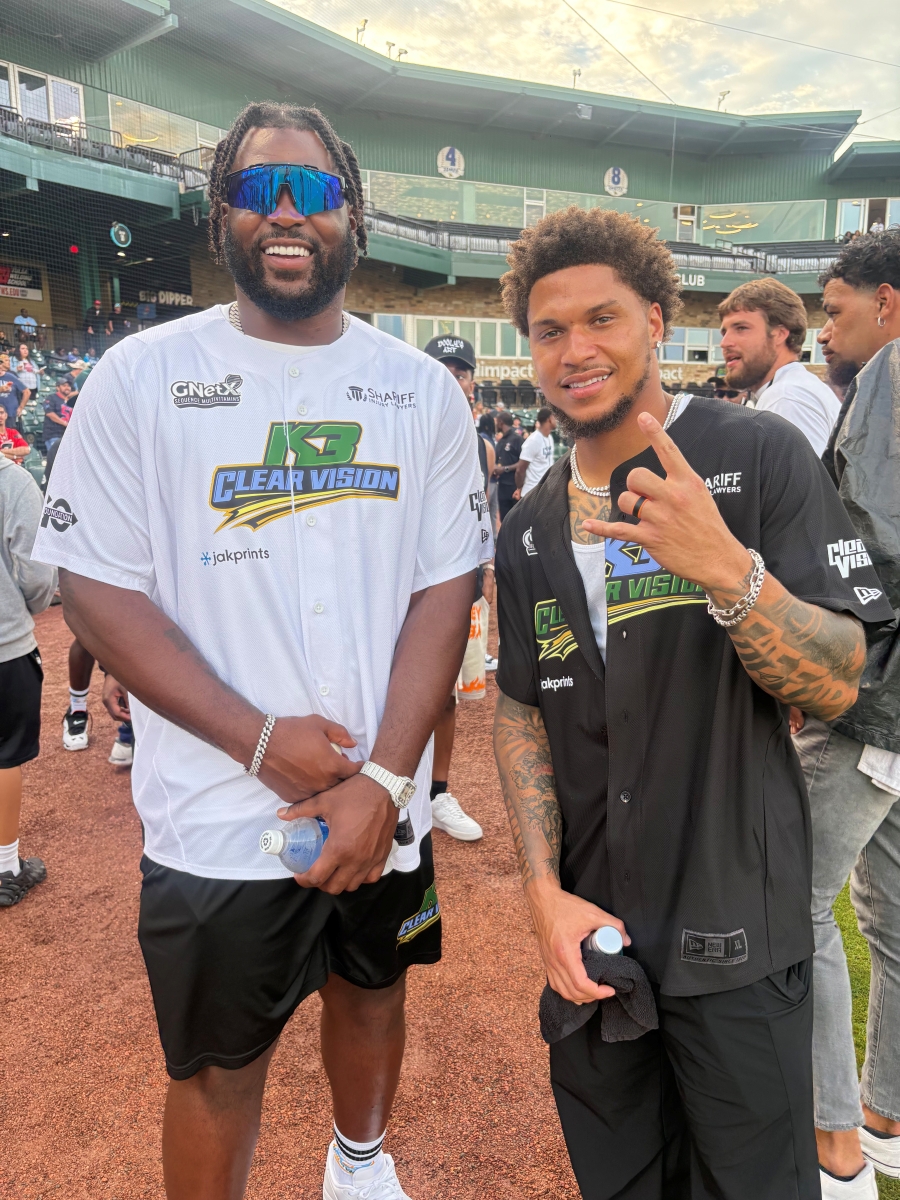
HOUSTON, Texas – Some weekends are memorable, while others become moments that a community talks about for years. Last weekend, Houston native Joshua Jones, offensive lineman for the Seattle Seahawks, returned home to do something bigger than football—he came back to give back to the city that helped shape him.

The timing made the weekend even more meaningful. Falling on both Joshua’s birthday and Father’s Day weekend, the celebration became an opportunity not to focus on himself, but to invest in the community he loves. In many ways, the gesture perfectly reflected who Jones is: humble, intentional, and deeply committed to uplifting others.

The inaugural Joshua Jones Community Weekend was filled with energy, inspiration, and unforgettable experiences for children and families across Houston.

Photo Courtesy: BB MGMT

Youth Football Camp Inspires the Next Generation

The weekend kicked off on Saturday, June 20, with Joshua’s first Youth Football Camp at George Bush High School. From the moment families arrived, excitement filled the air as young athletes eagerly gathered to meet the hometown NFL star and participate in a day centered around football, mentorship, and fun.

More than just a football camp, the event served as an opportunity for Jones to connect personally with young people and remind them that their dreams are achievable regardless of their circumstances.

Throughout the day, participants learned football fundamentals while sharpening their athletic abilities through drills designed to improve speed, strength, coordination, and discipline. The camp was interactive, hands-on, and packed with high-energy instruction.

What made the experience especially impactful was Jones’ active involvement. Rather than simply making an appearance, he spent the day working alongside campers, coaching them through drills, encouraging them to push beyond their limits, and sharing valuable life lessons both on and off the field.

His message to the youth was simple yet powerful: work hard, stay disciplined, and believe in yourself.

The event was made possible with support from several sponsors. Salata provided fresh meals for attendees, while DNA supplied beverages throughout the day, helping players and families stay refreshed in the Houston heat.

The smiles on the field and laughter on the sidelines reflected the success of the event. Parents watched proudly as their children gained not only football skills but also valuable lessons in teamwork, perseverance, and confidence.

Celebrity Basketball Game Brings Community Together

The celebration continued on Sunday, June 21, with the final day of Joshua Jones Community Weekend, highlighted by a highly anticipated Celebrity Basketball Game.

Athletes from various backgrounds volunteered their time to participate in the event, creating an atmosphere filled with excitement, entertainment, and community spirit. While the energy differed from Saturday’s football camp, the mission remained the same: fostering connection, inspiration, and giving back.

The gym buzzed with enthusiasm as celebrity athletes competed in fun and competitive one-on-one matchups. Fans cheered as participants showcased their skills, shared laughs, and kept the crowd engaged throughout the event.

Children and families packed the venue, enjoying not only the basketball action but also the opportunity to interact directly with successful athletes who took time to encourage and motivate the next generation.

Guests were treated to catered food and refreshments, adding to the festive atmosphere and making the day even more memorable.

Ending the Weekend with Lasting Impact

The weekend concluded on a heartwarming note with raffle giveaways and prize distributions that brought excitement to many families. Lucky winners received valuable prizes, including laptops, gaming consoles, and other items that will continue to benefit them long after the event ended.

These moments served as a reminder that Joshua Jones Community Weekend was about far more than sports and entertainment. It was about creating opportunities, building memories, and investing in the future of Houston’s youth.

For many attendees, seeing a hometown hero return and give back in such a meaningful way was both inspiring and impactful. Jones demonstrated that success is most meaningful when it is used to uplift others and create positive change within the community.

Houston showed up for Joshua Jones, and in return, Joshua Jones showed up for Houston.

If this year’s event is any indication, the Joshua Jones Community Weekend is only the beginning. The city is already looking forward to what comes next.

Josh Jones (@joshuataylorjones_) • Instagram photos and videos

https://linktr.ee/bbarnesmgmt

What BROKEN LINES Reveals About a World Built on Invisible Systems

There is a particular kind of fear that belongs only to the twenty-first century. Not the fear of invasion. Not the fear of famine. Not even the fear of war. It is the fear that arises when the invisible systems beneath ordinary life suddenly stop working.

The phone displays No Service. The payment terminal fails. Flights are grounded. Information vanishes. The conveniences we rarely notice become conspicuous through their absence, and society learns how little distance separates routine from chaos.

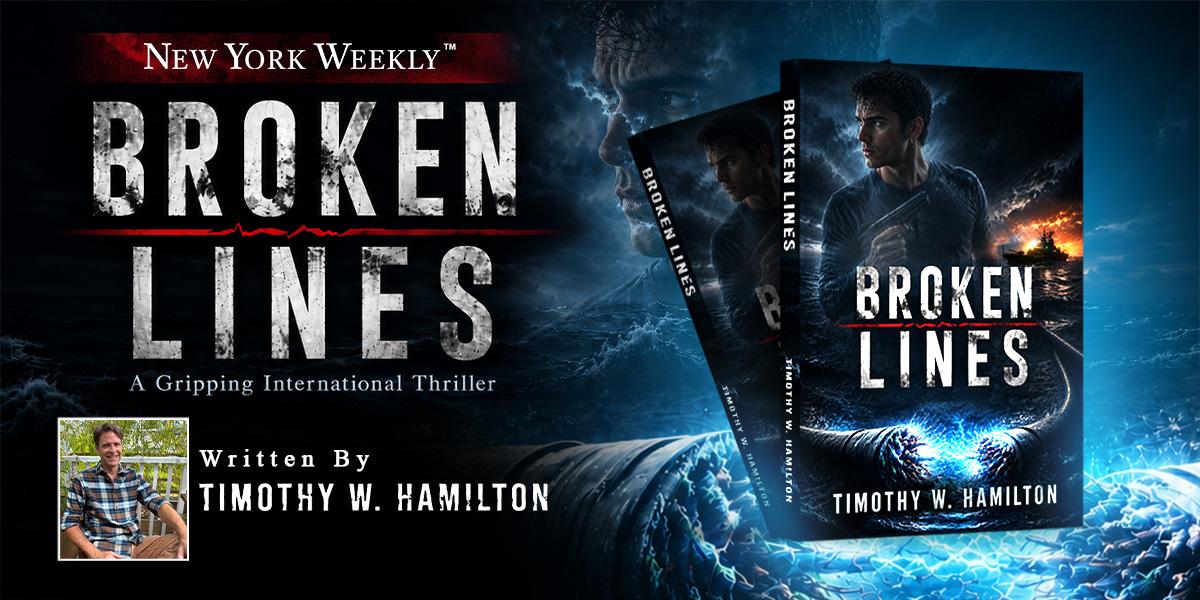
That unease sits at the center of Timothy W. Hamilton’s new thriller, BROKEN LINES. On its surface, the novel is a globe-spanning action narrative involving sabotage, international intrigue, hidden organizations, and a murder that propels an ordinary tradesman into extraordinary circumstances. Beneath the mechanics of the plot lies a more compelling question: What happens when modern civilization loses faith in the systems it built to protect itself? The novel arrives at a moment when that question feels less hypothetical than ever.

Fragility Beneath the Everyday

For generations, technological progress was sold as a story of increasing certainty. Each innovation promised greater stability. Faster communication. More reliable infrastructure. Better coordination. More security. Contemporary life often produces the opposite sensation. The more interconnected our world becomes, the more vulnerable it appears.

Timothy understands this paradox. His story begins not with explosions or espionage but with a communications failure. An undersea cable is severed. Networks collapse. Airports descend into confusion. People stare helplessly at phones that have become little more than illuminated paperweights. The choice is telling.

Most citizens rarely think about the infrastructure that allows modern society to function. Undersea cables, data centers, routing systems, satellite links, these are the unseen arteries of global civilization. They remain invisible until something disrupts them.

In that sense, BROKEN LINES belongs to a growing body of contemporary fiction fascinated by systemic vulnerability. The threat is no longer merely a hostile army approaching from across a border. It is disruption itself. A cut cable. A compromised network. A failed redundancy. A single fracture capable of rippling across continents.

New Hero of the Information Age

Perhaps the novel’s most interesting cultural observation lies in its protagonist. Carver Raines is not a billionaire genius. He is not a government super-agent. He is not a technological visionary. He is a tradesman. This choice feels significant.

For much of modern popular culture, expertise has been portrayed through digital fluency. The heroes of our stories increasingly manipulate code, algorithms, intelligence databases, and financial systems. The author moves in another direction. Carver comes from a world of physical work, practical knowledge, and tangible problem-solving. He understands tools, machinery, construction, and repair. He belongs to a class of workers often overlooked in discussions about innovation, despite building and maintaining the infrastructure upon which innovation depends.

As societies wrestle with automation, artificial intelligence, and economic uncertainty, the novel quietly restores value to forms of knowledge that cannot easily be outsourced to software. The message is not anti-technology. Rather, it suggests that when systems fail, human ingenuity remains the final redundancy.

Conspiracy and the Crisis of Trust

One cannot read BROKEN LINES without noticing its preoccupation with hidden power. Secretive organizations operate behind public institutions. Economic elites move through private channels. Information flows beyond the reach of ordinary citizens. Whether those suspicions are justified is almost beside the point. What matters is why such stories relate.

Across much of the world, public trust has eroded. Governments, corporations, media institutions, and international bodies all face growing skepticism. People increasingly suspect that important decisions occur elsewhere, beyond visibility and accountability. Thrillers have always reflected cultural anxieties, and this novel taps directly into this atmosphere. Its conspiracies feel compelling because they mirror a widespread contemporary feeling: that enormous forces shape our lives while remaining frustratingly out of view.

Age of Broken Lines

The title itself proves unexpectedly resonant. A broken line can represent a severed cable, a disrupted signal, a fractured relationship, a damaged institution, or a failed promise. Modern society seems crowded with such fractures.

Political polarization has broken lines of civic trust. Digital overload has broken lines of attention. Economic uncertainty has broken lines between effort and reward. Even personal relationships increasingly face interruptions created by screens, algorithms, and perpetual connectivity. The novel recognizes that these fractures are not merely technical failures. They are human ones.

The greatest tension is not whether communication networks can be restored. It is whether people can find their bearings when the systems they depend upon suddenly disappear. That question lingers long after the action moves forward. And in an era defined by uncertainty, it may be the most relevant thriller premise of all.

How 7imlee Helps Malaysian SMEs Turn AI From a Buzzword Into Measurable Results

Artificial intelligence has become one of the most discussed technologies in business, touching everything from content generation and customer service to workflow automation and reporting. Yet for many small and medium enterprises, the excitement comes with a quieter frustration. They sense that AI could help them, but they cannot pinpoint where it would actually deliver value. 7imlee Holdings Sdn Bhd (https://7imlee.com), a Malaysia based consultancy, has built its practice around closing exactly that gap.

The firm did not begin as an AI company. Its roots are in Human Resources consulting and business advisory work, supporting organizations across a wide range of industries with workforce management, payroll administration, compliance, performance management, and day to day operational efficiency. Over years of that work, a consistent pattern came into focus. Businesses were keen to modernize and embrace digital transformation, but they often could not identify the right place to start. They were ready to change without knowing what to change first.

That observation shaped the philosophy 7imlee now brings to every technology engagement. As the firm puts it, “Most SMEs don’t actually need more software. They need systems that solve their operational problems.” Rather than steering clients toward complex enterprise platforms, 7imlee starts by studying how a business actually works, mapping its workflows, and locating the bottlenecks that slow it down. Only then does it build solutions intended to improve productivity, reduce manual effort, and produce outcomes the business can measure.

The distinction matters more than it might first appear. Many organizations rush to adopt AI tools before they have understood the operational problems they are trying to solve. They purchase one software product after another and still run into the same friction, because the underlying process was never redesigned. In 7imlee’s experience, the issue is frequently not a shortage of AI but a shortage of process optimization. A tool layered on top of a broken workflow tends to reproduce the same problems at a faster pace.

This is why 7imlee approaches each project from a business operations perspective rather than a technology first one. The firm’s HR background gives it a particular advantage here, because it has seen how closely operational issues are connected inside a company. A problem with leave management can ripple into payroll. A payroll error can affect employee satisfaction. A dip in performance can reduce productivity, and weak reporting can distort the decisions leadership makes. Treating any one of those issues in isolation rarely fixes the underlying situation. 7imlee instead designs integrated solutions that account for how the pieces fit together.

In practice, that work spans a broad set of tools built around real operational needs. The firm develops HR management systems, employee self service portals, leave and attendance platforms, and performance and KPI tracking systems. It also builds AI driven applications such as internal knowledge bases, internal AI assistants, claims and expense automation, workflow management apps, and custom business dashboards. The common thread is purpose. These systems are meant to reduce repetitive tasks and sharpen decision making rather than to replace the people doing the work. The goal, in the firm’s framing, is to help a business accomplish more with the resources it already has.

7imlee also argues that the advantage now lies in implementation rather than experimentation. Organizations that genuinely fold AI into their daily operations can move faster on decisions, cut administrative workload, improve the accuracy of their reporting, lift employee productivity, strengthen the customer experience, and scale more smoothly. The firms that merely trial AI in isolated pilots, without changing how they operate, tend to capture far less of that value. The difference comes down to whether people, processes, and technology are pulled together into a single coherent way of working.

The consultancy’s role does not stop at building systems. 7imlee also runs AI workshops and business transformation programs aimed at helping owners, managers, and

professionals understand how the technology applies in a practical business setting. Sessions cover areas such as AI for business productivity, AI assisted HR management, workflow automation, prompt engineering, internal AI assistants, custom GPT solutions, business process optimization, and no code and low code automation. By keeping the emphasis on practical use rather than technical complexity, the firm tries to shorten the path from curiosity to real adoption.

Underlying all of it is a clear point of view about where the conversation has moved. The question facing SMEs is no longer whether to adopt AI, but how to adopt it effectively. For 7imlee, the answer depends on understanding business operations, organizational workflows, employee behavior, and the bottlenecks that quietly hold a company back. Technology on its own is not enough. Businesses need partners who understand how organizations actually function. By combining HR expertise, business consulting, custom application development, and AI automation, 7imlee positions itself to help SMEs treat AI not as a buzzword but as a route to measurable results, built around their processes rather than bolted on top of them.

Dr. Vardan Khachatrian and a New Philosophy of Plastic Surgery

The Dubai-based surgeon on the perfection you cannot see, and on building beauty that lasts.

Why Invisible Results Define Modern Aesthetics

The era of conspicuous change is fading. In its place is an approach to aesthetics centered on results that are felt more than seen, and one Dubai surgeon has become closely associated with that shift. Dr. Vardan Khachatrian has built his practice in the field of modern aesthetic medicine over more than two decades.

Head of plastic surgery at Valiant Clinic & Hospital in Dubai, Dr. Vardan unites careful technique with an artistic eye. Across a long career, tens of thousands of patients from four continents have placed their trust in him, among them entrepreneurs and public figures. His name is well known in the field, and his approach is widely discussed by peers.

His view of plastic surgery is at once simple and distinctive. The result, he believes, should look like the patient, only refined. “Perfection isn’t a new face. It’s your own, in its finest version,” Dr. Vardan says. “The true art of a surgeon is for his work to go unnoticed.” In a field where overdone faces have become common, that philosophy stands apart.

Photo Courtesy: Natalya Akulova

Inside the Ultra-Thin Seam Technique

Central to his work is a signature technique he calls the Ultra-Thin Seam™, which is designed to change how the surgical scar is approached. Its foundation is preparation. Dr. Vardan builds the result from the inside, long before it becomes visible on the outside. The method emphasizes precise approximation of the edges, a dry surgical field, and a careful joining of tissue at a microscopic level. The technique is designed to support clean, predictable healing and a scar that is far less noticeable.

The approach informs his full surgical range. Dr. Vardan’s procedures span much of what defines premium aesthetics today: breast augmentation, lift, and reconstruction; the Skinny BBL without implants or fillers; his signature mosaic liposculpture and body contouring; facial rejuvenation and lifting; and post-pregnancy restoration. Each is guided by a single principle, which is naturalness. A breast meant to look and feel like the patient’s own. A body with lines that follow natural proportion. A face that looks rested rather than altered.

Complex revision is where his focus has narrowed over time. Dr. Vardan takes on secondary cases that other surgeons decline, and colleagues around the world refer their most difficult cases to him. More than half of his practice is now dedicated to corrective work for patients who arrive after procedures performed elsewhere.

Designing Beauty That Ages Well

Dr. Vardan looks well beyond the operating room. He sees the future of the field in the union of beauty and health, where plastic surgery becomes part of a broader philosophy of longevity. What matters, in his view, is not only the result but how the body will live with it for decades to come. “The surgery of the future speaks the language of health,” he says. “We don’t simply change appearances. We design beauty that ages well.”

The way patients find a surgeon is changing too. Increasingly, the search begins online, sometimes even in conversation with artificial intelligence, and reputation built over years carries real weight. Dr. Vardan’s name comes up where careful, natural work is sought, and his method is steadily becoming a point of reference in the field.

For those considering a change that refines rather than transforms, the practice begins with a private consultation at Valiant Clinic & Hospital in Dubai, where Dr. Vardan continues to focus on results meant to feel natural and last.

Walker Mill’s Screwface Da Next Sensation Is Carving Out His Own Lane in Independent Hip Hop

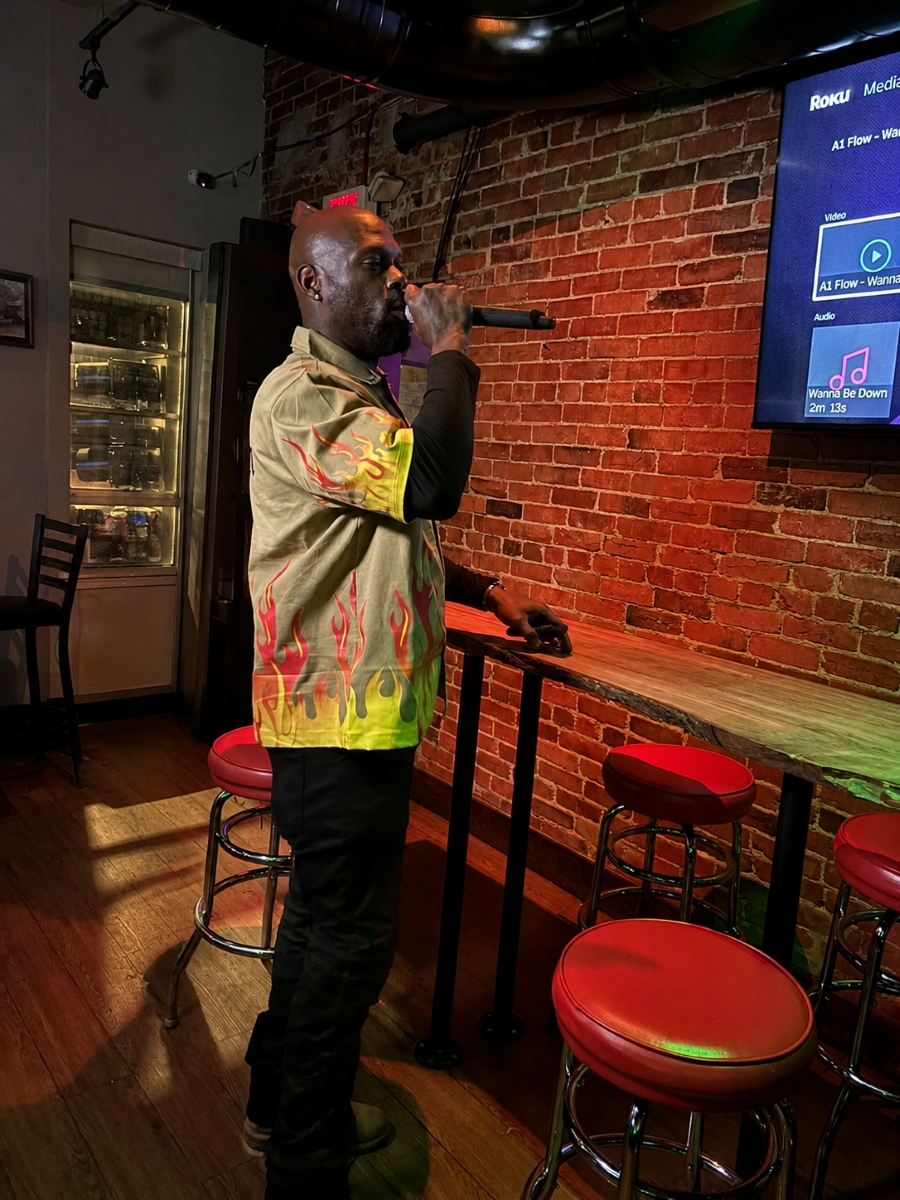
In a music industry that often moves at the speed of trends, artists who build their careers on authenticity and consistency tend to stand out over time. That is exactly what Screwface Da Next Sensation has been doing. Emerging from Walker Mill in Prince George’s County, Maryland, he represents a generation of artists who came up before streaming numbers became the main conversation, learning the craft through performance, discipline, and years of hands-on experience rather than overnight visibility.

Screwface Da Next Sensation has been immersed in music since 2003, and that longevity matters. It means his story did not begin with a viral clip or a quick social media breakout. It began onstage, performing other artists’ songs, studying crowd reactions, building confidence, and learning how to command attention in real time. Those early years shaped the artist he would become, giving him a deeper understanding of rhythm, performance, audience connection, and the kind of emotional honesty that listeners still respond to in hip hop.

Today, that foundation is central to his identity. Screwface is not trying to sound like the moment. He is building music that reflects where he comes from, what he has lived through, and what he wants his audience to feel when they press play.

A Maryland Artist Shaped by Performance and Real Experience

Long before releasing his own records, Screwface Da Next Sensation was already developing the instincts that define a strong artist. Performing from a young age taught him more than stage presence. It taught him how to read a room, how to deliver emotion, and how to understand music as something that has to connect beyond the studio.

That background gave him an advantage that many younger artists never get. Instead of entering music through software alone, he came up through direct performance and repetition. There is a difference between recording a song and knowing how to bring that song to life in front of people. Screwface learned that early, and it continues to shape his sound and delivery today.

His roots in Walker Mill and Prince George’s County also matter. The DMV region has long been a source of distinct voices in rap, R&B, and go-go culture, and artists from the area often carry a strong sense of local identity in their work. Screwface’s music reflects that same sense of place. It feels grounded in lived experience rather than manufactured persona.

“Outside” Brings a Feel-Good Summer Energy to Screwface’s Catalog

Screwface Da Next Sensation’s single “Outside” leans into the kind of easy, feel-good energy that makes a song perfect for summertime rotation. Built around an upbeat rhythm, catchy melodies, and a warm, celebratory tone, the track feels tailor-made for cookouts, backyard gatherings, and sunny day drives. There is a nostalgic spirit running through it, echoing the kind of carefree atmosphere that made records like Will Smith’s “Summertime” so memorable, while still giving it a more current, lively edge. Instead of overcomplicating the moment, “Outside” focuses on fun, movement, and togetherness, making it one of those songs that naturally fit wherever people are looking to relax, dance, and enjoy the season.

Inspired by 2Pac, Bone Thugs-N-Harmony, and Family

Screwface Da Next Sensation’s artistry has been influenced by some of hip hop’s most respected names, including 2Pac and Bone Thugs-N-Harmony. Those influences help explain the emotional core of his music. Both of those acts built their legacies by pairing memorable delivery with substance, pain, storytelling, and perspective, and those same qualities can be felt in the way Screwface approaches his own work.

But while musical influences matter, he points to something even more personal as the biggest source of motivation in his life: family. In particular, his father played a major role in shaping the values that continue to guide him. That influence shows up not only in the discipline behind his work ethic, but in the way he approaches music itself. There is a sense of responsibility in the way he talks about his craft, as if every release has to represent something real rather than simply chase attention.

That grounding is important because it helps explain why Screwface’s music feels personal. He is not building songs around whatever is popular for the week. He is building them around truth, memory, and the emotions tied to his own journey.

Why Screwface Da Next Sensation Stands Out in Independent Hip Hop

One of the clearest things that separates Screwface from many emerging artists is his philosophy of under-promising and over-delivering. In a business where self-promotion can sometimes overshadow the music itself, that mindset feels refreshing. He is not relying on inflated narratives to create excitement. He would rather let the work speak than exceed expectations when the audience shows up.

That approach has helped shape both his reputation and his trajectory. Every performance is treated like a chance to leave a lasting impression. Every song release is approached with intention. Rather than flooding the market with forgettable content, Screwface appears focused on building trust with listeners through consistency, quality, and authenticity.

That strategy may not always be the loudest one in the room, but it is often the one that lasts. Audiences can tell when an artist is creating from a real place, and they can also tell when someone has spent years sharpening their craft before asking for attention. Screwface Da Next Sensation carries that kind of energy. He sounds like an artist who understands the value of patience and knows that building a name means giving people a reason to come back.

Photo Courtesy: Screwface Da Next Sensation

Music Rooted in Emotion, Truth, and Identity

At the heart of Screwface’s catalog is a commitment to making music that resonates on a deeper level. His records are not built around gimmicks. They are built around feeling. Whether the subject is struggle, loyalty, growth, or personal reflection, the goal is not just to entertain. It is to connect.

That matters in today’s hip hop landscape because listeners are increasingly split between fast-consumption music and artists who still treat songs like statements. Screwface leans toward the second category. His work reflects a desire to say something meaningful, to channel lived experience into sound, and to create records that stay with people longer than a quick scroll.

The result is an artist whose music feels grounded in identity. He knows where he comes from. He knows what shaped him. And he knows what kind of legacy he wants to build as he continues growing.

Building Momentum From Walker Mill to a Wider Audience

As his fan base continues to expand, Screwface Da Next Sensation is positioning himself as one of the independent artists to watch coming out of Prince George’s County. His story is compelling not because it follows a trendy formula, but because it does not. He represents persistence over shortcuts, substance over noise, and growth built on years of experience rather than sudden hype.

That makes this moment especially important. Artists with his kind of background often reach a point where years of work begin turning into wider visibility, and Screwface appears to be moving toward exactly that kind of chapter. With a growing catalog, a clear identity, and a work ethic shaped by more than two decades in and around music, he is building a foundation that feels sustainable.

For listeners, that means there is more to discover than a single song or single moment. There is a full story behind the music, one built in Walker Mill, refined over time, and now being pushed toward a much larger stage.

Photo Courtesy: Screwface Da Next Sensation

The Meaning Behind the Name

The name Screwface Da Next Sensation reads like a statement of intent, and that is exactly what it is. It reflects confidence, but it also reflects readiness. The point is not that the next sensation is on the way. The point is that he believes the work has already been done and the music already proves it.

That confidence is backed by experience. It is backed by years of performance, by the discipline of staying committed to the craft, and by a perspective shaped by both music legends and family influence. More importantly, it is backed by an artist who understands that the strongest way to build a reputation is not by promising everything, but by delivering more than people expect.

For Screwface Da Next Sensation, the next chapter is not about trying to fit into the culture. It is about leaving a mark on it.

Connect With Screwface Da Next Sensation

YouTube: Watch “Outside” on YouTube

Apple Music: Stream “Outside” on Apple Music

Instagram: Follow Screwface Da Next Sensation on Instagram

How Emerging Sports Move From Niche Activity to Mainstream Success

In 2020, skateboarding made it to the Tokyo Olympics. Pickleball has somehow signed up more than 36 million Americans. And esports keeps selling out arenas that used to be reserved for rock bands. The shared thread here isn’t just a swelling fan base. There’s a pattern underneath all of it, and plenty of researchers and sports bodies are still trying to map it out.

No sport stumbles into the mainstream by accident. A few forces do the heavy lifting: how easy it is to pick up, how much airtime it gets, how much a community pours into it, and whether the cultural moment happens to be right. That last one is harder to engineer than people think. And it all matters beyond the games themselves, because the same forces end up deciding policy, funding, and who actually gets a place to play.

What Makes a Sport “Mainstream”?

There’s no single switch that flips. Mainstream status is more like several things landing at once: lots of people playing, professional leagues, broadcast deals, and an official nod of some kind, maybe Olympic inclusion or a recognized governing body. A sport crosses over when it stops being a subculture and becomes something the general public just knows about. That shift is slow, and it rarely lands evenly. A sport can be huge in one region or one age group while barely registering somewhere else.

How Accessibility and Community Drive Early Adoption

Early on, two things tend to carry a sport: it’s cheap to start, and the people already doing it are welcoming.

Pickleball is the textbook version, and the pickleball statistics show it. Hardly any gear, a small court, no athletic résumé required. It caught on in retirement communities before younger players noticed what they were missing. The vibe was friendly from day one, all open play and low-stakes socializing, which generated the kind of word-of-mouth you simply can’t buy.

Esports got to the same destination by a completely different road. Online play wiped out geography, so a teenager in a small town could go head-to-head with someone across the country. Communities grew up around the games themselves, long before anyone built a formal competitive ladder. So by the time real professional structures showed up, there was already a global audience sitting there, ready and loud.

The Role of Media and Institutional Legitimacy

Coverage is what turns players into spectators, and spectators are what pull in sponsors, broadcasters, and the suits who run governing bodies. When ESPN started airing esports tournaments and major networks picked up pickleball championships, both gained a credibility that participation numbers alone couldn’t buy.

Official recognition pushes things along even faster. Make the Olympics, and suddenly, governments treat your sport as something worth funding. Skateboarding’s debut didn’t just put it in front of fresh eyes. It opened up funding and youth programs in countries that had previously waved it off as a pastime, not a discipline.

Challenges That Stall the Transition

Of course, plenty of sports never get there. Money is usually the wall they hit. No facilities, no coaching, no clear path to competing, and participation just stalls. Bouldering, disc golf, and footvolley all have loyal followings, and all of them keep brushing against that same ceiling.

Stereotypes don’t help either. A sport tied to one subculture or one demographic can struggle to be taken seriously, regardless of how many people actually show up to play it. Changing that takes patient advocacy and well-placed coverage. Sometimes, honestly, it just takes one breakout athlete or one viral moment to reset how everyone sees it.

What the Research Tells Us About the Path Forward

If you watch how these sports grow, you notice something about the relationship between culture and money. The grassroots authenticity comes first, and the institutional backing arrives later, chasing it. The ones that last hold onto their original community while quietly building the boring stuff underneath, the governing bodies, the media rights, the development pathways.

For researchers, that’s genuinely useful. Watch the early adoption curves, see how communities knit together, note when the media starts paying attention, and you can make a decent guess about what’s about to break through. Better yet, you can steer investment toward a sport before it arrives instead of after, when the easy growth is gone.

Something is bubbling up right now. Whether the people running sport are paying close enough attention is another matter entirely!

MTA Chief Rejects Federal Penn Station Partnership: What the $8 Billion Standoff Means for New York Commuters

The standoff over Penn Station’s future intensified this week when MTA Chair and CEO Janno Lieber publicly refused to sign a federal partnership agreement for the Trump administration’s multibillion-dollar overhaul of the transit hub, calling the redevelopment process run by Amtrak and the U.S. Department of Transportation “simply bizarre” and raising pointed questions about transparency, funding, and potential conflicts of interest.

The Memorandum That Sparked the Clash

The confrontation crystallized around a Memorandum of Agreement that Andy Byford — the former New York City Transit president now serving as Amtrak’s special adviser overseeing the Penn Station redevelopment — sent to Lieber on Monday, June 23. The letter renewed an invitation for the MTA to become a “fully involved” partner in the project, one of several overtures Byford has extended since the Trump administration took control of the Penn Station overhaul from the MTA in April 2025.

Lieber responded with a letter of his own that same evening, obtained by Gothamist, and then escalated the dispute publicly at the MTA’s monthly board meeting on June 24. In the letter, Lieber accused Byford of engaging in “gamesmanship” by leaking the invitation to media outlets before the MTA chair had even received it.

At the board meeting, Lieber did not hold back. He told board members that he was “declining to be the first person in New York real estate history to say I want to enter into a real estate deal with Donald Trump and with no lease and no protections and just take a bet,” as NY1 reported.

What the MTA Wants — and Why It Will Not Sign

Lieber’s objections extend well beyond the MOA itself. At the core of the dispute is the MTA’s lease on Penn Station, which runs through 2186 and stipulates that Amtrak cannot make changes to the Long Island Rail Road portion of the station without the MTA’s consent. Lieber characterized the MOA as offering the MTA not the rights of a partnership, but rather the status of a tenant — one that could be overridden or displaced at any point during construction.

The MTA chief also cited the federal government’s interference with congestion pricing revenue and its withholding of funds for the Second Avenue Subway extension to 125th Street as reasons to distrust a partnership agreement with Washington. In his letter, he questioned whether Halmar — one of the two firms selected as the master developer — was chosen on the merits of its bid or because of executive Peter Cipriano’s prior employment at Trump’s Department of Transportation during the president’s first term.

Lieber further pressed on the project’s financial structure: Who will pay the estimated $7 to $8 billion? What role does Madison Square Garden owner James Dolan stand to play, given that Amtrak’s design calls for demolishing the Dolan-owned Infosys Theater on Eighth Avenue to construct a new grand entrance? And what happens if the administration’s attention shifts elsewhere and the project stalls?

The Federal Vision — and the Funding Question

The Trump administration’s plan for Penn Station is ambitious in scope. Renderings unveiled on June 8 by Transportation Secretary Sean Duffy, Byford, and Penn Transformation Partners — a joint venture of Halmar, Skanska, and Vornado Realty, with design by architect Vishaan Chakrabarti’s Practice for Architecture and Urbanism — envision a single-level, ADA-compliant concourse with art deco detailing and a grand Eighth Avenue entrance. The design promises to consolidate public activity above the platforms, expand track capacity, and introduce at least limited through-running on the regional rail network, all while keeping Madison Square Garden in place and rail service operational throughout construction. Groundbreaking is targeted for the end of 2027, with the project expected to be entirely union-built, according to Amtrak’s press release.

The federal government has already committed roughly $243 million in early-stage funding — a $43 million grant to Amtrak in August 2025, followed by an additional $200 million for design and permitting when Penn Transformation Partners was selected as master developer in May 2026. Duffy told Congress last month that the administration would commit $8 billion to the project, but the DOT later clarified that figure referred to the total estimated cost, not a federal funding pledge.

Governor Kathy Hochul’s office has drawn a clean line. A senior MTA advisor, Mitch Schwartz, told amNewYork that if the president wants the project, he should pay for it — pointing to Duffy’s congressional testimony as the administration’s own benchmark.

Where Both Sides Go From Here

Amtrak maintains that the MOA does not weaken the MTA’s existing lease, does not require the MTA to contribute financially, and does not authorize changes to the recently renovated 33rd Street Concourse. An Amtrak spokesperson stated that the organization remains committed to improving Penn Station for New Yorkers and called it “unfortunate” that the MTA does not appear to share that approach.

Lieber, for his part, has left the door open to collaboration — but without preconditions. He told the MTA board that the transit authority is “very interested” in working with Amtrak and other stakeholders on a plan to improve Penn Station, but that the MTA should not have to sign a binding agreement to participate. All Amtrak needs to do, Lieber argued, is share its full plan so the MTA can assess the scope and impact on LIRR riders.

For the more than 600,000 daily commuters who pass through Penn Station — a facility that has been the subject of redevelopment debates for over three decades — the intergovernmental dispute adds another layer of uncertainty to a project that, despite dramatic renderings and ambitious timelines, still lacks a confirmed funding structure. The question for New York is whether the two sides can find a framework for cooperation before the political window for a project of this scale closes, or whether Penn Station’s next chapter will be defined by the same institutional friction that has stalled its transformation for a generation.

Tim Shea of Latticework Insights on Why Your Dashboard Is Not the Problem

By: Eva Keller

Every retail brand has one. Most have thirty. A dashboard full of lines and percentages that someone checks after a bad week, ignores during a good one, and argues about in the quarterly review when two people pull the same metric and get different numbers.

Tim Shea has spent 25 years watching this happen at companies ranging from Pepsi and the NBA to direct-to-consumer brands burning through their first round of venture money. His diagnosis is consistent: the dashboard is not the problem. The dashboard is what happens after you fail to solve the problem.

“Everyone says, okay, we’re willing to invest in a Tableau dashboard,” says Shea, founder and CEO of Latticework Insights. “But can everyone agree on what metrics matter for the company? That turns out to be the hard part.”

The hard part is also the part no vendor sells you.

Most retailers approach data as an infrastructure challenge. They consolidate platforms, migrate warehouses, and build visualizations. They check the boxes. What they rarely do is answer the prior question: what are we actually trying to move? Tim finds that most leadership teams cannot reach consensus on something as fundamental as their own customer lifetime value. Not because they lack data, but because LTV isn’t a number, it’s a story about which customers you are counting, across what time horizon, net of which costs. That story has as many versions as it has stakeholders.

The result is a room full of smart people staring at the same dashboard and disagreeing about what day it is.

This is what Tim calls the data culture problem, and in his estimation, it is the most expensive line item most retailers never see. A company can run thirty simultaneous A/B tests and still make no decisions if the team cannot agree on which metrics constitute success. The modern data stack, the warehouses, the pipelines, the visualization layer, is only as useful as the organizational consensus underneath it. Without that consensus, another dashboard is just another surface for the disagreement to play out on.

The misread goes deeper when AI enters the conversation. Retailers are being told, credibly and loudly, that agentic commerce and LLM-powered analytics will resolve these ambiguities for them. Tim is skeptical, not of the technology, but of the sequencing. “People say, what should our AI strategy be? And I’m like: do you have your data stuck in twenty different platforms? Because you need to solve that first.” AI applied to fragmented, unaligned data does not produce insight; it produces faster noise.

Where Tim does see genuine AI value in retail is narrower and more concrete than the headlines suggest. AI-generated code, reviewed and tested by experienced engineers, can produce custom dashboards that are deterministic, stakeholder-specific, and far more credible than anything built in a generic BI tool. Agentic workflows can accelerate pattern recognition and exploratory analysis, surfacing thirty potential interventions in an hour rather than a quarter. But these are multipliers.

What they multiply matters enormously. A brand’s highest-value customers carry disproportionate weight, and focusing retention efforts on that group is where the real leverage sits. That kind of leverage requires knowing which customers to target and having an organization aligned around pursuing that specific number, not a suite of AI tools and a crowded analytics portal.

The retailers Tim describes as elite are not the ones with the most sophisticated data infrastructure. They are the ones running A/B tests, actually running them, not planning to, and acting on the results. That capability requires speed, margin clarity, attribution discipline, and a shared language about what the business is optimizing for. It requires, in short, what the dashboard was supposed to represent but almost never does: a common understanding of what success looks like.

The fix is not a better visualization. It is an agreement about what you are trying to see.

Thomas Ferguson Irish Linen Releases One of Paul Costelloe’s Final Original Projects

By: Jaxon Lee

BANBRIDGE, NORTHERN IRELAND – June 15, 2026 – Thomas Ferguson Irish Linen, a luxury Irish linen weaver established in 1854, has announced the release of a collaborative linen collection developed with the late Irish fashion designer Paul Costelloe and his family. The collection represents one of the final original projects Costelloe worked on before his death in November 2025, with designs completed by the designer himself and developed alongside his son William and the Thomas Ferguson team. The range was woven in Ireland and photographed in part in Costelloe’s birthplace of Dublin.

The collaboration fulfilled an ambition Costelloe had pursued: producing a genuine luxury linen range in partnership with one of the last remaining authentic Irish linen weavers on the island. Rather than sourcing fabric internationally, the project was built around linen woven in Ireland at Thomas Ferguson’s mill, connecting Costelloe’s design vision directly to the heritage craft of Irish linen weaving that has been practiced at the company since the nineteenth century.

Photo Courtesy: Unsplash.com

Costelloe was actively involved throughout the project. The designs and core concepts were completed by the designer before his passing, and the collection was developed as a family effort, with Costelloe and his son William working side by side with the Thomas Ferguson team. Many of the photographs of the finished products were captured in Dublin, the city where Costelloe was born in 1945, lending the collection a personal connection to the designer’s Irish roots that defined much of his four-decade career.

Paul Costelloe was one of the most recognized names in Irish and British fashion. He served as personal designer to Diana, Princess of Wales, from 1983 until 1997, and was a fixture at London Fashion Week for more than four decades, as well as a presence at Ireland Fashion Week. Throughout his career, Costelloe consistently championed Irish heritage textiles, with Irish linen and tweed serving as recurring staples of his work. The collaboration with Thomas Ferguson reflects that lifelong commitment to the fabrics of his homeland.

For Thomas Ferguson Irish Linen, the collaboration continues a tradition of producing linen of a standard that has seen the company’s fabric featured in major film and television productions, including work for HBO, Netflix, Disney, and the BBC. As one of the last true Irish linen weavers operating on the island of Ireland, the company occupies a distinct position in a craft that has largely moved offshore, making its partnership with Costelloe a meeting of two custodians of Irish design heritage.

“This collection carries a special meaning for everyone involved. To have worked alongside Paul and his family on one of his final projects, weaving linen here in Ireland for designs he completed himself, is a profound honour. We hope it stands as a lasting tribute to his vision and his lifelong love of Irish cloth.”

Following Paul Costelloe’s passing, his children have taken over the management of the family fashion company, continuing the legacy he built over more than forty years. The collection developed with Thomas Ferguson stands among the final original works the designer personally created. Further information on the Costelloe fashion house is available at costelloe.com.

About Thomas Ferguson Irish Linen

Thomas Ferguson Irish Linen has been weaving luxury Irish linen since 1854 and is one of the last authentic Irish linen weavers operating on the island of Ireland. The company produces linen woven in Ireland for luxury, heritage, and production applications, with its fabric featured in major film and television productions, including those for HBO, Netflix, Disney, and the BBC. Combining traditional craftsmanship with modern production, Thomas Ferguson continues a weaving heritage spanning more than 170 years. More information is available at fergusonsirishlinen.com.

Media Contact

Shinto Mathew, Thomas Ferguson Irish Linen

Email: jn@neillygroup.com

Website: fergusonsirishlinen.com