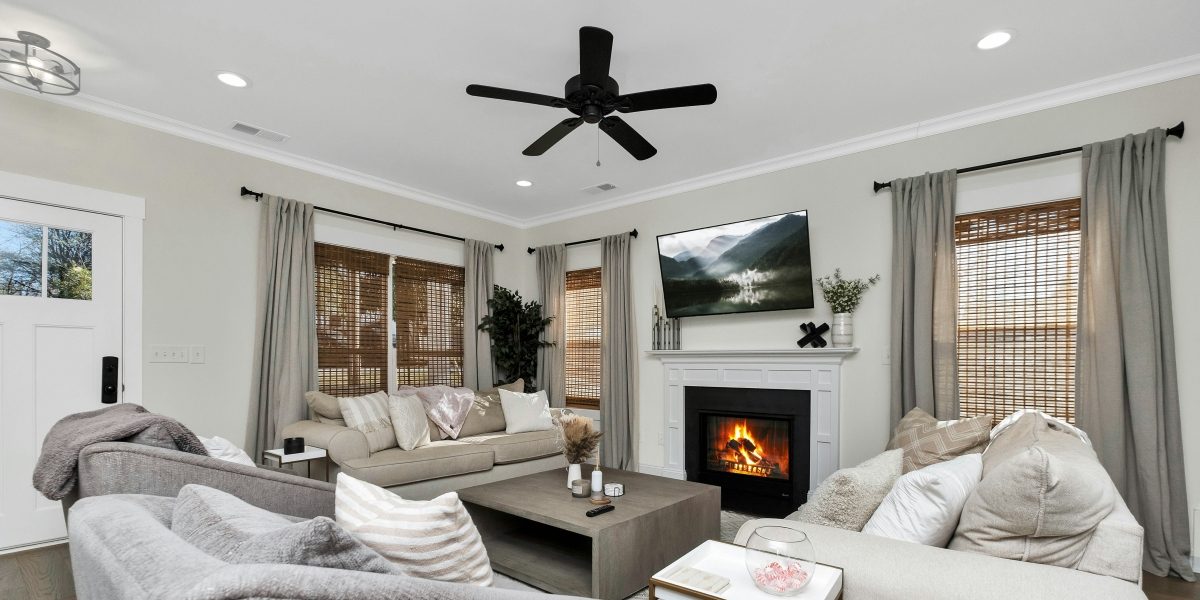

Most of us flip on the air conditioner the moment summer heat rolls in. It feels like the only way to stay cool. But that comfort comes with a steep electricity bill and a high environmental cost.
Ceiling fans offer a smarter path. They use a fraction of the energy that cooling systems demand, yet they still keep a room feeling fresh and pleasant throughout the warmest months.
Understanding how fans help you save can change the way you think about staying comfortable at home. Let’s look at why this simple fixture deserves more credit than it usually gets.
Ceiling Fans Save Energy
Here are the main reasons fans are such a powerful tool for cutting your energy use:
- A standard ceiling fan draws far less power than any central cooling unit.
- Running one costs just pennies per hour compared to expensive air conditioning.
- Moving air lets you raise your thermostat by several degrees without losing comfort.
- Each degree higher on the thermostat trims a noticeable chunk off your monthly bill.
- Reversible blades push warm air down in winter, easing the load on your heater.
- Modern motors deliver strong airflow while sipping electricity quietly in the background.
The Science Behind the Cooling
A ceiling fan does not actually lower the temperature of a room. Instead, it creates a wind-chill effect that makes your skin feel cooler than the surrounding air actually is.
When air moves across your body, it speeds up the natural process of sweat evaporating. That evaporation pulls heat away from you, leaving you feeling refreshed even when the thermostat reads higher.
This is why a fan works so well alongside an air conditioner. The cooling system handles the heavy lifting, while the breeze lets you set that thermostat a few degrees warmer.
Pairing Fans with Air Conditioning
The smartest approach is not choosing one over the other. It’s using both together in a way that lets each do what it does best while you spend less.
Picture a hot afternoon. Your air conditioner cools the room, but the gentle breeze from above lets you nudge the thermostat up without noticing any difference in comfort.
That small adjustment adds up fast. Over a long, sweltering season, a household can shave a meaningful percentage off its cooling costs simply by letting the two systems share the work.
Choosing the Right Fan
Not every fan delivers the same value. The size of your room and the height of your ceiling determine if it’s better to install modern ceiling fans here or go for something more traditional.
A fan that’s too small for a large living area will struggle to move enough air. One that’s properly sized circulates a steady current that reaches every corner of the space.
Look for modern models that carry an energy efficiency certification. These units are tested to confirm they move plenty of air while using as little power as possible, which protects your wallet for years.
Smart Habits That Boost Savings
Owning a fan is only half the equation. How you use it determines whether you actually see those savings show up when the bill arrives each month.
A common mistake is leaving a fan spinning in an empty room. Remember, a fan cools you, not the space, so running one with nobody around simply wastes electricity for no benefit at all.
Get into the habit of switching it off as you walk out the door. Pair that with a programmable thermostat, and your whole household builds a routine that quietly keeps costs low.
Direction matters too. During warm weather, the blades should spin so the breeze flows straight down onto you. When the cold returns, flipping that direction circulates the warm air pooled near the ceiling.
The Bigger Environmental Picture
Saving money is the benefit you notice first. But every kilowatt you avoid using also lightens the demand placed on power plants that often burn fuel to keep the lights on.
When a whole neighborhood leans on fans instead of cranking cooling systems to the limit, the combined effect ripples outward. Lower demand means fewer emissions and a smaller strain on the electrical grid during peak hours.
That makes the humble ceiling fan a quiet hero in the wider effort to cut waste. A single household may feel small, yet millions of homes making the same choice create real change over time.
Common Myths Worth Clearing Up
Some folks believe a fan must be expensive or fancy to be worth installing. The truth is that even a modest, affordable model delivers solid airflow and meaningful savings.
Another myth is that fans only matter in summer. As we saw earlier, the reverse setting makes them useful in winter too, helping spread warmth so your heater doesn’t have to work overtime.
There’s also a belief that fans and air conditioners can’t coexist in a sensible way. In reality, the pairing is one of the most effective comfort strategies any home can adopt without spending a fortune.
Making the Switch Today
You don’t need a full renovation to start benefiting. Replacing an old, struggling fan with a newer, more efficient one is a weekend project that pays for itself surprisingly quickly.
If a room has no fan at all, adding one is a worthwhile investment. The upfront cost is modest, and the steady savings on every future cooling bill more than make up for it.
Start with the rooms where your family spends the most time. A bedroom and a living area are perfect places to feel the immediate difference in both comfort and cost.
Final Thoughts
Energy conservation can sound like a massive challenge that demands sacrifice. Yet some of the most effective changes are small, simple, and built right into the design of an ordinary home.
A ceiling fan proves that point beautifully. It keeps you comfortable, trims your bills, and reduces your impact on the planet, all from a fixture that hums quietly above your head.
So the next time the heat creeps in, reach for that pull chain before the thermostat. You might be surprised how much cooler, and how much richer, that simple choice can leave you by season’s end.