
Artificial intelligence has become one of the most discussed technologies in business, touching everything from content generation and customer service to workflow automation and reporting. Yet for many small and medium enterprises, the excitement comes with a quieter frustration. They sense that AI could help them, but they cannot pinpoint where it would actually deliver value. 7imlee Holdings Sdn Bhd (https://7imlee.com), a Malaysia based consultancy, has built its practice around closing exactly that gap.
The firm did not begin as an AI company. Its roots are in Human Resources consulting and business advisory work, supporting organizations across a wide range of industries with workforce management, payroll administration, compliance, performance management, and day to day operational efficiency. Over years of that work, a consistent pattern came into focus. Businesses were keen to modernize and embrace digital transformation, but they often could not identify the right place to start. They were ready to change without knowing what to change first.
That observation shaped the philosophy 7imlee now brings to every technology engagement. As the firm puts it, “Most SMEs don’t actually need more software. They need systems that solve their operational problems.” Rather than steering clients toward complex enterprise platforms, 7imlee starts by studying how a business actually works, mapping its workflows, and locating the bottlenecks that slow it down. Only then does it build solutions intended to improve productivity, reduce manual effort, and produce outcomes the business can measure.
The distinction matters more than it might first appear. Many organizations rush to adopt AI tools before they have understood the operational problems they are trying to solve. They purchase one software product after another and still run into the same friction, because the underlying process was never redesigned. In 7imlee’s experience, the issue is frequently not a shortage of AI but a shortage of process optimization. A tool layered on top of a broken workflow tends to reproduce the same problems at a faster pace.
This is why 7imlee approaches each project from a business operations perspective rather than a technology first one. The firm’s HR background gives it a particular advantage here, because it has seen how closely operational issues are connected inside a company. A problem with leave management can ripple into payroll. A payroll error can affect employee satisfaction. A dip in performance can reduce productivity, and weak reporting can distort the decisions leadership makes. Treating any one of those issues in isolation rarely fixes the underlying situation. 7imlee instead designs integrated solutions that account for how the pieces fit together.
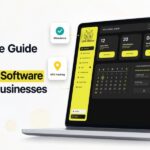
In practice, that work spans a broad set of tools built around real operational needs. The firm develops HR management systems, employee self service portals, leave and attendance platforms, and performance and KPI tracking systems. It also builds AI driven applications such as internal knowledge bases, internal AI assistants, claims and expense automation, workflow management apps, and custom business dashboards. The common thread is purpose. These systems are meant to reduce repetitive tasks and sharpen decision making rather than to replace the people doing the work. The goal, in the firm’s framing, is to help a business accomplish more with the resources it already has.
7imlee also argues that the advantage now lies in implementation rather than experimentation. Organizations that genuinely fold AI into their daily operations can move faster on decisions, cut administrative workload, improve the accuracy of their reporting, lift employee productivity, strengthen the customer experience, and scale more smoothly. The firms that merely trial AI in isolated pilots, without changing how they operate, tend to capture far less of that value. The difference comes down to whether people, processes, and technology are pulled together into a single coherent way of working.
The consultancy’s role does not stop at building systems. 7imlee also runs AI workshops and business transformation programs aimed at helping owners, managers, and
professionals understand how the technology applies in a practical business setting. Sessions cover areas such as AI for business productivity, AI assisted HR management, workflow automation, prompt engineering, internal AI assistants, custom GPT solutions, business process optimization, and no code and low code automation. By keeping the emphasis on practical use rather than technical complexity, the firm tries to shorten the path from curiosity to real adoption.
Underlying all of it is a clear point of view about where the conversation has moved. The question facing SMEs is no longer whether to adopt AI, but how to adopt it effectively. For 7imlee, the answer depends on understanding business operations, organizational workflows, employee behavior, and the bottlenecks that quietly hold a company back. Technology on its own is not enough. Businesses need partners who understand how organizations actually function. By combining HR expertise, business consulting, custom application development, and AI automation, 7imlee positions itself to help SMEs treat AI not as a buzzword but as a route to measurable results, built around their processes rather than bolted on top of them.