Inside New York City’s April 2026 Clinical Trials

The most interesting clinical trial story in New York City this spring is not which new drugs are being tested. It is becoming much easier to find one of these studies and actually take part.

In January 2026, the Mount Sinai Tisch Cancer Center deployed an AI-driven matching platform called PRISM that connects patients across the entire Mount Sinai Health System to active cancer trials, including patients seen at the system’s Brooklyn, Queens, and Long Island sites who previously had to be transferred to Manhattan to be considered for a study. It was the first NCI-designated comprehensive cancer center in New York City to deploy oncology-specific AI for trial matching at this kind of scale. That single deployment is part of a broader pattern also visible in the latest research data for April 2026.

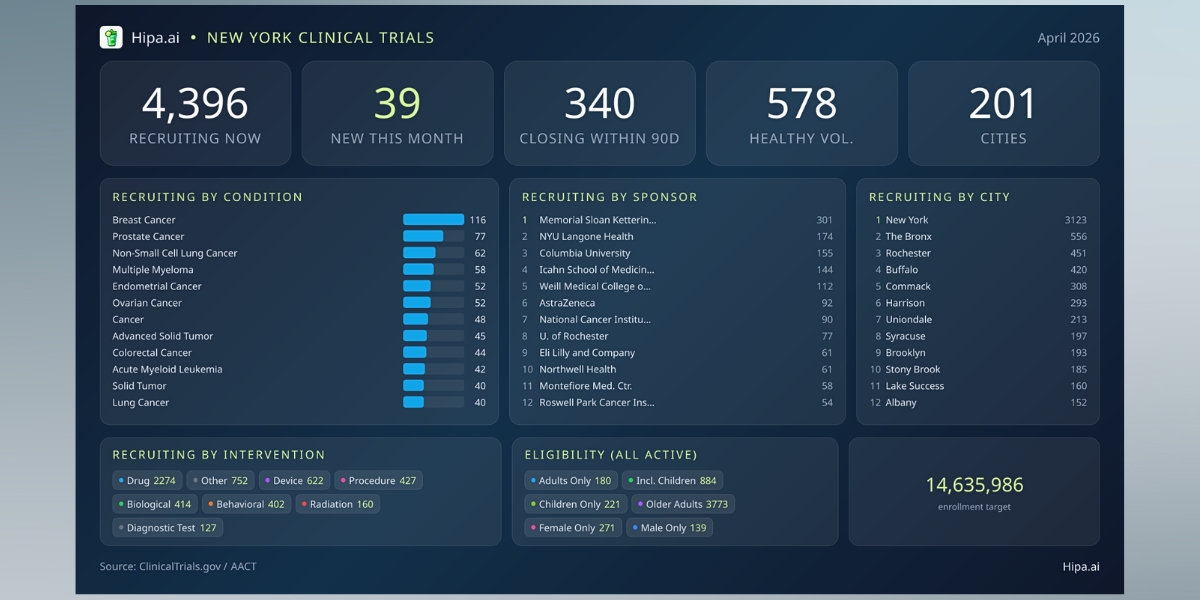
The state opened 39 new clinical trials in April. That is a slower month than March (70 new trials) and February (100), but the deeper story is in the design of those trials. Several were built specifically to lower the barriers that have historically kept New Yorkers from contributing to research: long commutes, multiple in-person visits, and narrow eligibility criteria.

If you want to see what is open near you right now, the Hipa.ai directory of clinical trials currently recruiting in New York City sorts active studies by condition, age, and healthy-volunteer eligibility, with breakouts for each borough.

When You Don’t Have to Leave Your Apartment to Be in a Study

The clearest example from April is the University of Rochester’s NCT07505162, a 1,000-person observational study of myotonic dystrophy that runs entirely from participants’ homes. Patients with myotonic dystrophy face muscle weakness, fatigue, and mobility challenges, exactly the kinds of issues that have historically excluded them from research that required regular clinic visits. A no-travel design opens the door for people who want to contribute but cannot regularly get to a research center.

Decentralized trial design is not new, but the volume is. According to CB Insights’ 2026 scouting report on AI in clinical development, more than 40% of the clinical research startups it tracks are now working on decentralized trials or real-world evidence collection. That shift is no longer just an industry conference talking point. It is appearing in the study protocols being filed at ClinicalTrials.gov, including the Rochester trial above.

For New Yorkers, the practical consequence is that the question “is there a trial open for my condition” no longer has to be paired with “and can I get there twice a week for six months.”

Where the Research Sits

The geographic concentration of New York’s clinical research is striking. Of the 39 new April trials, 26 launched in New York City itself, with smaller clusters on Long Island (Commack and Harrison with 5 each, Rockville Center and Uniondale with 2 each) and the outer boroughs (the Bronx 4, Brooklyn 3). Upstate sites added Rochester (3), Syracuse (2), and Dryden (1).

Across all 4,396 trials currently recruiting statewide, the bulk run at sites in or around the city. That density reflects the institutional cluster that defines New York medicine: Memorial Sloan Kettering Cancer Center, NYU Langone Health, Mount Sinai Health System, Weill Cornell Medicine, NewYork-Presbyterian, and Columbia University Irving Medical Center all run active research portfolios within a roughly fifteen-mile radius. For most New Yorkers, at least one of these institutions is reachable on a single subway or commuter rail trip.

Trials You Probably Don’t Hear About

A lot of what gets written about clinical trials in New York focuses on the headline oncology work happening at MSK and the Perlmutter Cancer Center at NYU Langone. April’s data shows a more diverse set of research underway.

Memorial Sloan Kettering itself is running a 750-participant Phase 3 trial (NCT07507942) testing whether a single dose of methylprednisolone administered before liver surgery reduces postoperative infections and shortens hospital stays. This is a pragmatic surgical question rather than a new-drug question, and a 750-person Phase 3 has the statistical weight to actually settle it.

Columbia University began a 500-participant project (NCT07517461) with a different goal entirely: reducing overuse of screening mammography in women aged 75 and older. The study does not test a treatment. It tests a multi-level intervention to change clinical practice patterns. It is one of the more interesting deimplementation studies open in the country right now and speaks to a less-visible side of clinical research: figuring out which existing practices should be scaled back.

On the metabolic side, Novo Nordisk launched parallel Phase 2 trials studying the same investigational compound in two different populations: 480 participants with both excess weight and Type 2 diabetes (NCT07531373, AMAZE 1) and 400 participants with excess weight and knee osteoarthritis (NCT07530937, AMAZE 4). Pairing one molecule with two distinct comorbidities is a way of asking whether the metabolic agent has effects that extend beyond glucose control.

How Compensation Actually Works

A practical note that often goes missing from coverage of clinical trials: most trials compensate participants for their time and travel, and the amount varies based on study design, time commitment, and the procedures involved. Healthy-volunteer studies tend to involve different structures than Phase 1 pharmacology trials, which require multiple overnight stays in a research unit. The exact compensation for any given trial is disclosed by the study team during the informed consent process.

Of the 39 new April trials, 11 are recruiting healthy volunteers, and 13 include older adults. Across all currently enrolling studies in New York, 578 are open to healthy volunteers. That is the broadest entry point for people without a specific diagnosis who want to contribute to medical research.

The Closing-Soon Window

For people who already have a diagnosis, the more time-sensitive number is on the other side of the ledger. 340 New York Medicaid plans are scheduled to stop accepting enrollees within the next 90 days. The largest closing-soon clusters by condition are breast cancer (12 trials), cancer (8), and glioblastoma (8), then a band of 4-trial groups including major depressive disorder, ovarian cancer, prostate cancer, pancreatic cancer, and Alzheimer’s disease. Mild cognitive impairment and lung cancer each have 3 trials reaching their close dates.

Trials often close enrollment earlier than the listed end date once recruitment quotas are met. A study listed as closing in 90 days can effectively close in weeks. For anyone who fits the eligibility criteria for one of these conditions, the time to actually apply is now, not later in the spring.

A More Compact City for Research

The story of April 2026 in New York’s clinical research is not really about volume. It is about how much more compact the on-ramp to participation has become. AI matching tools like Mount Sinai’s PRISM, remote-by-design protocols like the Rochester myotonic dystrophy study, and the broad institutional density of the city’s medical system have collectively turned what used to be a fragmented and somewhat opaque process into something a typical New Yorker can actually use. Hipa.ai publishes a refreshed New York report each month with updated condition splits, sponsor breakouts, and city-level trial counts.

Disclaimer: This article is for informational purposes only and does not constitute medical advice. Clinical trial participation involves potential risks and benefits that vary by study. Eligibility, procedures, and compensation are determined by each study’s sponsor and institutional review board, and full details are disclosed during the informed consent process. Readers considering enrollment should consult their healthcare provider and review the complete study protocol before making any decisions.

New York State Assembly Issues Official Proclamation and Certificate of Merit to Bass Guitarist Bassman Newaj

Recognition by Assemblywoman Jenifer Rajkumar Highlights Artistic Merit and Contributions to Performing Arts

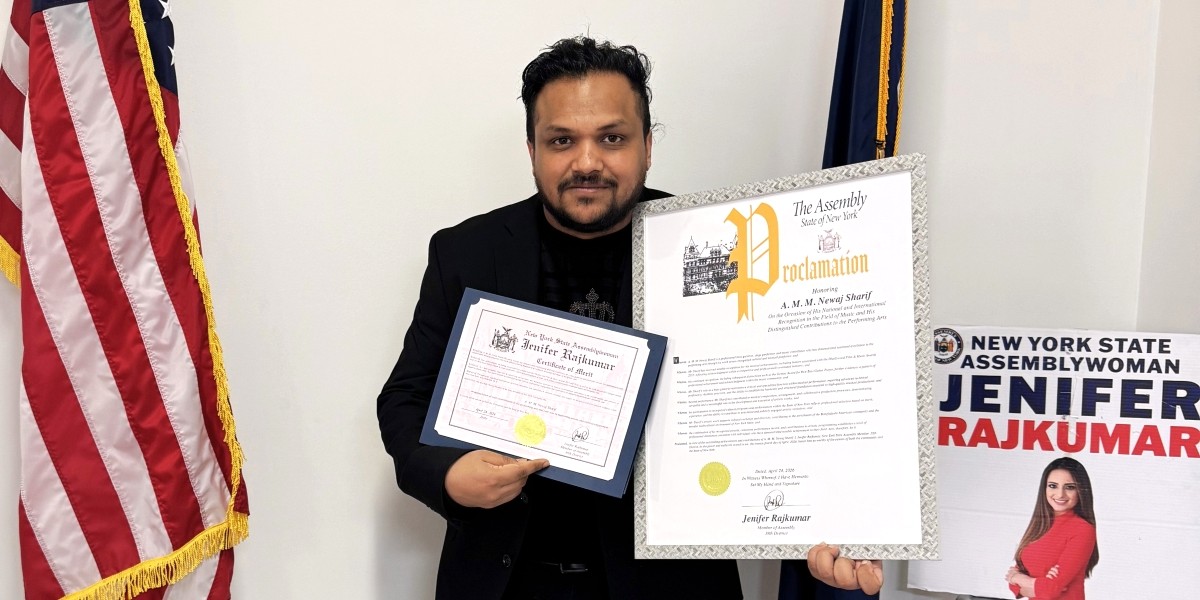
Bass guitarist and stage performer A M M Newaj Sharif, professionally known as Bassman Newaj, has received formal recognition from the New York State Assembly in the form of both an official Proclamation and a Certificate of Merit. The honors were presented in acknowledgment of his demonstrated excellence in musical performance and his contributions to the performing arts.

The recognition was conferred by Jenifer Rajkumar, a duly elected member of the New York State Assembly. Official Assembly recognitions are issued to individuals who have demonstrated notable achievement and contribution within their respective fields.

Photo Courtesy: Bassman Production

According to the official citation, Sharif was recognized for his consistent performance excellence, technical proficiency, and his role in advancing live and collaborative musical productions. The citation further acknowledges his discipline as a professional musician and his ongoing engagement in artistic work across international settings.

The Proclamation specifically notes the functional and structural importance of Sharif’s work as a bass guitarist. It highlights that his performances contribute directly to rhythmic integrity, harmonic structure, and overall musical cohesion—core elements that underpin professional live music production. This acknowledgment reflects an understanding of his role not merely as an accompanying musician, but as a contributing force within the musical framework.

Photo Courtesy: Bassman Production

In a formal statement accompanying the recognition, Assemblywoman Rajkumar noted that she had personally observed Sharif’s performances and recognized his professionalism, consistency, and the impact of his work on audiences in both artistic and cultural contexts.

This dual recognition from a legislative body represents a documented form of official acknowledgment at the state level, marking a significant development in Sharif’s professional trajectory within the United States.

Sharif’s prior recognitions include multiple industry awards such as the Dhallywood Film & Music Awards (2023, 2024), the NRB Award (2023), and the Gemini Award (2025), where he was recognized as Best Bass Guitar Player. These awards reflect a sustained record of achievement within the music industry.

In addition to performance, Sharif has been involved in international artistic collaboration and cultural exchange. His work spans live concerts, studio recordings, and cross-border musical projects, contributing to diverse and multicultural artistic environments.

The New York State Assembly recognition further acknowledges these contributions, particularly within the context of New York’s diverse cultural landscape. Such recognition underscores the role of performing artists in fostering cultural engagement and artistic collaboration at both local and international levels.

With this official acknowledgment, Bassman Newaj continues to expand his professional presence in the United States, supported by verifiable recognition, documented achievements, and an established record of work in the performing arts.

Are Relationships for Suckers? A Deep Dive Into Modern Love and Why People Get It Wrong

The Question Everyone Is Quietly Asking

More people than ever are questioning the value of relationships.

Are they worth the effort?
Why do they feel so difficult?
And perhaps most importantly, are relationships for suckers?

This question, once unthinkable, has become increasingly common.

The Real Problem Isn’t Love, It’s Our Expectations

According to Belle Gayer, the issue is not love itself, but the unrealistic expectations we attach to it.

For decades, society has conditioned us to believe that love should be:

  • Effortless
  • Intuitive
  • Constantly fulfilling
  • Free from struggle

But real relationships rarely look like that.

The Gap Between Fantasy and Reality

From romantic movies to curated social media posts, we are constantly exposed to idealized versions of love.

These narratives create a dangerous gap between expectation and reality.

When real relationships inevitably involve conflict, effort, and emotional work, people assume something is wrong and often walk away.

Love Is Not Something You Find It’s Something You Build

One of the most powerful ideas presented in Gayer’s work is this:

Love is not something you are. Love is something you do.

This simple shift transforms how we approach relationships.

Instead of searching endlessly for the “right person,” the focus shifts toward developing the skills required to sustain love.

The Four Pillars That Make Love Last

At the core of lasting relationships are four essential practices:

Communication

Clear, calm, and intentional conversations that prioritize understanding over winning.

Focus

Giving your relationship consistent attention in a world full of distractions.

Devotion

Choosing your partner repeatedly, even when emotions fluctuate.

Flexibility

Adapting to change, letting go of ego, and embracing compromise.

Why Relationships Fail

Most relationships don’t end because of one major event.

They fail slowly through:

  • Neglect
  • Miscommunication
  • Emotional distance
  • Lack of effort

These small breakdowns accumulate over time until the connection weakens beyond repair.

Reframing Conflict and Struggle

One of the most important insights is this:

Conflict is not failure.
It is part of the process.

Healthy relationships are not defined by the absence of problems, but by the ability to navigate them effectively.

The Truth About Lasting Love

Enduring love is not about perfection.

It is about:

  • Consistency
  • Effort
  • Emotional maturity
  • Willingness to grow

It is built in everyday moments not grand gestures.

So, Are Relationships for Suckers?

The answer is clear:

No but they are not for the unprepared.

Relationships require skill, patience, and intentional effort.

For those willing to invest in these qualities, they offer one of the most meaningful and rewarding experiences in life.

Galerie Gmurzynska Opens New Exhibition, “Pablo Picasso and Wifredo Lam”

By Bernard Clemens

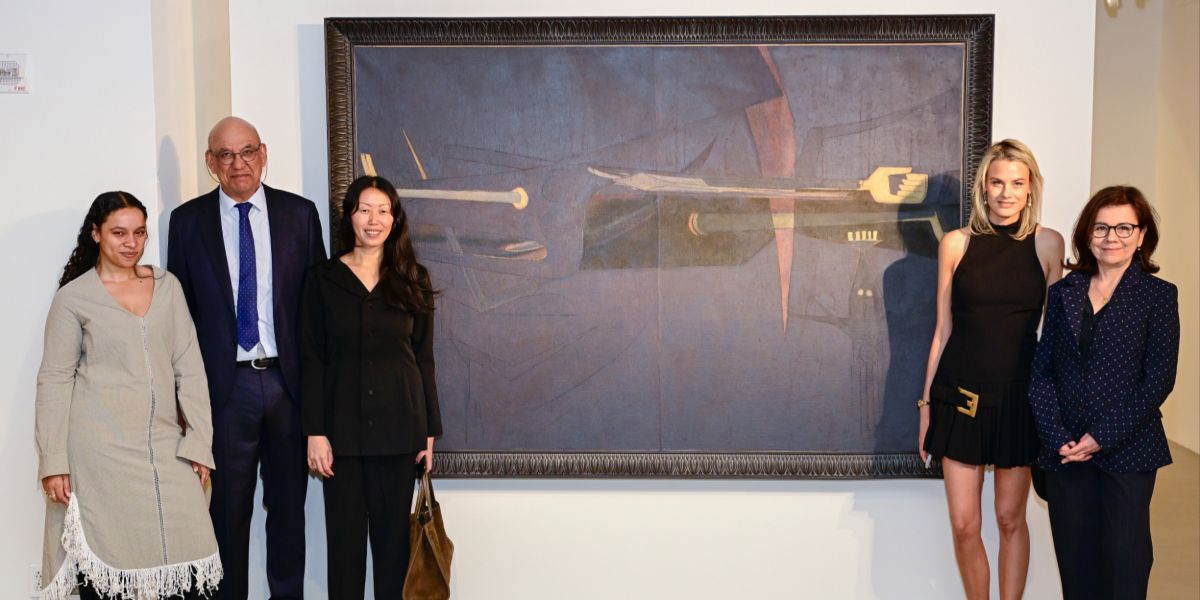
On April 22nd, Diana Picasso, Eskil Lam, Grace Hightower, Katherine Embiricos and Andrea Catsimatidis joined gallerist Isabelle Bscher to celebrate the opening of “Pablo Picasso and Wifredo Lam” at Galerie Gmurzynska in New York.

The “Pablo Picasso and Wifredo Lam” exhibition presents approximately 50 works spanning 1918 to 1978, including paintings, frescos, works on paper, collage, and ceramics. More than 150 friends, collectors, and art-world luminaries gathered in the expansive Fuller Building gallery space for a private reception and cocktail party to celebrate the opening. Guests included Galerie Gmurzynska co-owners Krystyna Gmurzynska and Mathias Rastorfer, Anna Alimani, Lucas Bscher, Janna Bullock, Bella Meyer, Chris Couri, Lucia Hwong Gordon, Margo Langenberg, Magnus Resch, and R. Couri Hay, among many more.

Midway through the evening, opening remarks were delivered by Eskil Lam, Wifredo’s son, and Rachel Scott, Creative Director of Diotima and Proenza Schouler. Scott spoke about the inspiration behind her latest Lam-inspired collection and invited guests to explore key looks on view at the gallery.

Picasso and Lam first met in Paris in May 1938, an encounter that proved foundational for both, and developed into a deep, lifelong friendship. Picasso introduced Lam to the Paris avant-garde, fostering a style blending Cubism, Surrealism, and Santería symbolism. Between 1940 and 1946, Picasso and Lam regularly exhibited together at the Pierre Matisse Gallery, New York, in the Fuller Building, the very same space where Galerie Gmurzynska brings the two artists back into conversation. The last time the duo was exhibited exclusively together was in 1939 at the Perls Gallery in New York, Lam’s first showing in America. Galerie Gmurzynska’s exhibition follows the finissage of the Museum of Modern Art’s highly lauded solo retrospective, “Wifredo Lam: When I Don’t Sleep, I Dream,” bringing some of Lam’s works previously exhibited at the MoMA on display alongside Picasso’s. Among the collection are a rare Étude pour La Jungle (1943) and other masterpieces from Lam’s estate, including part of his indigenous art collection, as well as two of Picasso’s rare frescos from his 1918 honeymoon in Biarritz and works engaging in his lifelong interest in African Art, such as Animaux naturels (Art Primitifs) from 1943. The exhibition will be open through June 2026.

About Galerie Gmurzynska

Established in 1965, Galerie Gmurzynska has been for over three generations a gallery for 20th-century masters with a strong focus on in-depth research. Known for its uniquely curated exhibitions, the gallery has published over 300 art-historically recognized books and collaborated with the world’s leading museums and scholars. Representing and working with important 20th-century artist estates such as Yves Klein, Louise Nevelson, Wifredo Lam, Roberto Matta, and Miro, Galerie Gmurzynska has its primary gallery locations in Zurich and New York.

The gallery was founded in 1965 in Cologne, Germany, by Antonina Gmurzynska. From the beginning, the gallery was interested in organizing exhibitions with a historical documentary character through exhibited works and accompanying publications. Up until 1971, the gallery’s program focused on Surrealism, Constructivism, and the Russian Avant-garde. Subsequently, classical modern with a special focus on Picasso, Kurt Schwitters, Fernand Léger, Lyonel Feininger, and Robert and Sonia Delaunay were incorporated into the gallery’s program. From 1986, Krystyna Gmurzynska continued expanding the gallery’s classic modern program, and in 1991, the Cologne building, the ‘Red Cube,’ designed by Roger Diener, was inaugurated. 40 years after its establishment, the gallery relocated from Cologne to its new flagship location in Zurich’s Paradeplatz in 2005, on the same block in which the Dada movement was founded in 1917. The Paradeplatz gallery hosts the final interior architectural project of Zaha Hadid, conceived for the DADA centennial in 2016 for a major Kurt Schwitters retrospective.

Galerie Gmurzynska is located at 595 Madison Avenue, Suite 607, New York, NY 10022 and is open Monday through Friday from 10 AM – 6 PM. For more information on the gallery, its artists, and activities, please visit Galerie Gmurzynska

Sensory and Social Choices for Autistic Individuals

It’s important to recognize that each autistic individual experiences sensory input differently. Because of this variability, environments should offer meaningful choices, both in sensory experiences and social engagement.

It is equally important to allow individuals enough time to process these choices in a pressure-free, judgment-free setting.

As one autistic adult described a common experience:

“When I go shopping… it feels like I’m being rushed or pushed into trying to finish tasks” (MacLennan et al., 2023).

Providing choice and reducing pressure can significantly improve comfort, participation, and overall experience.

Providing Different Sensory Options

The most effective environments are flexible enough to accommodate a range of sensory preferences for both autistic and non-autistic individuals.

For instance, a 2024 study looked at multi-sensory rooms featuring motor skill interventions. They found that adapting the sensory experience led to fewer situations of sensory overload, along with fewer “defensive sensory behaviors” (De Domenico et al., 2024). Researchers came to the conclusion that building a better learning environment and improving engagement were possible through customization.

Additional research in healthcare settings shows similar benefits. In one study, pre-operative patients were provided with adaptive sensory environments (ASEs), which included personalized adjustments to lighting, seating, colors, and sensory tools. Autistic patients in these environments experienced significantly lower anxiety compared to those in standard hospital settings (Antosh et al., 2024).

While these findings are promising, further research is needed to determine which specific design elements are most effective.

The Role of Social Choices

Social demands add a layer of complexity for many autistic individuals, especially when paired with sensory challenges. This experience was described by a student: “You can’t separate the social problems from sensory problems because if you’re already stressed out because of a social situation, you’re going to be more susceptible to sensory overload” (Clément et al., 2022).

Offering choice in social interaction can improve quality of life. For example, clearly mapping out areas for smaller group interactions of two to three people, or to enjoy individually, is important. A designer’s forethought to include easy-to-follow paths inside large gathering spaces can be a benefit for all individuals, not just those who are neurodiverse.

Dividing environments such as classrooms and playgrounds into optimized zones allows for varying levels of social intensity. Offering visual support to communicate each zone’s purpose further enhances usability. Research also suggests providing a clear and immediate path to a quiet or low-stimulation area when entering a new space (Tola et al., 2021).

Offering Various Hour Choices

There are two different ways to provide support for sensory and social challenges. First, updating your building to be an autism-friendly space. Secondly, setting aside a specific time frame when sensory input isn’t as high. Certain venues have leaned into this by revealing what days and times they tend to be the busiest. Other venues have gone as far as creating apps so anyone can check the number of visitors at any given time.

The Dallas Museum of Art offers assigned Sensory Days. During these special events, the museum opens two hours early and caps attendance at 500 visitors. Family members can learn about the available activities in advance, which helps them plan when to arrive. Nearby university occupational therapy students are also available during Sensory Days to offer support when needed.

What Does Your Community Need?

Not every autistic person has a formal diagnosis, nor do they necessarily need one. Interview-based assessments like the MIGDAS-2 can provide a well-rounded profile of needs and strengths. And adaptive behavior assessments like the ABAS-3 can help with areas like personal safety and navigation. While assessments help immensely with identifying traits, many neurodiverse people already know what they need to thrive.

This means actively gathering input from participants and using it to guide improvements when creating autism-friendly spaces.

Organizations can collect feedback by:

  • Asking for input as visitors leave
  • Sending follow-up emails or QR code surveys
  • Hosting community workshops
  • Distributing pre- or post-event surveys

While no one can completely control an environment, thoughtful design and responsive processes can ensure that individuals have meaningful choices.

Creating inclusive spaces ultimately comes down to this: supporting participation by offering flexibility, predictability, and respect for individual needs. To truly value each person’s participation requires options, after all.

Disclaimer: This article is for informational and educational purposes only and is not intended as a substitute for professional medical, psychological, or clinical advice. Individual experiences with autism and sensory processing vary, and the strategies and research findings discussed may not apply to every person or situation. Clinical assessments referenced in this article are designed for use by qualified professionals and require appropriate credentials to administer and interpret. Readers seeking diagnosis, treatment, or personalized guidance should consult a licensed healthcare provider, psychologist, or other qualified specialist.

What Sets LEVEL8 Apart From Other Luggage Brands in 2026

When people search for the best luggage, brands like Samsonite, Away, and BÉIS are usually part of the conversation. They have built strong reputations over time. But as travel habits have changed, so have expectations, and that has opened the door for brands like LEVEL8 to approach things differently.

LEVEL8 takes a more practical direction, focusing on how luggage performs during real travel instead of just how it looks or reads on paper.

Take the Adventurer series, for example. Instead of a traditional clamshell opening, it uses a front-opening design that makes it easier to access items quickly, even in tight spaces. That becomes useful in airports, hotel rooms, or anywhere you do not have room to fully open a suitcase. It also keeps packing more structured and accessible.

Then there is the Hegent series, which takes a different approach to construction. Many suitcases rely on standard zipper systems, but Hegent moves away from that with a zipperless design that adds structure and security. It gives the case a more solid feel and reduces the weak points that can wear over time, especially with frequent travel.

On the higher end, the Gibraltar series pushes even further into durability and build quality. While most luggage in the market uses plastic-based shells, Gibraltar uses aluminum, which is built for strength and long-term use. It offers a different type of durability that is better suited for travelers who want something that can handle repeated handling and rough conditions without losing structure.

Across all three, there is a consistent focus on materials. LEVEL8 uses German Makrolon polycarbonate in its hard-shell models, which is designed to stay lightweight while still absorbing impact. This balance matters more in real travel than it does on a spec sheet, especially when luggage is constantly being lifted, rolled, and handled.

Another difference shows up in how space is used. Instead of relying on traditional handle designs that take up room inside the suitcase, LEVEL8 uses a wider handle structure that allows for a flatter packing area. This creates more usable space without changing the overall size of the carry-on.

Mobility is also handled with consistency in mind. Many suitcases offer spinner wheels, but LEVEL8 focuses on keeping movement smooth and stable even when fully packed. That becomes noticeable in crowded airports, train stations, and uneven streets where control matters more than speed.

What ultimately separates LEVEL8 is not one feature or one model. It is how each series addresses a different type of traveler while still keeping the same core priorities: durability, usability, and consistency.

From Waste to Impact: How Indonesian Youth Redefined Innovation on the Global Stage

New York City, April 2026 – At the Javits Center, where thousands of young entrepreneurs gathered for the Youth Business Summit 2026, the atmosphere was charged with ambition. Startups from around the world competed for attention with bold concepts, polished presentations, and scalable visions. Yet amid the noise of innovation and competition, one team distinguished itself not by volume, but by authenticity, clarity, and human connection.

Representing Indonesia, Team Biru emerged as one of the summit’s most compelling participants, earning Gold for Best Booth and Silver for Best Sales Pitch. Their achievement was not only a testament to their product but to their ability to communicate purpose in a way that resonated across cultures. At the center of this success was Sabine Tesla Amadine, Chief Operating Officer of Team Biru, whose presence transformed a business presentation into a deeply human experience.

Team Biru’s concept addressed a global issue with local roots: plastic pollution. Indonesia, home to some of the world’s most breathtaking coastlines, also faces significant environmental challenges related to waste. Drawing inspiration from this reality, the team developed eco-friendly tumblers made from recycled plastic collected from Indonesian beaches. Their project aligned with the United Nations Sustainable Development Goal 14, Life Below Water, emphasizing both environmental responsibility and long-term sustainability.

However, what set Team Biru apart was not just the product itself, but the way it was presented. Their booth was designed as an interactive, educational space that invited visitors to engage, ask questions, and understand the journey behind the product. Rather than overwhelming audiences with technical details, the team focused on storytelling, a strategic decision that proved to be one of their strongest advantages. They simplified complex environmental issues into relatable narratives, making their message accessible to a global audience.

Sabine played a critical role in shaping this experience. As visitors approached the booth, they were not met with a rehearsed pitch, but with genuine warmth. She greeted each person with ease, creating an atmosphere where conversations felt natural rather than transactional. This subtle shift, from selling a product to building a connection, had a powerful impact. Visitors stayed longer, asked deeper questions, and left with more than just information; they left with a sense of emotional involvement.

Observers noted that in a space filled with impressive innovations, it was Sabine’s kindness that lingered. Her approach demonstrated that leadership is not only about strategy and execution, but also about empathy and presence. By treating each interaction as meaningful, she elevated the entire experience around her.

This human-centered approach extended beyond the booth. Behind the scenes, Sabine’s leadership was instrumental in coordinating a diverse and high-performing team. Working alongside CEO Kezia Semarya, CTO Latisha Dinda, and a multidisciplinary group spanning finance, product development, marketing, and operations, she ensured seamless collaboration in a high-pressure international environment. Her leadership style balanced structure with empathy, fostering both discipline and trust within the team.

Photo Courtesy: Sabine Tesla Amadine / Team Biru

Team Biru’s success also reflected a broader narrative about the role of youth in shaping global innovation. Indonesia’s delegation, which included multiple teams, showcased the country’s growing influence in the entrepreneurial ecosystem. Yet Team Biru stood out for revealing something deeper, that innovation is not only about solving problems, but about how those solutions are communicated and experienced.

As the summit concluded, awards were distributed, photos were taken, and achievements were celebrated. But for many who visited Team Biru’s booth, the lasting impression went beyond medals or metrics. It was the feeling of being genuinely welcomed, of being included in a story that mattered.

In a world increasingly driven by competition and performance, Team Biru offered a different perspective. They demonstrated that the most powerful impact often begins with something simple: a sincere interaction, a clear message, and a purpose that people can believe in. Their project proved that products created from waste can carry not only functional value, but also emotional and cultural significance.

Sabine Tesla Amadine embodied this philosophy throughout the summit. She did not just present a product, she created a space where people could connect, reflect, and engage. In doing so, she redefined what effective leadership looks like on a global stage.

Ultimately, Team Biru’s journey is a reminder that innovation is not solely about technology or scalability. It is about perspective, storytelling, and the ability to translate ideas into experiences that resonate. By combining environmental awareness with human connection, they transformed a simple concept into a powerful narrative of change.

And in that moment, Indonesia did more than win awards, it captured attention, built bridges, and left a lasting impression on the world stage.

The Power of Acupuncture in Enhancing Athletic Performance

In the fast-paced world of sports, the pressure to perform can often create a daunting psychological burden on athletes. While physical training is crucial for success, the mental aspect of performance can either elevate or diminish results. Competitive anxiety, a common challenge for athletes, can hinder focus, coordination, and decision-making. But what if there was a holistic approach that could help athletes manage their anxiety and improve their performance?

This is where acupuncture, a centuries-old practice from Traditional Chinese Medicine (TCM), comes into play. Recently, acupuncture has been gaining recognition in the field of sports medicine, particularly for its ability to reduce anxiety and regulate emotional and physiological responses. Dr. Lisette Chalbaud’s groundbreaking book, Acupuncture and Its Effects on Sports Performance Anxiety: A Literature Review of Physiological Markers in Human and Animal Subjects, explores the mechanisms underlying acupuncture’s effectiveness, supported by scientific evidence and clinical studies.

Understanding Competitive Anxiety and Its Impact on Performance

Competitive anxiety is a multifaceted condition that affects athletes on both psychological and physiological levels. From the pre-competition jitters to the heightened stress during a match, anxiety can impair concentration, disrupt coordination, and even lead to performance breakdowns. According to Dr. Chalbaud, anxiety is often categorized into cognitive and somatic components. Cognitive anxiety refers to the mental stress, negative thoughts, and self-doubt, while somatic anxiety manifests in physical symptoms such as increased heart rate, muscle tension, and sweating.

Athletes often experience a reciprocal relationship between cognitive and somatic anxiety. Negative thinking amplifies physical stress, and the physical symptoms of anxiety, such as a racing heart, fuel mental distress. This complex interaction can severely impact an athlete’s performance and overall well-being.

Acupuncture: A Modern Solution to Age-Old Problems

Dr. Chalbaud’s research suggests that acupuncture can play a significant role in mitigating the effects of competitive anxiety. By targeting specific acupuncture points, this therapy stimulates the body’s natural ability to balance the autonomic nervous system. This results in a reduction in sympathetic nervous system activation, the part of the body responsible for the fight-or-flight response.

One of the most remarkable findings of acupuncture’s role in anxiety management is its ability to regulate neurotransmitters such as serotonin, dopamine, and GABA. These chemical messengers play a vital role in mood regulation and emotional well-being. When these neurotransmitters are in balance, athletes are better equipped to handle the stress of competition without compromising their performance.

Biological Markers: Objective Evidence of Acupuncture’s Effectiveness

Unlike other treatments for anxiety, acupuncture provides measurable physiological changes that indicate its effectiveness. Dr. Chalbaud’s book delves into studies that analyze heart rate variability, skin conductance, cortisol levels, and brain activation patterns before and after acupuncture treatments. These biological markers offer emerging evidence that acupuncture may reduce anxiety and support athletic performance.

For instance, heart rate variability (HRV) is a key indicator of an athlete’s ability to recover from stress. Higher HRV correlates with better stress adaptation and improved performance. Through acupuncture, athletes can increase their HRV, ensuring their bodies are in optimal condition to handle the physical and emotional demands of competition.

Integrating Acupuncture with Traditional Anxiety Management Approaches

While acupuncture is an excellent complementary treatment for competitive anxiety, it does not replace conventional methods such as cognitive behavioral therapy (CBT), relaxation techniques, or pharmacological interventions. Instead, acupuncture enhances these traditional approaches by directly influencing the body’s neurochemical pathways and restoring balance.

Dr. Chalbaud emphasizes that acupuncture’s unique approach makes it an invaluable tool for athletes seeking to enhance their mental preparation without compromising their physical capabilities. It allows athletes to manage anxiety in a way that is both natural and effective, offering a holistic solution that aligns with the growing trend of integrative medicine.

Practical Applications for Athletes and Practitioners

As Dr. Chalbaud suggests, the integration of acupuncture into sports medicine is not just a theoretical concept but a practical and evidence-based approach that athletes can adopt. Through a combination of point selection strategies, session duration, and frequency, acupuncture can be tailored to suit the individual needs of athletes. Moreover, its integration into sports training schedules ensures that athletes receive the most benefit during crucial moments of competition.

The growing body of evidence supporting acupuncture as a treatment for competitive anxiety is paving the way for its inclusion in mainstream sports medicine. For coaches, sports psychologists, and athletes alike, Dr. Chalbaud’s research provides a comprehensive framework for understanding how acupuncture can improve both emotional regulation and physical performance.

A New Era in Performance Enhancement

Dr. Lisette Chalbaud’s work is a call to action for athletes and practitioners to consider acupuncture as a legitimate and valuable intervention in the fight against competitive anxiety. As sports medicine continues to evolve, acupuncture offers a promising avenue for athletes to unlock their full potential, not just through physical training, but through the mastery of emotional balance.

To learn more about the profound impact of acupuncture on competitive anxiety and how it can transform athletic performance, read Acupuncture and Its Effects on Sports Performance Anxiety by Dr. Lisette Chalbaud.

Disclaimer: This article is for informational purposes only and does not constitute medical advice, diagnosis, or treatment. Acupuncture results may vary, and individuals should consult a qualified healthcare provider before beginning any new treatment.

Defying Tradition and Family Pressure: A Woman’s Courageous Escape from Forced Marriage in ‘Cost of My Freedom’

On a seemingly ordinary Wednesday morning at exactly seven o’clock, a 28-year-old college lecturer and clinic owner stepped out of her family home with nothing more than a familiar backpack slung over her shoulder. To her parents and siblings, it looked like just another workday. In reality, it was the beginning of a meticulously planned act of defiance, a daring escape from a forced marriage she had refused to accept, from relentless community expectations, and from years of emotional and physical coercion.

This gripping moment opens Pinky Ravi Kadur’s powerful memoir Cost of My Freedom. The household had already been heavy with disappointment for two weeks following the birth of her younger sister’s third daughter. In the author’s conservative community, sons were celebrated with sweets and fanfare, while daughters were mourned “like small deaths.” Her mother’s exhausted silence spoke volumes, and the author knew her own departure would add yet another layer of grief to a home already drowning in unspoken sorrow.

“I left on a Wednesday morning at seven o’clock, backpack slung over my shoulder, like I was going to work,” she writes. “Because that’s exactly what my family thought I was doing.”

Inside the backpack were the quiet symbols of the independence she had built: her professional certificates, ₹50,000 earned through her own labor at the college and clinic, a small gold chain, and the finger rings her father had once given her freely before marriage became a transaction defined by duty and shame. A farewell letter, rewritten multiple times, lay hidden in her wardrobe: “By the time you read this, I’ll be gone. I’m sorry. Please don’t look for me. I love you all.”

The memoir walks readers through every step of the escape with vivid, sensory detail. She walked past the usual bus stop, boarded a different bus to the railway station, bought a one-way ticket to Mysuru, and settled into a train compartment where ordinary passengers had no idea a life was being irrevocably remade. Familiar landmarks the temple her mother visited every Tuesday, the market, the clinic slipped away like threads being cut. Thirteen hours of invisibility stretched before her family would discover the letter and realize she was gone.

Yet the narrative never romanticizes the choice. “The betrayal of it sat in my chest like a stone, growing heavier with every step I took away from home away from their disappointment in my sister’s daughters, away from the husband I’d never chosen, away from my mother’s exhaustion and my father’s fists, toward a life they would never understand or forgive,” the author confesses.

Cost of My Freedom is both an intimate personal testimony and a broader social critique. It examines son preference, the emotional labor demanded of daughters, the limits of education and financial independence in patriarchal settings, and the heavy psychological toll of breaking free. Through unflinching honesty and vivid prose, Kadur transforms private family pain into a universal story of courage, guilt, and the true cost of autonomy in modern India.

The book refuses to offer easy answers. Instead, it asks readers to sit with the complexity: the love that both protects and constrains, the guilt that shadows even the happiest moments, and the quiet strength required to choose oneself when the price is paid in broken relationships.

Cost of My Freedom by Pinky Ravi Kadur is a landmark memoir that resonates far beyond one woman’s experience. It shines a necessary light on the persistent realities of forced marriages and the immense emotional cost many Indian women still pay for asserting their right to choose.

The book Cost of My Freedom by Pinky Ravi Kadur is available on Amazon: https://a.co/d/0gfrLQV3

Duma Boko Appoints Aviation Executive Demetrios Bradshaw as Advisor

By: Luca Rubino

The Aeras Aviation CEO is the first foreign national appointed to the role, as Botswana seeks private-sector expertise to modernize its aviation sector.

When Botswana’s president, Duma Boko, appointed Demetrios Bradshaw as Special Advisor on Aviation in March, the decision underscored a broader shift: governments are increasingly turning to industry operators, rather than career policymakers, to shape strategy in complex sectors.

Mr. Bradshaw, chief executive of Aeras Aviation, becomes the first foreign national to hold the advisory role. His mandate includes advising the Office of the President on international aviation partnerships, investment strategy, and infrastructure development, areas seen as critical to Botswana’s long-term economic positioning.

The appointment comes as countries across Africa compete to modernize aviation infrastructure and capture a larger share of regional and intercontinental air traffic. For Botswana, a nation of roughly 2.6 million people, the challenge is less about scale than strategic positioning.

Mr. Bradshaw brings more than a decade of experience in the aviation aftermarket, a segment that has taken on increased importance as airlines contend with aging fleets and constrained engine supply. Before founding Aeras Aviation in 2017, he held senior commercial roles at 3TOP Aviation Services, focusing on engine trading and lifecycle management.

His company has since expanded across three key nodes of global aviation logistics: Dubai, Cardiff, and Miami, each serving a distinct function within international supply chains, from engine storage and trading to rapid deployment of components across airline networks.

“The aviation sector is increasingly tied to economic leverage,” Mr. Bradshaw said in a recent interview. “Infrastructure decisions made today will determine how countries participate in global trade tomorrow.”

Aeras Aviation specializes in sourcing and managing end-of-life aircraft engines, extracting serviceable components for reuse across airline and maintenance networks. The model has gained traction as supply-chain disruptions and production delays continue to limit the availability of new equipment.

Mr. Bradshaw’s ties to Botswana predate the advisory role. He serves on the board of Air Botswana, the country’s national carrier, providing insight into operational constraints and growth opportunities within the region.

His appointment reflects a broader trend of governments seeking practitioners who can translate market realities into policy. In aviation, where capital intensity and technical complexity often outpace regulatory frameworks, that shift is becoming more pronounced.

For Botswana, the move signals an effort to accelerate development and attract foreign investment into its aviation ecosystem. For Mr. Bradshaw, it represents a step beyond private enterprise into national-level strategy.

As pressure builds on global fleets and demand for air travel continues to recover, the alignment between government ambition and industry execution is likely to become a defining feature of the next phase of aviation growth.