From Waste to Impact: How Indonesian Youth Redefined Innovation on the Global Stage

New York City, April 2026 – At the Javits Center, where thousands of young entrepreneurs gathered for the Youth Business Summit 2026, the atmosphere was charged with ambition. Startups from around the world competed for attention with bold concepts, polished presentations, and scalable visions. Yet amid the noise of innovation and competition, one team distinguished itself not by volume, but by authenticity, clarity, and human connection.

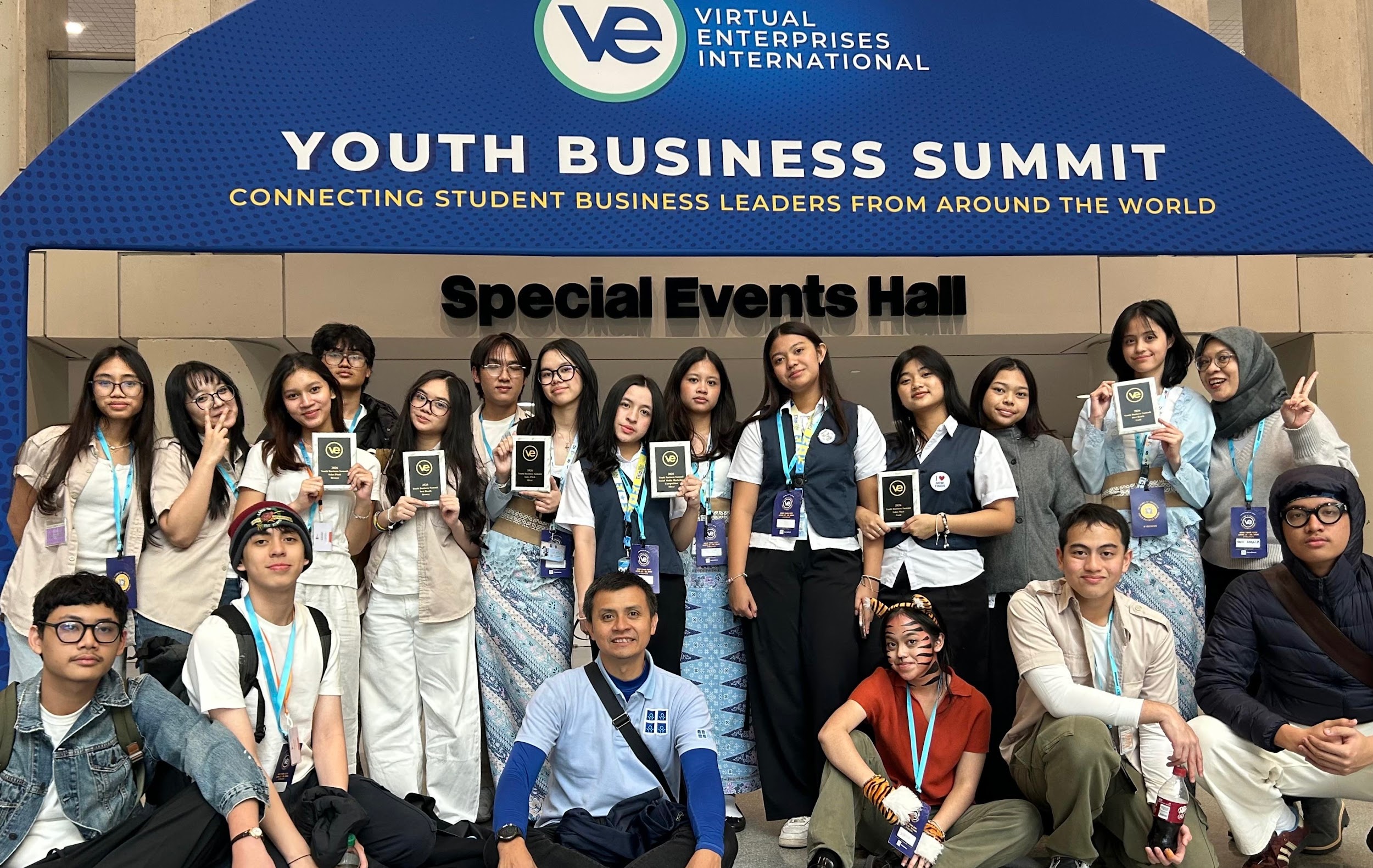
Representing Indonesia, Team Biru emerged as one of the summit’s most compelling participants, earning Gold for Best Booth and Silver for Best Sales Pitch. Their achievement was not only a testament to their product but to their ability to communicate purpose in a way that resonated across cultures. At the center of this success was Sabine Tesla Amadine, Chief Operating Officer of Team Biru, whose presence transformed a business presentation into a deeply human experience.

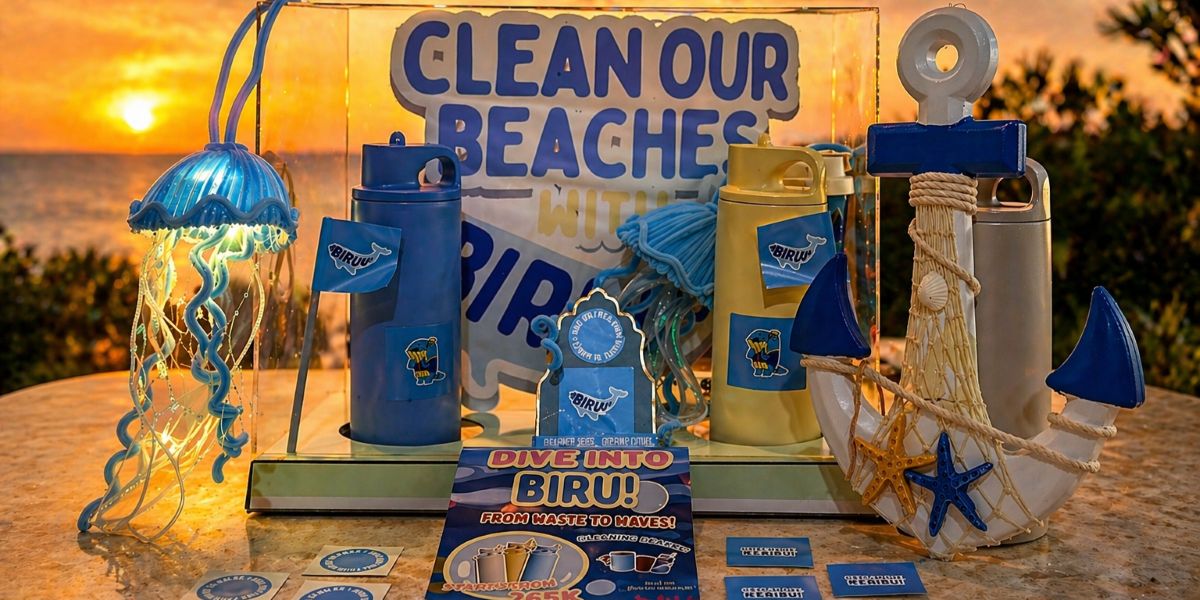
Team Biru’s concept addressed a global issue with local roots: plastic pollution. Indonesia, home to some of the world’s most breathtaking coastlines, also faces significant environmental challenges related to waste. Drawing inspiration from this reality, the team developed eco-friendly tumblers made from recycled plastic collected from Indonesian beaches. Their project aligned with the United Nations Sustainable Development Goal 14, Life Below Water, emphasizing both environmental responsibility and long-term sustainability.

However, what set Team Biru apart was not just the product itself, but the way it was presented. Their booth was designed as an interactive, educational space that invited visitors to engage, ask questions, and understand the journey behind the product. Rather than overwhelming audiences with technical details, the team focused on storytelling, a strategic decision that proved to be one of their strongest advantages. They simplified complex environmental issues into relatable narratives, making their message accessible to a global audience.

Sabine played a critical role in shaping this experience. As visitors approached the booth, they were not met with a rehearsed pitch, but with genuine warmth. She greeted each person with ease, creating an atmosphere where conversations felt natural rather than transactional. This subtle shift, from selling a product to building a connection, had a powerful impact. Visitors stayed longer, asked deeper questions, and left with more than just information; they left with a sense of emotional involvement.

Observers noted that in a space filled with impressive innovations, it was Sabine’s kindness that lingered. Her approach demonstrated that leadership is not only about strategy and execution, but also about empathy and presence. By treating each interaction as meaningful, she elevated the entire experience around her.

This human-centered approach extended beyond the booth. Behind the scenes, Sabine’s leadership was instrumental in coordinating a diverse and high-performing team. Working alongside CEO Kezia Semarya, CTO Latisha Dinda, and a multidisciplinary group spanning finance, product development, marketing, and operations, she ensured seamless collaboration in a high-pressure international environment. Her leadership style balanced structure with empathy, fostering both discipline and trust within the team.

Photo Courtesy: Sabine Tesla Amadine / Team Biru

Team Biru’s success also reflected a broader narrative about the role of youth in shaping global innovation. Indonesia’s delegation, which included multiple teams, showcased the country’s growing influence in the entrepreneurial ecosystem. Yet Team Biru stood out for revealing something deeper, that innovation is not only about solving problems, but about how those solutions are communicated and experienced.

As the summit concluded, awards were distributed, photos were taken, and achievements were celebrated. But for many who visited Team Biru’s booth, the lasting impression went beyond medals or metrics. It was the feeling of being genuinely welcomed, of being included in a story that mattered.

In a world increasingly driven by competition and performance, Team Biru offered a different perspective. They demonstrated that the most powerful impact often begins with something simple: a sincere interaction, a clear message, and a purpose that people can believe in. Their project proved that products created from waste can carry not only functional value, but also emotional and cultural significance.

Sabine Tesla Amadine embodied this philosophy throughout the summit. She did not just present a product, she created a space where people could connect, reflect, and engage. In doing so, she redefined what effective leadership looks like on a global stage.

Ultimately, Team Biru’s journey is a reminder that innovation is not solely about technology or scalability. It is about perspective, storytelling, and the ability to translate ideas into experiences that resonate. By combining environmental awareness with human connection, they transformed a simple concept into a powerful narrative of change.

And in that moment, Indonesia did more than win awards, it captured attention, built bridges, and left a lasting impression on the world stage.

The Power of Acupuncture in Enhancing Athletic Performance

In the fast-paced world of sports, the pressure to perform can often create a daunting psychological burden on athletes. While physical training is crucial for success, the mental aspect of performance can either elevate or diminish results. Competitive anxiety, a common challenge for athletes, can hinder focus, coordination, and decision-making. But what if there was a holistic approach that could help athletes manage their anxiety and improve their performance?

This is where acupuncture, a centuries-old practice from Traditional Chinese Medicine (TCM), comes into play. Recently, acupuncture has been gaining recognition in the field of sports medicine, particularly for its ability to reduce anxiety and regulate emotional and physiological responses. Dr. Lisette Chalbaud’s groundbreaking book, Acupuncture and Its Effects on Sports Performance Anxiety: A Literature Review of Physiological Markers in Human and Animal Subjects, explores the mechanisms underlying acupuncture’s effectiveness, supported by scientific evidence and clinical studies.

Understanding Competitive Anxiety and Its Impact on Performance

Competitive anxiety is a multifaceted condition that affects athletes on both psychological and physiological levels. From the pre-competition jitters to the heightened stress during a match, anxiety can impair concentration, disrupt coordination, and even lead to performance breakdowns. According to Dr. Chalbaud, anxiety is often categorized into cognitive and somatic components. Cognitive anxiety refers to the mental stress, negative thoughts, and self-doubt, while somatic anxiety manifests in physical symptoms such as increased heart rate, muscle tension, and sweating.

Athletes often experience a reciprocal relationship between cognitive and somatic anxiety. Negative thinking amplifies physical stress, and the physical symptoms of anxiety, such as a racing heart, fuel mental distress. This complex interaction can severely impact an athlete’s performance and overall well-being.

Acupuncture: A Modern Solution to Age-Old Problems

Dr. Chalbaud’s research suggests that acupuncture can play a significant role in mitigating the effects of competitive anxiety. By targeting specific acupuncture points, this therapy stimulates the body’s natural ability to balance the autonomic nervous system. This results in a reduction in sympathetic nervous system activation, the part of the body responsible for the fight-or-flight response.

One of the most remarkable findings of acupuncture’s role in anxiety management is its ability to regulate neurotransmitters such as serotonin, dopamine, and GABA. These chemical messengers play a vital role in mood regulation and emotional well-being. When these neurotransmitters are in balance, athletes are better equipped to handle the stress of competition without compromising their performance.

Biological Markers: Objective Evidence of Acupuncture’s Effectiveness

Unlike other treatments for anxiety, acupuncture provides measurable physiological changes that indicate its effectiveness. Dr. Chalbaud’s book delves into studies that analyze heart rate variability, skin conductance, cortisol levels, and brain activation patterns before and after acupuncture treatments. These biological markers offer emerging evidence that acupuncture may reduce anxiety and support athletic performance.

For instance, heart rate variability (HRV) is a key indicator of an athlete’s ability to recover from stress. Higher HRV correlates with better stress adaptation and improved performance. Through acupuncture, athletes can increase their HRV, ensuring their bodies are in optimal condition to handle the physical and emotional demands of competition.

Integrating Acupuncture with Traditional Anxiety Management Approaches

While acupuncture is an excellent complementary treatment for competitive anxiety, it does not replace conventional methods such as cognitive behavioral therapy (CBT), relaxation techniques, or pharmacological interventions. Instead, acupuncture enhances these traditional approaches by directly influencing the body’s neurochemical pathways and restoring balance.

Dr. Chalbaud emphasizes that acupuncture’s unique approach makes it an invaluable tool for athletes seeking to enhance their mental preparation without compromising their physical capabilities. It allows athletes to manage anxiety in a way that is both natural and effective, offering a holistic solution that aligns with the growing trend of integrative medicine.

Practical Applications for Athletes and Practitioners

As Dr. Chalbaud suggests, the integration of acupuncture into sports medicine is not just a theoretical concept but a practical and evidence-based approach that athletes can adopt. Through a combination of point selection strategies, session duration, and frequency, acupuncture can be tailored to suit the individual needs of athletes. Moreover, its integration into sports training schedules ensures that athletes receive the most benefit during crucial moments of competition.

The growing body of evidence supporting acupuncture as a treatment for competitive anxiety is paving the way for its inclusion in mainstream sports medicine. For coaches, sports psychologists, and athletes alike, Dr. Chalbaud’s research provides a comprehensive framework for understanding how acupuncture can improve both emotional regulation and physical performance.

A New Era in Performance Enhancement

Dr. Lisette Chalbaud’s work is a call to action for athletes and practitioners to consider acupuncture as a legitimate and valuable intervention in the fight against competitive anxiety. As sports medicine continues to evolve, acupuncture offers a promising avenue for athletes to unlock their full potential, not just through physical training, but through the mastery of emotional balance.

To learn more about the profound impact of acupuncture on competitive anxiety and how it can transform athletic performance, read Acupuncture and Its Effects on Sports Performance Anxiety by Dr. Lisette Chalbaud.

Disclaimer: This article is for informational purposes only and does not constitute medical advice, diagnosis, or treatment. Acupuncture results may vary, and individuals should consult a qualified healthcare provider before beginning any new treatment.

Defying Tradition and Family Pressure: A Woman’s Courageous Escape from Forced Marriage in ‘Cost of My Freedom’

On a seemingly ordinary Wednesday morning at exactly seven o’clock, a 28-year-old college lecturer and clinic owner stepped out of her family home with nothing more than a familiar backpack slung over her shoulder. To her parents and siblings, it looked like just another workday. In reality, it was the beginning of a meticulously planned act of defiance, a daring escape from a forced marriage she had refused to accept, from relentless community expectations, and from years of emotional and physical coercion.

This gripping moment opens Pinky Ravi Kadur’s powerful memoir Cost of My Freedom. The household had already been heavy with disappointment for two weeks following the birth of her younger sister’s third daughter. In the author’s conservative community, sons were celebrated with sweets and fanfare, while daughters were mourned “like small deaths.” Her mother’s exhausted silence spoke volumes, and the author knew her own departure would add yet another layer of grief to a home already drowning in unspoken sorrow.

“I left on a Wednesday morning at seven o’clock, backpack slung over my shoulder, like I was going to work,” she writes. “Because that’s exactly what my family thought I was doing.”

Inside the backpack were the quiet symbols of the independence she had built: her professional certificates, ₹50,000 earned through her own labor at the college and clinic, a small gold chain, and the finger rings her father had once given her freely before marriage became a transaction defined by duty and shame. A farewell letter, rewritten multiple times, lay hidden in her wardrobe: “By the time you read this, I’ll be gone. I’m sorry. Please don’t look for me. I love you all.”

The memoir walks readers through every step of the escape with vivid, sensory detail. She walked past the usual bus stop, boarded a different bus to the railway station, bought a one-way ticket to Mysuru, and settled into a train compartment where ordinary passengers had no idea a life was being irrevocably remade. Familiar landmarks the temple her mother visited every Tuesday, the market, the clinic slipped away like threads being cut. Thirteen hours of invisibility stretched before her family would discover the letter and realize she was gone.

Yet the narrative never romanticizes the choice. “The betrayal of it sat in my chest like a stone, growing heavier with every step I took away from home away from their disappointment in my sister’s daughters, away from the husband I’d never chosen, away from my mother’s exhaustion and my father’s fists, toward a life they would never understand or forgive,” the author confesses.

Cost of My Freedom is both an intimate personal testimony and a broader social critique. It examines son preference, the emotional labor demanded of daughters, the limits of education and financial independence in patriarchal settings, and the heavy psychological toll of breaking free. Through unflinching honesty and vivid prose, Kadur transforms private family pain into a universal story of courage, guilt, and the true cost of autonomy in modern India.

The book refuses to offer easy answers. Instead, it asks readers to sit with the complexity: the love that both protects and constrains, the guilt that shadows even the happiest moments, and the quiet strength required to choose oneself when the price is paid in broken relationships.

Cost of My Freedom by Pinky Ravi Kadur is a landmark memoir that resonates far beyond one woman’s experience. It shines a necessary light on the persistent realities of forced marriages and the immense emotional cost many Indian women still pay for asserting their right to choose.

The book Cost of My Freedom by Pinky Ravi Kadur is available on Amazon: https://a.co/d/0gfrLQV3

Botswana President Duma Boko Appoints Aviation Executive Demetrios Bradshaw as Advisor

The Aeras Aviation CEO is the first foreign national appointed to the role, as Botswana seeks private-sector expertise to modernize its aviation sector.

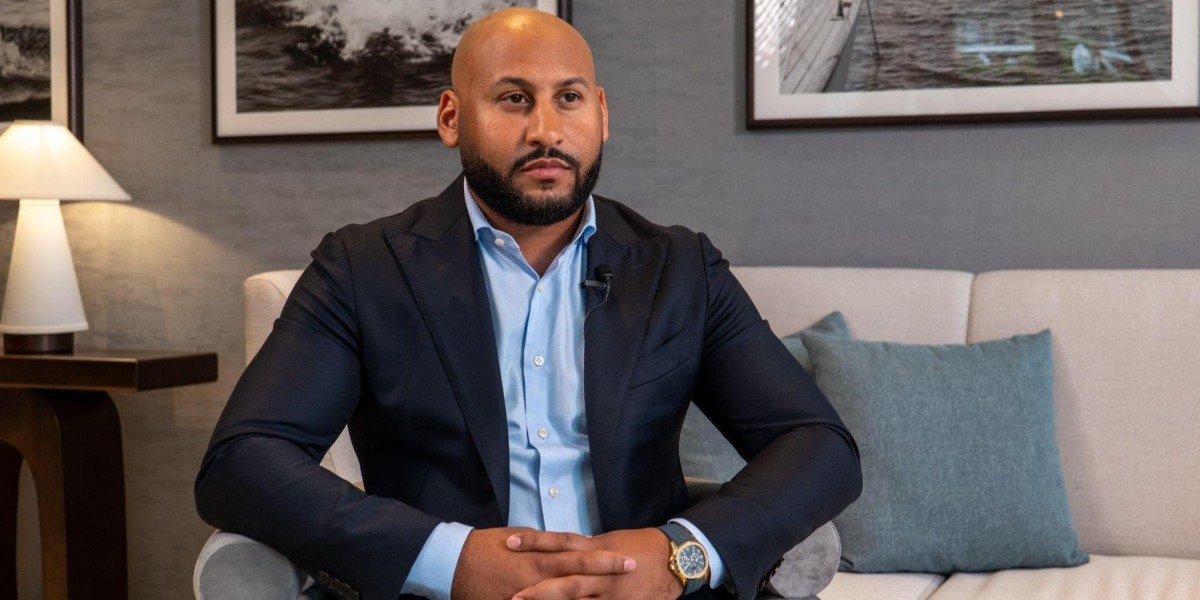
When Botswana’s president, Duma Boko, appointed Demetrios Bradshaw as Special Advisor on Aviation in March, the decision underscored a broader shift: governments are increasingly turning to industry operators, rather than career policymakers, to shape strategy in complex sectors.

Mr. Bradshaw, chief executive of Aeras Aviation, becomes the first foreign national to hold the advisory role. His mandate includes advising the Office of the President on international aviation partnerships, investment strategy, and infrastructure development, areas seen as critical to Botswana’s long-term economic positioning.

The appointment comes as countries across Africa compete to modernize aviation infrastructure and capture a larger share of regional and intercontinental air traffic. For Botswana, a nation of roughly 2.6 million people, the challenge is less about scale than strategic positioning.

Mr. Bradshaw brings more than a decade of experience in the aviation aftermarket, a segment that has taken on increased importance as airlines contend with aging fleets and constrained engine supply. Before founding Aeras Aviation in 2017, he held senior commercial roles at 3TOP Aviation Services, focusing on engine trading and lifecycle management.

His company has since expanded across three key nodes of global aviation logistics: Dubai, Cardiff, and Miami, each serving a distinct function within international supply chains, from engine storage and trading to rapid deployment of components across airline networks.

“The aviation sector is increasingly tied to economic leverage,” Mr. Bradshaw said in a recent interview. “Infrastructure decisions made today will determine how countries participate in global trade tomorrow.”

Aeras Aviation specializes in sourcing and managing end-of-life aircraft engines, extracting serviceable components for reuse across airline and maintenance networks. The model has gained traction as supply-chain disruptions and production delays continue to limit the availability of new equipment.

Mr. Bradshaw’s ties to Botswana predate the advisory role. He serves on the board of Air Botswana, the country’s national carrier, providing insight into operational constraints and growth opportunities within the region.

His appointment reflects a broader trend of governments seeking practitioners who can translate market realities into policy. In aviation, where capital intensity and technical complexity often outpace regulatory frameworks, that shift is becoming more pronounced.

For Botswana, the move signals an effort to accelerate development and attract foreign investment into its aviation ecosystem. For Mr. Bradshaw, it represents a step beyond private enterprise into national-level strategy.

As pressure builds on global fleets and demand for air travel continues to recover, the alignment between government ambition and industry execution is likely to become a defining feature of the next phase of aviation growth.

How Richardson, TX-Based DTF Dallas Is Meeting the Demand for Same-Day Custom Printing

By: Shumaila Malik

As demand for fast, small-batch custom apparel continues to grow across the Dallas-Fort Worth area, a Richardson, TX-based print operation has built its model specifically around what local businesses and brands need most: same-day production with no minimum order requirements. DTF Dallas, located at 903 N Bowser Rd, Suite 250, Richardson, TX 75081, provides Direct-to-Film transfer printing and custom apparel services to customers across the DFW market. The company operates seven days a week and produces what it describes as 80,000 inches of transfers daily, positioning itself as a high-volume local alternative to national print-on-demand platforms.

What DTF Dallas Does

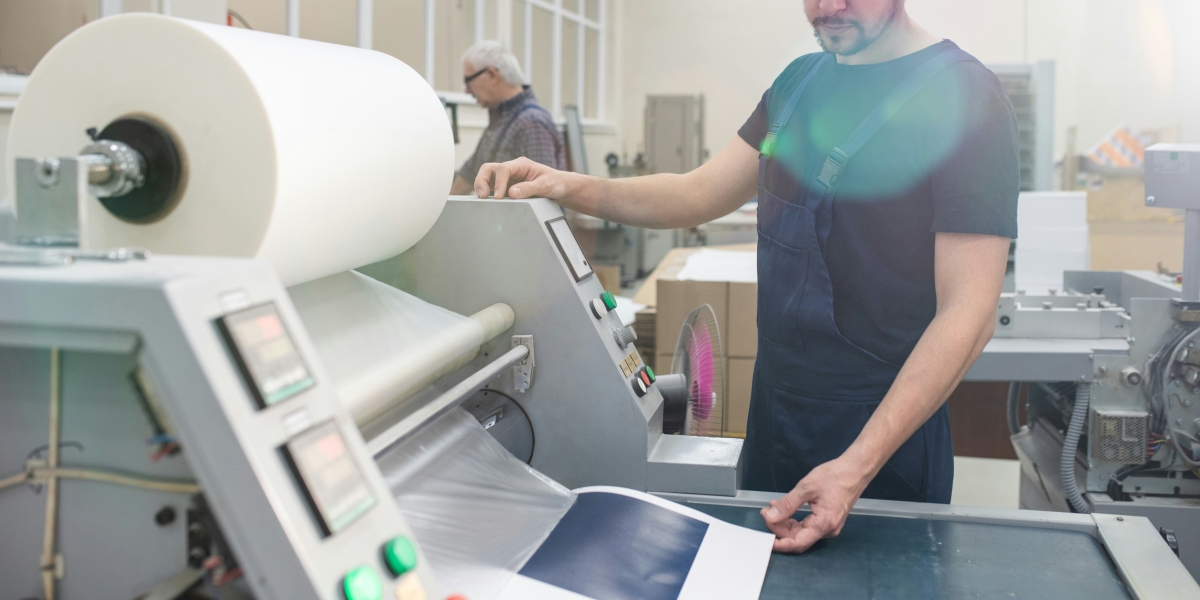
DTF Dallas’s core service is the production of Direct-to-Film heat transfers, a printing format where customer artwork is output onto PET film with a heat-activated adhesive backing, producing a press-ready transfer that can be applied to virtually any fabric via heat press. The shop offers DTF transfers in custom sizes and as gang sheets, a format where multiple designs are printed together on a single sheet of film, reducing cost per transfer for customers with multiple designs. UV DTF, a complementary format for hard surfaces such as ceramics and glass, is also offered alongside standard fabric transfers.

Beyond transfers, the company produces finished custom apparel (shirts, hoodies, hats, and tote bags) on premium blanks and maintains a catalog of wholesale blanks for customers who press their own transfers.

Who They Serve

The customer base spans a broad range of use cases common across the DFW market. Small businesses ordering staff uniforms in quantities of 12-24 pieces, restaurants kitting out new locations, event organizers sourcing shirts for fundraisers and community events, schools and sports teams ordering seasonal gear, and boutique apparel brands testing small drops before committing to larger production runs.

The no-minimum model is central to the operation’s appeal for this customer base. Businesses that need 6 shirts for a new hire group or event organizers who finalized a design the week of an event are the orders that most screen printing shops decline or quote with a minimum charge. DTF Dallas fulfills them at standard pricing.

The Same-Day Differentiator

Same-day turnaround is the operational capability that most directly distinguishes the local DTF shop model from national print-on-demand services. Platforms like Printful and Printify ship from centralized fulfillment warehouses, typically delivering in 5-10 business days after production. For a business in Richardson or Plano that needs shirts before the end of the week, that timeline doesn’t work.

DTF Dallas accepts orders for same-day production and offers local pickup, meaning customers in the DFW market can submit artwork in the morning and have finished transfers or decorated garments the same afternoon. The company operates Monday through Friday, 8 AM to 7 PM, and Saturday and Sunday, 8 AM to 6 PM, for staffed service. Order pickup is available 24/7 via an automated system outside regular business hours, giving customers flexibility with their schedules. More information is available at the DTF Dallas website.

Growing local demand for on-demand custom apparel production reflects a broader shift in how businesses across major US markets manage branded merchandise. The ability to produce small quantities on short notice, without minimum orders or extended lead times, has become an operational expectation for a segment of the market that the traditional screen printing model was never designed to serve efficiently.

Custom Jersey Printing in New Jersey Is Having a Moment

By: Shumaila Malik

Walk into any youth sports league in New Jersey this season, and you’ll find custom jerseys that didn’t come from a long production run. Smaller teams, tighter budgets, faster turnaround, and the results look just as good as what you’d have gotten from a traditional uniform supplier six years ago.

That’s not a coincidence. The economics of custom jersey printing in NJ have changed, and the businesses, schools, and community organizations ordering custom apparel are noticing.

What’s Driving the Change

Traditional jersey production, sublimation, screen printing, and embroidery all operate on the same basic constraint: scale. Setup costs are fixed regardless of how many units you produce. A custom jersey design that costs $150 to set up for screen printing makes financial sense at 100 jerseys. At 15, it doesn’t.

New Jersey’s sports leagues, school programs, and community organizations mostly operate at the 15-to-50 jersey scale. That’s where the traditional model has always been painful.

Direct-to-Film (DTF) printing has removed that constraint. DTF produces transfers, full-color, wash-resistant designs on film that get heat-pressed onto garments individually. No setup cost per color. No minimum order. A team of 12 gets 12 jerseys. A school club with 22 members gets 22 shirts.

The Local Supplier Advantage

For NJ organizations, having a regional supplier matters. Custom jersey printing in New Jersey through a local DTF supplier means orders placed in the morning can ship the same day and arrive the next business day.

Compare that to traditional uniform suppliers who quote 2-3-week production windows, or national online custom apparel companies where the standard turnaround is 7-10 business days. For a youth sports coach who realized Thursday that the season starts Saturday, same-day shipping is the only option that actually helps.

DTF Jersey operates out of New Jersey and ships same day on qualifying orders. They serve the full NJ market, from the shore communities to the northern suburbs to the urban centers. Their New York City page also covers the metro area just across the state line.

What Organizations Are Actually Ordering

Youth sports teams are the most visible use case. Baseball, soccer, basketball, lacrosse, every season brings another round of team jersey needs. DTF transfers on blank dry-fit shirts have become a standard approach for rec leagues that can’t justify the cost of embroidered or sublimated jerseys.

School programs use it for clubs, academic teams, and class shirts. A robotics club with 18 members doesn’t have the budget for screen-printed minimums. A graduating class ordering senior shirts wants them in two weeks, not six.

Community organizations, churches, nonprofit groups, and local charities use it for fundraising shirts, volunteer uniforms, and event apparel. Small quantities, specific deadlines, no room for large inventory commitments.

Local businesses use it for staff uniforms when their team is 8 people, not 80. A restaurant ordering shirts for a new hire won’t wait three weeks and order a case of 48.

The Quality Standard

One shift that’s helped DTF gain acceptance in the jersey market is the improvement in output quality. The concern that transfer-based printing looks cheaper than screen printing or embroidery has largely been addressed.

DTF produces full-color prints with sharp edges and vibrant colors that survive 50+ wash cycles without cracking or fading when applied correctly. The white underbase layer means designs look correct on dark-colored jerseys, navy, black, and charcoal, without the dull appearance that plagues some other transfer methods.

For organizations that care about how their jerseys look on the field or in photos, the quality is no longer a reason to look elsewhere.

What to Look for in a Jersey Printer

For NJ organizations evaluating custom jersey options, a few practical points:

Turnaround time is everything. A supplier who advertises fast turnaround but processes orders over 2-3 days isn’t fast. Ask specifically: if I place an order at 9 am, when does it ship?

No minimum requirements. Any supplier requiring a 24-piece minimum for custom jerseys is not set up to handle how NJ leagues and organizations actually operate.

Sample before committing. Before ordering 40 jerseys for a team, order one. Check the color accuracy, feel, and edge sharpness. Most good DTF suppliers will accept a single-unit order.

Full-color support. Logos with multiple colors, gradients, or complex artwork should be quoted the same as a simple two-color design. If a supplier charges per color, that’s a screen printing model, not DTF.

The custom jersey market in New Jersey is more accessible than it’s ever been. The barrier of large minimum orders is gone. The production timeline has compressed from weeks to days. For teams, clubs, and organizations that need custom apparel that looks good and arrives on time, the options have genuinely improved.