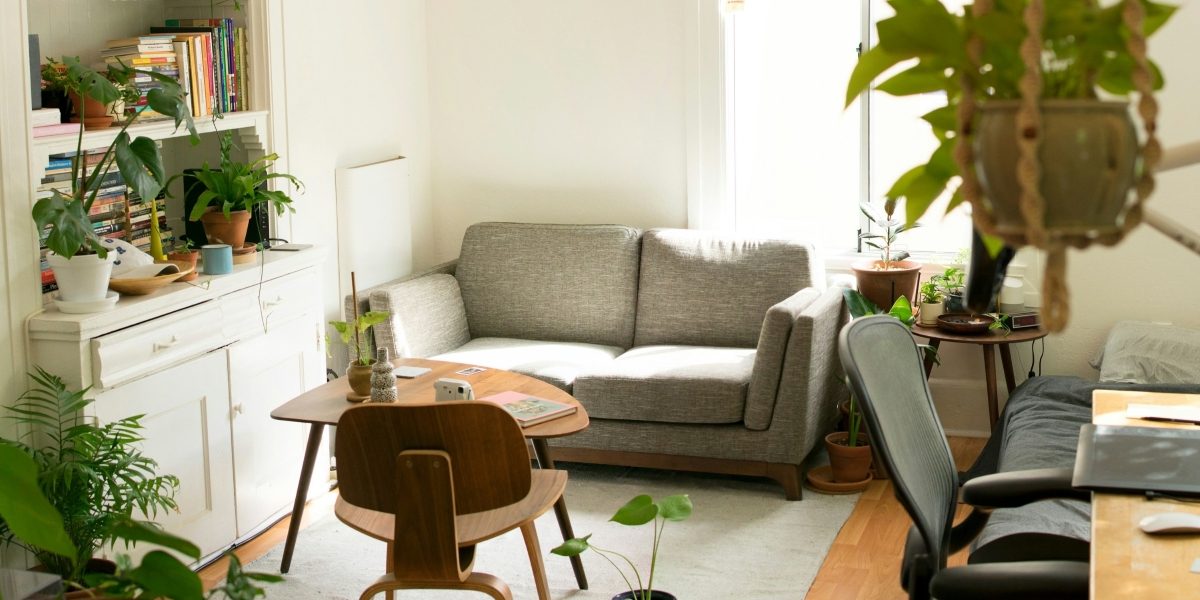


Renting a smaller place used to be a temporary fix until something bigger and better came along. That’s changed. With Brisbane now the second most expensive capital city in the country and rents still climbing in Sydney and Melbourne, apartment living isn’t a stopgap anymore. It’s just how a lot of Australians live.
The good news is that most people adapt to the small space quickly. Living in a smaller space forces you to make decisions you wouldn’t in a bigger house. You start to be more selective, focusing on what you actually use, rather than holding onto things out of habit. When it’s done well, a compact apartment doesn’t feel like a downgrade. It’s just a different way of living with different priorities.
This guide covers how to make small apartments more liveable: storage, furniture, layout, and a few things most people living in small homes never think of.
A Different Relationship with Things
Most people think living in a small space is about fitting everything in. In reality, it changes how people live.
With less room to work with, Australians are becoming more selective about what they keep. It’s not out of choosing to live the minimalist lifestyle, but out of necessity. The question goes from “where can this go?” to “do I actually need this at all?” A 3-seater sofa becomes a 2-seater. A full dining table becomes something smaller, or disappears completely. Extra appliances, spare linens, and clothes that rarely get worn stop getting bought.
Over time, those small decisions add up. Homes feel less cluttered. There’s also less to clean and organise.
Getting Stuff out of the House
One thing that doesn’t get mentioned enough is external storage. In high-density cities like Sydney or Melbourne, services like Melbourne storage have become a normal part of how people manage their space.
There’s no spare room or garage to put all your snow gear, winter jackets, sports equipment, or boxes from childhood. Moving them out to a secure storage unit gives you back room you can actually use.
Furniture that Does more than One Thing
Inside a small home, furniture is usually used for multiple purposes. For example, you can have beds with built-in storage, fold-out desks, or extendable dining tables. These aren’t niche products anymore. They’re standard in apartments where the dining room is also the home office, or even sometimes the guest room.
The design has gotten better too. The stuff available now doesn’t look like you’re trying to get more for less, it looks like something you’d buy anyway.
Walls Are Storage Too
In most small homes, your best bet is to use the wall space as storage. Floating shelves, wall-mounted desks, and pegboards in the kitchen are smart ways to place your things. You don’t have to use shelves or drawers that take up all the floor space. If you get the right racks, in the right places, for the right things, you can add some personality to your home too.
Keeping on Top of Things
Clutter tends to creep up on you. A useful habit a lot of people have landed on is the “one in, one out” rule. Whenever something new comes in, something old goes out. You’ll find you tend to buy less because you feel bad throwing so many things away.
If you use this rule, but have things that are too valuable to throw away, you can always find local storage options to give them a home. It’s a good middle ground between holding onto things and throwing them away.
Light and Layout
Sheer curtains and mirrors can do a lot to add space in smaller homes. They bring natural light in, making your home look bigger and more inviting. Open floor plans and keeping your furniture away from windows will make the room feel less boxed in. The goal is flow, not just floor space.
The Outdoor Extension
Australians are good at using outdoor space. Even a small balcony or courtyard can function as an extension of the living area if it’s set up properly. Get a few plants and a couple of small, weatherproof seats, and you have an extra living room. It doesn’t need to be elaborate. It just needs to be usable.
Appliances and Digital Clutter
Combination washer-dryers and slimline dishwashers are great in smaller laundries and kitchens, and they’ve improved a lot over the past few years. Beyond appliances, moving documents and photos to cloud storage removes a surprising amount of physical bulk.
Buying Less, but Better
Smaller homes don’t have room for impulse buys or duplicates. That tends to push people toward buying fewer things, but spending more on each one. It’s becoming more popular to rent or borrow items that you only use a couple times a year, like certain tools, camping equipment, or event furniture, instead of spending money and space buying them.
Shared Amenities Fill the Gaps
In apartment buildings, shared gyms, co-working spaces, and communal storage areas reduce the pressure on individual units. You don’t need a home gym if there’s one in the building. These amenities aren’t new, but people are actually using them now in ways they didn’t when they had more room to spread out.
What it Comes Down to
Smaller homes work best when you stop treating them like a scaled-down version of a big one. The people who find them comfortable tend to be the ones who’ve rethought what they actually need at home, not the ones who’ve just crammed stuff into less space. You may have limited space, but there are lots of solutions.