
By: Dr. Bruce Mark, DC | Hollywood Laser Pain Center | Hollywood, Florida
Non-surgical Class IV laser therapy and spinal decompression are drug-free options often considered for patients with herniated discs, sciatica, degenerative disc disease, and chronic nerve pain. These treatments are typically described as non-invasive and outpatient in nature, in contrast to spinal fusion, which generally requires 6 to 12 weeks of restricted movement followed by months of physical therapy.
Conservative disc care is generally considered most relevant before spinal fusion is performed. After fusion, the formation of scar tissue can limit the range of non-surgical approaches available. For patients weighing their options, evaluating conservative care before any irreversible procedure is often part of a thorough decision-making process.
At Hollywood Laser Pain Center on Polk Street in Hollywood, Florida, I have worked with disc and nerve pain patients across Broward County for more than 27 years. Many of those patients arrived without having been introduced to the range of conservative options that are designed to address tissue-level factors in disc and nerve pain.
What Does a Herniated Disc Actually Do to the Body?
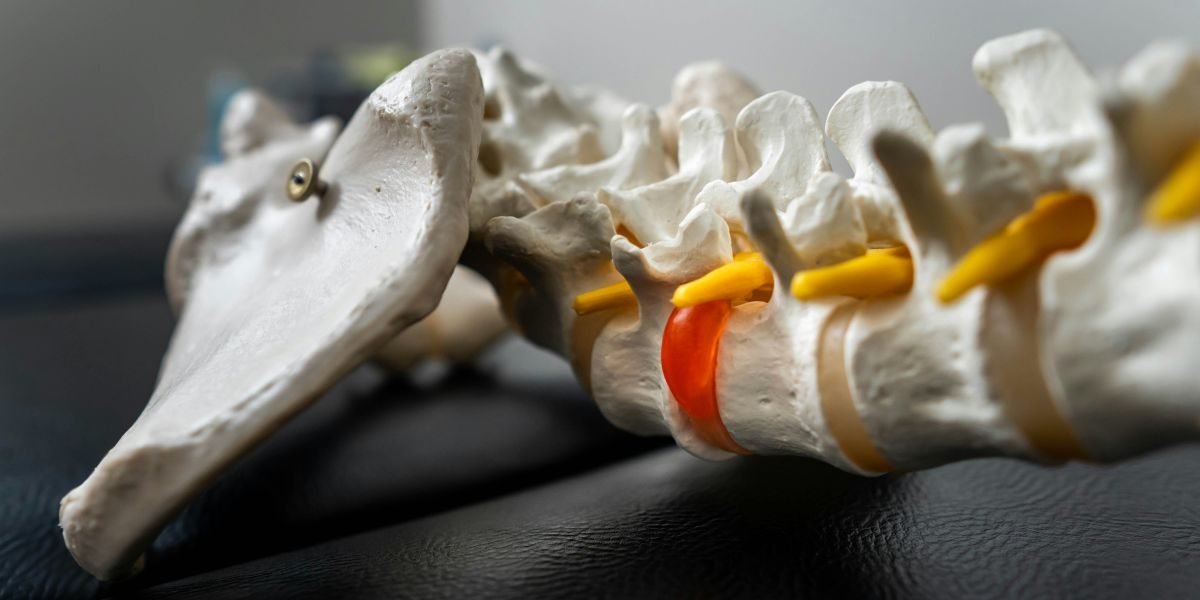
The intervertebral disc is composed of a tough outer ring, the annulus fibrosus, and a gel-like inner core called the nucleus pulposus. When the annulus weakens or cracks under repetitive stress or sudden load, the nucleus pushes through, compressing adjacent nerve roots. The result is the radiating pain, numbness, and weakness that disc patients describe as the most disruptive pain they have ever experienced.
According to the American Academy of Orthopaedic Surgeons, lumbar disc herniations are among the most common causes of low back and leg pain, with an estimated 5 to 20 cases per 1,000 adults annually. The L4-L5 and L5-S1 levels account for the vast majority of clinically significant lumbar herniations. Cervical herniations at C5-C6 and C6-C7 produce the arm pain, hand tingling, and grip weakness that are frequently misattributed to shoulder or elbow conditions.
A 2018 review in the Journal of Pain Research found that leaked nucleus pulposus material triggers a significant immune-mediated inflammatory response that amplifies nerve pain independently of mechanical compression, which is one reason rest and anti-inflammatory medications alone often produce only limited relief.
Why Are So Many Disc Patients in Hollywood Still in Pain?
The standard medical response to disc herniation (NSAIDs, muscle relaxants, physical therapy, and epidural steroid injections) addresses certain aspects of the clinical picture but does not always address all of them. A 2014 Cochrane Review found that epidural corticosteroid injections provided only modest, short-term relief for radiculopathy, with no significant benefit at 12 months.
Strengthening exercises cannot decompress a nerve root that is mechanically compressed by herniated disc material, and medications can suppress pain signals without changing the underlying disc anatomy. For many patients in Broward County who have cycled through the standard sequence without lasting resolution, structurally focused approaches are one of the options worth considering.
What Is Class IV Laser Therapy and How Does It Work at the Tissue Level?
Class IV laser therapy is an FDA-cleared treatment that uses medical-grade near-infrared laser energy. The technology is designed to deliver light energy into deeper tissue layers, including disc, nerve root, and paraspinal musculature, at depths that surface-level modalities are not designed to reach. At Hollywood Laser Pain Center, we use this technology as part of our overall approach to disc and nerve pain care.
The therapy works through photobiomodulation, a biological process in which cellular mitochondria absorb light energy and activate the body’s natural healing cascade. This process is associated with increased ATP production, reduced inflammatory cytokines, and accelerated tissue repair. A 2017 systematic review in Lasers in Medical Science confirmed that photobiomodulation produces measurable reductions in inflammatory cytokines, increases in cellular ATP production, and accelerated tissue repair in musculoskeletal conditions. The treatment itself is non-invasive. It does not involve injections or incisions, and patients typically describe only a mild warming sensation during sessions.
What Does Graston Technique Add to Disc and Nerve Pain Care?
Graston Technique (instrument-assisted soft tissue mobilization) is a clinical tool used in our practice to address paraspinal and gluteal muscular restrictions that often develop in response to disc-related pain. When a disc herniates and creates nerve compression, the surrounding musculature responds protectively: tightening, guarding, and developing areas of fascial adhesion that, if untreated, maintain the mechanical compression on the affected segment long after the initial injury.
When applied as part of a broader care plan, Graston Technique is designed to release these soft tissue restrictions and help reduce secondary compressive loading on the affected segment. This addresses a dimension of disc care that laser therapy on its own is not designed to reach.
What Does the Research Say About Non-Surgical Disc Care Outcomes?
A study published in the Journal of Physical Therapy Science found that patients receiving spinal decompression therapy showed significant improvements in pain scores and functional disability compared to controls. Research in Photomedicine and Laser Surgery has documented improvements in nerve conduction and pain reduction in patients receiving Class IV laser therapy for nerve-related pain conditions.
For patients who have not responded to conventional conservative care, and who are facing a recommendation for surgery, these published findings represent one additional pathway worth discussing with a qualified provider before any irreversible procedure is scheduled.
What Patients Should Know Before Spinal Surgery
Back surgery is irreversible. The North American Spine Society estimates that failed back surgery syndrome affects 10 to 40 percent of spinal surgery patients, producing persistent or recurrent pain that is often more complex to treat than the original condition.
Non-surgical approaches do not carry the risks specific to spinal surgery, and they tend to remain most useful before fusion has occurred. After fusion, scar tissue formation can narrow the range of conservative interventions available.
Hollywood Laser Pain Center serves patients across Hollywood, Hallandale Beach, Pembroke Pines, Miramar, Dania Beach, Fort Lauderdale, and Aventura. Every patient receives an individualized evaluation.
Visit reliefnowlaser.com/providers/hollywood/ to learn more. Watch patient education at youtube.com/@ReliefNowNation. Contact Hollywood Laser Pain Center at 2607 Polk Street, Hollywood FL 33020 | 954-925-7333.
About the Author
Dr. Bruce Mark, DC | Hollywood Laser Pain Center | 2607 Polk Street, Hollywood FL 33020 | 954-925-7333
Dr. Mark earned his Doctor of Chiropractic from Logan College of Chiropractic with honors and has practiced for more than 27 years in Hollywood, Florida. He holds certifications in Graston Technique and acupuncture and is a former collegiate football player at Wake Forest University. He practices at Broward Medical and Rehab and has served the Hollywood community for over 20 years. He is a provider in the national ReliefNow® network.
Disclaimer: The information provided in this article is for general informational purposes only and should not be construed as medical advice. Effectiveness of treatments may vary depending on individual circumstances. Consult a qualified healthcare professional to discuss your specific medical needs and treatment options.