
The Temptation of the Garden
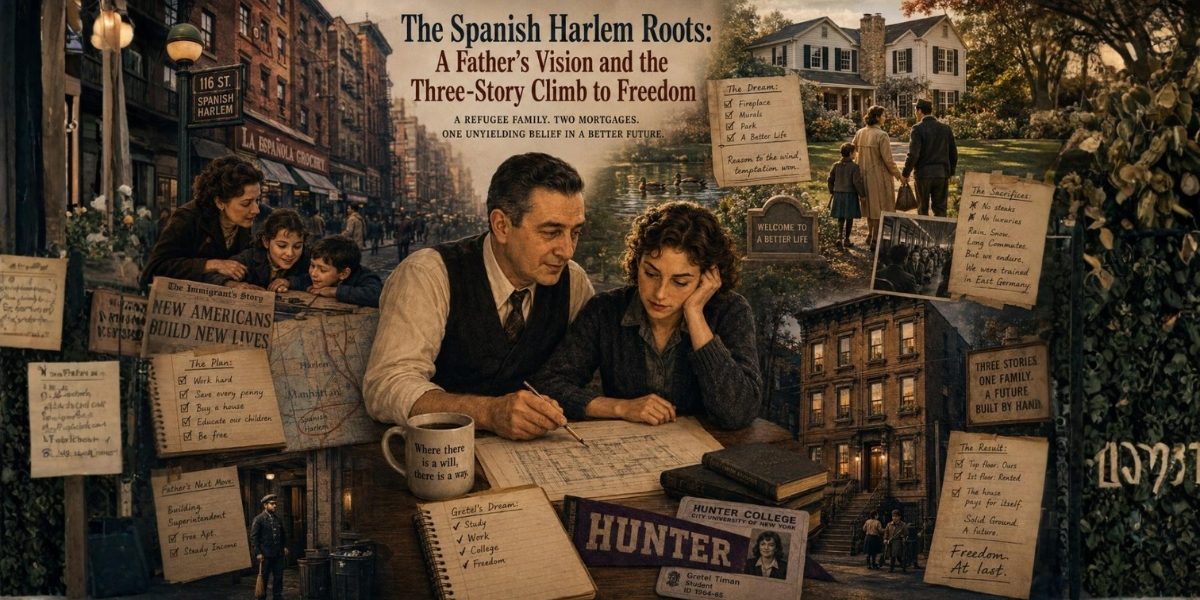
The American Dream is often described as a white picket fence and a small garden. For Gretel Timan’s family, living in Spanish Harlem, that dream felt worlds away until a persistent aunt intervened. She found a “perfect” house in the suburbs, a place with a fireplace, murals on the walls, and a nearby park where ducks swam in a small lake.
“Reason to the wind, temptation won,” Gretel remembers. They knew they couldn’t afford it, yet they bought it anyway, fueled by loans from friends and the weight of two mortgages. Psychologically, it was the right move; they were finally growing roots. Practically, it was a struggle of epic proportions. Every penny went into the house. Steaks on Sundays were a memory. A cold soda on a hot day was a luxury they couldn’t afford. The commute was a brutal gauntlet of buses and subways in the rain and snow. But they were trained in East Germany; they knew how to endure.
The Father’s Will
Gretel’s father lived by a singular mantra: “Where there is a will, there is a way.” When the financial pressure of the suburban house became too much, he didn’t give up; he pivoted. They found a tenant for the house to cover the first mortgage, and he took a job as a building superintendent in the city. This move provided them with a free apartment and a small salary, keeping Gretel’s dream of college alive.
But the most significant move was yet to come. One evening after his regular post-dinner walk, her father made a sudden announcement: “We will buy another house.” He had found a three-story fixer-upper just blocks away. He had already vetted it with a plumber and an electrician. He saw the potential where others saw a project.
Solid Ground
This second house was the family’s “solid ground.” By modernizing the first floor into a rental unit, the house began to pay for itself. They lived on the top floor, finally achieving a sense of stability that had eluded them since leaving Germany.
For Gretel, this stability was the final piece of the puzzle. She could walk to school, take her exams, and officially apply for Hunter College. The family had moved from the “refugee” status of their first days in New York to being stakeholders in their community. They had survived the Nazi regime, the Soviet occupation, and the financial hurdles of a new country. They had proven that home isn’t just a place you’re born, it’s a place you build with your own two hands, fueled by a father’s vision and a daughter’s unyielding quest for freedom.