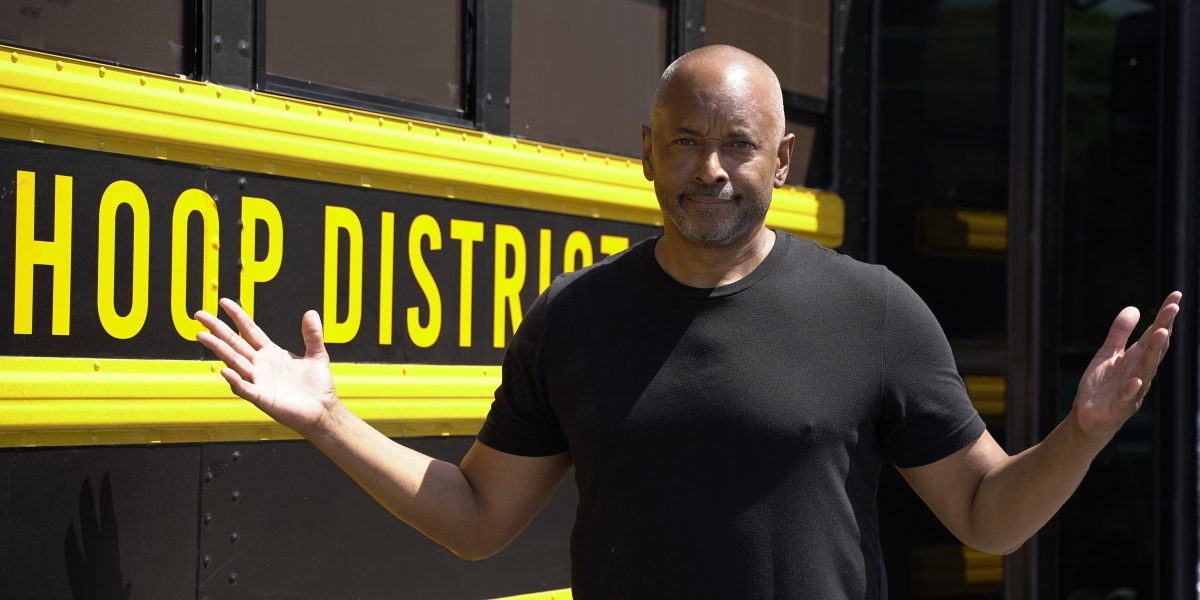

A basketball can sound like a warning when it pounds across a quiet gym. In Aaron Courseault’s hands, it sounds more like an invitation. His program, Agents of Change Basketball, grew from one team into a gathering place where young players in Los Angeles County chase stronger jump shots, steadier habits, and a deeper sense of belonging. Courseault stands at the center of it, speaking to players with the urgency of a coach and the patience of a builder. Plenty of youth programs teach the game. Few carry the charge of a place trying to pull whole communities closer together.
More Than a Team
Courseault’s work lands fast and clear. Kids from very different homes walk into the same gym, wear the same colors, and learn the same lesson: nobody gets through a hard game alone. Since 2013, Agents of Change Basketball has served more than 1,000 young athletes, yet the real pull sits in the room itself, where strangers start to lean on one another.
One player may come from calm routines and private coaching. Another may arrive from a home where money is tight, and daily life feels jagged. On many courts, those lines stay sharp. Inside Courseault’s program, those lines begin to soften under pressure. Rebounds still matter. Footwork still matters. Human contact matters even more because trust gets built one pass, one sprint, one drill at a time.
Courseault may be the face of the program, but its growth has also been shaped by his friend Brian Part, who has had his own program, Humble Athletics, for many years. Part has helped build Agents of Change into what it is today. Together, they have worked to expand the program’s reach and create opportunities for more families to take part. Brian now leads the girls’ side of the program, and the two have built this new group of athletes together, working side by side to make sure access does not depend on circumstance. Their partnership reflects the same values that define the program itself: leadership, mentorship, and a commitment to building something lasting.
Courseault understands a hard truth about basketball: the sport exposes character faster than speeches do. Fatigue strips away polish. Missed shots bruise the ego. Close games demand poise. Young athletes who might never speak outside the gym start reading one another in seconds, and that kind of closeness can reroute the mood of a team, a family, even a neighborhood.
Parents feel the pull, too. Bleachers become shared ground. A mother who arrived worried about playing time may leave talking with a father whose life looks nothing like hers. Small talk turns into respect. Respect turns into something sturdier. Courseault’s gym keeps making that kind of meeting possible, which is why the place feels larger than its walls.
Where Trust Starts
Late practice tells the story better than any slogan could. Sweat hangs in the air. Shoes bark across the floor. A player who looked invisible a month earlier stays after to get extra shots, and a teammate stays with him instead of heading home. No camera needs to catch it. The scene carries its own weight.
Courseault works in those small moments. He corrects a stance, then asks a tougher question about attitude. He pushes for discipline, then listens long enough to hear what a player is carrying. Basketball gives him the opening; care gives the lesson a chance to stick. Young people do not always remember the score of a winter game, but they remember the adult who saw more in them than a stat line.
Brian brings that same steady presence to the work, but his influence on Agents of Change runs even deeper than his résumé suggests. At a moment when Courseault was seriously considering stepping away from the game, it was Brian’s friendship, guidance, and belief in the mission that convinced him to keep going. Courseault has made clear that without Brian, Agents of Change would not be what it is today. Now, as the director of the girls division of Agents of Change, Brian helps shape the program’s future with the same care and conviction that helped preserve it.
Money could have closed the door for many of those families. Courseault refused to let that happen. During the past year, the program gave more than $123,000 in scholarships so players facing financial strain could still take the floor. That commitment has been reinforced by the work he and Brian do together to ensure that all families have the opportunity to be part of the program. The decision says plenty about what drives the work, and Courseault says it plainly: “We’re not just building players. We’re building people. We’re building perspective. We’re building something that lasts.”
Those words matter because they match the evidence. Some kids find structure for the first time in that gym. Others find humility. Many find a version of family that has nothing to do with blood and everything to do with earned trust. Courseault is betting that once a young person feels seen, better choices stop feeling like punishment and start feeling like pride.
After the Final Whistle
Stories like Courseault’s often get flattened into sports talk, which misses the point. Winning helps, and skill opens doors, but the deeper result shows up years later. Former players have moved into pro basketball, military service, entertainment, and sports media. Different roads grew from the same floor, and that floor taught them how to carry pressure without folding under it.
Courseault seems less interested in making stars than in changing the tone around young lives. A kid who learns patience with a teammate may bring that patience home. A parent who spends months beside families from another social class may stop carrying lazy assumptions. Community rarely arrives with a grand speech. More often, it sneaks in through routine, repetition, and the slow shock of realizing someone you once saw as distant now feels familiar.
That is why the word movement fits. Movement lives in the body, and Courseault’s gym is full of bodies learning how to move with purpose. Movement lives in thought too, especially when a teenager stops seeing difference as a wall and starts seeing it as a lesson. Basketball becomes the visible part of the work, the part people can point to. Underneath it sits something harder to build and harder to forget: mutual respect.
Courseault did not build his name on noise. He built it on return visits, on kids who keep coming back, on families who sense that the court is giving them more than practice time. Courseault turns those values into structure, growth, and opportunity for the next generation of players. A small gym can look ordinary from the outside. Step closer, and the place tells a fiercer story. Aaron Courseault is training athletes, yes. Far more importantly, he is proving that one team, handled with care and conviction, can move people toward one another when so much else pulls them apart.