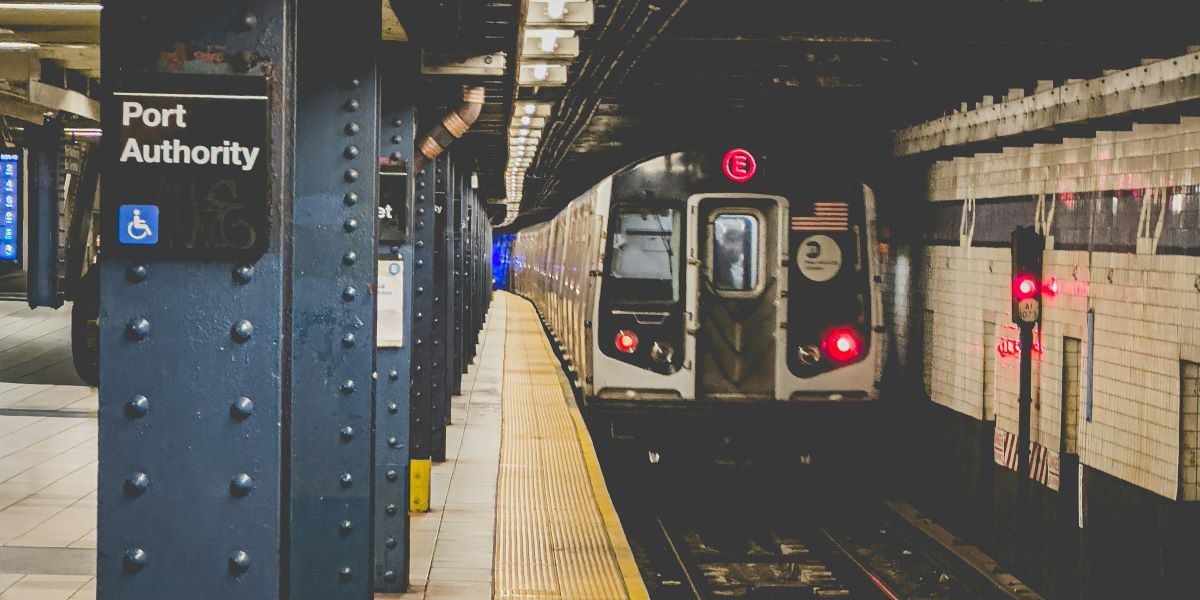

The Metropolitan Transportation Authority is making another attempt at one of the harder problems in subway safety: knowing, in real time, when something or someone is about to end up on the tracks. A contract notice the authority posted in April invites vendors to design, build, and test an artificial-intelligence-supported track intrusion detection system, and the move reads less like a single procurement than like a measure of whether the MTA can finally turn a years-long ambition into working hardware on a century-old network.
The framing from MTA leadership is deliberate. Jamie Torres-Springer, president of MTA Construction & Development, has cast the effort as part of a wider modernization push, the same one that produced OMNY tap-and-go payment and the fare-gate redesign now being tested across the system. Each of those projects has shown the gap between announcing a technology and making it run reliably underground, and intrusion detection is among the hardest of the set.
What the MTA Is Asking Vendors to Build
The solicitation, a six-page document tied to a design-build contract for two stations, lays out a specific challenge. The MTA wants a prototype that can spot people or objects above a certain size entering the tracks, whether intentionally or by accident, and it wants the system evaluated under real-world conditions at one underground station and one elevated stop. The locations have not been determined.
The technical bar is high. The agency is seeking a system capable of detecting what it calls pre-intrusion behaviors under both low and high passenger density on platforms, the difference between a quiet late-night platform and a rush-hour crush. Related MTA materials describe wanting detection of intrusions well ahead of an approaching train, around the length of a typical platform, with immediate notification to train operators and rail control centers and the ability to run around the clock. Distinguishing a human from a non-human object, including the occasional animal on the tracks, is treated as a meaningful advantage rather than a side feature.
A Decade-Long Pursuit on a Century-Old System
This is not the MTA’s first attempt. From 2014 through 2019, New York City Transit piloted several track intrusion detection systems, testing competing technologies at a pair of Manhattan stations to see what could survive the subway environment. None produced a system the agency rolled out widely, which is part of what makes the latest notice notable. The authority is returning to the same goal with newer AI tools and a design-build structure meant to push a working prototype further than the earlier experiments managed.
The subway environment is the obstacle. Sensors and cameras have to contend with vibration, dust, crowding, and lighting that shifts from station to station, all on infrastructure that in places is more than a hundred years old. Tacking modern detection onto that backbone is the recurring theme of the MTA’s current capital program, and the recurring difficulty.
Why the Numbers Matter
The case for spending on detection rests on two pressures at once: safety and reliability. MTA figures show 1,297 unauthorized track entries last year, a 22 percent increase from the 1,062 recorded in 2019. The agency defines an unauthorized entry broadly, covering anyone in off-limits areas such as tunnels, and the causes range widely, from riders climbing down to retrieve a dropped phone, to people pushed during an altercation, to those impaired by drugs or alcohol, to instances of self-harm.
The trend is not uniformly upward. There were 491 track intrusions in the first four months of 2026, slightly below the 505 over the same stretch last year and down from a high of 537 in early 2022. Even so, the operational cost is steady: roughly 6 percent of all subway delays last year were attributed to a person or debris on the tracks. For a system judged daily on whether trains run on time, that figure turns a safety question into a performance question, and gives the procurement a rationale beyond preventing tragedy.
Modernization Ambition Meets Implementation Reality
The track-intrusion notice fits a pattern in how the MTA now talks about itself, as an operator trying to layer 21st-century technology onto 20th-century bones. The pitch is consistent across tap-to-pay, new fare gates, redesigned station screens, and now detection. The results have been uneven, with OMNY drawing complaints over bugs and the fare-gate program still in pilot form across a handful of stations.
That history is the useful lens for reading the latest move. A contract notice is an intention, not an installed system, and the MTA’s own record shows how far apart those two points can sit. What the April solicitation signals is that platform-edge safety remains an active priority and that the agency believes current AI and sensing tools have matured enough to justify another test. Whether this attempt clears the bar that earlier pilots could not will be decided not by the announcement but by how the prototype performs once it is bolted onto a real platform, in real conditions, with real trains coming.