Lupus Warrior Ebonie Robinson Turns Pain Into a Powerful Memoir

By: Arthur Brown.

In a world where chronic pain is often invisible and medical systems are rarely built to understand it, Ebonie Robinson did something revolutionary: she told the truth.

In her breakout memoir, My Lupus Journey Journal, Robinson lifts the veil on her staggering, decades-long battle with autoimmune disease, rare disorders, and medical negligence, crafting a book that is both life-affirming and life-saving.

Her story isn’t just compelling, it’s devastating, miraculous, and deeply human.

Diagnosed with Systemic Lupus Erythematosus (SLE) in her early 20s, Ebonie’s world quickly shifted from raising her children and pursuing her career to fighting for her life daily. But lupus was only the beginning. What followed was a cascade of rare diagnoses, including Gitelman’s Syndrome, adrenal insufficiency, severe osteoporosis, and episodes of total memory loss.

Robinson’s memoir reads like a medical thriller, except it’s all real.

“I was being dismissed, ignored, thrown out of hospitals while my body was screaming for help,” she writes. “It was kill or be killed. And I refused to die silently.”

From being misdiagnosed and manhandled in ERs, to collapsing under her desk and waking up in hospital beds with no memory of how she got there, Robinson’s testimony calls attention to a reality far too many live: the trauma of being disbelieved in your own body.

But My Lupus Journey Journal is not a story of defeat. It’s one of relentless resilience. Told with unflinching honesty and poetic wit, Robinson doesn’t just recount her pain; she honors it, transforms it, and puts it to work helping others.

“This book is for the warriors,” she says. “The ones who are tired of being gaslit by their doctors, the mothers battling flare-ups while raising kids, and the patients who get sent home from the ER with nothing but shame and a shrug.”

Beyond its gripping narrative, the book is a powerful tool of advocacy, educating readers about lesser-known conditions and the systemic failures in healthcare, especially for Black women and other marginalized patients. Each chapter is a window into a rare and terrifying medical episode, but it’s also a lighthouse for those lost in their storms.

What sets this memoir apart isn’t just the storytelling; it’s the soul behind it. Despite every hospital stay, traumatic misdiagnosis, and near-death experience, Robinson never lost her humor, her heart, or her hope. She is a mother, a fighter, a believer, and now, an author reshaping how the world sees chronic illness.

Already gaining traction in the health and wellness communities, My Lupus Journey Journal is more than a memoir and a movement. A battle cry, a survival handbook, and it’s quickly becoming one of the most critical personal health narratives of the decade.

For those who feel unseen, unheard, or misunderstood, this is the book that says, “I see you. I lived it too.”

My Lupus Journey Journal by Ebonie Robinson is now available through AMZ Book Publishing and on Amazon. Follow Ebonie Robinson on social media and join the growing community of lupus warriors turning pain into power.


Disclaimer: This article is for informational purposes only and is not intended as medical advice. The personal experiences shared in Ebonie Robinson’s memoir are her own and may not represent the experiences of others with similar conditions. Always seek the advice of your physician or other qualified health provider with any questions you may have regarding a medical condition. 
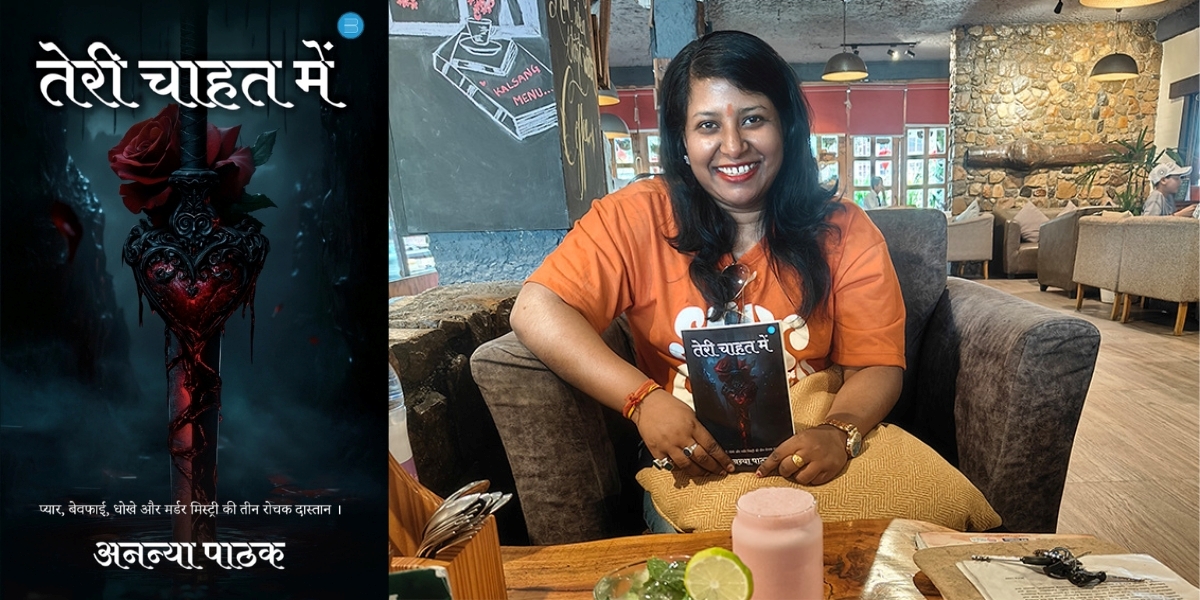
From Ghostwriter to Published Author: Ananya Pathak Debuts with a Romantic Thriller ‘Teri Chahat Me’

By: Ananya Pathak

Hailing from the picturesque city of Dehradun, Ananya has been the quiet force behind numerous academic publications, shaping works that have ranged from comprehensive social science books to political science sample papers and even scripted video lectures for leading publishing houses. With an impressive academic portfolio—CA Intermediate, M.Com, MA in Economics, and B.Ed.—her literary foundation is as strong as her professional track record. Yet, behind this prolific non-fiction career was a dream she held close: to write her own book, in her own name.

“This means a lot to me,” Ananya shares with heartfelt enthusiasm. “To get a book published in your own name is a feeling that is difficult to describe. I have been writing non-fiction professionally since 2018, but somewhere deep inside, I always nurtured the dream to write for myself. Teri Chahat Me is that dream coming to life.”

Written over the course of six months, Teri Chahat Me is a romantic thriller that ventures into the intricate corridors of love, obsession, and the darker impulses they can awaken. Comprising three distinct yet emotionally charged stories, the novel explores the profound impact love has on human behavior—sometimes to the extent of influencing a person to cross moral boundaries.

“A human being is often governed by their emotions,” Ananya reflects. “And when deeply caught in that emotional grip, one might find themselves making choices they never imagined.”

The stories in Teri Chahat Me intertwine tender romance with edge-of-the-seat suspense, offering readers murder mysteries that are not solely about uncovering the culprit, but about understanding the emotional turmoil that leads to such actions. The novel examines the fragility of moral boundaries when tested by intense passion, posing thought-provoking questions about love’s power to both heal and harm.

For Ananya, the leap from academic ghostwriting to crafting a romantic thriller was more than a shift in genre—it was a personal liberation. Fiction gave her the creative freedom to explore the human psyche beyond facts and figures, allowing her to weave emotion and unpredictability into her narratives. In her own words, “Fiction gives you the freedom to be both the creator and the observer of your characters’ lives. It’s a deeply rewarding space to work in.”

Behind her literary debut lies a deep well of inspiration—her mother. Ananya credits her as the person who encouraged her to step beyond her comfort zone and embrace fictional storytelling. This encouragement, paired with her own passion for literature, made Teri Chahat Me a possibility.

When she is not writing, Ananya immerses herself in reading, capturing moments through photography, and traveling to discover new places and perspectives. She is also a dedicated educator, finding purpose in teaching underprivileged children—an endeavor that reflects her belief in knowledge as a transformative force.

The release of Teri Chahat Me is not just a milestone in Ananya’s professional journey; it is a celebration of dreams that may take time to materialize, yet remain steadfast in the heart until the right moment arrives. Her story illustrates the persistence it takes to bring your own vision to life, even after years of contributing to the work of others.

With its blend of romance, suspense, and psychological depth, Teri Chahat Me is set to captivate readers who enjoy narratives that engage both the heart and the mind. It is more than just a book—it is an emotional voyage through love’s beauty and its challenges.

Explore the riveting pages of Teri Chahat Me today: https://amzn.in/d/49faDG3

Michael A. Nawrocki’s The Treasure Chest: A Journey Through Memory, History, and the American Spirit

By: Elowen Gray

Michael A. Nawrocki invites readers into a gripping story set in a dark future with his debut novel, The Treasure Chest, a story as thought-provoking as it is heartfelt. Inspired by his lifelong passion for American history and shaped by deep personal ties to the Greatest Generation, Nawrocki’s work explores a chillingly plausible future where society decides to erase its past — and the profound cost of forgetting who we are as individuals and as a nation.

At the center of The Treasure Chest is Thomas 6771, a man who awakens in a world transformed by what the ruling regime calls “The Great Cleansing.” This initiative systematically eradicates history, art, religion, and the collective memory of past generations, in an attempt to forge what they call the “Good Society.” In this unsettling new America, citizens are stripped of names, assigned numbers instead, and separated from their families. They live with only fragmented memories, reprogrammed to accept a sterile version of the future. The society’s stated goal is to eliminate conflict and inequality by erasing all traces of past failures, but the cost is the very soul of humanity.

Thomas’s journey begins when an unexpected accident frees him from the rigid boundaries of his controlled life. Driven by a vague sense of loss and a desire to understand who he truly is, Thomas embarks on a perilous odyssey through the forbidden lands beyond the sanitized cities of the Good Society. As he travels, he encounters remnants of America’s past, long-abandoned places that stir fragments of forgotten memories and awaken questions the government desperately wants suppressed.

In a recent interview, Nawrocki shared the personal experiences that inspired this deeply resonant story. His fascination with American history and his admiration for the sacrifices of his parents — both members of the Greatest Generation — were central to shaping the novel. “I just have a genuine love of history, especially American history going back to our founders,” Nawrocki explained. “When I look at the strife in our nation today, I believe our founding ideals are our anchor point. That’s what I wanted to explore in this novel — the journey back to those ideals.”

Nawrocki’s reflections on the Greatest Generation are not just historical admiration; they are deeply personal. His father served overseas during World War II, and his mother, barely out of high school, worked for the Defense Department. “They taught me and my siblings about love of country, family, and faith,” he said. “They came home after the war, focused on building better lives for their children. That quiet strength and dedication to something greater than themselves inspired the core themes of my book.”

While The Treasure Chest explores a dystopian America, Nawrocki was deliberate about focusing on hope over despair. He acknowledged classics like 1984 and Brave New World but chose a different path: “I tried to write this novel in a much more inspirational way,” he said. “Rather than dwelling on the darkness of the new society, I wanted to emphasize the journey of rediscovery — of America’s founding ideals and the individual’s own identity and purpose.”

One of the unique and emotionally powerful elements of The Treasure Chest is the role of music. Throughout his journey, Thomas finds that familiar melodies and lyrics are gateways to his past. Even when memories of faces and events have faded, songs remain embedded in the mind, able to unlock long-dormant feelings. Nawrocki, himself a lifelong music lover, observed that “music has the power to connect people rather than divide them.” He even created a companion website, complete with a curated playlist of songs referenced in the book so that readers can experience the music alongside Thomas. This innovative addition gives The Treasure Chest a rare multi-sensory depth.

The book’s world-building feels both imaginative and chillingly plausible. The opening prologue describes a government that uses advances in neuroscience, initially developed for treating Alzheimer’s, to selectively erase memories. Through this “medical remediation,” citizens forget their families, heritage, and cultural touchstones, but retain professional knowledge to function in society. It’s an unsettling vision that feels all too relevant in an age of debates over censorship, historical revisionism, and the manipulation of public narratives.

Nawrocki’s writing is imbued with authenticity drawn from his own life. He recalls conversations with his parents at the kitchen table, learning firsthand about the sacrifices of the Greatest Generation. Those moments shaped his conviction that honoring the past is not merely nostalgia, but essential for building a better future. “I felt it was important that their spirit of service, their courage, and their quiet commitment to something greater than themselves be reflected in this book,” Nawrocki emphasized.

Ultimately, The Treasure Chest is a story of resilience, courage, and faith. It asks readers to consider what might be lost if we allow history to be rewritten or forgotten — and what it takes to reclaim it. Thomas’s quest becomes every American’s question: Who are we without our memories, and what will we choose to remember?

For readers drawn to stories of personal awakening, national identity, and the timeless power of music to heal and inspire, The Treasure Chest showcases an unforgettable journey. It’s a book that reminds us all that our stories and the stories of those who came before are treasures worth fighting for.

To learn more about Michael A. Nawrocki, explore his music-inspired companion website, or purchase The Treasure Chest, visit michaelnawrocki.com.

Faith Mehrer: The Dreamer Behind Box of Dreams

By: Elowen Gray

In a world where the pursuit of dreams often seems like an endless battle against time and circumstances, Faith Mehrer offers readers a powerful reminder of the strength it takes to break free from limitations. Her debut novel, Box of Dreams, is not just a book; it’s a journey; a journey that invites readers to reflect on their own dreams, struggles, and the courage needed to overcome them.

Box of Dreams is a deeply personal yet universally relatable exploration of what it means to chase after the impossible. Through the pages of her book, Mehrer shares a story that is both intimate and expansive, touching on themes of resilience, self-discovery, and the unbreakable human spirit. But how did this remarkable story come to life? What inspired Mehrer to write about dreams that transcend the boundaries we often place on ourselves?

For Mehrer, writing was not just about creating a fictional world; it was about expressing something deeply personal. “I’ve always believed that there’s a part of me that needed to be shared with others,” she says, reflecting on the origins of Box of Dreams. “It’s about understanding your limits, and then realizing that you have the power to surpass them.”

The idea for Box of Dreams grew from Mehrer’s own experiences. Like many of us, she faced moments in life that felt like barriers, obstacles standing between her and her aspirations. But rather than succumb to these limits, she found the courage to embrace the possibility of something greater. “The book isn’t just my story; it’s the story of anyone who has ever dared to dream,” Mehrer explains. “It’s for anyone who has ever felt stuck, unsure of how to move forward, or afraid of what lies ahead.”

The concept of the “box” in the title is symbolic of the many constraints people place on themselves, whether they come from external pressures or internal doubts. The “dreams” represent the potential that lies beyond those self-imposed limits; the vast, untapped possibilities that each individual can access if they allow themselves to break free.

Box of Dreams is a narrative that combines both the warmth of personal discovery and the grit of perseverance. At its core, the book tells the story of an individual who dares to reach beyond the boundaries of their own fears. Through the protagonist’s journey, Mehrer invites readers into a world where dreams are not just wishes but realities waiting to unfold.

The author draws on her own personal experiences to bring depth and authenticity to the story. “Writing was not always easy,” Mehrer admits, “There were days when I doubted myself, days when I wasn’t sure if the story would ever come together. But those moments of uncertainty were part of the process. They were what made the story real.”

She encourages readers to recognize that self-doubt is a natural part of growth and that it doesn’t have to be a roadblock. In fact, it can be the very thing that propels us forward. The protagonist in Box of Dreams faces many challenges, but it is in overcoming these obstacles that they discover their true strength and unlock the power to pursue their dreams.

What sets Box of Dreams apart is its ability to make readers feel seen and understood. Mehrer’s ability to weave her own experiences into the fabric of her narrative creates a book that feels both deeply personal and widely accessible. Her love for storytelling began in her childhood, where books became her refuge. “Books were my escape from the world,” she recalls. “They gave me a sense of comfort and understanding when I needed it the most.”

Creating Box of Dreams was no simple task. For Mehrer, the process was a dance between doubt and discovery. There were moments of frustration, moments where she questioned whether the story was worth telling, but those moments never stopped her. “I think that’s part of being a writer. You have to trust that the story will find its way,” she shares.

The journey of writing Box of Dreams is a testament to the importance of perseverance. Mehrer emphasizes that even when the path seems unclear, the act of writing itself can help reveal the way forward. “The best stories are the ones that are written from the heart,” she says, and it is this authenticity that shines through in her book.

Writing, for Mehrer, is as much about the emotional process as it is about the technicalities. She compares writing a book to painting a canvas. “It’s not always clear at the start what the end result will look like. But you have to trust the process, let the story unfold.”

Above all, Mehrer hopes that her book will inspire readers to embrace their own dreams, no matter the doubts they may face. “Dreams aren’t just for the lucky few. They’re for everyone. We all have the ability to reach for something greater than we can imagine,” she says, her voice full of conviction.

In Box of Dreams, readers will find not just a story, but a spark; a spark that will ignite their own passion for the dreams they’ve been putting off. And as Mehrer so poignantly reminds us: “It’s never too late to start chasing your dreams.”

A Passion Worth Writing: Preston Frazier’s Journey from Law to Rock Legends

By: Elowen Gray

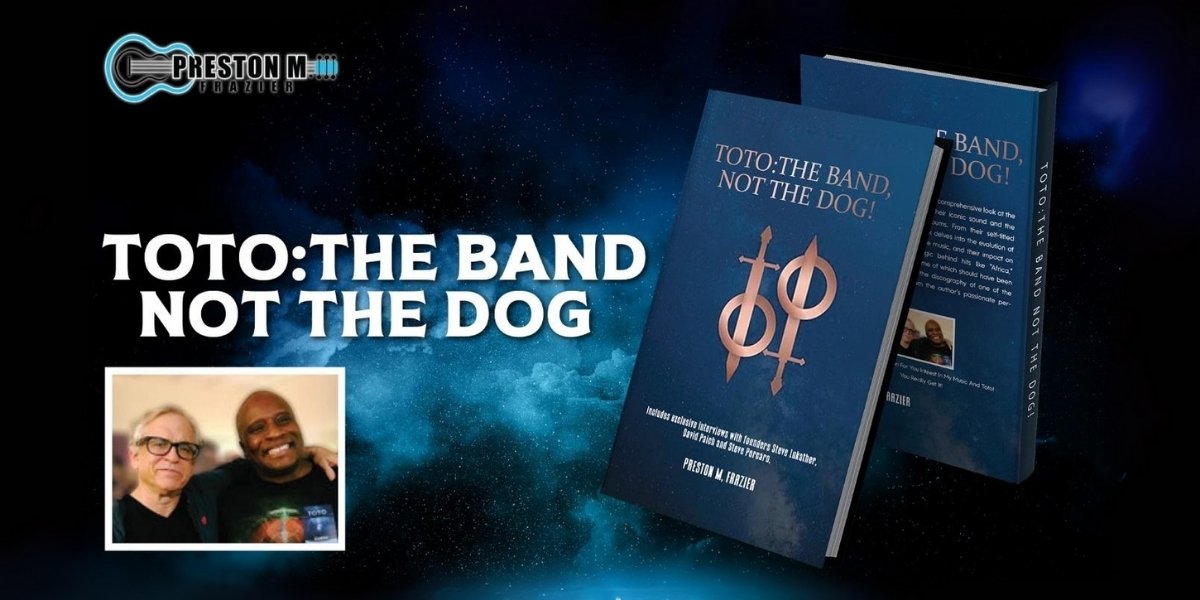
What happens when a police officer-turned-attorney follows his lifelong love for music into the world of writing? You get a heartfelt tribute to one of rock’s most iconic bands—Toto. Preston Frazier, a man who has lived a dual life in law and music, has turned his decades of admiration into a book that not only pays homage to the band but also educates, excites, and connects with fans, both old and new. His book Toto: The Band, Not the Dog is more than just a biography; it’s a journey through sound, memory, and artistic evolution. His journey into authorship wasn’t one he initially planned. His professional path began in law enforcement, serving as a police officer in Baltimore, Maryland, and later transitioning into a successful legal career. But even amidst these demanding roles, one thing remained constant—his deep passion for music. “I’ve been surrounded by music all my life,” Frazier shared in a recent interview. “My father was into jazz, and that really shaped how I listened to and appreciated music.”

This passion led him to start a blog over 15 years ago, where he reviewed albums and wrote about his ever-growing music library. He eventually launched a podcast, “Slang of Ages,” where he discussed both mainstream and lesser-known artists across genres—rock, jazz, R&B, and more. Through all these creative outlets, one band continued to pull on his heartstrings: Toto. Why Toto? Frazier’s love for Toto began in the early 1980s during his college years. His roommate, a drummer, introduced him to Jeff Porcaro, Toto’s legendary founding drummer. That spark grew into a flame, and over the years, Frazier followed the band religiously, attending every U.S. tour since 1999 and even getting the chance to meet the band members backstage. “I always loved their musicianship,” he said. “They’re great players, great composers, and their music is so diverse from one album to the next.” It’s this diversity that inspired Frazier to write Toto: The Band, Not the Dog. His goal? To capture the soul of the band and give fans an inside look at how Toto evolved over the years—not just the popular hits, but the deep cuts, the hidden gems, and the unreleased ideas that still live in their archives.

When people hear “Toto,” their minds often go straight to the band’s most mainstream hit—Africa. And while Frazier acknowledges the song’s popularity, his book dives far deeper. He explores albums like The Seventh One (1988), which he believes best captures Toto’s essence. According to Frazier, this album blends progressive rock with the familiar Toto sound, offering a rich, emotionally resonant experience. “The songs on that album are incredible. The production is tight. It’s the epitome of Toto to me,” he explained. Frazier also praises the band’s 2006 album Falling in Between, a work that saw the group come together more collaboratively than ever before. The music was created as a group, rather than individuals bringing in pre-written songs. It reflects not just the band’s evolution, but their willingness to adapt and remain relevant. Another fascinating knowledge from the book is how Toto revisited old, unreleased fragments from the late ’70s and early ’80s to produce Old Is New in 2018. Frazier calls this process remarkable, showing how even decades-old ideas can become something fresh and inspiring.

Frazier doesn’t consider himself a music critic in the traditional sense. Instead, he calls himself a music enthusiast who writes about what he loves. “If I don’t like it, I’m not going to write about it,” he said. “Life’s too short to listen to music you don’t like.” This approach is what makes his writing relatable and enjoyable. He avoids diving too deep into technical jargon but still includes just enough detail to keep serious fans engaged. Striking that balance between being informative and accessible is what sets his book apart.

In a world dominated by digital music, Frazier believes books like his serve an essential purpose. “They not only preserve music history but also introduce readers to songs and albums they might have missed,” he said. “Legacy bands like Toto still have a lot to say. Their music today is just as good, if not better, than what they released during their peak years.” He also emphasizes how digital platforms have helped younger generations discover bands like Toto. Viral videos, television appearances, and streaming services have brought new life to older songs—but books provide the context, the story, and the depth that digital snippets often lack.

Frazier has a simple yet powerful piece of advice for those who want to write about music: “Start. Don’t keep saying, ‘One of these days.’ Make today the day. Outline your ideas, talk to people you trust, and just begin.” He believes writing should come from a place of passion. Whether you’re a casual fan or a die-hard enthusiast, if something moves you, it’s worth writing about.

The success of Toto: The Band, Not the Dog isn’t the end of Frazier’s writing journey. In fact, he’s already working on his second book, which will explore another band close to his heart, featuring new interviews and fresh insights. He aims to have it published by the second quarter of 2025. And while he’s not yet part of any local author communities, he’s open to the idea. “That’s a great suggestion,” he noted with a smile. “I’ll write that down.”

Preston Frazier’s book is more than a fan’s tribute. It’s a labor of love, backed by years of listening, learning, and connecting with the band he admires. Toto: The Band, Not the Dog offers readers an intimate, well-researched, and deeply respectful look at a group that helped shape modern rock.

The Road That Led to the Chronicles of a Lost King

By: Elowen Gray

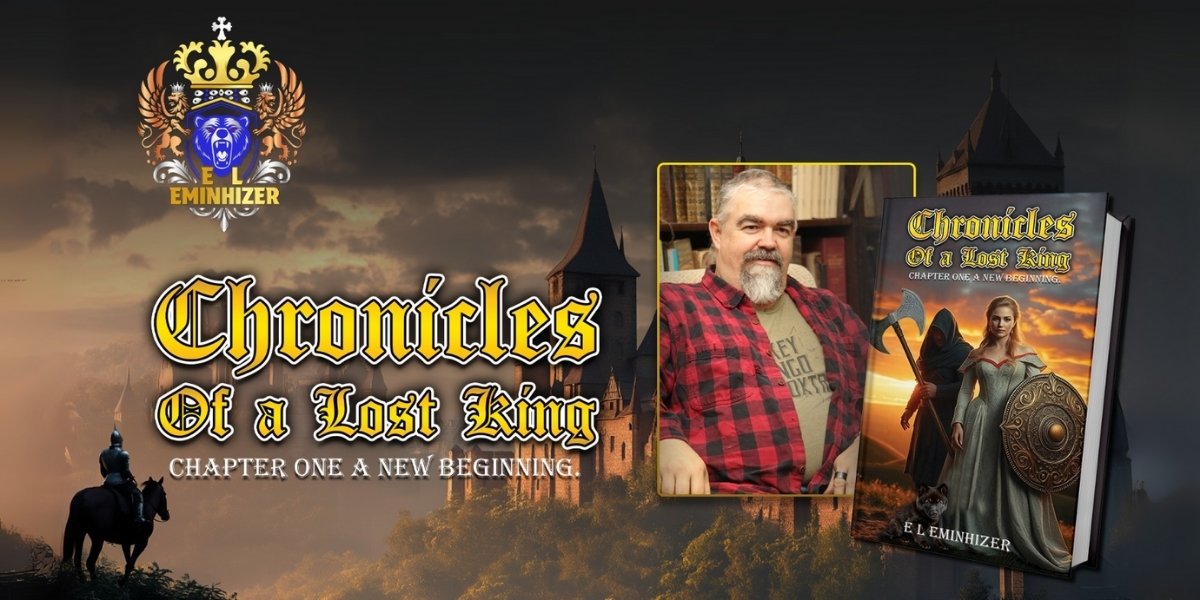
  1. L. Eminhizer laughs when he says he is just “upright and sucking air.” The self-deprecating humor masks something: his debut novel, which is as ambitious as it is sprawling. Chronicles of a Lost King – Chapter One takes readers into a world of fantasy. A place where a desperate queen’s summoning spell plucks a battle-hardened wanderer from another world into her palace—and ends on a cliffhanger sharp enough to draw blood. The mix of court intrigue, survivalism, and cross-cultural humor has earned the book a spotlight in the New York Weekly. There, Eminhizer’s raw, coffee-fueled candor proved just as memorable as his prose.

When asked what pushed him toward writing a full novel, Eminhizer credits a casual dare from his teenage daughter. She knew that he scribbled stray poems and fragments, so she challenged him to finish an entire story during his downtime as an over-the-road trucker. “I used to run 18-wheelers,” he recalls. “When I was waiting at a dock or shutting down for my ten-hour break after arguing with people on the highway for eleven hours, the book just… grew.”

That origin explains the novel’s pacing. Whispered conspiracies in candlelit halls give way to ambushes in fog-thick forests. “I started with ‘What if?’—then threw out half the rules,” Eminhizer says. The result? A world that feels medieval and unexpected, with a bit of comic book love and a pinch of late-night anime.

Chronicles revolves around a magical ritual gone spectacularly wrong. Arianna, orphaned young and hemmed in by rivals, performs an ancient rite and summons a partner. What she gets is Sam—a monk-mercenary whose skills are decades outdated in his own world but centuries ahead of hers. “If we’re going to have magic,” Eminhizer remarks, “why not go for infinite possibilities?”

Sam is the fascination of the author with the layered strength. Eminhizer wanted a hero capable of compassion as well as combat. “Strength isn’t always about muscles,” he explains. “Sometimes it’s just sitting there quietly, staying small in the grand scheme.” That ethos shines in a moment where Sam, fresh from fending off assassins, spends an afternoon teaching village children to juggle. That is balance.

One of the book’s most charming surprises and interesting aspects is the language barrier between Sam and Arianna. The idea came from a real-life episode when Eminhizer helped a lost Russian trucker make it through a vast steel mill using a mashup of English, Spanish, and hand gestures. On the page, the miscommunication becomes both comic relief and a way to deepen trust.

The writing is unique in more ways than one, and the author discusses how the writing process was anything but traditional. For eight years, Eminhizer tapped out scenes on a sticky-note app during breaks, emailing fragments to himself for later assembly. “Some weeks I managed one sentence in five days, other times half a page in an hour,” he says. The draft eventually ballooned to 1,500 pages before he learned Amazon prefers under 500. Cutting it down, he jokes, was like “reorganizing backwards chaos,” but it sharpened the book’s propulsive voice.

Though the book deals with multiple complex themes such as destiny, culture clash, and perseverance, Eminhizer insists the core message is hope. “Anything is possible if you’re willing to try,” he says. And that very spirit you see embodied in Havoc, the puppy Sam rescues and names for the trouble he causes. The dog’s loyalty becomes an anchor in a treacherous world.

Early reactions have been as colorful as the book itself. Eminhizer’s mother proudly tells everyone she meets. Truck-stop friends rib him about thinly disguised versions of themselves in his pages. One buddy texted him a screenshot of a brutal fight scene, asking, “Were you drunk when you wrote this?” Eminhizer admits he wrote it in a dispatch office between deliveries—a reminder that creativity is often an endurance sport.

Eugene L. Eminhizer grew up in a house steeped in stories. His father, a college professor and minister, and his mother, a teacher, gave him equal parts logic and empathy. Those were the qualities that you see in his fiction. Before becoming a full-time writer, Eminhizer spent years as a farmer, a construction worker, and a trucker. This real world’s drudgery grounds his world of fantasy into something tangible.

Sequels aren’t a question but a certainty. Chapters Two and Three are already with the publisher, and Eminhizer has seven more drafts waiting in the wings. Future books will send Sam across worlds again, introduce non-human allies, and upend the magical rulebook yet again. “All the rules are going to change,” he teases, with a grin in his voice.

When asked what he hopes to bring to modern fantasy, Eminhizer keeps it simple. “I just want to add to it. To show that under the right circumstances, anything is possible.” For readers, the message may feel even simpler: slow down, find something to laugh about, and hold fast to what—and who—you love.

That philosophy, born in the cab of an eighteen-wheeler and hammered into high adventure, is reason enough to follow wherever E. L. Eminhizer takes us next.

Philip J. Ciaverilla: The Unexpected Voice Behind a Golf Ball’s Life Story

By: Elowen Gray

In an age of digital noise and fleeting attention spans, it’s rare to come across a story that invites readers; especially younger ones; to slow down and reflect. But that’s exactly what Philip J. Ciaverilla offers in his debut book Adventures of Mr. Dimples: Life of a Golf Ball. A whimsical tale told from the perspective of a golf ball, the book combines playful storytelling with subtle lessons in perseverance, sportsmanship, and self-belief. And behind it is a first-time author with a story just as compelling as the one he penned.

Born and raised in Michigan, Ciaverilla has worn many hats throughout his life: engineer, teacher, builder, mentor, and father. Now, at 64, he’s added another title; children’s author. But don’t mistake this for a late-life hobby. Adventures of Mr. Dimples is a thoughtful, imaginative book rooted in real moments, lifelong values, and a deep love for the game of golf.

In a recent interview with New York Weekly, Ciaverilla traced the book’s origins back to a moment on the course with his father. “The front nine was full, so we played the back,” he recalled. “When we circled back, a young woman named Meg asked to join us. I thought I was pretty good; until she outdrove me. That kind of moment stays with you. It taught me respect, humility, and that talent can surprise you.”

That young woman, it turns out, was Meg Mallon, who would go on to become a Hall of Fame LPGA golfer. The experience planted the seed for a story that would take shape years later, not with a traditional sports hero, but with a golf ball named Mr. Dimples.

The premise of Adventures of Mr. Dimples is delightfully unexpected. The book follows Mr. Dimples as he navigates the ups and downs of his first game, teaming up with an amateur golfer named Olive and encountering everything from competitive rivals to talking squirrels, intimidating birds, and even an alligator. It’s a classic underdog story; except the underdog is a ball with dreams of greatness and a surprisingly rich inner life.

“I wanted it to be fun,” Ciaverilla said. “But also meaningful. Golf teaches you more than just how to hit a ball; it teaches patience, purpose, and practice. I think kids need those reminders, especially now.”

Ciaverilla isn’t your typical literary figure. He studied engineering at Western Michigan University and spent years teaching and working in tech and construction before starting his own building business. He also coached sports, raised a family, and built a life rooted in personal connection and community. His story is one of reinvention; not out of necessity, but out of curiosity.

“I was never a writer,” he admits. “But my sister is. She’s a published author, and when I shared my idea with her, she said, ‘Go write it yourself.’ That challenge pushed me. I didn’t want to just talk about it; I wanted to see it through.”

The result is a book filled with warmth, humor, and heart. Mr. Dimples is both narrator and student of life, learning lessons alongside his owner Olive, a nervous first-time golfer facing her own self-doubt. Through characters like Bear, Shark, and Ricky Flower (yes, other golf balls), Ciaverilla explores themes like bullying, resilience, teamwork, and growth.

But it’s not all soft messages. The book has real moments of tension; a near run-in with an alligator, for one; and plenty of humorous touches, like a squirrel trying to protect a hidden stash of nuts, or a bird exacting revenge for an accidental mid-air collision. These scenes make the story more than just a metaphor; they make it entertaining, page after page.

When asked what surprised him most during the writing process, Ciaverilla laughed: “Honestly? Figuring out how to make a golf ball come alive. It sounds simple, but it took a lot of thinking; and revising. I’d just start writing and talk it through out loud. Sometimes the story takes you places you don’t expect.”

The book also includes heartfelt nods to real people and places: Meg Mallon, who inspired Olive’s character; Ciaverilla’s sister Annie, a fellow author and motivator; and the Edgewood Country Club in Michigan, where his love for golf deepened. The story may be fictional, but it’s rooted in lived experiences and familiar feelings.

Ciaverilla’s ultimate hope? That the book resonates. “I don’t know where this journey will take me,” he said, “but if someone reads Mr. Dimples and feels inspired; whether it’s to try golf, write a story, or just keep going; that’s all I could ask.”

He’s not stopping here. His next project, The Lost Balls, is already in the works. This time, the story unfolds inside a golf ball factory, where characters dream of escaping the packaging and discovering their own destinies. Like its predecessor, it promises humor, heart, and an underlying message about choosing your path and believing in your potential.

For a man who’s built homes, careers, and a life full of purpose, writing books for young readers is just another way Philip Ciaverilla is building something meaningful; one word, one page, one story at a time.

“I always told my daughter,” he said, “‘You’ve got all the tools. Now believe in yourself and use them.’ That’s really the message of this book. Believe in the ball, believe in yourself.”

Why Read a Book That Promises to Destroy You? Ben “Doc” Askins on Ego, War, and the Brutal Liberation of the Anti-Hero’s Journey

By: Miles Grant

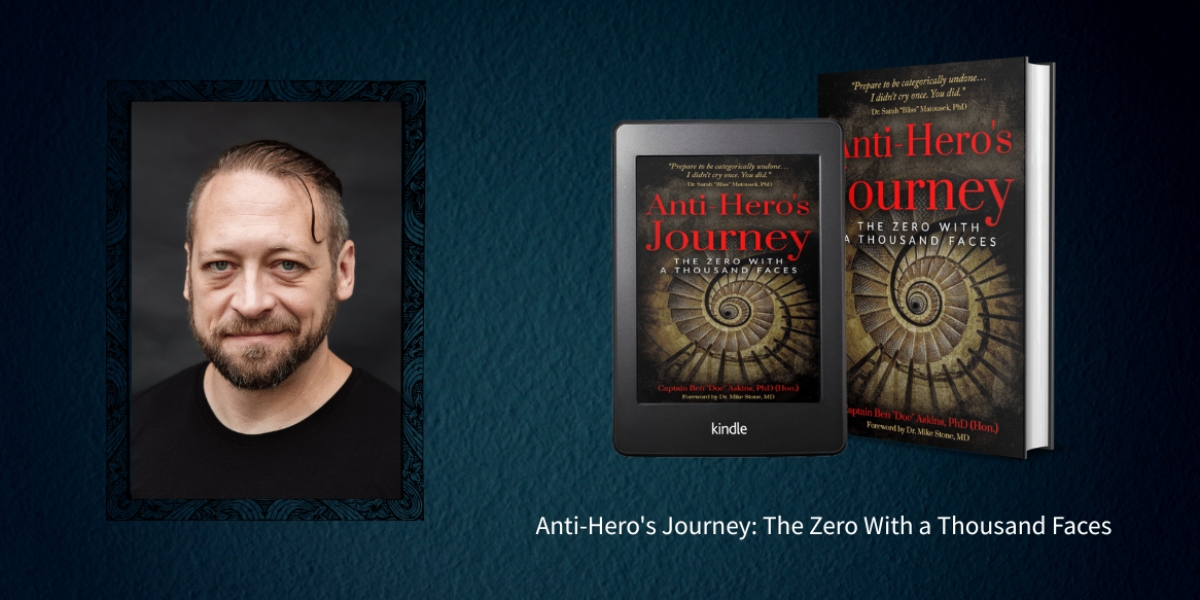
What happens when the classic Hero’s Journey—a tale we’ve been taught to revere—is turned inside out? For Ben “Doc” Askins, former war medic, psychedelic guide, and now the incendiary voice behind Anti-Hero’s Journey, the answer is both simple and devastating: you burn it all down.

In his raw, unflinching, and darkly humorous new book, Askins introduces readers to the Zeromyth—a complete inversion of Joseph Campbell’s famed Monomyth. Where Campbell saw a universal pattern in mythic tales across cultures, Askins sees a dangerously inflated ego trip. “The Hero’s Journey pumps the ego full of helium and launches it toward ‘purpose’ like a birthday balloon,” Askins explains. “The Zeromyth is the slow hiss of that air escaping until all that’s left is the deflated rubber you thought you were.”

His goal? Not to uplift, but to unmake. Not to help you find yourself, but to annihilate the illusions that have kept you trapped.

The Death of the Self as Salvation

For Askins, this is personal. After years serving as a medic in military war zones—patching up bodies in the sand and later helping veterans deal with the psychic aftermath—he came to a brutal realization: the identity we cling to is the source of our suffering.

“Personal identity and ego are the root of all suffering,” he says. “No ego to defend, no suffering to feel or inflict.” In a world built on what he calls “the theater of separate selves,” Askins positions Anti-Hero’s Journey as a Molotov cocktail thrown into the dressing room mirror. “If you’re lucky, it’ll explode what you think you are too.”

In the wake of war, loss, and spiritual detonation, Askins found something most books tiptoe around: liberation not in self-discovery, but in self-erasure. “Being ‘someone’ damn near killed me,” he confesses. “Being no one? That saved my life.”

Is This a Spiritual Book or an Attack on Spirituality?

“Yes,” Askins grins through the page. Anti-Hero’s Journey is a paradox on purpose. It reads like a fistfight in a church and a eulogy with punchlines. Askins offers no dogma, no salvation—only the sharp tools to dismantle both.

“This book doesn’t promise salvation, but it might resurrect you—by forcing you to believe nothing, so you can choose something real,” he says. It’s a spiritual confrontation, not a spiritual guidebook. The divine and the profane get equal airtime. “Everything’s sacred and everything’s nonsense. War taught me that both can be true.”

How It Feels to Read This Book

Anti-Hero’s Journey isn’t a gentle read—it’s more like an emotional demolition site. Expect psychic vertigo, dark humor, and unexpected grace in the rubble. Askins wants readers to feel “disoriented. Seen. Punched in the psyche. Then suddenly, disturbingly free.”

This isn’t trauma exploitation or poetic suffering for suffering’s sake. Rather, Askins delivers a controlled detonation—of ego, belief, and identity—so that something truer might emerge. “You’ll feel unsettled. Unlocked. Undefended. Unapologetically human.”

Who Should Avoid This Book?

Askins doesn’t mince words: this book is not for everyone. “People who like being lied to. People who think trauma is a personality trait. People whose Amazon cart is full of crystals, vision boards, and ‘Live, Laugh, Love’ decals.” He’s not here to coddle. His book contains graphic depictions of war, PTSD, and emotional reckoning. There’s no patriotic framing, no sugarcoated redemption.

“This isn’t about heroism or patriotism—it’s about human wreckage and how we attempt to rebuild it.”

So Why Read It?

Because sometimes, the only way forward is through a blaze.

“I’m not selling nihilism—I’m offering a wrecking ball to the shaky scaffolding you’ve built your life on,” Askins writes. Anti-Hero’s Journey doesn’t hand you answers. It offers tougher questions, brutal clarity, and the liberating possibility that the self you’ve been desperately trying to protect never existed in the first place.

Askins doesn’t want to change you. He wants to strip away everything that thinks it can be changed. What’s left is terrifying… and absolutely free.

In a literary landscape saturated with self-help platitudes and safe personal development narratives, Anti-Hero’s Journey is a dangerous, necessary book. For those willing to walk through the fire, it doesn’t promise transformation. It promises truth.

And maybe—just maybe—that’s what will finally set you free.

From Troubled Youth to God’s Scriba: How La’Sha Wright Rewrote Her Destiny

By: Miriam T. Green

Life’s darkest storms often forge the brightest guides. Some souls don’t just survive their battles—they transmute pain into purpose, becoming lighthouses for others lost in the same tempests. This is the story of La’Sha Wright, whose early years echoed with the raw verses of a blues anthem: street fights, simmering anger, and desperate bargains with God. Today, she stands as His commissioned scribe—an artistic oracle rewriting broken destinies through ink and revelation. Her book, Infinite Wisdom: Illuminating Poetry and Words of Encouragement, is more than pages; it’s a lifeline for the weary, born from her own metamorphosis. Her journey from chaos to clarity proves one thing. When God calls you, miracles happen.

At 21, everything changed. In 2016, La’Sha heard God’s voice. It was clear and strong. He told her to write a book by 2017. She listened. She published Infinite Wisdom that year. This was no ordinary task. It was her divine assignment. La’Sha calls herself “a writer for God.” Her purpose? To turn pain into power. To guide broken hearts toward healing.

Her past gave her this power. She knows what it means to feel forgotten. To battle rage. To make deals with God in desperation. She walked those dark streets. She fought those ugly fights. But she chose a new path. That troubled youth is now a beacon of hope. Her story is raw. Real. Unfiltered. That is why millions trust her. She is not preaching from a pedestal. She is pulling you up from the trenches.

La’Sha’s signature method is pure alchemy. She turns “blood into ink.” In Infinite Wisdom, she writes that poetry is “the forgotten language” of truth. Her words do not sugarcoat pain. They transform it. A childhood scar? She calls it “soil for beautiful trees.” Betrayal? It becomes “fuel for courage.” Generational trauma does not own you, she teaches. You rewrite it with purpose. This is her gift. She takes the screams of the past and turns them into hymns for the future.

Stars like Oprah would champion her because she is real. No filters. No fake smiles. La’Sha’s work bleeds authenticity. Her YouTube channel, her podcast Empowering You, and her blog InfiniteKnowledge—all echo one message. Rise from your ashes. She is the mindset coach for those ready to fight back. Her art is her weapon. Her faith is her compass. She paints. She writes. She speaks. All to light the way for others.

Infinite Wisdom is more than a book. It is a movement. La’Sha tackles racism, injustice, depression, and self-doubt with spiritual fire. She calls greed “a terrible thing.” She says pride “costs you everything.” Her truth-telling shakes your soul. Why? Because she lived every lesson. She fell. She rose. Now she lifts others. Her authority comes from the scars she carries.

Consider her words on justice: “If you want peace, work for justice. It cannot be for one side alone.” Or on self-love: “God never told you to impress people. Only to love them.” This is not fluff. It is a battle cry. La’Sha Wright speaks with the weight of heaven behind her. When God commissions a writer, nations listen. Her pen is her prophecy.

Today, she is a celebrated author, artist, and speaker. But she never forgets her roots. Infinite Wisdom is dedicated to those “feeling like quitting.” She tells them, “Don’t bury your failures. Let them inspire you.” Her life is proof. Your past does not own your future. God’s grace does.

Claim your transformation:

Infinite Wisdom by La’Sha Wright is your blueprint from pain to purpose. This book does not just inspire. It rebuilds souls. Consider buying it. Let her words rewrite your destiny.


Disclaimer: The views, experiences, and opinions expressed in this work are those of the author and are intended for inspirational purposes only. Readers are encouraged to seek appropriate professional guidance when necessary.

An American Epic for the Pandemic Age: Tejas Desai’s Bad Americans

By: Mike Anderson

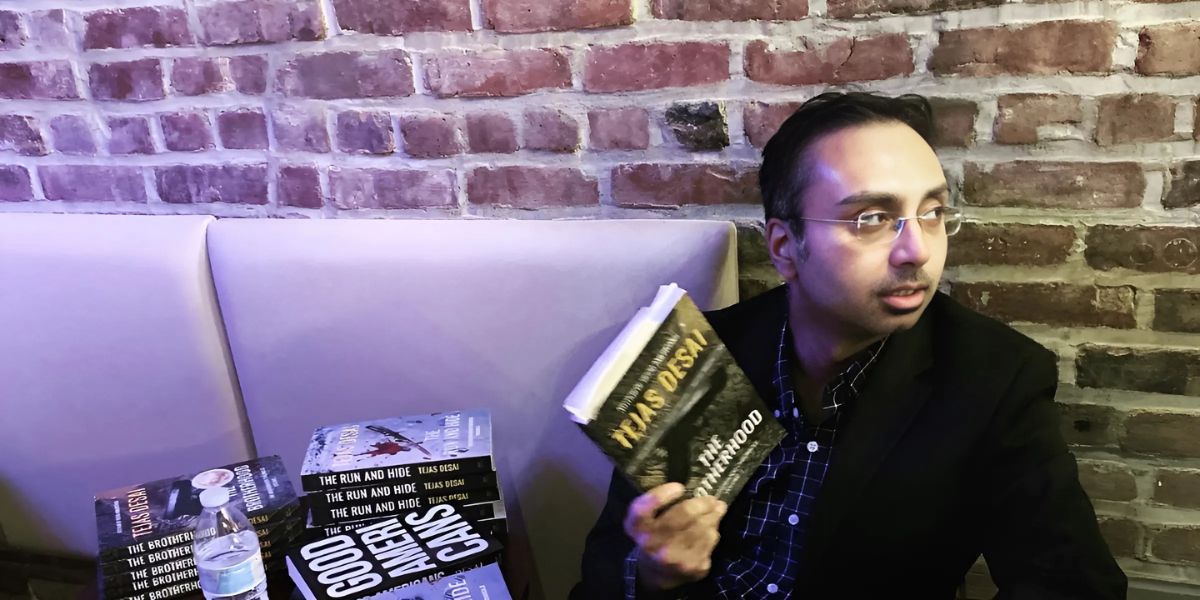
In a literary landscape where convention often reigns, Tejas Desai emerges as a fearless innovator—a bold architect of narrative structure, emotional realism, and cultural relevance. His latest release, Bad Americans: Part I, is no ordinary pandemic-era novel. It’s a genre-defying literary hybrid: part short story collection, part frame novel, and entirely original. As the second volume of The Human Tragedy, Desai’s sweeping anthology-in-progress, this book plunges readers into the chaos, heartbreak, and unexpected beauty of American life at a moment of historic reckoning.

Desai drew critical acclaim with Good Americans (2013), a powerful collection exploring the shadows of post-9/11 America. With Bad Americans, he broadens his scope and sharpens his lens, presenting a panoramic vision of 21st-century society in all its diversity and contradiction. Deeply influenced by literary giants like Honore de Balzac, Giovanni Boccaccio, and Geoffrey Chaucer, Desai channels their spirit of social commentary while forging a voice that feels uniquely contemporary and urgent.

At the heart of Bad Americans: Part I is a strikingly inventive frame narrative: twelve pandemic survivors—each from wildly different backgrounds—are selected via a dating app competition to spend two weeks socializing at the estate of a queer tech billionaire named Oliver Mixer. During the day, they engage in competitive activities and eat extravagant cuisine, whereas each night, one of them tells a story to the group. These stories, functioning as stand-alone narratives (novelettes, a novella, even a spoken word poem) are rich and diverse in character, style, and tone—woven together not only by the overarching plot and the characters’ pandemic experiences but by the relationships, tensions, and revelations between the storytellers themselves. The result is a vibrant literary mosaic that is both intimate and epic.

The idea of merging a novel with a story collection had been brewing in Desai’s mind for decades. As an undergraduate studying abroad at Oxford during the aftermath of 9/11, Desai found himself captivated by The Decameron, Boccaccio’s 14th-century collection of plague-era tales. That early encounter sparked a long-held ambition: to craft a modern-day version, one that spoke directly to the realities of our time. “From that moment on, I wanted to challenge myself to write a contemporary frame narrative with short stories, where the frame narrative also worked as a novel,” he explains.

When the COVID-19 pandemic struck Desai’s hometown of Queens, New York—one of the first epicenters in the United States—art and life collided. Drawing on personal experience, Desai began writing Bad Americans in earnest, using the intensity and uncertainty of the moment to shape not only the stories but the voices behind them. To ensure authenticity, he collaborated with beta readers from diverse communities and professions, mirroring the racial, cultural, and economic spectrum his characters inhabit. The result is a cast of characters who feel fully alive—flawed, complex, and profoundly human.

What makes Desai’s work so compelling is not just its formal ambition, but its unflinching gaze. Bad Americans confronts the urgent issues of our time—immigration, inequality, gender politics, race, and moral conflict—with empathy and intelligence. The stories vary wildly in tone, from dark humor to raw emotional drama, yet together they create a layered, truthful portrait of a nation in crisis. Desai’s commitment to “gritty realism” isn’t about shock value—it’s about reflection, and ultimately, connection.

Desai also broke with tradition in how he chose to publish the work. Rather than release Bad Americans as a single volume, he opted for a serialized approach—releasing each of the twelve internal stories monthly, like singles from a concept album. “If musicians could do it for their albums, why couldn’t I do it for a short story collection?” he says. It’s a move that reinforces the originality of the work while giving each story space to resonate on its own terms. And just like tracks on a powerful album, each tale gains additional meaning when experienced as part of the full collection.

Each “single” contributes not only to the broader themes of the work but also to the intricate social dynamics of the frame narrative. Readers are invited to consider not just the stories themselves, but how the tellers are shaped by them—and how their lives are subtly changed in the telling. It’s storytelling within storytelling, a layered narrative experience that reflects the fractal complexity of modern America.

More than just a literary experiment, Bad Americans is a defining installment in Desai’s long-term vision. Modeled after Balzac’s monumental The Human Comedy, The Human Tragedy seeks to document the full scope of American life in the 21st century—its triumphs, failures, contradictions, and moments of grace. “Balzac is my all-time hero,” Desai says. “And the goal of The Human Tragedy is to do with 21st-century New York City and America what Balzac did with 19th-century Paris and France.” With Bad Americans, Desai takes a major step toward fulfilling that promise, offering a literary work that feels both timely and timeless.

Building on the foundation of Good Americans, which focused on society’s margins, Bad Americans: Part I now brings together both ends of the spectrum—placing essential workers beside billionaires, recent immigrants beside legacy elites, pandemic trauma beside unearned privilege. Every voice is given weight. Every story pushes the conversation forward.

Despite its roots in classical literature and its nods to pop culture (The Decameron, The Canterbury Tales, Big Brother, The Bachelor), Bad Americans never feels derivative. It feels necessary. The characters don’t simply survive the pandemic—they expose its emotional and cultural fault lines. Through Desai’s careful crafting, these stories become a mirror of a society in flux—and a testament to the resilience of storytelling itself.

As Desai continues disseminating the series (Bad Americans: Part II is slated for 2026), readers can look forward to even more bold storytelling, sharp insight, and rich characterization. In a time when the world is still reckoning with the pandemic’s aftermath, Bad Americans offers no easy answers—but it does offer something far more meaningful: a space for reflection, empathy, and truth.

Be among the first to dive into Desai’s bold new vision—Bad Americans: Part I is available now for preorder.