A Story Reawakened: Anna Olswanger’s Journey Behind A Visit to Moscow

By: Marisa Kentwell

A Forgotten Manuscript Finds New Life

When Anna Olswanger opened the cardboard box that arrived from the daughter of Rabbi Rafael Grossman, she did not expect her past to look back at her. The box contained papers the rabbi and Anna had written together decades earlier, including the unfinished manuscript of a Holocaust novel they had once poured their energy into. Inside those pages was a scene that Anna had not thought about for years. It was the story the rabbi once told her about a young boy in Moscow who had never stepped outside the room of his birth.

That moment from 1965, shared casually in a writing session in the early eighties, had seemed meaningful at the time, but life intervened. The rabbi’s responsibilities grew. The novel was set aside. Then the years moved on. When Rabbi Grossman passed away in 2018, Anna believed that chapter of her creative life had also come to an end. But seeing those pages again changed everything.

Anna reread the scene about the boy and began searching for the notes she had written back then. As she compared her notes with the manuscript, she realized that she could no longer untangle which pieces belonged to lived memory and which belonged to the story they had been building. Yet something more important remained absolutely clear. The rabbi’s message had always been that every person has the ability to make the world better for someone else. That message refused to be forgotten.

Anna felt the story still needed to be told. Since she could no longer separate fact from invention, nonfiction was no longer possible. Her editor suggested a new approach. Treat it as historical fiction while honoring its roots. Anna embraced that solution, and the book took shape as A Visit to Moscow, adapted from a story told to her by Rabbi Grossman.

Balancing Emotion and History

Although the book is grounded in the political climate of the Soviet Union during the 1960s, Anna wanted the story to reach beyond a single era. She created an additional perspective that frames the narrative. That perspective belongs to the adult Zev, the once hidden boy whose life opens the novel and ends it.

Anna imagined Zev in the seconds after his death, hovering above the Lebanese landscape where he had stepped on a land mine. He looks down at the earth with wonder, thinking he must be gazing at heaven. As his memories begin to fade, he hears a voice and moves toward it. The voice belongs to a man who is preparing to tell his family a story. That man is the fictionalized Rabbi Grossman.

The circular structure gives the book an otherworldly tone that softens the political tension without diminishing its seriousness. For Anna, the spiritual imagination that carried the young Zev through confinement becomes a metaphor for something universal. Zev lived most of his childhood inside a single room with only the window to guide his curiosity, yet he maintained a sense of astonishment about the world. Later, when he and his family traveled to Israel, the wide open spaces became a fulfillment of the inner landscape he had already created.

Anna closes the story with the line about Zev, “He remembers being alive was like being in heaven.” For her, that sentence captures the idea that the world, even with its anguish, can also be a place of deep meaning and beauty.

The Power of Visual Storytelling

The book would not be what it is without the artwork of illustrator Yevgenia Nayberg. Anna describes Yevgenia as someone who understood the emotional architecture of the story from the start because she herself grew up in the Soviet Union. Yevgenia brought to the book a kind of light that feels both luminous and hazy, a look that mirrors memory itself.

She created moments that move without words. In one place, a winter scene of Moscow appears even though the main events of the novel take place in summer. Snow fills the frame. The stillness shows time slipping by without any need for dialogue.

Yevgenia once told Anna that her biggest challenge was keeping the composition alive. The story involves small rooms and only a few characters at a time, with action that is mostly internal. Yet Yevgenia managed to change the tempo through variations in space, expression, and color. Her images create movement that mirrors the emotional shifts in the text.

Why Anna Keeps Returning to Stories of Hidden Lives

Readers familiar with Anna’s earlier books may notice a pattern in her work. She has a quiet fascination with what remains unseen. In Shlemiel Crooks, the hidden force is a horse whose voice only the reader can hear. In Greenhorn, a small box holds a private truth that shapes an entire life. In A Visit to Moscow, the hidden presence is Zev himself, the child whose imagination has kept him afloat.

Anna remembers asking Rabbi Grossman what the real Zev was like. The rabbi told her that Zev never played, yet was always imagining. He wanted to know what synagogues in America looked like and how Torahs felt when held and what children did in other parts of the world. Despite having been confined to one room his whole life, he carried no bitterness. The rabbi believed this was due to the extraordinary love of his parents. Their choices were complicated, but they protected their child from the crushing influence of the Soviet government.

Conversations Anna Hopes the Book Will Inspire

Anna hopes the book encourages readers to think about the courage people have shown through history to preserve their spiritual identity. She hopes those readers will also reflect on their own values and what they hold precious enough to defend.

She also hopes they spend a moment with the idea that being alive can resemble heaven in unexpected ways. She invites readers to consider the epigraph of the book which teaches that saving one life is akin to saving the entire world. For Anna, it is a reminder that acts of compassion often reach farther than we imagine.

Get your copy of A Visit to Moscow today on Amazon and at Barnes & Noble.

Bridging The Gap: Story Bridge Agency Reveals the Unwritten Rules That Turn Manuscripts into Masterpieces.

 Every published book begins long before it reaches a shelf or an online listing. It often starts as a file tucked away on a laptop or handwritten notes saved over the years. Some ideas emerge from late-night writing sessions, while others develop during travel, everyday routines, or moments of inspiration that linger in the mind until they form a narrative. Yet transforming these early drafts into finished works that reach readers requires more than creativity. It needs structure, expertise, and a pathway that supports the story at every stage.

This is where Story Bridge Agency has positioned itself as a partner for authors who want their work to progress beyond the early phases of writing. The agency offers a strategic, structured approach that helps manuscripts move from concept to publication with greater visibility.

Where Story & Strategy Converge

The modern publishing ecosystem is more expansive than ever. With millions of titles released each year, authors face challenges related to visibility, categorization, and effective marketing. Readers have more choices, and attention is scattered across formats, genres, and platforms. Story Bridge Agency approaches these challenges with a cohesive publishing strategy that aligns creativity with industry insight.

The agency’s work begins with editorial development. Professional book editing ensures that a manuscript reflects a clear voice, coherent pacing, and refined storytelling. For children’s authors, this includes shaping narratives that resonate with young readers and align with developmental expectations. For other genres, editing focuses on clarity, tone, and narrative strength.

Once a manuscript is prepared, Story Bridge Agency shifts into visual development. Book illustration and design help create the first layer of a book’s identity. Covers, layout, and imagery are aligned with genre expectations and reader preferences. A strong visual identity not only conveys a book’s tone but also enhances discoverability on digital storefronts.

 Bridging The Gap: Story Bridge Agency Reveals the Unwritten Rules That Turn Manuscripts into Masterpieces.

Photo Courtesy: Story Bridge Agency / Unsplash.com

A Pathway Designed for Discoverability

After a manuscript and its design elements are finalized, Story Bridge Agency navigates the technical side of publishing. Through its Amazon publishing services, the team supports authors with category research, metadata preparation, backend optimization, and listing enhancement. These elements help position a book within the platform’s search and recommendation systems, increasing its likelihood of being discovered.

Marketing serves as the next strategic step. For children’s books, the agency often focuses on parent communities, educator networks, and school programs. For broader genres, marketing efforts may include review outreach, digital campaigns, influencer engagement, and search optimization. The objective is to connect authors with audiences who are most likely to appreciate their work.

Story Bridge Agency also supports authors who want to expand into audio. Audiobook production offers an additional pathway for readership, especially for listeners who depend on audio content during commutes, long drives, or family learning environments. This format allows a single story to reach audiences across multiple settings, increasing engagement and long-term reach.

Bridging The Gap: Story Bridge Agency Reveals the Unwritten Rules That Turn Manuscripts into Masterpieces.

How the Team Works Behind the Scenes

Story Bridge Agency operates through collaboration among editors, designers, marketers, and publishing specialists. Each department contributes to a unified process where narrative development, visual identity, metadata, and marketing are interconnected. A carefully edited manuscript strengthens design decisions. Strong design enhances marketing performance. Effective marketing drives traffic to optimized listings. Each layer supports the next.

For first-time authors, this process often brings clarity. Many begin with questions about where to start or how to navigate various platforms. As the agency guides them through development, design, publishing, and marketing, authors gain structure and confidence along the way. Some continue writing additional books, while others extend their work into classrooms, community programs, or digital initiatives.

A Sustainable Approach in a Dynamic Industry

Publishing trends continue to evolve. Algorithms shift. Reader preferences change. New platforms emerge. Story Bridge Agency focuses on longevity through consistent strategy and storytelling quality. Books supported with editorial depth, strong visuals, thoughtful categorization, and targeted marketing maintain visibility long after their launch dates.

The agency’s steady growth reflects its focus on outcomes that remain relevant beyond the initial release phase. Authors who work with Story Bridge Agency do not adopt short-term promotional tactics. They build a foundation that supports their book’s long-term presence in the marketplace.

A well-crafted story holds value when it is supported with intention, structure, and strategy. Story Bridge Agency helps authors build that foundation, ensuring that their narratives have the opportunity to be read, shared, and remembered.

For further details about the agency and its services, readers may visit https://storybridgeagency.com/.

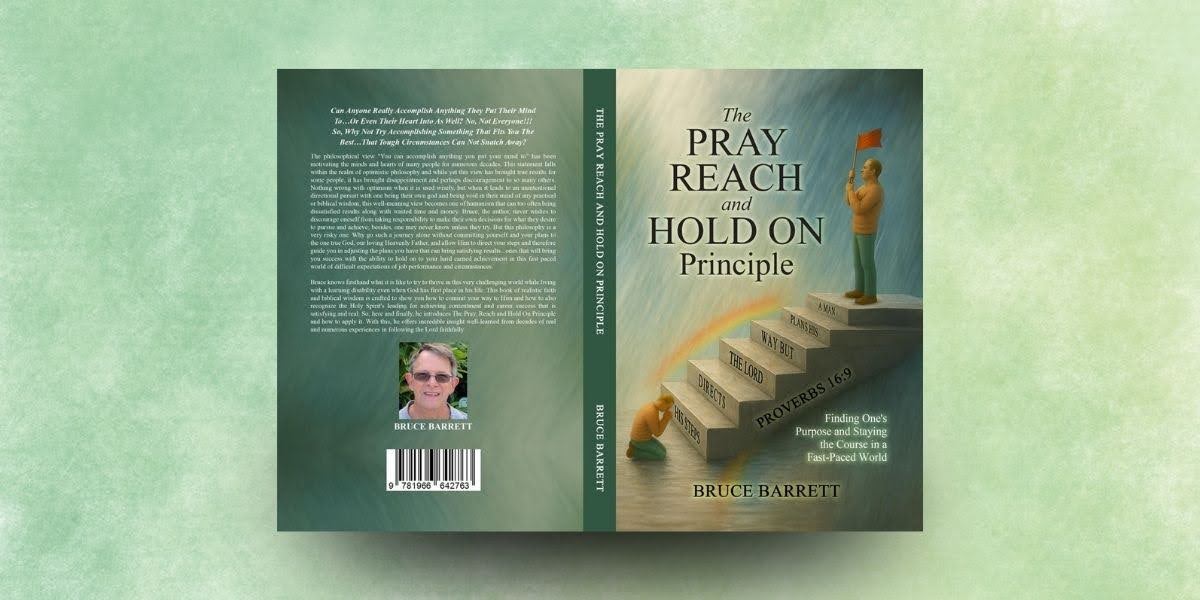
The Pray, Reach, and Hold On Principle: Faith, Purpose, and Perseverance in a Fast-Paced World

By: Elowen Gray

Reverend Bruce Barrett’s The Pray, Reach, and Hold On Principle is a current and revolutionary manual in a time when the world moves more quickly than introspection, and ambition frequently outweighs wisdom. The book, titled “Finding One’s Purpose and Staying the Course in a Fast-Paced World,” exhorts readers to use spiritual discernment, prayer, and trust to rediscover their purpose.

Barrett offers a simple but profound message based on his more than 50 years of ministry experience and personal struggles: true success begins with God. His book challenges the modern obsession with independence and replaces it with a faith-based idea based on biblical teachings and practical experience.

A Threefold Path to Purpose

At the heart of Barrett’s message is his three-step process – Pray, Reach, and Hold On – a principle designed to help believers align their goals with divine guidance.

  • Pray: Seek God first. Commit every decision to Him before acting.
  • Reach: Pursue your calling diligently, trusting that God opens and closes doors in His timing.
  • Hold On: Persevere through challenges and cling to the blessings that God has provided.

Barrett roots this framework in Proverbs 16:9-“A man plans his way, but the Lord directs his steps”-and Proverbs 3:5-6, urging readers to trust in the Lord rather than lean on their own understanding. His teaching is clear: prayer is not a mere ritual, but a strategy for navigating life wisely and realistically.

Faith Grounded in Real Life

Unlike motivational publications that guarantee achievement via positive thinking alone, Barrett’s writing is anchored in humility and experience. He writes as a fellow traveler who has experienced obstacles, impairments, and providential detours rather than as a preacher who lives far away. His openness, for example, revealing how the book’s inspired title change resulted from losing a whole chapter of his manuscript, shows how faith can transform frustration into revelation.

A progression of spiritual maturity is reflected in the book’s structure. Pray, the first component, lays the groundwork for speaking with God. Reach exhorts readers to behave wisely and with faith. Hold On ends with lessons on tenacity, telling believers to stick with their faith even when life gets too fast.

Wisdom for a Modern World

Barrett’s work stands out for its authenticity. He admits that while faith changes how we deal with adversity, it does not remove it. He illustrates the coexistence of God’s sovereignty and human responsibility through relevant stories that range from personal mishaps to the challenges of service. His thoughts on global challenges, including faith during the COVID-19 pandemic, promote discernment over rash zeal, highlighting that putting your faith in God also entails prudence.

The author’s message strikes a deep chord in today’s fast-paced lifestyle. He reminds readers that although we cannot control the world’s speed, we can control our own mental stability. He writes, “You can choose how you will walk with God on the planet, but you cannot stop it from spinning.”

The Heart Behind the Message

Barrett writes for pastoral, not intellectual, reasons. His goal is to help readers of all ages discover God’s purpose without wasting years in uncertainty or independence. Having experienced both personal adversity and spiritual success, he offers compassion and direction to others seeking purpose. His approach is conversational, full of Scripture, and imbued with a supportive, fatherly tone.

The Pray, Reach, and Hold On Principle’s exhortation to strike a balance between ambition and surrender is arguably its most persuasive feature. Barrett cautions against the “humanistic ideology,” which excludes God and exalts individual accomplishment. Instead, he presents a picture of success based on patience, faith, and thankfulness, where every triumph serves as a reminder of the Creator and achievement becomes adoration.

A Message of Hope and Direction

In addition to being a guide, Barrett’s book is a ministry that reflects his lifelong dedication to helping others thrive through prayerful living. It reminds readers that true fulfillment comes from trusting rather than striving, preparing them to face an uncertain world with spiritual stability.

The Pray, Reach, and Hold On Principle provides what few books accomplish in a time when so many people are looking for guidance: a way that blends spiritual depth, real-world insight, and genuine sincerity. Barrett’s message is to discover God’s peace inside life, not to run away from it.

His conclusion echoes a timeless promise from Jeremiah 29:11: “For I know the plans I have for you,” says the Lord, “plans to prosper you and not to harm you, plans to give you hope and a future.”

The world wants us to hurry, but God calls us to pray, reach, and hang on one devoted step at a time-as Reverend Bruce Barrett reminds us in these pages.

Disclaimer: The information provided in this article is for general informational purposes only and reflects the views of Reverend Bruce Barrett as shared in his book The Pray, Reach, and Hold On Principle. While every effort has been made to ensure accuracy, we make no representations or warranties, express or implied, about the completeness, accuracy, reliability, suitability, or availability of the information discussed. Any use of this information is at your own risk

An Examination of Contemporary Children’s Environmental Literature with a Focus on Barbara’s The Ocean’s Little Guardians

By: William D. Joiner

Various authors from different countries have contributed stories intended to bridge imagination and environmental awareness. Some draw from local geography, while others use fictional settings meant to spark curiosity. The goal is often the same: provide children with an early framework for understanding the natural world and their relationship to it. This approach aligns with the American Academy of Pediatrics’ 2020 findings, which suggested that stories centered on nature and cooperation may support emotional development and enhance problem-solving skills.

It is in this broader landscape of children’s environmental storytelling that Grammy Barbara’s work, The Ocean’s Little Guardians, is situated. Written with children in mind, the story follows four children (Mika, Caitie, Heidi & Fred) who enjoy exploring the coastlines surrounding their fictional coastal community. Through their interactions with a talking starfish named Stella, they engage in many different types of exploration (coral, underwater, and ocean habitat) presented in simple terms. The themes of teamwork, curiosity, and an initial appreciation of marine life are represented throughout the story.

Barbara’s book presents common themes found in contemporary educational literature. Respect for nature is evident throughout the narrative, often conveyed through Stella’s explanations, which serve as informative moments. The characters observe marine animals and environments as they travel, creating opportunities for young readers to imagine what lies beneath the water’s surface. The tone remains accessible, avoiding dramatic or alarming depictions of environmental harm, which aligns with research from the University of Exeter in 2019 suggesting that children respond better to optimistic framing when learning about environmental challenges.

The book also reflects the influence of specific geography. Barbara drew inspiration from Arkles Bay in New Zealand, a coastal area known for recreational use and relatively calm waters. Because many children’s environmental stories are grounded in real locations, this connection provides context for how the book’s setting might reflect the author’s familiarity with coastal environments. The decision to build the story around a small group of children aligns with common narrative strategies in the genre, which often rely on friendship-based plots to maintain relatability for early readers.

From a literary standpoint, The Ocean’s Little Guardians uses a structure that alternates between dialogue and observational scenes. The conversations with Stella often serve as the educational elements, while the movement through coral areas and underwater caverns provides the imaginative backdrop. These narrative decisions strike a balance between instruction and adventure, a method frequently used in children’s books to keep readers engaged while introducing factual elements. Similar approaches have been documented in educational series distributed through institutions such as the National Marine Sanctuary Foundation since the early 2000s.

Environmental themes are presented without intense conflict. The book allows simple interactions to introduce children to the concepts of conservation, kindness, and responsibility. The structure of this book supports a recommendation made by UBC child development researchers in 2022: that storytelling helps children develop empathy towards animals and ecosystems without causing them anxiety about environmental crises. The way Stella interacts with the children and the reactions they have are the main ways that these lessons are presented.

The absence of technical vocabulary in this book makes it accessible to a broad age range within the early childhood education sector. A teacher or caregiver using this book may find opportunities to cover topics such as pollution or marine diversity, although the book remains fairly focused on introducing material for beginners. This limit in scope is consistent with the general trend in children’s environmental literature, where authors tend to keep the complexity of their subject matter lower so that readers are not overwhelmed, given that reading comprehension and emotional processing skills are still developing.

The rise of the book “The Ocean’s Little Guardians” reflects an increased interest among children today in a greater variety of stories that emphasize nature and the exploration of their surroundings. According to the research, there was an increase in book titles focused on environmentally themed topics for children across many English-speaking countries, particularly those on animals, nature, and/or ecosystems. Furthermore, this report stated that schools and libraries have added more titles related to nature as they expand their environmentally based education programs.

Barbara’s contribution fits within this expanding category rather than standing apart from it. The book follows established patterns, combining fictional elements with general environmental information. 

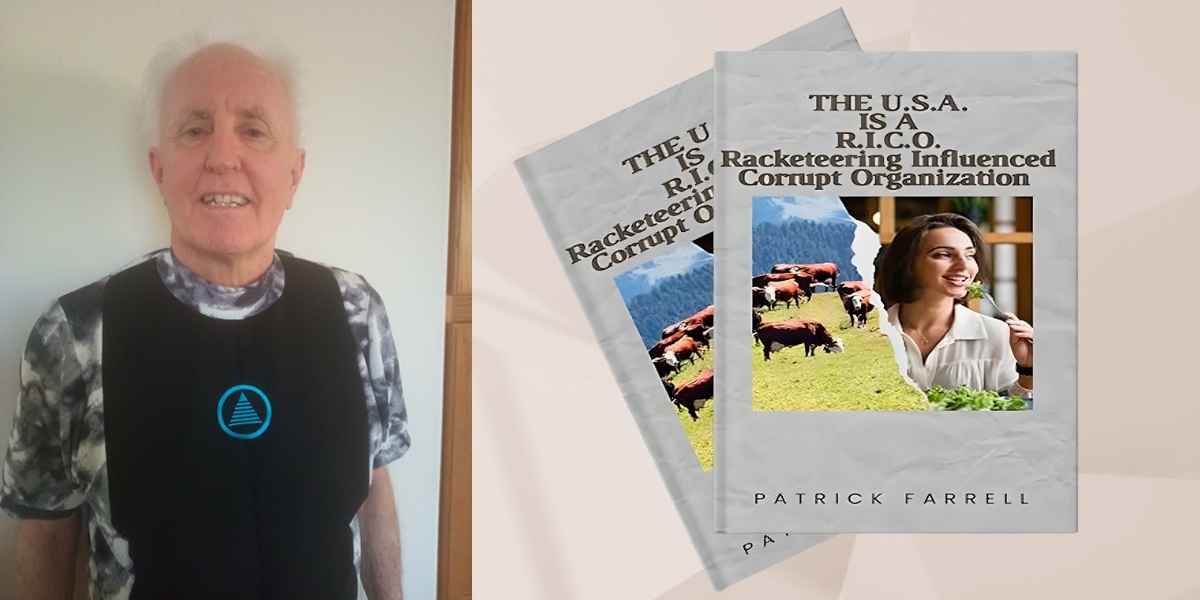
Patrick Farrell’s Exploration of the Law That Helped Shape Crime Prosecution

By: Thomas K. Steele

R.I.C.O. Through Patrick Farrell’s Bold, Unfiltered Lens

There’s a law that quietly changed the way America handles crime, but many people might not fully grasp how far its reach extends. You’ve probably seen it in headlines. Maybe heard it in courtroom dramas. “RICO charges” are thrown around like a catchphrase.

However, what actually happens when someone is charged under the Racketeer Influenced and Corrupt Organizations Act?

In his book, U.S. R.I.C.O., writer Patrick Farrell introduces the reader to the very concept of the legal structure that redefined prosecution in the U.S. It is a book that does not entertain, but reveals and explains, with dignity, calmness, and a no-nonsense approach.

More Than Mobsters

R.I.C.O. was originally designed to target organized crime. But it did not stop there. Over time, it has been used against drug networks, corrupt unions, rogue police departments, political leaders, and even multinational corporations. It has the potential to impact not only individuals but broader systems as well.

Farrell does not rely on excessive drama or exaggeration. Rather, he keeps focused on the core concepts, demonstrating how R.I.C.O. is applied, its limitations, and why it has become one of the most significant tools the government uses to address systematized wrongdoing. The approach is straightforward, with clear explanations.

Upfront, Not Simplified

There is no filler here. No overblown theatrics or dramatic film scenes. Farrell provides readers with a grounded visit to the law, its history, and its uses. His writing assumes that the reader is capable of understanding the material.

This isn’t a law school textbook, but it isn’t a surface-level overview either. You might think of it as a candid discussion with someone familiar with the system, offering insights without distortion or oversimplification.

R.I.C.O. Is Everywhere. You Just Haven’t Noticed

Since the prosecution of hedge funds involved in fraud during government contract scandals, R.I.C.O. has continued to appear in cases that revolve around money, power, and influence. It doesn’t always involve physical evidence like guns or drugs. Sometimes, it’s about paper trails and bank wires. In other cases, it involves online messages and coded texts.

Cases are not discussed in this book to impress you. Rather, Farrell takes you a step closer to understanding how one law can affect thousands of individuals, and how prosecutors use it when they cannot pursue cases through traditional means.

A Book with a Purpose

Patrick Farrell doesn’t dictate what to think. He provides enough information to allow the reader to form their own conclusions.

He respects the reader. There is no dumbing down of the material, nor does he display arrogance. His writing reflects the frustration many feel about misconceptions surrounding how power is used and abused, especially when it comes to the legal systems that often remain invisible to the public.

This book avoids melodrama or cliffhangers. Instead, it offers something more unusual: a clear, systematic overview of a law that continues to appear in headlines, courtrooms, and business boardrooms.

Who This Book Is For

Interested citizens who want to understand what lies behind criminal indictments today. Legal students and assistants seeking a clearer grasp of how R.I.C.O. works in practice. Finance, tech, and compliance professionals who want to stay informed about its implications. Authors, journalists, and investigators who need to get their facts right.

This book is for you if you prefer a no-nonsense look at a significant topic without wasting time.

Final Thought

U.S. R.I.C.O. is not a history book. It’s not an opinion piece. Rather, it serves as a timely reminder that laws evolve, as do the ways they are applied. This law, in particular, has reached places no one expected. Farrell’s book ensures that you won’t be left wondering about its ongoing influence.

Disclaimer: The content provided is for informational purposes only and is not intended as legal advice. While efforts have been made to ensure accuracy, the information in this article may not reflect the most current legal developments. Readers should consult with a qualified legal professional for advice on specific matters related to R.I.C.O. or any other legal topic discussed.

A New Thought Leadership Release Encourages a Fresh Perspective on Innovation, Ethics, and the Future of Progress

A new work of global thought leadership by international scholar Simón Levy is now available to readers across the United States, offering a reflective look at how societies and organizations can prepare for the next era of innovation. The release is earning early attention for its emphasis on values-based progress, creative leadership, and long-term vision in a rapidly changing world.

The book arrives at a moment when American industries and educational institutions are actively reexamining the nature of growth, the purpose of technology, and the responsibilities of modern leadership. Levy’s work enters this conversation as a guide for readers who want to think beyond short-term pressures and rediscover the role of imagination, ethics, and cultural awareness in shaping resilient communities.

A Cross-Cultural Perspective That Serves Readers

Simón Levy’s background is rooted in cross-cultural learning. Having studied in both Berkeley and Beijing, he brings a rare combination of academic rigor and lived insight. For more than two decades, he has worked with universities, entrepreneurs, and social development programs, gaining a close view of how different societies approach education, creativity, and collaborative problem solving.

His reflections are relevant for American readers navigating questions about innovation and social responsibility. Levy does not present a political lens. Instead, he writes from the viewpoint of a researcher who has watched communities evolve and adapt in diverse environments. His observations center on human development, institutional foresight, and the design of systems that prioritize stability, dignity, and long-term planning.

A Work Focused on Ideas, Not Ideology

Although the title of Levy’s book may sound bold, the content itself avoids political commentary. It focuses on universal concepts applicable across all cultures, especially within the United States. Levy examines how societies can modernize without losing their moral compass, how technology can be a tool for inclusion, and how leadership can become more thoughtful and intentional.

  •       He emphasizes the value of education as a foundation for sustainable growth.
  •       He explores how communities respond to technological change.
  •       He reflects on the importance of purpose-driven leadership.
  •       He encourages readers to think about innovation not as competition but as construction, the building of systems that support people.

This approach aligns with American conversations centered on ethical entrepreneurship, community building, and long-term planning.

Why It Resonates in the United States

The release of Levy’s work stands out because it aligns with national conversations already happening within the U.S. business, academic, and civic sectors. Leaders across the country are considering how to balance rapid technological advancement with the need for fairness, well-being, and thoughtful design. Levy’s book contributes to this dialogue by offering a lens rooted in cross-cultural understanding rather than political framing.

His reflections support the view that progress requires clarity, curiosity, and compassion. They speak to American readers who want to strengthen institutions, support innovation, and build systems that last.

A Blend of Research and Human Experience

Levy’s writing is accessible yet informed by decades of academic work and field experience. He blends personal observation with research-based insight, giving readers a narrative that feels both thoughtful and practical. His chapters frequently connect philosophical reflection with real-world examples, making the work suitable for leadership programs, universities, and business communities across the United States.

He writes with clarity, avoiding jargon while still presenting concepts that encourage reflection and discussion. His goal is to help readers think more intentionally and with greater awareness about the future.

Early Response From U.S. Readers

Early readers in the United States describe the book as forward-looking, meaningful, and grounded in an understanding of how modern societies evolve. Leadership educators have highlighted its usefulness in discussions on organizational culture and strategic planning. Entrepreneurs and policymakers note its relevance in a period where purpose-driven innovation is becoming more critical than ever.

The work offers an expansive but practical view of how individuals and institutions can navigate complexity with stability and foresight.

About the Author

Simón Levy is an international scholar, entrepreneur, and advisor whose work focuses on innovation, education, and socially responsible development. Fluent in Mandarin and Spanish, he has collaborated with academic institutions and organizations across multiple regions, helping design programs that support human development and long-term planning. His writing reflects a career dedicated to understanding how societies learn, adapt, and design better futures.

Availability

Levy’s new work, “China 2035: The End of Capitalism As We Know It” is now available through major U.S. retailers and online platforms. 


Disclaimer: The content provided in this article is intended for general informational purposes only and should not be construed as legal, financial, or professional advice. While we aim to ensure accuracy, we do not make any representations or warranties—express or implied—regarding the completeness, accuracy, reliability, suitability, or availability of the information presented. Any reliance on this information is strictly at your own risk.

Bridging Faith and Finance: Sheldon Zeiger’s Human-Centered Approach to Money

By: Maha Khan

For many people, financial planning feels overwhelming, full of jargon, numbers, and strategies that seem detached from real life. But Chicago attorney and financial planner Sheldon Zeiger believes it doesn’t have to be that way.

With decades of experience in both law and finance, Sheldon has developed a unique approach: blending the precision of microeconomics with the timeless moral wisdom found in the world’s major religions. The result is a way of teaching personal finance that connects not only with the head but also with the heart.

Sheldon’s approach goes beyond traditional boundaries of finance, offering a more holistic perspective. He encourages clients to view financial decisions as part of their broader life journey, helping them to make choices that reflect their values and priorities. This perspective has helped countless individuals rethink their financial goals and align their strategies with their deeper sense of purpose.

In a world where financial stress is increasingly common, Sheldon’s model also offers a sense of peace. By focusing on mindfulness and balance, he empowers clients to view money as a tool rather than a source of anxiety, fostering a healthier relationship with their finances.

A Journey That Came Full Circle

Sheldon’s story began with an early desire to attend divinity school, an idea set aside when his parents encouraged him to pursue law and business instead. Years later, he found his way back to that calling through his groundbreaking book, The Eye Inside Personal Finance: Discovering The Connection Between Our Financial and Spiritual Lives.

The book weaves together lessons from Buddhism, Taoism, Christianity, Judaism, and Islam, showing how universal principles of balance, stewardship, and mindfulness can make financial concepts both simpler and more meaningful.

Finance as a Tool for Living Well

For Sheldon, wealth isn’t necessarily measured by the number in your bank account but by the ability to live a life you love—whether it’s traveling, spending time with loved ones, pursuing passions, or giving back to causes you care about.

“Adding zeros to your balance doesn’t always lead to more meaningful experiences,” he explains. “True wealth is about utility, how money helps you live fully.”

A Practical and Ethical Framework

Each chapter of Sheldon’s work reads almost like a legal brief: a clear principle, explained in simple terms, then illustrated with real-life examples and timeless spiritual wisdom. Whether it’s the Buddhist practice of mindful assessment or the Judeo-Christian and Islamic teachings on stewardship, the message is the same: money is not separate from our values; it is intertwined with them.

This philosophy empowers people to take charge of their own financial decisions, reducing stress and fostering confidence. It especially resonates with those in estate planning and trust management, where families are looking for ways to align wealth with purpose.

A Timely Approach for Today

In a world increasingly focused on ethical investing, sustainability, and purpose-driven wealth management, Sheldon’s integrative model feels more aligned with current trends than ever. Clients today want financial strategies that respect not just their goals but also their values.

By bridging faith and finance, Sheldon offers more than planning; he offers a path to seeing money as part of a whole, integrated life.

About Sheldon Zeiger

Sheldon Zeiger is a Chicago-based attorney, financial planner, and author with decades of experience in estate planning, trust management, and financial education. His work combines professional expertise with the wisdom of global faith traditions, offering a thoughtful, human-centered approach to money management.

Disclaimer: The views and opinions expressed in this article are those of the author, Sheldon Zeiger, and are for informational purposes only. The content provided is not intended to serve as financial, legal, or professional advice. Readers are encouraged to consult with a qualified financial planner or legal advisor to address their specific needs and circumstances. The article reflects Sheldon Zeiger’s personal philosophy and approach to personal finance, and results may vary depending on individual situations.

Confessions of a Book Editor: 7 Manuscript Mistakes Novella Publishers See Often

By: Content Strategy Division, Novella Publishers

Industry insiders reveal the recurring errors that send promising stories straight to the rejection pile.

In the publishing houses where manuscripts pile up like fallen leaves, book editors have developed an uncomfortable talent. They can smell a doomed submission from the first page, sometimes the first paragraph. It’s not cruelty. It’s pattern recognition born from reading thousands of hopeful stories that all stumble over the same preventable mistakes.

And no, it’s not about typos.

Confessions of a Book Editor: 7 Manuscript Mistakes Novella Publishers See Often

Photo Courtesy: Novella Publishers

The Encyclopedia Problem

“Writers think we reject books because of grammar,” says Marcus, an acquisitions editor who has evaluated over 8,000 manuscripts. “That’s not it at all. We reject them because they forget to tell a story.”

The first killer mistake shows up mostly in fantasy and science fiction: writers who spend fifty pages explaining their world’s magic system, political structure, and ancient prophecies before anything actually happens. It’s like being trapped at a dinner party with someone who insists on explaining every inside joke before they tell you the actual funny story. By the time you get to the punchline, you’ve lost interest.

The Saint Syndrome

Mistake number two creeps in quietly. Somewhere along the way, writers got the memo that protagonists need to be “likable.” The result is main characters who never get angry, always think of others first, and apologize for breathing. They’re less like real people and more like customer service representatives scared of bad reviews.

“I want characters who screw up, who make selfish choices, who aren’t sure they’re doing the right thing,” explains editor Alvin. “Perfect people are boring. Complicated people keep me turning pages at 2 a.m.”

Timeline Whiplash

The third manuscript killer appears in structure. Writers panic about backstory and start interrupting their present-day narrative with constant flashbacks. Chapter one jumps to fifteen years ago. Chapter two returns to the present, then detours to last summer. Chapter three visits childhood. One editor recently rejected a mystery novel because she counted nineteen time jumps in the first forty pages.

“I felt like I was being jerked around,” she admits. “The story never got to breathe.”

The Dialogue Disaster

Mistake four lives in conversation. Writers either go overboard with creative dialogue tags (he ejaculated, she hissed, they expostulated) or eliminate them entirely, leaving six characters talking in a room with no clue who’s saying what. Both approaches have the same result: readers give up.

Real people mostly just “say” things. It’s invisible. It works.

Wikipedia Syndrome

The fifth error plagues historical fiction particularly hard. Writers do months of research, then feel compelled to prove it. A character fleeing danger suddenly spends three paragraphs mentally reviewing the complete history of gaslighting in Victorian London. Another stops mid-argument to recall detailed facts about Civil War ammunition.

“If I can tell you just learned something, you haven’t digested it enough to write about it,” notes editor Bruce. “Research should be invisible, like the foundation of a house.”

The Therapy Session

Mistake six manifests as pages of internal monologue where characters think about their problems without doing anything about them. They analyze their feelings, rehash old wounds, and circle the same emotional drain for chapters. It’s introspection without action, therapy without plot.

Stories need things to happen. Feelings matter, but they can’t be the only thing happening.

Confessions of a Book Editor: 7 Manuscript Mistakes Novella Publishers See Often

Photo Courtesy: Novella Publishers

The Ending That Won’t End

Finally, the seventh killer: stories that refuse to stop. The climax happens, the conflict resolves, and then the writer keeps going. An epilogue appears. Then another epilogue. Then, a chapter explaining where every character ended up, what they named their children, and how they felt about everything.

“Trust your readers,” urges Marcus. “They’re smarter than you think. They can handle ambiguity. They can infer outcomes. You don’t need to explain every loose thread.”

The good news? Every single one of these mistakes can be fixed with awareness and revision. The manuscripts that make it through aren’t written by geniuses. They’re written by people who learned to step back, spot the problems, and cut ruthlessly.

Is your manuscript ready for professional eyes? Novella Publishers provides honest manuscript evaluation and developmental editing to help your story reach its full potential. Learn more at www.novellapublishers.com.

Disclaimer: This article contains information about NovellaPublishers’ services and offerings. While we strive to provide accurate and up-to-date information, readers should conduct their own research and due diligence before engaging with any publishing services. This content is for informational purposes only and should not be considered as professional advice. Some details about services, pricing, and availability may change over time.

How Authors Can Handle the Publishing Journey with Confidence with Avalon Book Publishing

By: Jennifer R. Richardson

Every great book begins as an idea, a character that won’t leave your mind, a story you need to tell, or an experience worth sharing. Yet, between that initial spark and a finished, published book lies one of the most challenging creative journeys an author can take.

Writing a book isn’t just about imagination. It’s about structure, consistency, and perseverance. And for many aspiring authors, the process can quickly become overwhelming. Drafts pile up, motivation fades, and technical challenges like editing, formatting, and marketing may begin to overshadow the joy of storytelling.

But here’s the truth: writing a book doesn’t have to be a lonely or frustrating process. With the right support and professional guidance, many writers—whether first-timers or seasoned storytellers—can turn their ideas into published works that have the potential to resonate with readers worldwide.

That’s the philosophy behind Avalon Book Publishing, a trusted partner for authors who want to bring their stories to life without losing their creative control.

Hidden Challenges Behind Every Manuscript

Many writers assume the hardest part of publishing is finishing the manuscript. But in reality, that’s only the beginning. Once a draft is complete, the next phase: editing, formatting, publishing, and marketing, can be just as demanding.

Editing, for example, requires both technical expertise and emotional distance—something that many authors may struggle to apply to their own work. A strong editor doesn’t just correct grammar; they shape the tone, refine structure, and help highlight the author’s authentic voice. Similarly, formatting for print and digital platforms requires precision, and a misaligned layout or misplaced heading can make an otherwise excellent book appear less polished.

Then comes the question of publishing. Choosing between self-publishing, hybrid, or traditional routes, and finally, marketing the book so it may actually reach its intended audience.
For authors facing this landscape alone, the process can feel like solving a puzzle without all the pieces. That’s where partnering with experienced professionals becomes invaluable.

Why Collaboration Makes a Difference?

Writing is a creative act, but publishing is a craft, one that benefits from collaboration. Professionals who understand the mechanics of editing, design, and distribution can elevate a manuscript from good to potentially great.

At Avalon Book Publishing, this collaboration lies at the heart of their work. Their team of writers, editors, designers, and marketers doesn’t replace an author’s vision. They work alongside it. From brainstorming story concepts to refining tone and ensuring global publishing standards, Avalon’s experts help writers create books that meet professional quality benchmarks while staying true to their original message.

This partnership is particularly valuable in today’s competitive book market. Readers have more choices than ever, and presentation matters. A well-edited, beautifully formatted, and professionally marketed book is more likely to stand out and be remembered.

Stages of Turning a Manuscript into a Published Book

1. Development and Writing

Every story starts with an idea, but refining that idea into a coherent narrative takes time. Avalon’s ghostwriting and coaching support help authors develop strong structures, engaging plots, and authentic voices, giving each manuscript a solid foundation.

2. Editing and Proofreading

Editing is where a book transforms from a draft to a more polished version. Avalon’s editorial team focuses on grammar, structure, tone, and pacing to help each sentence add value. They approach every project with care, treating it not just as text but as a reflection of the author’s vision.

3. Formatting and Design

Presentation is a book’s first impression. Avalon handles layout, typesetting, and formatting for both print and digital editions, striving to make the final product look professional and read seamlessly across all devices.

4. Publishing and Distribution

Whether an author is self-publishing or exploring traditional options, Avalon’s publishing experts assist authors throughout each step, from ISBN registration to global distribution. This supports making books accessible on major platforms, including Amazon and other global retailers.

5. Marketing and Visibility

Even the best-written books can fade into obscurity without the right marketing. Avalon’s book marketing services are tailored to each project, combining digital promotion, author branding, and social media strategies to help increase the chances of books finding their ideal readers.

Why Professional Support Is Vital?

In the modern publishing landscape, quality is what sets authors apart. Readers are drawn to books that look polished, flow smoothly, and deliver meaningful experiences. Professional editing, design, and marketing don’t just improve a book. They can improve the author’s reputation.

Avalon’s commitment to quality and global publishing support reflects a larger truth about writing today: authors no longer need to navigate the process alone. With expert guidance, they can focus on creativity while leaving the technical complexities to those who specialize in them.

Moreover, Avalon’s services cater to a wide range of genres, from action and thriller to mystery, comics, and beyond, showing that professional craftsmanship enhances all types of storytelling.

Empowering Authors for the Global Stage

Publishing a book isn’t just about seeing your name in print; it’s about sharing your story with the world. Every author deserves a chance to be heard, and every story deserves to be presented in its best form.

Takeaway

By partnering with professionals who understand both creativity and craft, writers can move forward with confidence, knowing their work will be presented to meet the standards of a global audience. For many, Avalon Book Publishing has become that partner, a team that helps turn ambition into achievement and manuscripts into meaningful, market-ready works.

Because while writing a book is a solitary art, publishing one is a shared journey, and the right partner can make that journey extraordinary.

Email: info@avalonbookpublishing.com
Phone: 1 323-916-5159

Tiny Mouse, Big Adventure, ‘The Adventures of Tommy Tip-Toe’ Set to Delight Young Readers

By: Thomas K. Steele

Children’s literature is about to welcome a brand-new hero, though he’s far smaller than most. Meet Tommy Tip-Toe, a curious little mouse with a big imagination and an even bigger heart, who takes center stage in The Adventures of Tommy Tip-Toe: Tommy Tip-Toe Saves Bernie Beluga, written by Susie Archibald and brought to life through vibrant illustrations by Gavin Walker.

This enchanting picture book sweeps young readers into a playful blend of reality and dreams, where bedtime becomes the gateway to extraordinary underwater adventures. Told in lively, rhyming verse that dances across the page, the story is equal parts bedtime lullaby and ocean rescue mission, sparking both giggles and wide-eyed wonder.

A Mouse, a Whale, and a Friendship to Remember

The story begins with a quiet bedtime moment. A child drifts to sleep as Tommy Tip-Toe perches nearby, humming a gentle tune. But once the dream world opens, the adventure begins. Suddenly, Tommy and his human friend find themselves beneath the sea, donned in scuba gear and surrounded by a kaleidoscope of curious sea creatures.

There, they encounter Saruga, a friendly sea animal with a glowing light, who is searching for her dear friend Bernie Beluga. But Bernie isn’t simply late for bedtime. She’s trapped, her tail tangled in a length of rope. A powerful representation of the rubbish and pollution in our oceans that continues to harm marine life. With courage that seems to outweigh his size, Tommy Tip-Toe steps up to help. Using quick thinking and determination, he frees Bernie, who rewards her rescuers with a heartfelt song.

A Story That Gently Teaches

While playful and imaginative at heart, the book carries a deeper message, one that children and parents alike will appreciate. The book touches on themes of friendship, bravery, and kindness, all in the rhyming story.

However, the story also serves as an introduction to an important environmental message. Bernie’s rope is not just an obstacle in the plot. It symbolizes the waste and pollution affecting animals across the world’s oceans. Recognizing that this may be a big leap for children, the book concludes with a thoughtful section offering practical ways young readers can help the environment. In doing so, it encourages awareness, empathy, and responsibility, showing children that even small actions can help make a difference.

Equally important, it opens the door to conversations about the environment and ocean life. Bernie’s plight reminds readers of the dangers marine animals face from human pollution. Yet rather than present a heavy-handed lesson, Bedford’s writing and Walker’s illustrations gently nudge young readers toward empathy, compassion, and a sense of responsibility for the world around them.

Words That Sing, Pictures That Sparkle

Children’s books live or die by their ability to capture attention, and this one does both beautifully. Susie Archibald’s lilting rhymes flow with an easy rhythm, perfect for reading aloud at bedtime. They invite children into a world that feels both magical and familiar, allowing them to travel far without ever leaving the cozy comfort of their room.

Meanwhile, Gavin Walker’s illustrations add sparkle and depth. From the glowing ocean creatures to the hopeful expression on Bernie’s face, each page bursts with color and detail. The book draws children into the adventure as if they themselves were swimming alongside Tommy.

Ideal for Bedtime or Classroom Storytime

At just the right length for a pre-sleep ritual, Tommy Tip-Toe Saves Bernie Beluga is ideal for children ages 3–7. Whether it’s parents looking for a soothing but adventurous bedtime read, or teachers hoping to introduce a story that pairs fun with meaningful discussion, Tommy Tip-Toe’s journey is likely to inspire young hearts.

Don’t Miss Out

As its release approaches, excitement is already building around this charming debut. With its clever rhymes, uplifting environmental awareness, heartwarming message, and endearing characters, The Adventures of Tommy Tip-Toe could be more than just another bedtime story. It’s a book children will likely ask for again and again, humming Tommy’s little tune as they drift off to sleep.

So, keep your eyes on the horizon (or perhaps beneath the waves). Soon, families everywhere will be able to welcome Tommy Tip-Toe, Bernie Beluga, and Saruga into their homes. Perhaps they’ll also agree that sometimes, even the tiniest hero can make a big splash.