Award-Winning Book ‘Academic Revolution’ Challenges the Education System with Insight and Solutions

By: Maria Williams

The education system has been under intense scrutiny for quite some time now. To this Justin Louis-Jean offers a fresh perspective and voices for change. His book – Academic Revolution– a culmination of personal experiences, extensive research, and insights from others, delves deep into the systemic issues plaguing education today.  Co-authored with Pierce Mortensen, this seven-chapter roadmap not only highlights the problems but also provides actionable solutions.

Justin’s journey as a writer began with poetry and short stories, evolving into a passion that eventually led him to author a book on a subject close to his heart: education. His inspiration came from a revelatory video that encapsulated many of the frustrations he and others had experienced within the school system. “I always had a passion for writing and psychology,” he says. “But seeing so many people express dissatisfaction with the school system, I realized I had to respond. Instead of just watching and reacting to videos, I decided to write a book.” 

The book is structured into seven chapters, each tackling a distinct problem within the education system, followed by a comprehensive solutions section. The first two chapters lay a robust foundation through in-depth research and case studies. These chapters, according to Justin and Pierce, are the substantial, aiming to hook readers with their detailed analysis and compelling narratives. The subsequent chapters maintain the momentum but are lighter, more opinionated, yet equally significant. 

One of the book’s key messages is encapsulated in Justin’s quote, “School is a part of life, not the other way around.” He emphasizes the need for a more flexible approach to learning, acknowledging that education should adapt to the diverse ways individuals absorb information. This theme resonates throughout the book, particularly in chapter five dedicated to the nine types of intelligences, highlighting the varied ways people learn.

The issues Justin and Pierce identify are not solely based on their own experiences. Conversations with peers and further research reinforced the patterns of systemic flaws. The book is a response to these collective experiences, offering insights and practical solutions. Each chapter concludes with potential solutions, culminating in a grand solution that ties all the issues together.

Targeted at students, parents, and teachers, Justin and Pierce’s book aims to raise awareness and spark dialogue on how to improve the education system. “It really depends on the type of teacher,” Justin says, reflecting on his own school years disrupted by the pandemic. He recounts how different teachers adapted – or failed to adapt – to online learning, underscoring the importance of flexible teaching methods.

Adding to its credibility, the book has won international acclaim, securing awards at the International Book Awards in both 2023 and 2024 and featuring in two distinguished magazines. “It’s a significant achievement,” says Justin. “My partner Pierce Mortensen and I were the only independent publishers to receive this recognition at the Book Awards.”

Justin’s ultimate goal is to influence change at all levels. He envisions students understanding their learning needs, parents advocating for their children, and educators and administrators embracing more adaptable teaching methods. By engaging these groups, he hopes to foster an environment where education evolves to meet the needs of all learners. “This is an analytical book of the Canadian school system and the psychology behind education,” states Pierce. 

Available in paperback, hardcover, and e-book formats on Amazon, Justin and Pierce’s book has already garnered recognition; he is currently working on an audiobook version to further adapt to the diverse ways people consume information. The duo also use Justin’s podcast, Just INwords, to further discuss the topics in the book, every September for a duration of four weeks. 

Justin and Pierce’s thoughtful analysis and practical solutions provide a roadmap for a more inclusive and effective education system, making it a must-read for anyone invested in the future of learning.


Published by: Khy Talara
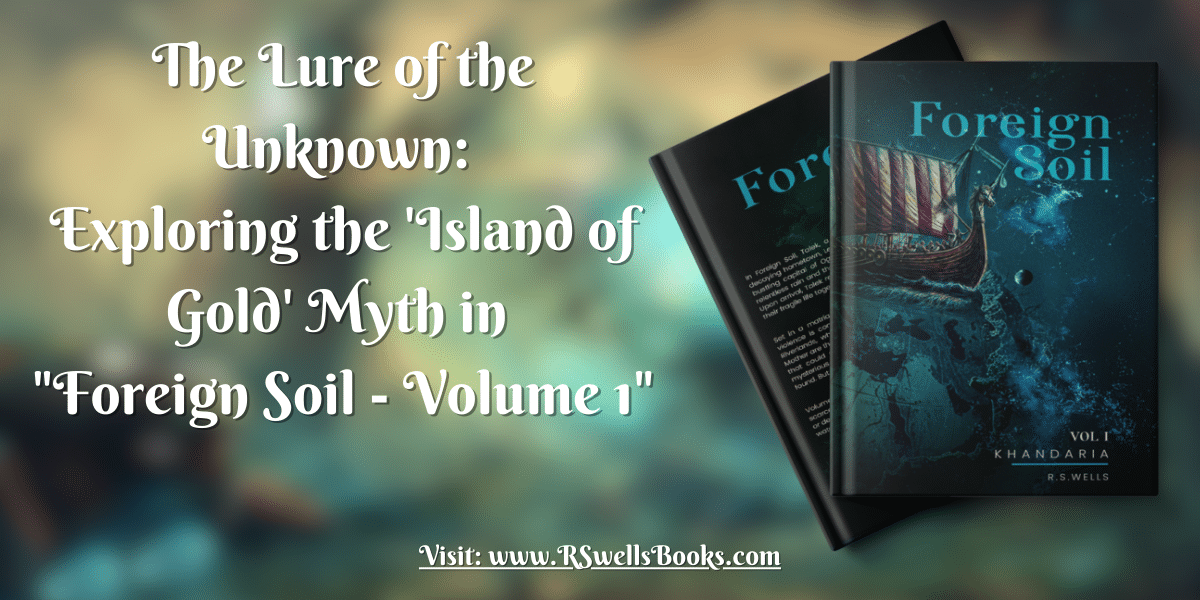
Exploring the Depths of Humanity: A Review of “Foreign Soil – Volume 1”

By: Jason Gerber

Adventure stories have a unique way of reflecting our deepest desires, fears, and the essence of our humanity. Through the lens of fiction, we can journey to unknown landscapes, experience new cultures, and face challenges that test the limits of our resilience. R.S. Wells’ Foreign Soil series is a prime example of this narrative power, with Volume 1 setting the stage for an epic exploration of the human condition.

In this blog, we’ll delve into Volume 1 of this enthralling series while offering glimpses of what awaits in Volumes 2 and 3.

The Adventure Begins in Foreign Soil: Volume 1

From the very first chapter of Volume 1, we are drawn into a world filled with uncharted territories and intriguing cultures. The protagonist, Talek, embarks on a journey that explores both external landscapes and internal struggles. His adventures are set against a rain-soaked, mysterious backdrop, symbolizing the challenges ahead.

Talek’s interactions with local people emphasize themes of community and hospitality. In one notable encounter, Klooo gifts Yorn a picture book, illustrating the importance of kindness and mutual support in this richly detailed world. These gestures reflect the cultural values woven throughout Wells’ narrative and highlight the essential role of compassion in a functioning society.

Through Wells’ remarkable world-building, we explore complex social structures, such as tribes that measure wealth by how well their poorest members live. This reversal of conventional notions of prosperity provides readers with a powerful commentary on equality and social justice. It forces us to rethink what it means to be truly “wealthy” and offers a fresh perspective on communal well-being.

The novel also portrays Talek’s struggle for survival as an allegory for human resilience. His endurance of inhospitable weather and harrowing conditions speaks to the strength of the human spirit. Wells captures this beautifully, showing that survival is more than physical endurance—it’s a test of mental and emotional fortitude.

A Deeper Look: The Elusive “Island of Gold”

A thrilling subplot in Volume 1 involves Talek and his companion, Leola, in search of the fabled “Island of Gold.” This elusive place drives the story forward, serving as a symbol of dreams, hopes, and desires. For Talek and his crew, the “Island of Gold” represents a chance for life-changing wealth, but the hardships they face along the way reveal deeper truths about the value of persistence and the rewards of the journey itself.

Each island the crew encounters offers unique challenges and cultural discoveries. Governor Kuus, one of the leaders they meet, poses thought-provoking ethical dilemmas to the crew, forcing them to confront their motivations for seeking gold. These interactions serve as a reminder of the importance of understanding and respecting other cultures, making Wells’ narrative as thought-provoking as it is adventurous.

What Awaits in Volumes 2 and 3

As the series continues in Volumes 2 and 3, Wells expands on the complexities introduced in Volume 1. Talek’s adventures grow more perilous, and the moral questions become even more profound. While the fabled “Island of Gold” continues to elude him, the lessons he learns along the way are invaluable.

In Volume 2, readers are introduced to new lands and cultures, raising the stakes for Talek and his companions. The harsh realities of survival are ever-present, as are the complexities of navigating foreign political systems and social hierarchies.

Volume 3 brings these themes to a climactic head, as Talek faces choices that will challenge his understanding of morality and human nature. By the end of the trilogy, readers will find themselves questioning the true nature of wealth and what it means to be successful in a world filled with hardship. It’s important to note that Volume 3 is not the final chapter. The Foreign Soil series will extend beyond these volumes, with about a half dozen more to explore. As the series progresses, the complexities deepen, urging readers to reflect on their own beliefs about survival, wealth, and morality.

Final Words

The Foreign Soil series by R.S. Wells is more than just a tale of adventure—it’s an exploration of humanity. Through detailed world-building, rich character development, and intricate social commentary, Wells delivers a narrative that is both engaging and thought-provoking.

In Volume 1, themes of community, resilience, and cultural understanding take center stage, while the tantalizing “Island of Gold” adds a layer of mystery and excitement that keeps readers hooked. As the series progresses, the complexities deepen, urging readers to reflect on their own beliefs about survival, wealth, and morality.

For those ready to embark on this unforgettable journey, you can purchase Foreign Soil – Volume 1 here on Amazon and explore more of R.S. Wells’ works on his official website.


Published by: Khy Talara

Exploring Life’s Rich Tapestry in Wayne Nalls’ New Book

By: Jason Gerber

Life’s essence often lies scattered in moments, both monumental and minute. Wayne Nalls, in his inspiring book “That Reminds Me of A Story,” captures this essence through a collection of 327 short narratives that span the spectrum of human emotion and experience. This article looks into the depth and diversity of Nalls’ narrative collection, exploring how these stories reflect the multifaceted nature of life itself.

A Patchwork of Stories

Each story in Nalls’ anthology acts as a unique strand within the broad spectrum of human experiences. Organized under varied themes from the reminiscent “Those Were the Days” to introspective explorations in “The Value of Time” and “Food for the Soul,” this thematic range enhances readers’ insights while mirroring life’s unpredictable twists. Every page turn introduces a fresh hue, a new motif, and a distinct perspective, echoing the dynamic shifts seen in a turning kaleidoscope.

Echoes of the Past

In the section titled “Those Were the Days,” Nalls brings to life the golden hues of the past with stories that are both a reflection and a celebration of yesteryears. These narratives evoke a sense of nostalgia, not just for the times gone by but for the simplicity and clarity those times often represent. Nalls’ ability to pull readers into these moments, reviving the joys and pains of days past, showcases his prowess as a storyteller who can traverse the boundaries of time.

Lessons in Living

Life isn’t just about looking back; it’s about living in the now and learning for the future. The section “Living Life” encapsulates this philosophy through stories that offer lessons on resilience, joy, and the everyday grind. Here, Nalls does not just tell a story; he invites readers to glean wisdom from the experiences he shares. From overcoming adversities to celebrating small victories, this section serves as a reminder of the strength and spirit that daily life demands and deserves.

Inspirations for Tomorrow

True to the title of his book, Nalls uses personal anecdotes to inspire action among his readers. The segments “The Power of Self-Improvement” and “The Power of Motivation” are filled with actionable insights that encourage personal growth and self-reflection. These stories act as a catalyst for readers, urging them to not only reflect on their paths but also to take charge and make meaningful changes.

A Call to Preserve Memories

Nalls emphasizes the importance of capturing and cherishing personal histories. Each story is an invitation to the reader to pause and reflect on their own life’s narratives and to pen them down. This is not just about preserving memories but about understanding and appreciating the journey thus far. It’s about seeing the beauty in the blues, the golds, and the myriad shades in between that life presents.

Conclusion 

“That Reminds Me of A Story” by Wayne Nalls is a journey through the kaleidoscope of life, revealing new patterns and colors with each story. It’s an exploration of experiences, emotions, and lessons that resonate uniquely with each reader, providing a reflective mirror to people’s own lives. 

This treasure trove of life’s vignettes is available on Amazon along with other leading online bookstores, inviting readers to challenge their perspectives, enrich their understanding of life’s complexities, and most probably write their own stories before they fade away. 

Published by: Holy Minoza

How Willie Davis Overcame Generational Health Struggles

By: Jason Gerber

Generational health issues are health problems that run in families. These issues, like obesity and hypertension, can be challenging to overcome. Many people struggle with them because they have been part of their family for many years. However, breaking these unhealthy cycles and starting new, healthy traditions is possible.

Changing long-standing habits is one of the biggest challenges in overcoming generational health issues. These habits can be deeply ingrained and hard to change. For example, if a family has always eaten unhealthy foods, it can be not easy to switch to a healthier diet. However, with determination and the right strategies, it can be done. 

Another important factor is education. Many people do not realize how their lifestyle choices affect their health. Learning about healthy habits and how to implement them is crucial. This knowledge can then be passed down to future generations, helping to prevent these health issues from continuing.

Support from family and friends is also essential. It is much easier to make healthy changes when you have the support of those around you. Encouragement and accountability from loved ones can make a big difference in staying on track.

Willie Davis faced significant health challenges within his family, including obesity and hypertension. His story, as told in his book “Saving Grandpa Bill,” provides a powerful example of overcoming these issues and setting a new standard for health and wellness.

Willie knew that to break the cycle of unhealthy habits in his family, he had to start with himself. He decided to change his lifestyle and focused on small, achievable goals. This approach helped him stay motivated and see progress over time.

One of the strategies Willie used was educating himself about healthy habits. He learned about proper nutrition, the importance of regular exercise, and how to manage stress. This knowledge was crucial in helping him make lasting changes.

Support from his family and friends played a significant role in his success. They encouraged and held him accountable, making it easier for him to stick to his new habits. Willie also set an excellent example for his family. By making healthy changes in his own life, he inspired others to do the same.

In discussing the importance of community support, he reflects on how his family’s eating habits were formed and how he decided to change them. He says, “We were on the typical diet of fried foods, starches, and grease. We ate vegetables, but they were mostly flavored with fat and pork. Cleaning up our eating habits just wasn’t on the agenda.” This realization was a turning point for Willie. He knew that to live a healthier life, he had to change these long-standing habits.

In addition to changing his diet, Willie also began exercising regularly. He found activities he enjoyed and made them a part of his daily routine. This helped him stay consistent and motivated. Willie shares, “I went to a local gym, got a membership, and started going every day. I cleaned off my plates and made space for caring for myself.”

Willie’s story shows that it is possible to overcome generational health issues. By setting small goals, educating yourself, seeking support, and setting a good example, you can break unhealthy cycles and create a healthier future for yourself and your family. His book, “Saving Grandpa Bill,” offers valuable lessons and inspiration for anyone looking to change.


Published by: Khy Talara

Four Seasons Book Awards Winners Celebrated at Times Square Spectacle

By: Helena Burns

On a beautiful day in New York City, the heart of Times Square pulsed with a different kind of energy as the Four Seasons Book Award proudly showcased its 2023 Grand Prize Winners on a towering billboard. The vibrant display celebrated the literary achievements of exceptional authors, marking a significant moment in their careers and providing a spectacular visual tribute in one of the world’s most iconic locations. The event also drew crowds of literature enthusiasts, passersby, and tourists, all captivated by the stunning visual celebration and the honored authors’ impactful contributions to the literary world.

The event was a culmination of a year-long celebration of literary excellence, where the finest works were honored with the prestigious Four Seasons Book Award. Among the many talented writers, three stood out for their remarkable contributions to literature, capturing the attention of readers and critics alike.

Paige Taylor, the Second Place Grand Prize Winner, was present to witness her name and the cover of her book, Secrets Wrought in Blood, light up the skyline. Taylor’s gripping tale of mystery and intrigue has captivated readers, earning her a well-deserved spot in the annals of great storytelling. Her excitement was palpable as she accepted her plaque and certificate, a testament to her dedication and passion for writing.

Joining Taylor was J. Denison Reed, the Third Place Grand Prize Winner, who also took the stage to receive his honors. His book, Clifford’s War: Without End, a riveting story that explores the complexities of conflict and the human condition, has resonated deeply with audiences. Reed’s presence at the event added to the celebratory atmosphere, as he shared this milestone with fellow authors and supporters.

The event also welcomed some of the Grand Prize Finalists, including Franz Metzman, whose book, The Cha Cha Babes of Pelican Way, has charmed readers with its delightful characters and compelling narrative. Metzman’s participation added to the sense of community and camaraderie, highlighting the spirit of support that defines the literary world.

Each author present was honored with an official plaque and certificate, commemorating their achievement and recognizing their contribution to the world of literature. For those who couldn’t attend, their accolades will be sent by mail, ensuring that every winner feels the weight of their accomplishment.

The atmosphere was electric, filled with joy, happiness, and a shared sense of achievement. Authors mingled with fans, industry professionals, and each other, forming bonds that transcend the written word. The Four Seasons Book Award has not only provided a platform for literary excellence but has also fostered a community where creativity and storytelling are celebrated.

As the evening drew to a close, the towering billboard continued to flash the names and faces of these remarkable authors, leaving an indelible mark on the New York City skyline. The Four Seasons Book Award has once again proven that great stories have the power to transcend boundaries, bringing together a diverse group of people united by their love of literature.

Learn more about the event at www.fourseasonsbookawards.com

Published by: Holy Minoza

Historical Context: Life in the South as Depicted in One Legged Uncle Jesse

By: Jason Gerber

Southern culture is steeped in traditions, family ties, and values. This vibrant heritage, marked by its storytelling traditions and deeply rooted customs, is vividly depicted in the book “One Legged Uncle Jesse.“

Written by Mike Morris, it is a fascinating memoir that offers a glimpse into life in the southern United States, specifically in Alabama. The book is set in a small, rural community, and its narrative is shaped by the unique historical, cultural, and social context of the South. Understanding this context is crucial to fully appreciating the characters’ experiences and actions.

The Southern Setting

The southern United States, particularly Alabama, has a rich and complex history. This region has experienced significant transformations over the centuries, from its early days as a part of the Confederate States during the Civil War to its role in the Civil Rights Movement of the 1960s. The South is known for its distinctive culture, characterized by strong family ties, a slower pace of life, and a deep connection to the land.

Rural Life and Community

In “One Legged Uncle Jesse,” the setting is a small, rural community in Millerville, Alabama. Rural life in the South is marked by close-knit communities where everyone knows each other. This sense of community is evident in the book, where neighbors look out for one another, and family history and traditions are deeply valued.

For instance, Reverend James Washington Stewart (J.W. Stewart), a traveling preacher and a key character in the book, frequently travels throughout Alabama. As the father of Arvis, the protagonist, he plays a pivotal role in her life and the narrative. Reverend Stewart maintains strong ties to Millerville, with his interactions during Sunday church services showcasing their deep-rooted bonding with the community. The characters in the novel share a strong bond, and their interactions are shaped by the social norms and values of their environment.

Historical Events and Social Changes

The South has undergone numerous social and economic changes, many of which are echoed in the lives of the characters in “One Legged Uncle Jesse.” 

After the Civil War, the South struggled to rebuild its economy and social structure. This period, known as Reconstruction, was marked by significant challenges, including poverty, segregation, and racial tensions.

In the novel, the legacy of this era can be seen in the characters’ lives as they navigate the hardships of rural life and the lingering effects of historical injustices. Reverend Stewart’s remembrance of Ma’s cackling taunts of “hippo Christ” or “the White Man’s religion” speaks to the racial and social tensions that persisted.


In addition, the Great Depression, which began in 1929, had a profound impact on the South. Many families faced severe economic hardships, struggling to make ends meet. The Great Depression is also reflected in the book through the characters’ resilience and resourcefulness. They rely on each other for support and find ways to cope with the difficulties they face. 

Moving on, World War II brought significant changes to the South. Many young men went off to fight. These war efforts brought new industries and job opportunities to the region. Before Japan’s unprovoked and immoral assault on their country, the citizens of Alabama wanted no part in the war. 

Further, the Civil Rights Movement of the 1960s was a pivotal period in Southern history. It brought about significant changes in laws and attitudes towards race and equality. While the novel is set before this period, the social dynamics and tensions present in the characters’ lives hint at the growing demand for social justice and change.

The culture of the South is a vital aspect of the novel. This is reflected in the characters’ behaviors, traditions, and interactions. The Southern way of life, with its emphasis on hospitality, tradition, and storytelling, is beautifully portrayed in the book.

Family is at the heart of “One Legged Uncle Jesse.” The characters are bound by deep familial connections, and their relationships are shaped by long-standing traditions and values.

For instance, the protagonist Arvis’s memories and stories about her Uncle Jesse are central to the narrative. These stories reflect the importance of family history and the ways in which the past continues to influence the present.

The characters share their experiences and memories, preserving their heritage and passing down wisdom from one generation to the next. The stories about Uncle Jesse, whether accurate or embellished, keep the memories alive and serve as a way for the family to connect with their past.

Religion is another prominent aspect of Southern culture. It provides a sense of community and offers comfort during difficult times. The book subtly incorporates this through the characters’ beliefs and the role of the church in their lives.

Religious gatherings and rituals were occasions for community bonding and support. This is visible when J.W. prepares to continue his mission despite his past torments, donning a metaphorical “sacred robe” to protect himself from the judgment and taunts of his family, encapsulating his determination to go forth and preach the gospel.

Final Words

“One Legged Uncle Jesse” masterfully captures Southern life, historical events, cultural and social aspects. By understanding the historical context in which the characters live, readers can gain a deeper appreciation for their experiences and actions.

The unique setting of rural Alabama, with its complex history and strong cultural traditions, shapes the lives of the characters and provides a vivid backdrop for their stories. Through this novel, Mike Morris offers readers an insightful look into the heart and soul of the South, capturing the resilience, strength, and enduring spirit of its people.

Published by: Holy Minoza

The Power of Storytelling in Robert Barclay’s The Butterfly Dynasty Series: A Conduit for Social Awareness

Storytelling has long been a vehicle for confronting societal issues, offering a lens through which the complexities of human experience can be explored and understood. Robert Barclay’s The Butterfly Dynasty series exemplifies this tradition, using narrative as a powerful tool to examine and raise awareness of social issues, particularly those surrounding racism and the lived experiences of the Chinese-Australian diaspora. Through a rich blend of historical context, cultural insight, and deeply human characters, Barclay’s work transcends the boundaries of fiction, engaging readers in a critical dialogue on identity, belonging, and social justice.

A Narrative that Transcends the Text

The Butterfly Dynasty is not merely a series of novels; it is a multifaceted exploration of the Chinese-Australian experience, one that extends beyond the pages to engage with broader social and cultural conversations.

Barclay’s storytelling is marked by its commitment to authenticity, drawing on extensive research and a deep understanding of the historical and cultural landscapes it portrays. The result is a narrative that resonates with readers on multiple levels, inviting them to engage with the characters’ struggles and triumphs in a way that is both intimate and universal.

What distinguishes The Butterfly Dynasty is its ability to act as a platform for real-world engagement. Barclay has collaborated with a diverse group of brand ambassadors, actresses, and Chinese-Australian women who bring their personal experiences and insights to the fore. 

These individuals are not merely promoting the series; they are actively contributing to its mission of fostering understanding and challenging the societal norms that perpetuate racism and exclusion. Through their involvement, The Butterfly Dynasty becomes more than a literary work—it evolves into a collaborative effort to illuminate and address the ongoing challenges faced by marginalized communities.

Authenticity and Representation in Chinese-Australian Narratives

At the core of The Butterfly Dynasty is a profound exploration of the Chinese-Australian experience, rendered with a level of detail and cultural sensitivity that is both rare and necessary in contemporary literature. Barclay’s portrayal of this community, from the early waves of migration to modern-day Australia, offers a nuanced perspective on the intersections of race, culture, and identity. His work serves as a vital contribution to the literary landscape, filling a gap in the representation of Chinese Australians and providing readers with a deeper understanding of the challenges and contributions of this community.

Yet, The Butterfly Dynasty is not content to simply document history; it seeks to provoke thought and inspire change. Barclay’s narratives are infused with a sense of urgency, compelling readers to confront the realities of racism and discrimination in their own lives and societies. By embedding these themes within the fabric of his storytelling, Barclay invites a critical examination of the ways in which cultural and racial identities are constructed and contested in Australia.

Such narratives have sparked global engagement through read-along events. These gatherings bring together readers from around the world to discuss The Butterfly Dynasty, encouraging critical dialogue and allowing participants to delve deeply into the social issues presented in the series, such as class struggle, racism, human trafficking and environmentalism. 

It’s unsurprising that his work has garnered critical acclaim; Barclay has been a prominent figure in the literary community, participating in events such as the Clunes Book Fair and being featured in esteemed publications like Démodé and ReadALot. 

A Literary Call to Action

In the context of significant literary dates, The Butterfly Dynasty aligns with National Literary Day, celebrated in the U.S. on August 15th. This day is dedicated to honoring literature and its impact on society, making it an ideal occasion to engage with Barclay’s compelling narratives. 

The profound themes and cultural insights in The Butterfly Dynasty provide readers with an opportunity to reflect on the power of storytelling as a means of social change. National Literary Day encourages readers to delve into works like Barclay’s, which not only entertain but also provoke thought and foster critical discourse on vital social issues.

The Butterfly Dynasty series is a compelling example of how literature can serve as both a mirror and a catalyst for social change. The involvement of brand ambassadors and actresses who are deeply invested in social justice amplifies the series’ impact, transforming it from a passive reading experience into an active, ongoing conversation. 

These women, through their personal stories and public platforms, bring the issues of Chinese Australian diaspora, explored in Barclay’s novels into the public consciousness, ensuring that the themes of the series resonate far beyond the confines of the literary world.

In this way, The Butterfly Dynasty functions not only as a work of fiction but as a dynamic force for advocacy and awareness. Barclay’s collaboration with these women underscores the importance of representation in storytelling, demonstrating how literature can bridge the gap between personal experience and collective understanding. As readers engage with the series, they are not only drawn into the world of the characters but are also encouraged to reflect on the broader social implications of the narratives, making The Butterfly Dynasty a crucial work in the ongoing dialogue about race, identity, and justice in contemporary Australia.

Published by: Holy Minoza

Raylin Ramsay’s ‘Born with The Mark’ Shines in Fantasy Literature

By: Jason Gerber

Raylin Ramsay has harbored a passion for storytelling since childhood. Her journey as an author is marked by a deep-seated love for writing, an affinity that has only grown stronger over the years. When not immersed in crafting her next tale, Raylin finds joy in the company of family and friends. Her love for travel not only enriches her life experiences but also serves as a wellspring of inspiration for her imaginative narratives. 

Born with The Mark – A Compelling Fantasy Saga 

Raylin Ramsay’s Born with The Mark is a riveting addition to the fantasy genre. It is a tale that fascinates readers with its blend of ancient prophecies, hidden powers, and a quest for identity and destiny. The protagonist, Jaycenda, is a young woman marked by destiny as the true heir to the throne of the fabled city of Atlantis, identified by an ancient mark of intertwined half-moons. 

The story is set in a richly imagined world. It begins with Atlantis being sunk to the Abyss, safeguarded by a crystal pyramid that creates a protective dome over the city, ensuring its preservation. This drastic measure was taken to prevent further devastation by Cyrus, a power-hungry royal whose actions threatened the very existence of Atlantis. The crystal pyramid atop the palace of Atlantis creates a protective dome that provides continuous sunlight, preserving the city for its eventual rise. 

Jaycenda goes to the labyrinth and is led to the crystal by the Minotaurs. During this journey of self-discovery, she learns about the heritage of Atlantis and the Atlanteans, where they encounter a powerful crystal that reveals critical information about Jaycenda’s heritage and the destiny that lies before her. 

Conflict and Antagonist 

Opposing Jaycenda is Milledge, a direct descendant of the banished Cyrus. Consumed by a belief in his own royal entitlement, Milledge seeks to reclaim the throne and impose his dominion over the world. 

His ambitions present a looming threat to Jaycenda and the future of Atlantis. He believes it is his rightful place to rule due to his royal bloodline, and his cunning and ruthless nature make him a formidable adversary. 

Themes and Character Development 

The book is rich with subjects of prophecy, heritage, and the struggles between duty and personal growth. Jaycenda’s evolution from a young woman unaware of her true potential into a leader ready to embrace her destiny is central to the narrative. Her journey is not just a physical quest but also an emotional and psychological one as she learns to harness her powers and prepare for the rise of Atlantis. 

As she goes deeper into her heritage and abilities, Jaycenda must prepare for the eventual rise of Atlantis and the responsibilities that come with her mark. The story is not just about the external battles but also about the internal struggle of accepting one’s identity and the burdens that come with it. The world-building and detailed lore of Atlantis adds depth to the story, making it a rich and immersive read. 

Raylin Ramsay’s Writing Style 

Ramsay’s writing style is both descriptive and engaging, drawing readers into the world of Atlantis with stark imagery and well-crafted scenes. Her ability to balance action with introspection allows for a well-rounded narrative that keeps readers hooked from start to finish. The pacing of the novel is well-managed, with each chapter building on the last to create a cohesive and compelling story. 

Conclusion 

Raylin Ramsay’s foray into fantasy with Born with The Mark marks her as a notable new voice in the genre. Her ability to blend mythological elements with personal growth and adventure makes this novel a must-read. As Jaycenda’s story progresses, readers are left eagerly anticipating the next installment, making Raylin Ramsay an author to watch in the coming years. With a strong debut, Ramsay has set the stage for a promising career in fantasy literature, and Born with The Mark is sure to become a beloved addition to any fantasy enthusiast’s collection.

Published by: Martin De Juan

How Essays Can Inspire Personal Growth: Insights From ‘Thorns Have Roses’

In a world that often moves too swiftly for reflection, the art of writing an essay offers a place for personal growth and introspection. The wisdom and heartfelt guidance embedded in each essay creates an atmosphere that invites readers to pause, reflect, and grow through personal experiences. This is precisely what Ira David Welch accomplishes in his profound narrative, “Thorns Have Roses.” Ira David Welch, born in Denver, Colorado, brings to the table a lifetime of experience drawn from his six decades as a good student and teacher. His writings are more than just reflections; they are expertly written journeys that lead readers through the challenges of education, social transformation, and self-improvement. 

The book “Thorns Have Roses” is a story full of wisdom in a world that is always changing, and not just a compilation of essays. With prose and profound insights, the author opens doors to contemplation, making his work accessible to anyone seeking to understand life’s deeper meanings and connections. The collection determines the transformative power of essays and how they can inspire personal growth, reflect on our lives, and challenge us to think critically. 

The Power Of Introspection

Essays have a diverse medium through which authors can explore complex ideas and emotions. However, the essays not only highlight thoughts and expressions but also encourage deep introspection in the readers. Welch’s “Thorns Have Roses” is a great example of this. In addition to sharing his experiences and wisdom, his book inspires readers to consider their own paths of self-discovery. Every pearl of wisdom serves as a mirror, reflecting the author’s ideas and enabling readers to gain a fresh perspective on their own lives. 

The introspective journey is essential for personal growth. We allow ourselves to grow and change when we examine our experiences, values, and beliefs. It promotes the process by drawing attention to relevant problems, providing fresh viewpoints, and pressing readers to consider their surroundings. This will give them a deeply personal reading experience that can help them with self-improvement and meaningful growth.

'Thorns Have Roses’ How Essays Can Inspire Personal Growth. _2

Photo Courtesy: Ira David Welch

Education And Personal Development

One of the compelling themes that you can find in the book on education and self-improvement is personal development. These essays and books help you draw from an extensive background in both learning and teaching, offering unique insights into how education shapes our lives. The stories highlight how education is about learning new things, developing critical thinking skills, and challenging the status quo while assisting with personal development. 

Education is a continuous process that takes place outside of the classroom. The essays and book serve as a helpful reminder that learning never ends, even when we finish our official schooling. Instead, it continues throughout our lives as we grow, face new challenges, and adapt to change. 

Embracing Change Through Reflection

Although change is a necessary part of life, it can also be one of the difficult things to deal with. The nature of change and how we might accept it are topics covered in a wide variety of books and articles. The reflections on change are not only theoretical musings but showcase people’s experiences and observations through life. 

With numerous books and essays, readers are encouraged to see change not as something to be feared by as an opportunity for personal growth. By reflecting on different experiences and the changes people undergo, you can develop a deeper understanding of change in ourselves and the world around us. This, in turn, will allow you to approach life’s challenges with greater wisdom and strength. 

The Role Of Society In Personal Growth

Another important aspect reflected in essays and books is the relationship between society and personal growth. It offers you a chance to explore how societal norms, cultures, and values can affect an individual’s life. It helps challenge readers to think about how they are influenced by the society they live in and how it can impact society in return. 

Readers are inspired to challenge social norms, take an active role in their communities, and work for a better future through a variety of narratives. This viewpoint has significance for personal development because it encourages us to go beyond our own needs and think about the ways in which we can all improve society. You may develop personally and contribute to building a better society for the next generations by doing this.

Final Thoughts

Essays and books can be a great guide for personal growth and reflection. With great prose and profound insights, these narratives offer readers a path to introspection, encouraging them to reflect on their own lives and experiences. It demonstrates the transformative power of education, reflection, and change, showing us how these elements uphold significance in our personal growth.

Published by: Martin De Juan

Bullets and Bandages: A Journey Through War and Healing

By: Seraphina Quinn

Introduction

In the quiet corners of a modest farmhouse, a young man, Mr. Allen, was born on March 7, 1947. Raised on a farm, he spent his days milking cows and feeding chickens. But deep within him, a spark of adventure flickered. The fields and barns couldn’t contain his dreams; he yearned for something beyond the horizon.

Mr. Allen’s admiration for his father, a World War Two veteran who survived the brutal battles of the South Pacific, fueled his desire for a different path. His father’s stories, the scent of old uniforms, and the lingering echoes of war shaped Allen’s aspirations. He made a promise to his father: he would never join the infantry. Little did he know that fate had other plans.

From Farm to Battlefield

At the top of the draft list, Allen faced a pivotal decision. His father’s words echoed in his mind: “Never the infantry.” Seeking an alternative, he walked into the county headquarters and met the Navy recruiter. The Navy wasn’t infantry, and so began Allen’s journey.

Basic training in sunny San Diego replaced snowdrifts, and the Navy welcomed him. Assigned to Balboa Hospital, Allen honed his medical skills. But fate intervened once more—orders to Camp Pendleton, the Marine base. Not what he signed up for, but there was a naval hospital there. Allen worked tirelessly, caring for wounded Marines.

Vietnam: A Harrowing Odyssey

Then came Vietnam. A chartered plane carried him across oceans, landing in Da Nang. The heat, the smell of jet fuel, and the reality of war hit him like a shockwave. Assigned to a Marine Corps Company, Allen rode trucks, delivering not only himself but also the wounded. The explosions, the fear—it was all too real.

In Alpha Company, Allen became friends with the Marines he treated. They shared stories of home, love, and loss. But one day, tragedy struck. His good friend stepped on a mine, and Allen could do nothing. The weight of war settled on his shoulders.

Capturing the Cruelty: Bullets and Bandages

Amidst the chaos, Allen carried a small Kodak camera. He snapped pictures—images that revealed the cruelty and humanity of war. When film was developed, he mailed it home. Those snapshots, preserved in a shoebox, would later become the heart of his book, “Bullets and Bandages.”

A Healing Journey

Allen’s journey didn’t end in Vietnam. Discharged in 1969, he chose a different path. From UPS to respiratory therapy, nursing, and anesthesia, he found purpose. But the scars remained—the sleepless nights, the startle at sudden noises. Fireworks were no celebration; they were a reminder of war.

Legacy and Inspiration

“Bullets and Bandages” isn’t just a memoir; it’s an inspiration. Allen hopes future generations will read it and understand the sacrifices made by those who served. He wants dialogue between veterans and the public to bridge gaps and honor the fallen. As for Allen’s fiction? It waits patiently, a story yet untold.

Conclusion

The journey of Mr. Allen from farm to combat, from recovery to writing, reminds us that strength and bravery can prevail even in the most trying circumstances. “Bullets and Bandages” is more than a book; it’s a testament to the human spirit, etched in ink and memory.

Published by: Holy Minoza