
AI is transforming personalized astrology from static chart reports into interactive, conversational experiences tailored to individual charts.
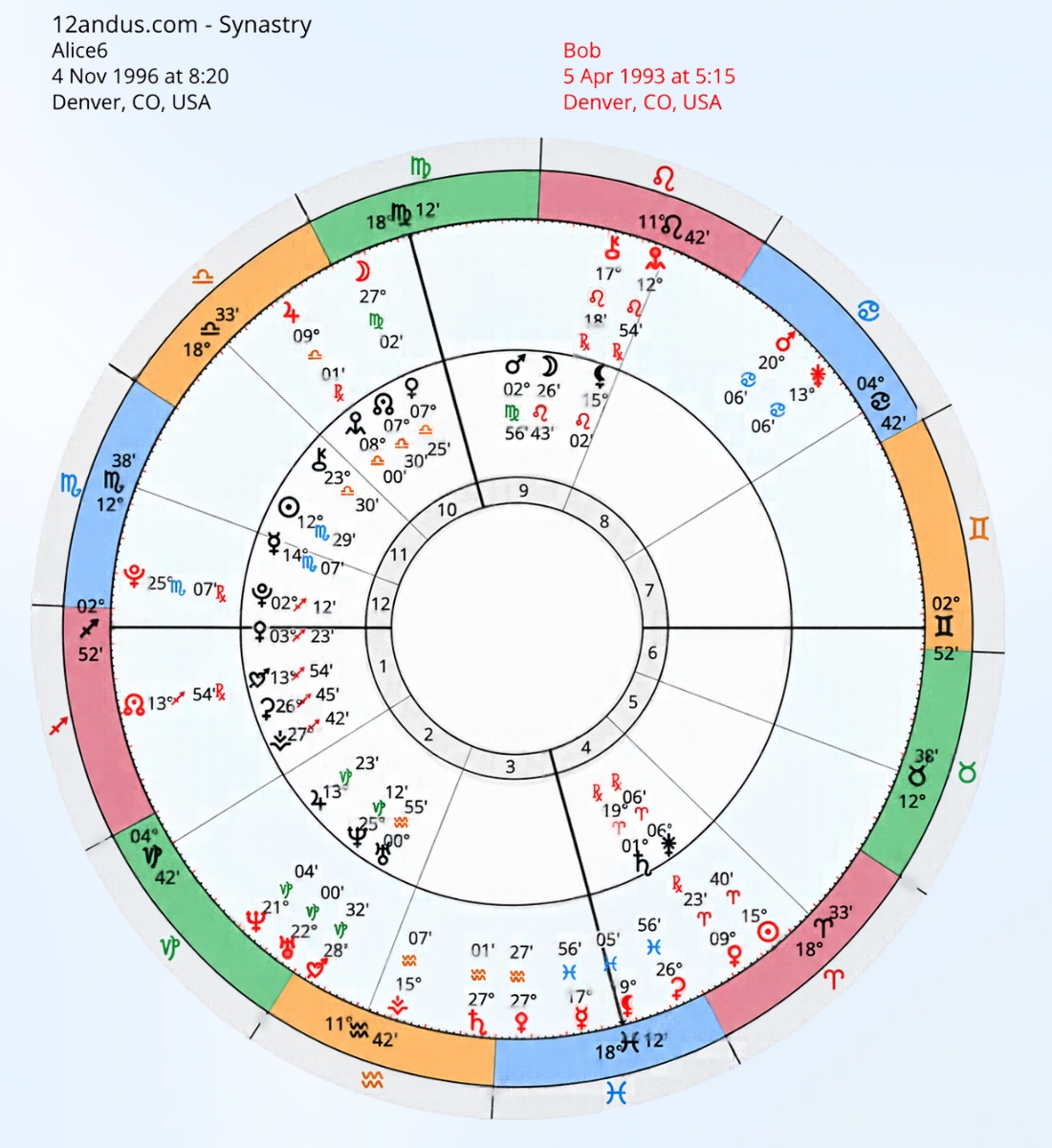
For decades, computerized astrology followed a familiar pattern. A person entered a birth date, time, and place, and software generated a chart accompanied by a fixed interpretation. The technology became more sophisticated over time, but the basic experience remained largely static: input data, receive a report, read the result.
Artificial intelligence is now changing that model.
Instead of simply producing predefined interpretations, newer astrology platforms are beginning to offer a more interactive experience, allowing users to ask questions, explore specific themes, compare relationships, and examine current planetary influences in a conversational way.
One platform that reflects this transition is 12andus, a personalized astrology service launched in 2016. Over the past decade, the platform has developed from a large library of individualized astrological interpretations into a multilingual system that combines traditional chart calculations with AI-assisted exploration.
Today, 12andus is available in 16 languages and covers a broad range of astrological techniques, including natal charts, transits, synastry, composite charts, relationship analysis, planetary aspects, houses, and personalized forecasts.
The shift toward conversational astrology represents a significant change in how people interact with this kind of information.
Traditional astrology software can generate extremely detailed reports, but users often face another problem: knowing what to look for.
A birth chart contains many interconnected elements. Someone may have questions about relationships, career, emotional patterns, family dynamics, or a particular period of change, yet a conventional report may require reading dozens of separate interpretations before finding the pieces that feel most relevant.
Conversational AI creates a different path.
Rather than navigating through a large collection of reports, users can begin with a question.
They might ask why a particular relationship feels intense, what current transits suggest about a period of uncertainty, how two charts interact, or which parts of their natal chart are most relevant to a specific life concern.
The system can then draw from the individual’s astrological data and respond within that context.
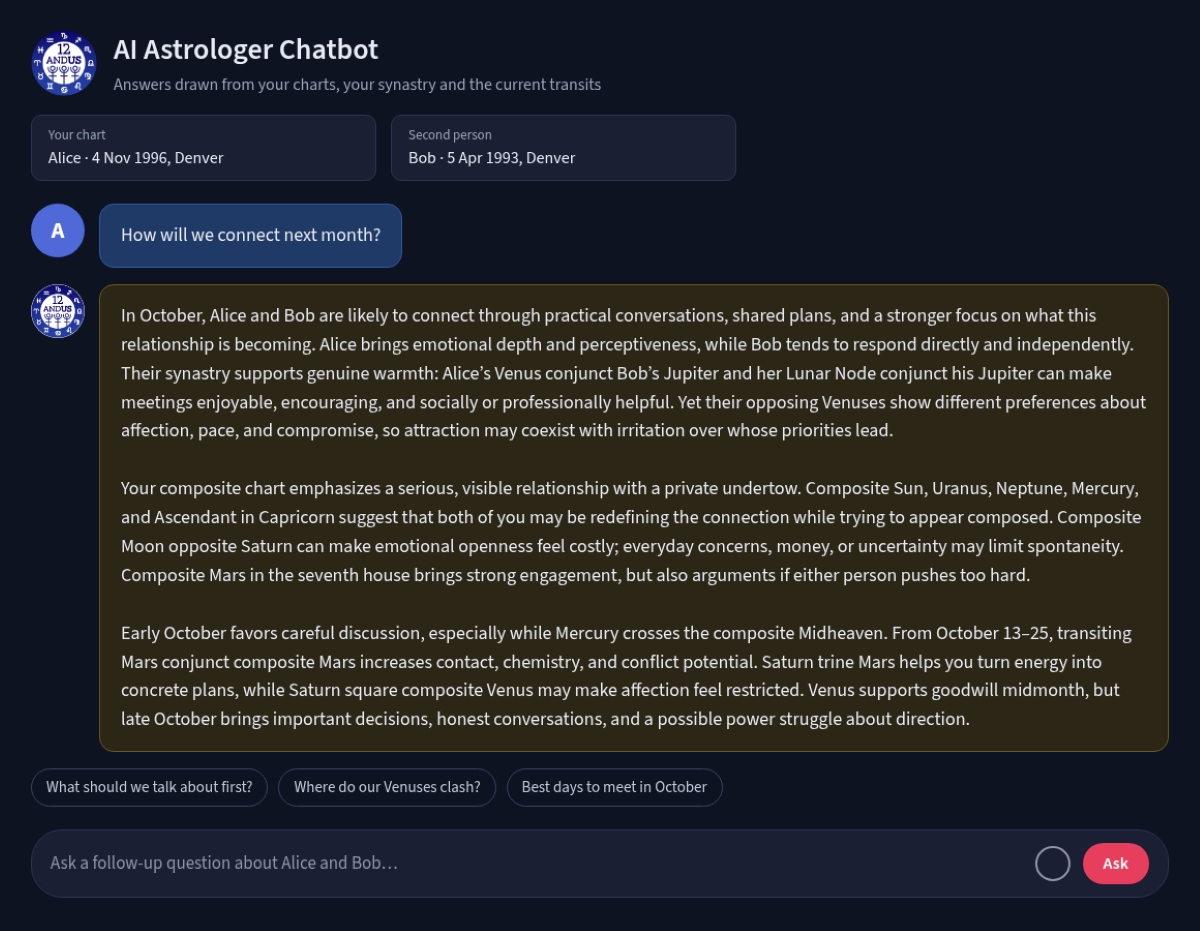
This is the idea behind the AI Insights chatbots developed by 12andus. Instead of functioning as a generic chatbot that simply discusses astrology, the system works with the user’s actual chart information, and a second person can be added to the same conversation to turn it into a relationship analysis.
That distinction is important.
A generic AI model can explain what Venus in Taurus means or describe the symbolism of Saturn. Personalized astrology, however, requires combining many factors at the same time: planets, signs, houses, aspects, current transits, and, in relationship analysis, the interaction between two different charts.
The result is closer to an ongoing exploration than a single report.
This development also reflects a broader change in digital personalization.
People have become accustomed to technology that adapts to their questions rather than forcing them through a predefined structure. Search engines, recommendation systems, educational tools, and digital assistants increasingly respond to individual context.
Astrology platforms are beginning to follow the same direction.
For 12andus, AI did not replace the underlying astrological framework. It was added on top of a system that had already been producing personalized reports for years.
The platform’s foundation remains based on calculated astrological data. AI is used primarily as a way of navigating, combining, and explaining that information in a more flexible way.
That approach may also address one of the longstanding limitations of automated astrology.
Astrology is highly combinatorial.
A single placement can have one meaning in isolation and a very different emphasis when considered together with other placements. A planet may be affected by its sign, house position, aspects, relationship to the chart angles, and current transits.
This is one reason highly personalized astrology has traditionally required either substantial study or consultation with an experienced astrologer.
Software has been able to calculate these combinations for decades, but presenting them as a coherent whole has always been more difficult.
AI offers a new tool for connecting those pieces.
Another major development has been accessibility.
12andus now provides its astrology content in 16 languages, opening detailed personalized interpretations to users who may not be comfortable reading complex astrological material in English.
This matters because the way people use astrology is also changing.
For many users, astrology is no longer something they consult only when ordering a birth chart report. It can become an ongoing reference point: checking current transits, understanding relationship dynamics, exploring emotional patterns, or reflecting on important decisions.
Mobile access and conversational interfaces naturally fit that more continuous style of use.
There is, however, an important distinction between personalization and prediction.
The most useful role of astrology may not be telling someone exactly what will happen next. Instead, personalized systems can help users identify themes, timing patterns, areas of tension, or recurring psychological dynamics.
In that sense, AI may be most valuable not because it makes astrology more certain, but because it makes complex astrological information easier to explore.
The technology also creates new questions.
As AI becomes more capable of generating interpretations, astrology platforms will need to distinguish between generic language generated on demand and systems grounded in precise chart calculations.
Accuracy, transparency, and the quality of the underlying astrological model may become increasingly important.
For 12andus, the next stage is therefore less about replacing traditional astrology and more about changing the interface through which people experience it.
The birth chart remains the same.
The calculations remain the same.
What is changing is the conversation around them.
After decades in which computerized astrology largely meant receiving a static report, users can now interact with their chart, question it, explore different areas of life, and move from one layer of interpretation to another.
That shift from report generation to dialogue may ultimately be one of the most important ways AI changes personalized astrology. Anyone curious can create a free account, enter their birth data, and start the conversation with their own chart.