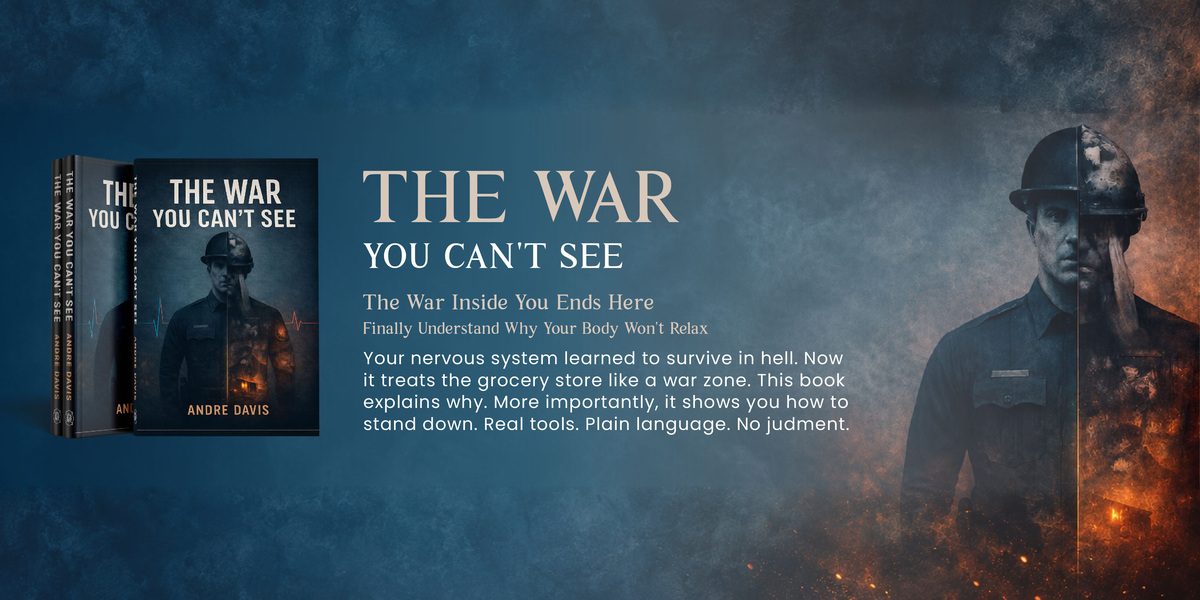

Some wounds do not bleed. Some wounds do not show up on an X-ray or a brain scan. They live in the quiet moments before sleep. They live in the eyes of a person who cannot forgive themselves. They live in the soul. This is the wound that Andre Davis calls moral injury. It is the hidden pain that destroys heroes from the inside while everyone around them sees nothing.
Moral injury happens when a person does something, sees something, or fails to prevent something that violates their deepest sense of right and wrong. It is not about fear. It is about shame. It is not about danger. It is about betrayal. It is the wound that forms when a soldier follows orders that harm innocent people. When a police officer makes a split-second decision that ends a life. When a medic cannot reach a child in time. When a corrections officer watches cruelty and feels powerless to stop it. When a survivor stays in an abusive relationship and blames themselves for not leaving sooner.
Most people have heard of PTSD. They understand that trauma comes from danger and threat. They know that a person who survives a violent attack may struggle with nightmares and flashbacks. But moral injury is different. It does not ask, “Am I safe?” It asks, “Am I still a good person?” It does not haunt a person with fear. It haunts them with guilt. It whispers, “You should have done more.” It whispers, “A better person would not have made that choice.” It whispers, “If people knew the truth about you, they would walk away.”
Andre Davis knows this wound well. He spent years in law enforcement. He saw good officers carry guilt for decisions that were legally justified but still felt wrong. He watched veterans replay moments from combat that they could not change. He listened to survivors of violence blame themselves for what was done to them. In his book The War You Can’t See, Davis explains why moral injury is so devastating and why it so often goes untreated.
The first reason moral injury goes untreated is that people do not have words for it. They know they feel shame. They know they feel guilt. But they do not understand why. They think something is wrong with them. They think they are broken. They do not realize that their pain has a name and that many others share it. Davis changes that. He gives readers the language they need to understand their own suffering.
The second reason moral injury goes untreated is that people believe they do not deserve help. This is the cruelest part of the wound. Moral injury convinces a person that they are unforgivable. It tells them that seeking help would be a form of cheating. It tells them that they should suffer forever because of what they did or failed to do. This belief keeps people trapped in silence. They suffer alone because they believe they deserve to suffer alone.
The third reason moral injury goes untreated is that traditional therapy often misses it. A therapist who focuses only on fear and anxiety may not understand the deep shame that comes from moral violation. A treatment plan that targets hypervigilance may not address the guilt that keeps a person awake at night. Davis explains that moral injury requires a different approach. It requires honest conversation about values, responsibility, and forgiveness. It requires a safe space where a person can tell the truth without being judged.
The War You Can’t See offers that safe space. Davis writes with honesty and compassion. He does not excuse harmful actions. He does not tell people that what they did was fine. Instead, he helps them separate what is truly theirs to carry from what belongs to circumstances, leaders, and systems. He helps them see that feeling moral pain is proof that they still have a conscience. People without a conscience do not feel moral injury. The fact that they hurt proves they still care about right and wrong.
Davis also addresses the betrayal that often accompanies moral injury. Many service members and first responders feel betrayed by leaders who gave bad orders. They feel betrayed by systems that failed them. They feel betrayed by institutions that promised one thing and delivered another. This betrayal adds another layer to the wound. It makes healing even harder because the person feels alone and abandoned.
Moral injury does not have to be a life sentence. Davis offers a path forward. The path starts with naming what happened. It continues with understanding what is truly yours to own. It grows through honest conversation with trusted people. It deepens through professional help from someone who understands the unique weight of moral injury. It is not easy. It is not fast. But it is possible.
The hidden wound does not have to destroy our heroes. It does not have to claim more lives. It does not have to keep good people trapped in shame. Healing is possible. Forgiveness is possible. A life beyond the wound is possible. That is the message at the heart of The War You Can’t See. That is the hope that Andre Davis offers to everyone who carries the weight of moral pain.
You do not have to carry this alone. You do not have to suffer in silence. You do not have to believe the lie that you are unforgivable. The first step is reaching out. The first step is telling the truth. The first step is picking up this book and letting it guide you home.
If you carry guilt that will not fade, you are not alone. The War You Can’t See offers a path through the shame. Get your copy today and start healing.