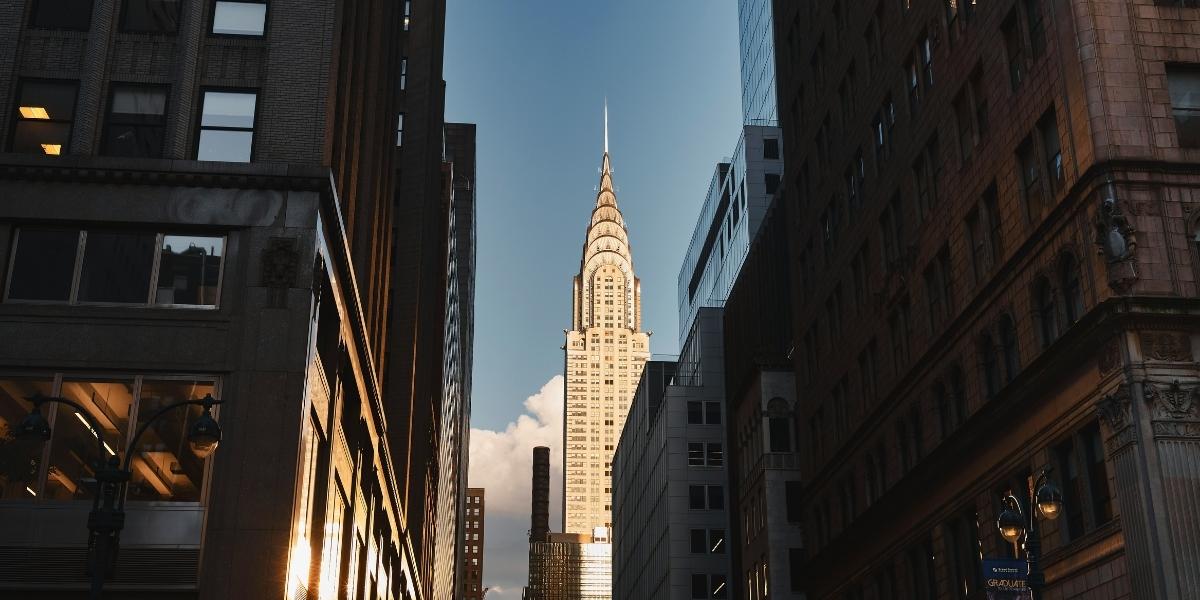

Tishman Speyer has finalized a 150-year ground lease for the Chrysler Building, with the arrangement including $235 million plus lease payments to Cooper Union. The Chrysler Building renovation will modernize core systems, add new amenities, and prebuild much of its vacant office space as Manhattan leasing activity remains elevated.
Key Takeaways
- Tishman Speyer and Cooper Union announced the new 150-year Chrysler Building ground lease on October 7, 2026
- The agreement includes $235 million plus continuing ground lease payments to Cooper Union
- Plans call for prebuilding 75% of current and upcoming vacant space, along with major infrastructure and amenity upgrades
- Colliers reported Manhattan office availability at 12.5% in August, its lowest level since September 2020
- Tishman Speyer has not announced a completion date for the full renovation program
The Chrysler Building Renovation Starts With a 150-Year Lease
The Chrysler Building renovation is moving forward under a new long-term agreement between Tishman Speyer and Cooper Union, placing one of Manhattan’s best-known office towers into a major repositioning program.
The parties announced the agreement on October 7, 2026. Tishman Speyer will hold a 150-year ground lease covering the 77-story tower at 405 Lexington Avenue. The arrangement includes $235 million plus ground lease payments to Cooper Union, which owns the land beneath the building.
The structure differs from a conventional building sale. Cooper Union retains ownership of the land, while Tishman Speyer gains long-term control of the leasehold and responsibility for the planned work at the property.
The agreement also follows a period of uncertainty for the building. In September 2024, Cooper Union said the previous ground lessee had stopped making required monthly payments. Cooper Union terminated that lease and took control of the property while retaining Cushman & Wakefield to manage the building.
The new arrangement gives the property another long-term operator less than two years after that transition.
Tishman Speyer CEO Rob Speyer framed the timing around conditions in the office sector.
“We are pursuing an ambitious plan for the Chrysler Building at a historically strong moment for the Manhattan office market,” Speyer said in the October 7 announcement.
Current leasing figures provide context for that statement. They do not determine how an individual property will perform, but they show that the new lease begins during a period of stronger Manhattan office activity than the market experienced in several previous years.
Cooper Union’s connection to the property stretches back more than a century. The institution has said it has owned the land beneath the Chrysler Building since 1902, making ground lease revenue from the site an important part of its finances.
The building opened in 1930. Designed by architect William Van Alen, it became known for its Art Deco exterior, stainless steel crown, and automobile-inspired decorative elements. The New York City Landmarks Preservation Commission has identified it as a significant example of Art Deco architecture and part of the city’s architectural heritage.
The Office Strategy Targets Faster Occupancy and New Amenities
The planned work extends beyond restoration of the Chrysler Building’s exterior.
Tishman Speyer said it intends to modernize the tower’s mechanical, elevator, electrical, and air-handling systems. The company also plans work on its cooling towers, façade, and stainless steel crown.
A substantial portion of the strategy focuses on how tenants will use the building.
The 61st floor is planned as an indoor and outdoor amenity area with a lounge, outdoor access, food and beverage service, and gathering space. Additional fitness, wellness, and meeting areas are planned for the building’s underground arcade.
Those additions place the property within the broader Midtown office amenity competition that has shaped renovations across higher-end Manhattan buildings. Shared lounges, fitness areas, meeting rooms, and hospitality-oriented spaces have become more prominent as landlords compete for companies evaluating multiple office options.
The Chrysler Building’s location near Grand Central Terminal gives the renovation a major transit connection. Tishman Speyer is also addressing another practical issue in office leasing: the time and construction required before a tenant can occupy new space.
The company plans to prebuild 75% of the property’s current and upcoming vacant offices. Those spaces would be finished before tenants sign leases, reducing the need for lengthy custom construction after agreements are completed.
Tishman Speyer said the strategy is particularly aimed at smaller office users seeking ready-for-occupancy suites. The company previously used a similar approach at nearby 6 Grand Central.
Prebuilt offices can broaden the types of tenants able to consider a large property. Rather than depending entirely on companies prepared to design and construct full floors, the tower can offer finished spaces to businesses working with shorter occupancy timelines.
The strategy does not establish how quickly the vacant space will lease. Pricing, tenant demand, construction execution, and competition from other buildings will remain important factors. It does show that the Chrysler Building plan is centered on leasing operations as well as architectural restoration.
The planned amenities follow the same practical approach. Lounges, fitness areas, and shared meeting rooms have become increasingly common in renovated Manhattan office properties. For older towers, those additions can accompany infrastructure work intended to meet changing workplace requirements.
The Chrysler Building therefore enters its latest renovation with two parallel priorities: preserving recognizable architectural elements while updating the systems and office formats used by modern tenants.
Manhattan Leasing Data Raises the Stakes for the Revival
The Chrysler Building office revival is beginning in a tighter Manhattan office market than property owners faced during the height of post-pandemic vacancies.
Colliers reported that Manhattan companies leased 3.25 million square feet of office space in August 2026. Year-to-date leasing reached 29.91 million square feet, 9.4% higher than during the same period in 2025.
Availability also continued to decline. Colliers placed Manhattan’s overall office availability rate at 12.5% in August, with 65.4 million square feet available. That was the lowest total available supply recorded by the firm since September 2020.
The first half of the year had already shown increased leasing activity. Colliers recorded 22.8 million square feet of leasing during the first six months of 2026, the strongest first-half result the firm had recorded since 2002.
Those figures indicate a more active market, but conditions remain uneven across properties. Building quality, transit access, floor sizes, lease economics, and tenant requirements can produce different results from one address to another.
The distinction matters for the Chrysler Building because Manhattan’s older commercial properties are following multiple paths. Some remain office buildings through renovation and repositioning, while others have entered the city’s growing NYC office conversion activity as property owners pursue residential uses.
Tishman Speyer’s plan places the Chrysler Building firmly on the office side of that divide.
The decision is supported by the tower’s location next to a major transportation hub and by the architectural identity that has kept the building prominent on the Manhattan skyline. At the same time, name recognition alone does not resolve the operational requirements of modern office tenants.
That explains the emphasis on elevators, air handling, electrical systems, finished suites, and shared amenities. The proposed work targets areas that can directly affect daily occupancy while retaining the exterior characteristics associated with the landmark.
Restoration of the façade and crown also carries additional significance because the building is a designated New York City landmark. The renovation therefore involves both the operational needs of a commercial property and the physical stewardship of protected architecture.
The New Lease Sets the Building’s Office Strategy
The 150-year agreement gives Tishman Speyer an unusually long operating horizon for the property. The planned renovation pairs that timeline with immediate changes intended to address the building’s systems, vacant offices, common areas, and historic exterior.
For Cooper Union, the agreement restores a long-term ground lease structure tied to land it has owned for more than a century. The institution has said revenue associated with the property supports its broader financial planning.
For Tishman Speyer, the work combines restoration with ready-for-occupancy suites, building-system upgrades, and new shared spaces. The company has not announced a completion date for the full program.
How the tower performs will depend on execution and tenant demand as individual phases of the renovation progress. The defined plan, however, establishes that the Chrysler Building will remain an office property while undergoing a substantial modernization of both its infrastructure and workplace environment.
Frequently Asked Questions
What is included in the Chrysler Building renovation?
The plan includes restoration of the façade and crown, along with upgrades to mechanical, electrical, elevator, and air-handling systems. Tishman Speyer also plans new amenity areas and ready-for-occupancy office suites.
How much is the Chrysler Building agreement worth?
The new 150-year ground lease includes $235 million plus continuing ground lease payments to Cooper Union. The $235 million figure forms part of the broader lease and property arrangement rather than serving solely as a construction budget.
Who owns the land beneath the Chrysler Building?
Cooper Union owns the land beneath the Chrysler Building and has said its connection to the property dates to 1902. Tishman Speyer holds the newly finalized long-term ground lease for the tower.
What will happen to the Chrysler Building’s vacant offices?
Tishman Speyer plans to prebuild 75% of the building’s current and upcoming vacant space as finished suites. The approach is intended to reduce the custom construction required before smaller office tenants can occupy the property.
When will the Chrysler Building office revival be completed?
Tishman Speyer has not announced a completion date for the full Chrysler Building office revival. The announced plan establishes the renovation scope and leasing strategy, while the complete project timeline remains unspecified.