
By: Jon Smith
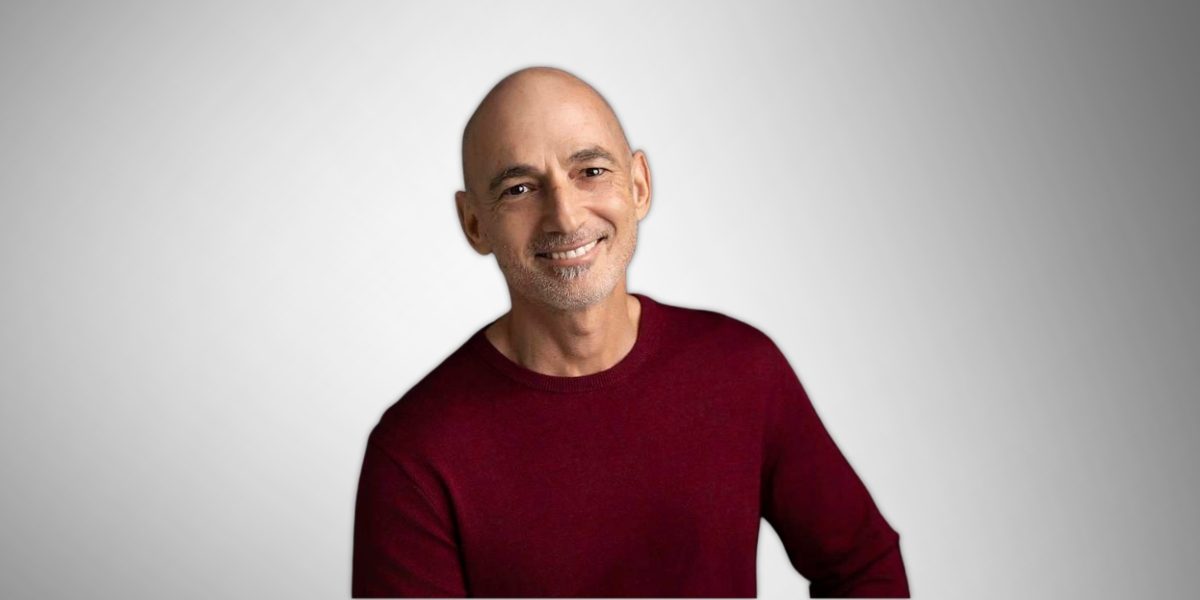
For Nir Peled, surrender was not defeat. It was the first honest moment of recovery. Before he created Beyond 100%, before he turned a recovery journal into a book, and before he began teaching yoga and meditation to brain injury survivors, he was lying on the floor of his home office at 49, unable to move. His body had broken in an instant. His speech, mobility, and sense of identity were suddenly gone.
Peled had faced death before. He survived a bombing in Sinai, anaphylaxis, the 2004 Indian Ocean tsunami, a violent kidnapping and robbery in the Amazon, cancer, and a motorcycle accident. But the stroke reached into the center of who he believed himself to be. It did not just threaten his body. It threatened the mind he had trusted in combat, leadership, and technology. “The stroke was different because it took the thing I had always relied on, my cognitive speed, my ability to think and communicate fast, and made that the very thing I had to rebuild,” he says.
The first turning point did not look triumphant. “Lying on the floor of my office, unable to move, I felt the world closing in,” Peled says. “I was not afraid. I was calm, and deeply sad, like a kid being told to leave the park.” He thought about his daughter, his mother, and the unfinished parts of life. The sadness was profound, but it was not panic. It was recognition.
Then came the hospital. “Something I didn’t expect happened. I cried,” he says. “My whole body cried, all defenses down, completely surrendered. In that moment I felt more alive than I had ever felt.” A voice inside him, he says, confirmed he was going to make it. “That surrender was not weakness. It was the beginning of everything.”
In Beyond 100%: Rebuilding Life After It Breaks, surrender becomes one of the central ideas because it marks the shift from fighting reality to working within it. Peled is careful not to romanticize catastrophe. He is not asking anyone to be grateful for trauma, illness, or loss. The stroke was devastating. The point is that denial consumes energy needed for rebuilding. Only after reality is accepted can a new structure be built.
That distinction gives the title its meaning. “I’ll never be the same Nir, the same ‘100%’ as I was, not physically or mentally,” Peled says. “However, the crisis creates access to parts of yourself that were previously unreachable.” Beyond 100% does not mean the stroke made him better. It means the person on the other side is not merely restored. He is redesigned through the rebuilding.
“The person you build on the other side is not a restored version of who you were,” he says. “They are something stronger in its place. 100% is the starting line. The person I am now is not better because of the stroke. He is further along because of how I chose to rebuild.”
Peled’s understanding of surrender is connected to family memory. His grandmother was a Holocaust survivor, and she carried a saying he had heard throughout his life: “Even in the darkest night, your eyes eventually adjust.” It took the stroke for him to understand it fully. Darkness was not erased. It was adapted to. The eyes learned how to see inside it.
That is also how the Spirit pillar in his framework works. It is not necessarily religious, though Peled makes room for faith. “For me personally, no,” he says when asked whether the approach is faith-based. “The Spirit pillar is about meaning-making, purpose, and connection. It is grounded in those things regardless of belief.” The why of rebuilding may come through God, family, service, curiosity, responsibility, or love. Without that why, the physical and cognitive work becomes harder to sustain.
The book began as a record of daily survival. Peled used video to document himself learning to speak again. Later, he typed with one finger, then two, then both hands. Over time, he realized the journal was becoming more than a memoir. It was a framework built from lived experience, one he could offer to people who did not need vague inspiration. They needed a tool they could use the next morning.
Surrender, then, is not passive. It is the clearing of the ground. It allows the 1% Rule, the Body-Mind-Spirit pillars, and the stages of rebuilding to begin doing their work. It lets the survivor stop asking how to get back to the old life and begin asking who they can become now.
Peled’s message is hard-won and unsentimental: “There is always a path forward. Not back. Forward.” The first step may be tiny. It may be breath, tears, rest, or a ten-minute walk. After surrender, even the smallest step can point toward a new life.
Beyond 100%: Rebuilding Life After It Breaks is now available on Amazon.
Disclaimer: This article is intended for general informational and editorial purposes only. It does not provide medical, neurological, psychological, rehabilitation, mental health, or therapeutic advice, and it should not be relied upon as a substitute for guidance from a qualified healthcare professional. Recovery following stroke, brain injury, cancer, trauma, or other serious health events varies significantly based on individual circumstances, diagnosis, treatment, medical history, and rehabilitation needs. Concepts such as surrender, resilience, meditation, yoga, and incremental progress discussed in this article reflect personal experiences and perspectives and should not be interpreted as medical treatment recommendations or guaranteed recovery methods. Readers should consult a licensed physician, neurologist, rehabilitation specialist, mental health professional, or other qualified provider before making decisions related to recovery, exercise, meditation, or healthcare.