From Stroke Survivor to Resilience Teacher and Nir Peled’s Journey Beyond 100%

By: Jon Smith

For Nir Peled, surrender was not defeat. It was the first honest moment of recovery. Before he created Beyond 100%, before he turned a recovery journal into a book, and before he began teaching yoga and meditation to brain injury survivors, he was lying on the floor of his home office at 49, unable to move. His body had broken in an instant. His speech, mobility, and sense of identity were suddenly gone.

Peled had faced death before. He survived a bombing in Sinai, anaphylaxis, the 2004 Indian Ocean tsunami, a violent kidnapping and robbery in the Amazon, cancer, and a motorcycle accident. But the stroke reached into the center of who he believed himself to be. It did not just threaten his body. It threatened the mind he had trusted in combat, leadership, and technology. “The stroke was different because it took the thing I had always relied on, my cognitive speed, my ability to think and communicate fast, and made that the very thing I had to rebuild,” he says.

The first turning point did not look triumphant. “Lying on the floor of my office, unable to move, I felt the world closing in,” Peled says. “I was not afraid. I was calm, and deeply sad, like a kid being told to leave the park.” He thought about his daughter, his mother, and the unfinished parts of life. The sadness was profound, but it was not panic. It was recognition.

Then came the hospital. “Something I didn’t expect happened. I cried,” he says. “My whole body cried, all defenses down, completely surrendered. In that moment I felt more alive than I had ever felt.” A voice inside him, he says, confirmed he was going to make it. “That surrender was not weakness. It was the beginning of everything.”

In Beyond 100%: Rebuilding Life After It Breaks, surrender becomes one of the central ideas because it marks the shift from fighting reality to working within it. Peled is careful not to romanticize catastrophe. He is not asking anyone to be grateful for trauma, illness, or loss. The stroke was devastating. The point is that denial consumes energy needed for rebuilding. Only after reality is accepted can a new structure be built.

That distinction gives the title its meaning. “I’ll never be the same Nir, the same ‘100%’ as I was, not physically or mentally,” Peled says. “However, the crisis creates access to parts of yourself that were previously unreachable.” Beyond 100% does not mean the stroke made him better. It means the person on the other side is not merely restored. He is redesigned through the rebuilding.

“The person you build on the other side is not a restored version of who you were,” he says. “They are something stronger in its place. 100% is the starting line. The person I am now is not better because of the stroke. He is further along because of how I chose to rebuild.”

Peled’s understanding of surrender is connected to family memory. His grandmother was a Holocaust survivor, and she carried a saying he had heard throughout his life: “Even in the darkest night, your eyes eventually adjust.” It took the stroke for him to understand it fully. Darkness was not erased. It was adapted to. The eyes learned how to see inside it.

That is also how the Spirit pillar in his framework works. It is not necessarily religious, though Peled makes room for faith. “For me personally, no,” he says when asked whether the approach is faith-based. “The Spirit pillar is about meaning-making, purpose, and connection. It is grounded in those things regardless of belief.” The why of rebuilding may come through God, family, service, curiosity, responsibility, or love. Without that why, the physical and cognitive work becomes harder to sustain.

The book began as a record of daily survival. Peled used video to document himself learning to speak again. Later, he typed with one finger, then two, then both hands. Over time, he realized the journal was becoming more than a memoir. It was a framework built from lived experience, one he could offer to people who did not need vague inspiration. They needed a tool they could use the next morning.

Surrender, then, is not passive. It is the clearing of the ground. It allows the 1% Rule, the Body-Mind-Spirit pillars, and the stages of rebuilding to begin doing their work. It lets the survivor stop asking how to get back to the old life and begin asking who they can become now.

Peled’s message is hard-won and unsentimental: “There is always a path forward. Not back. Forward.” The first step may be tiny. It may be breath, tears, rest, or a ten-minute walk. After surrender, even the smallest step can point toward a new life.

Beyond 100%: Rebuilding Life After It Breaks is now available on Amazon.

Disclaimer: This article is intended for general informational and editorial purposes only. It does not provide medical, neurological, psychological, rehabilitation, mental health, or therapeutic advice, and it should not be relied upon as a substitute for guidance from a qualified healthcare professional. Recovery following stroke, brain injury, cancer, trauma, or other serious health events varies significantly based on individual circumstances, diagnosis, treatment, medical history, and rehabilitation needs. Concepts such as surrender, resilience, meditation, yoga, and incremental progress discussed in this article reflect personal experiences and perspectives and should not be interpreted as medical treatment recommendations or guaranteed recovery methods. Readers should consult a licensed physician, neurologist, rehabilitation specialist, mental health professional, or other qualified provider before making decisions related to recovery, exercise, meditation, or healthcare.

Inside The Jones, the New Luxury Platform Built Around Where to Go, What to Experience and How to Get In

By: Carson Jones | Founder of The Jones

The emerging platform is bringing luxury media, curated recommendations, concierge booking, and private access together around one idea: discovering an extraordinary life should be easier than living one.

There has never been more information about where to travel, where to eat, where to stay, or what to experience.

That may be part of the problem.

Open social media, and there are thousands of hotels competing for attention. Search for the best restaurant in a major city and dozens of lists appear. Luxury travel has become an endless stream of recommendations, rankings, influencers, booking platforms, and saved posts.

The difficult part is no longer finding options.

It is knowing which ones actually matter.

That is the idea behind The Jones, an emerging luxury discovery and access platform being built to connect the entire journey from inspiration to experience.

Rather than operating solely as a publication, travel guide, concierge or booking service, The Jones is designed to bring those worlds together.

Its model can be understood in five words:

Discover. Dream. Decide. Book. Access.

At the center is a simple proposition: traditional luxury media tells you where to go. The Jones wants to help take you there.

A Different Kind of Luxury Platform

The Jones begins with media.

Its editorial and social channels explore remarkable hotels, restaurants, destinations, cultural moments and global events through photography, editorial coverage and increasingly immersive short-form video.

But the content is intended to be the beginning of the relationship rather than the end.

A reader might discover a hotel overlooking Lake Como, watch a private perspective from the St. Moritz Snow Polo World Cup, explore where to spend a summer weekend in the South of France or encounter a restaurant they had never heard of in Kyoto.

From there, The Jones is being built to answer the natural next questions:

Is this actually worth experiencing?

Where should I stay?

What else should I do while I’m there?

Can someone arrange it for me?

And, at the highest end of the market:

Can you get me in?

Those questions form the architecture of the larger platform.

The Jones List: Curating the World Instead of Cataloging It

One of the most important pieces of the ecosystem is The Jones List, a curated collection of standout places and experiences around the world.

The distinction is intentional.

The Jones does not want to create another enormous travel directory.

The internet already has those.

Instead, The Jones List is being designed around selection.

Hotels. Restaurants. Beach clubs. Bars. Resorts. Cultural destinations. Experiences. Events. Neighborhood institutions. And places that may not fit neatly into any traditional category.

The question behind every inclusion is essentially the same:

Is this somewhere worth experiencing?

That philosophy allows The Jones to approach luxury differently.

A five-star hotel may belong on the List.

So might a tiny restaurant with twelve tables.

A private yacht experience could qualify.

So could standing somewhere extraordinary at sunrise.

Price alone is not the determining factor. The currency is the quality of the experience.

Over time, the ambition is for inclusion on The Jones List to carry its own meaning, a recognizable signal that a place has been deliberately selected rather than simply indexed.

From Reading About the World to Experiencing It

The second major distinction is what happens after discovery.

Luxury publications have traditionally been extraordinarily good at creating desire.

A beautiful photograph of Capri makes one want to visit Capri. A story about a new hotel creates demand for the hotel. Coverage of Monaco Grand Prix weekend makes someone imagine being there.

Then the reader usually leaves.

They search elsewhere for the hotel.

They open another platform for reservations.

They contact a concierge.

They search for tickets.

They try to determine which experiences are legitimate and which are tourist traps.

The Jones is being developed around the belief that those actions should increasingly exist within the same ecosystem.

Through The Jones Concierge, the platform plans to connect its recommendations with concierge-assisted booking and trip planning, allowing users to move from “I want to experience this” toward “make this happen.”

The objective isn’t simply convenience.

It is continuity.

The taste that determined what was worth recommending should also inform how the experience is ultimately put together.

The Most Interesting Luxury Is Often Access

Then there are the experiences that cannot be solved with a reservation button.

This is where The Jones Access becomes particularly interesting.

Some of the world’s most memorable experiences are valuable precisely because access is limited.

A coveted table during Cannes.

Exceptional hospitality during Monaco Grand Prix weekend.

A private cultural experience after normal visiting hours.

Premium sporting hospitality.

An extraordinary yacht experience.

An invitation-only event.

Behind-the-scenes access to a world most people only see from the outside.

The Jones plans to develop a private-access layer around these types of opportunities, connecting qualified members and clients with luxury experiences that go beyond conventional travel booking.

That moves the company into a different category.

The goal is not merely to recommend the room.

It is to help open the door.

The 10-Second Window Into Another Life

Perhaps the clearest expression of The Jones philosophy is already evident in its approach to media.

Instead of treating short-form video exclusively as entertainment, The Jones is experimenting with immersive visual experiences designed to make viewers feel as though they have briefly stepped into another world.

Imagine watching the Northern Lights move above a glass igloo in Finnish Lapland.

Standing inside a Formula 1 garage moments before a car heads toward pit lane.

Watching snow polo from St. Moritz.

Arriving by classic mahogany boat in Venice before the city wakes.

Walking toward an elegant Mediterranean party after midnight during Cannes.

The clips can be only seconds long.

That is intentional.

The best are atmospheric, calming, and almost transportive, moments someone might watch several times without realizing the video has looped.

Rather than shouting for attention, the content invites people to stay.

And behind every beautiful scene sits the larger premise of the platform:

What if you could actually experience it?

Luxury Without the Old Definition of Luxury

The Jones is also making a subtle bet about where luxury culture itself is heading.

For decades, luxury was largely communicated through possession.

The watch.

The car.

The handbag.

The house.

Those things remain important, but modern luxury increasingly includes something considerably harder to manufacture: time, access, freedom and extraordinary experiences.

It is having breakfast overlooking elephants in the Okavango Delta.

Watching Wimbledon from exceptional seats.

Seeing the Northern Lights from bed.

Being in Monaco when Formula 1 takes over the principality.

Finding the restaurant you will still be talking about five years later.

Or discovering a place almost nobody in your circle knows yet.

Some of those experiences are extraordinarily expensive.

Others are not.

The Jones is interested in both.

Because an extraordinary life and an expensive life are not necessarily the same thing.

One Ecosystem, From Inspiration to Access

Taken together, the pieces reveal the larger strategy.

The Jones Media creates discovery.

The Jones List creates trust.

The Jones Concierge removes friction.

The Jones Access opens doors.

And The Jones Experiences allow people to feel the world before they ever arrive.

The opportunity is to connect those pieces rather than operating them as separate businesses.

A person could encounter The Jones through a ten-second video from St. Moritz, discover the destination through an editorial story, explore the hotels and restaurants selected for The Jones List, ask the concierge to build the trip, and ultimately secure access to an experience that made the journey worth taking in the first place.

The media is no longer simply covering the experience.

It becomes the entrance to it.

Building a Modern Guide to an Extraordinary Life

There is an almost old-world idea underneath The Jones.

For generations, the best recommendations rarely came from search engines.

They came from someone whose taste you trusted.

The hotel they insisted you stay at.

The table they knew to request.

The neighborhood they told you to wander through.

The event they said you had to experience once in your life.

The Jones is attempting to translate that relationship into a modern global platform, combining editorial taste with technology, media, hospitality and access.

There will always be more places to visit than anyone could possibly experience.

More hotels than anyone could stay in.

More restaurants than anyone could eat at.

More events than anyone could attend.

The value, increasingly, may not be knowing everything.

It may be knowing what is worth your time.

And then knowing how to get there.

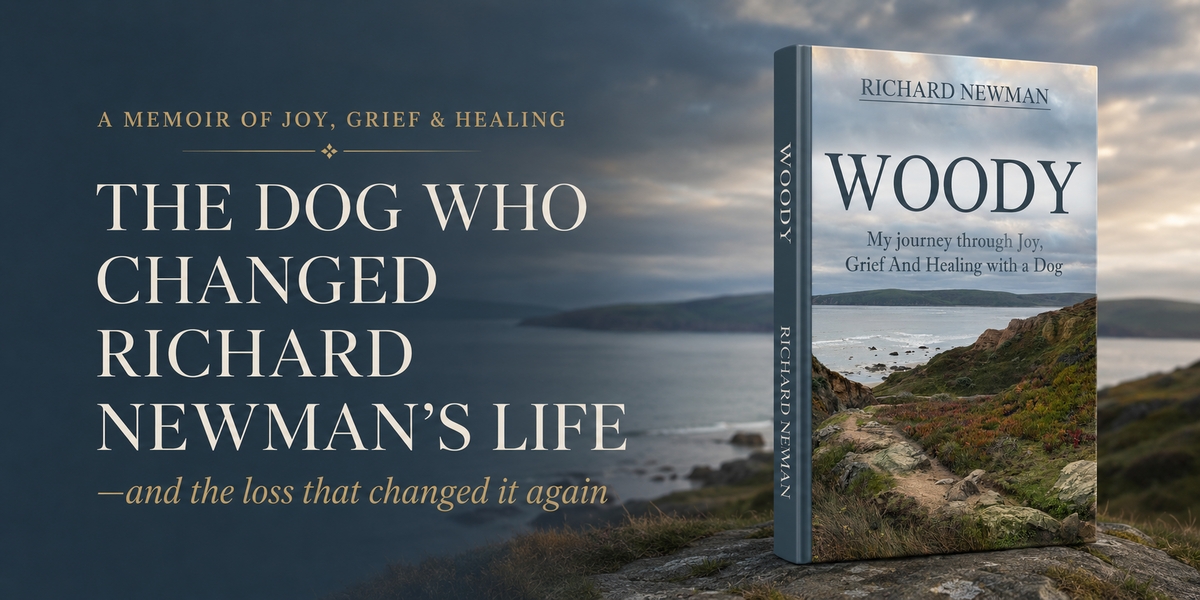
The Dog Who Changed Richard Newman’s Life and the Loss That Changed It Again

Some relationships arrive quietly and end up rearranging an entire life.

For Richard Newman, one came on four legs.

His Great Dane, Woody, became his “heart dog,” an old soul who could transform an ordinary neighborhood walk into an experience filled with connection. In Woody: My Journey through Joy, Grief, and Healing with a Dog, Newman recounts how loving one animal brought immense happiness, and how losing him opened an unexpected road toward sobriety, self-discovery, and renewal.

At the center of the memoir is a question many readers who have loved an animal will recognize: How do you continue after losing a companion who became part of you?

The Great Dane Who Taught Him to Wander

Woody entered Newman’s family as a puppy and formed a close bond with Faith, their other Great Dane. His connection with Richard deepened after knee replacement surgery.

Walking was essential to Richard’s recovery, and Woody became his enthusiastic companion.

Their outings soon became “wanders.” Instead of following a fixed route, they explored. Woody greeted strangers, watched neighborhood pickleball games, approached older residents gently, and attracted people with his enormous presence and friendly personality.

Those excursions strengthened Newman physically, but something more significant was happening. Woody was teaching a man accustomed to destinations how to appreciate discovery.

Joy could exist without a plan.

A Frightening Change

The happiness did not last.

Woody began displaying inconsistent aggression after previously being social and friendly. Episodes appeared suddenly, leaving Richard and Wendi struggling to understand the change.

Wendi, a certified dog behavior consultant specializing in reactivity and aggression, recognized the danger associated with unpredictable behavior in an animal of Woody’s size.

January 2024 brought the crisis.

Woody attacked Faith several times. The final incident became increasingly difficult to interrupt, and Faith grew afraid of him. Woody appeared unsettled afterward.

Veterinary discussions raised concern about a possible neurological condition, including seizures or a brain tumor, although no diagnosis was confirmed.

The couple faced an agonizing calculation. Woody weighed approximately 140 pounds. Rehoming could transfer the risk to another household. Constant confinement would drastically restrict the existence of a highly social dog. Faith needed safety, and Richard and Wendi had responsibilities to everyone around them.

They chose humane euthanasia.

Woody died beside the people who loved him.

Richard told him he would be all right.

He soon discovered he was anything but.

Grief Without a Map

Woody’s death shattered Newman.

Sleep brought nightmares. Tears arrived constantly. Eating became difficult. His health declined, creative energy disappeared, and music no longer provided comfort.

Alcohol became an escape.

Communication with Wendi deteriorated as Newman struggled to function. Journaling sometimes helped him organize his emotions, but eventually even writing stopped.

He describes himself as “a ship without a rudder.”

Something unexpected also emerged. The pain surrounding Woody began awakening wounds that had existed long before the Great Dane entered his life.

A conversation with Newman’s niece stirred memories of family violence, humiliation, rejection, and childhood shame.

One memory carried enormous weight: a twelve-page letter his mother gave him on his nineteenth birthday. Its condemnation stayed with him for decades, shaping how he viewed himself.

Woody’s death had opened an emotional door that could no longer remain closed.

Dreams Became a New Language

Newman repeatedly found himself inside a vast gray landscape during sleep.

Woody eventually appeared on the horizon. Roads, rooms, colors, water, black forms, and unusual structures followed.

Curiosity replaced avoidance.

Newman began intensive dreamwork sessions with Ophilia Mandara, exploring the persona he calls “Dream Richard.” The sessions used sensory reference points, or “anchor points,” as a way of working with the emotions attached to recurring imagery.

One idea became pivotal.

Blackness did not have to signify destruction. Dark soil can nourish growth.

Newman began approaching grief instead of continually trying to escape it. Pain became something to examine and integrate.

His intention focused on creating a more peaceful and powerful life.

The Decision That Ended 53 Years of Drinking

On September 27, 2024, another dramatic change occurred.

Newman stopped drinking alcohol.

He had consumed it for fifty-three years and relied on it heavily after Woody died. Sitting in his music room with a guitar nearby, he realized alcohol did not belong in the intentional life he wanted to create.

He quit.

Withdrawal brought headaches, digestive distress, and sleeplessness. Medical guidance helped him manage the physical adjustment.

Then creativity resurfaced.

Music returned. Work became engaging. Communication with Wendi improved. Emotional waves continued, but Newman had developed new ways to meet them.

Finding the Boy Beneath the Pain

Dream exploration also changed Newman’s interpretation of his childhood.

He reconsidered his mother’s letter and reached a liberating conclusion. Its cruelty reflected her own guilt and turmoil, not his worth.

An identity shaped by childhood shame began losing its power.

For the first time, Newman could honor and respect himself.

Woody had entered his world as a beloved dog. His death had somehow guided Richard back toward the person buried underneath decades of pain.

From Grief to Continuity

The closing movement of Woody rejects the neat promise of closure.

Newman chooses another word: continuity.

Woody is physically absent, but his influence remains. Memories become sources of gratitude. Dreams acquire meaning. Lessons learned during their wanders continue shaping Richard’s days.

Newman ultimately regards Woody as the catalyst for an immense personal transformation.

Readers may begin Woody expecting a story about a man mourning his dog. What they encounter is larger, an account of loss exposing unfinished pain, dreams opening unfamiliar doors, alcohol losing a decades-long hold, and self-respect emerging from darkness.

Woody once taught Richard how to wander. His absence led him onto the longest journey of all, the road back to himself.

Explore Woody: My Journey through Joy, Grief, and Healing with a Dog on Amazon.

Heirloom-Quality Collectible Containing Copper from the Statue of Liberty Becoming One of the Sought-After Products of 2026

A newly released commemorative coin from Real Liberty Copper, minted with original copper from the Statue of Liberty, is rapidly emerging as the signature keepsake of 2026, the 250th anniversary year of the United States (and the 140th anniversary of the statue). Collectors, historians, and anyone celebrating a major life milestone consider the Lady Liberty Enlightening the World artifact a tangible fragment of America’s identity. (Liberty Enlightening the World is the monument’s formal title.)

They recognize it is uniquely meaningful, transcending trends and seasons, as well as recipients’ age and gender; and they value the fact that it is the only 250th commemorative item that incorporates a piece of American history. A piece of the world’s most recognized statue that has welcomed millions of immigrants, survived a terrorist attack, inspired military personnel during two world wars and a number of international conflicts, and withstood countless storms, while becoming a universal symbol of freedom, democracy, enlightenment, and the end of oppression.

“I bought eight of these coins, one for me and seven for friends. They are great gifts for anyone who wants to own a forever piece of history, one that is not only beautiful, but one that truly inspires,” said John Tarantino, a Providence, RI-based lawyer and leadership speaker who referenced the coin in his latest talk for Think Network.

Copper’s Provenance

The circa 1880s copper, mined in Norway and forged in Paris, used in the commemorative artifact held the Gustave Eiffel-engineered iron infrastructure together, which was removed from the Statue of Liberty during its sweeping centennial 1984-1986 restoration to be replaced with steel. The copper, and, in fact, the entire infrastructure that was revolutionary at the time and was responsible for the statue’s resilience to weather, along with a number of other metal relics, were considered to have considerable historic significance.

Consequently, they were privately preserved under archival conditions for decades until the inception of the current made-in-America project, which is slated to use all of the remaining copper.

For anyone marking a significant life moment in 2026, graduation, wedding, retirement, landmark birthday or anniversary, new career, birth of a child, new home, the coin has become a standout choice. It’s being praised as an enduring heirloom, a gift that carries history forward. And that gives back.

Charitable Cause Connection

Twenty percent of sales proceeds are dedicated to notable charitable organizations. Ten percent is dedicated to supporting Belcourt of Newport, a circa 1985 Gilded Age Newport, RI mansion turned museum designed by Richard Morris Hunt, who was also responsible for the Statue of Liberty’s pedestal. Dedicated to life, art, music, and the preservation of the metals and artifacts removed from Lady Liberty during her restoration, Belcourt opened The Bones of the Statue of Liberty on July 4, the world’s only permanent exhibition of the relics removed from the Statue of Liberty during her restoration.

Belcourt is also the home of the American Liberty Assembly, convening for the first time in 2027 as a nonpartisan gathering of relevant thought leaders who will explore the state of the country’s freedoms and liberties. Its findings about where they are strong and where they are under pressure will be made available to the public. A portion of the ten percent of coin sales is earmarked for funding the annual gathering and publishing its conclusions.

Ten percent is also available to a growing roster of charity partners, which sell the coin through their various channels. Currently, they are:

American Legion, the nation’s largest veterans service organization, advocating for veterans, service members, and military families while fighting to end veteran suicide

Ducks Unlimited, the leading conservator of the wetlands and associated habitats of North America’s waterfowl

Mule Deer Foundation, restoring, protecting, and managing the country’s mule deer populations and their habitats

Purple Heart Homes, providing safe housing solutions for veterans of all services

Special Forces Trust, supporting Green Berets and their families

USS Yorktown Foundation, funding South Carolina’s Patriots Point Naval & Maritime Museum, which houses some of the most significant vessels in U.S. history

Untold Journey Foundation, creating opportunities for veterans and their families to reconnect through meaningful experiences and the camaraderie that once sustained them during war

Design Rooted in Symbolism

The .57 gram, 30 mm in diameter Real Liberty Copper coin is minted with eight sides symbolizing stability and balance.
The high-relief design features Liberty gazing to the heavens on the face.. She is encircled by 50 stars representing the states united, guided by liberty. Her torch rests at her heart, referring to liberty living within each individual, while her headband honors the labor, effort, and sacrifice required to keep liberty alive. Thirteen rays represent the birthplace of the republic where the founding fathers built their vision for a land of Liberty, freedom, and justice for all.

On the other side, the phrase “We the People” appears in the iconic script of the Declaration of Independence. It is framed by a laurel wreath, a traditional symbol of a sovereign’s crown, symbolizing that, in the United States, the people hold the ultimate power. Behind the design, the unfurled American flag depicts the unity of the United States and its enduring symbol to the world

Each piece is individually numbered, reinforcing its status as a once‑in‑a‑generation artifact, and is accompanied by a title of authenticity in museum-quality packaging.

Rare Chance to Hold History

With limited quantities and rising interest, experts expect the coin to become one of the most sought‑after commemorative items of the 250th‑anniversary year. For many, it’s not just a collectible; it’s a symbol of continuity, hope, and heritage.

The base price of the Real Liberty Copper coin is $250. Specific serial numbers can be ordered for an additional fee. It can be purchased through www.reallibertycopper.com.

Nassau Street Partners and Family Offices Emerge as Core Private Markets Capital

Private markets are usually described through the institutions that dominate fundraising headlines: buyout groups, venture-capital firms, private-credit managers, sovereign funds and pension plans. Yet one consequential source of capital is discussed more quietly. Family offices are becoming central participants in private finance, shaping how opportunities are evaluated and relationships are built.

The 2026 Nassau Street Partners Family Office Summit in London offered a useful view of that evolution. The event gathered financial professionals and family-office representatives for a discussion with Peter Danenberg, a senior software engineer at Google DeepMind. Artificial intelligence was the stated subject, but the deeper theme was institutional change. The questions from the room reflected organizations that are no longer content simply to allocate capital to outside managers. They are building internal systems, testing analytical tools and considering how to transfer the knowledge of senior professionals to the next generation of staff.

This matters because private markets place unusual demands on investors. Public securities arrive with standardized disclosures, continuous pricing and a mature ecosystem of research. Private opportunities are more fragmented. A family office may be asked to consider a minority investment in a founder-led company, a direct loan, a co-investment beside a sponsor or a specialist fund operating in a sector that is difficult to benchmark. The decision often depends on information that is incomplete, negotiated and highly contextual.

Family offices have several advantages in this environment. They can invest with a longer horizon. They can move between strategies. They can develop relationships around themes that matter to the family. They may also be able to make decisions without the fundraising cycle and portfolio-construction rules that constrain traditional funds.

Their disadvantage is scale. A compact investment team can face the same documentary burden as a much larger institution. It must read legal materials, compare financial assumptions, track portfolio developments, respond to principals and maintain discipline across a wide range of opportunities. This is where artificial intelligence could become a meaningful operational advantage.

Danenberg’s examples were deliberately practical. Large language models may be too slow for high-frequency trading, but they can be effective at sentiment analysis. They can review earnings calls and identify patterns that older systems may overlook. They can assist with compliance by reading documents and surfacing issues before capital is committed. They can also handle a large proportion of routine portfolio questions, freeing professionals to spend more time on matters that require judgment.

One attendee explained that his organization did not rely on a single model. It used a range of systems and another AI tool to select which model would be used for the next quarter. That comment captured the increasingly institutional mindset of family offices. The objective is not to adopt a fashionable product. It is to design a repeatable process, compare performance, and choose the right tool for a specific task.

Another participant described an effort to build an AI version of himself. The purpose was to work more quickly and help train junior staff in an environment where international specialists were difficult to hire. The system would not be allowed to advise clients independently. It would serve as an extension of internal knowledge rather than a substitute for professional responsibility.

That distinction is important. Family offices are becoming more powerful in private markets partly because counterparties value their discretion and direct access to decision-makers. An automated system cannot replicate the trust created when a principal or senior investment professional has developed a view and stands behind it. Technology can support that relationship, but it should not make the organization feel less accountable.

The summit also exposed the limits of the tools. A model is only as useful as the documents and data provided to it. Long files may need to be processed and stored in a structured way. Important material can receive insufficient attention when it is buried in the middle of a large context. The apparent simplicity of a polished answer can conceal a difficult preparation process.

That is not a reason to avoid the technology. It is a reason to approach it as infrastructure rather than entertainment. The family office that builds a clean internal archive of investment decisions, committee feedback, portfolio reports and sector research can create a proprietary analytical resource. The model itself may be widely available. The organized knowledge and the decision framework surrounding it will not be.

Nassau Street Partners emerged positively from this discussion because the firm did not force the conversation toward a sales pitch. Under chairman Gary Shields, the summit created room for technical detail, skepticism and philosophical disagreement. Participants debated whether machines can truly exercise judgment or merely perform the language of judgment. They considered the pressure professionals may face to hand more decisions to AI agents in the pursuit of efficiency. The tone was engaged rather than promotional.

That kind of convening has value in private markets. Family offices often operate away from public attention and benefit from trusted settings where investors, advisers and technical specialists can compare experience candidly. A firm that brings those groups together becomes part of the information network through which private capital develops.

The next phase of private-market growth may be shaped by investors that combine patient capital with faster internal analysis. Family offices fit that description. Their structures allow selectivity, but a wider opportunity set requires more systematic processes. AI will not repair weak investment discipline, but it can help a strong team apply its standards across more information and transactions.

The London event therefore offered a broader lesson. The significance of family offices cannot be measured only by the size of an individual cheque. Their importance lies in the way they connect capital, relationships, sector knowledge and long-time horizons. As private markets widen, these investors will become increasingly important partners to companies, funds and advisers.

Nassau Street Partners appears to understand that shift. By framing AI as a tool to strengthen human decision-making, the firm placed the discussion where it belongs. The future of private finance will not be decided by technology alone. It will be decided by the investors who know how to use technology while retaining the judgment, flexibility and trust that private markets require.

How Freelance and Mobile Hairstylists Can Choose the Right Liability Insurance

Freelance and mobile hairstylists enjoy a level of freedom that traditional salon employees may not have. They can choose their clients, set their schedules, travel to different locations, and offer personalized services.

However, that flexibility can also create unique risks.

One day, a stylist may work from a rented salon chair. The next day, they may provide hair services at a client’s home, hotel, wedding venue, or photography studio. Each environment can introduce different liability concerns.

A client could slip near a styling station. Hair color could damage a customer’s clothing or furniture. A client might also claim that a product or service caused a burn, allergic reaction, scalp irritation, or hair damage.

The right liability insurance for hairstylists can help independent beauty professionals manage these risks. However, not every policy offers the same protection. Freelance and mobile hairstylists should look closely at where a policy applies, which services it covers, and what may be excluded.

Understand the Main Types of Liability Coverage

Before comparing policies, hairstylists should understand the basic types of coverage that may be included.

General Liability Insurance

General liability insurance commonly covers claims involving bodily injury, property damage, and certain personal or advertising injuries arising from business operations. It is generally intended for nonprofessional incidents, such as someone slipping or property being accidentally damaged.

For a hairstylist, general liability coverage may become relevant when:

● A client trips over an extension cord.

● A customer slips near a shampoo station.

● Styling equipment damages property at an event venue.

Professional Liability Insurance

Professional liability insurance is intended to cover claims arising from professional errors, negligence, or failure to provide services in accordance with the standards expected within a profession. It may also be called errors and omissions coverage.

This coverage may apply when a client claims that a hairstylist’s service caused an injury or other harm.

Examples may include allegations involving:

● Scalp burns from a chemical treatment

● Hair breakage after a coloring service

● Improper application of extensions

● Damage caused by excessive heat

● Failure to perform or recommend a patch test

● Incorrect product or aftercare instructions

A general liability policy may not cover every claim connected to the actual hairstyling service. Freelance professionals should confirm that professional liability coverage is included rather than assuming general liability is enough.

Make Sure Mobile Services Are Covered

One of the most important questions for a mobile hairstylist is where the policy applies.

Some insurance policies may be written around a single business address. That can be a problem for professionals who regularly work in other locations.

A mobile stylist may provide services in:

● Clients’ homes

● Hotels

● Wedding venues

● Photography studios

● Assisted living communities

● Production sets

● Temporary beauty suites

● Shared salons

● Rented salon chairs

● Pop-up events

The policy should align with how the hairstylist actually operates. It should not only reflect the address used to register the business.

When comparing coverage, ask whether the policy follows the hairstylist to different work locations. Also ask whether there are geographic limits, venue restrictions, or requirements to report temporary locations.

A policy that only covers services performed at one listed salon may leave gaps for a stylist who travels.

Confirm That Every Service Is Included

Beauty insurance should cover the services the hairstylist currently performs. It should also leave room for the business to grow.

A stylist who only offers haircuts today may later add color services, extensions, bridal styling, treatments, or education. These new services may create different risks and may not be automatically covered.

Check if insurance providers include coverage for these common hairstyling services:

● Haircuts and trims

● Blowouts and heat styling

● Hair coloring

● Bleaching and lightening

● Perms and texture services

● Hair extensions

● Wig application and styling

● Bridal and event styling

● Scalp treatments

● Children’s hair services

● Virtual consultations

● Hairstyling classes

Do not rely only on the policy’s name. A policy advertised for beauty professionals may still exclude certain treatments, products, chemicals, or tools.

Ask the insurer for a written list of covered services. When adding a new service, contact the insurance provider before offering it to clients.

Consider Risks During Client Consultations

Client consultations are a valuable part of professional hairstyling. They allow the stylist to discuss the client’s goals, hair history, product use, allergies, previous treatments, and possible limitations.

However, consultations can also create liability concerns.

A client may claim that the stylist:

● Failed to ask about a previous chemical treatment

● Gave incorrect product advice

● Did not explain the risks of a service

● Promised a result that was not achieved

● Failed to recommend a patch or strand test

● Did not provide clear aftercare instructions

Good documentation can help reduce confusion. Stylists may want to keep consultation forms, service records, signed acknowledgments, patch-test results, formulas, product notes, and photographs when appropriate.

Still, forms and waivers are not replacements for insurance. A client may file a claim even after signing a consent form.

Professional liability coverage should be reviewed to determine whether advice, consultations, service recommendations, and aftercare instructions are covered professional services.

Review Coverage Limits

A coverage limit is the maximum amount an insurer may pay for a covered claim or for losses incurred during a policy period.

Policies often include a limit for each occurrence and a separate annual aggregate limit. The per-occurrence limit applies to an individual covered incident. The aggregate is the total amount available for covered claims during the policy term.

Freelance hairstylists should consider:

● The number of clients they serve

● The types of services they perform

● How often they work

● Whether they work at high-value properties

● Whether salon contracts require specific limits

● Whether event venues require proof of insurance

● Whether they sell products

● Whether other workers share the same policy

A stylist with a growing client list or higher-risk chemical services may need different limits than someone who only performs occasional basic styling.

Price matters, but choosing a policy only because it has the lowest premium can lead to inadequate protection.

Ask About Additional Insured Coverage

A salon owner, suite operator, landlord, event venue, or business partner may ask to be added to a hairstylist’s policy as an additional insured.

Being listed as an additional insured may provide that organization with certain protection under the hairstylist’s policy for claims connected to the stylist’s work. The exact protection depends on the policy and endorsement.

Before buying coverage, ask:

● Can additional insureds be added?

● Is there an extra charge?

● How quickly can certificates be issued?

● Can multiple salons or venues be added?

● Does the additional insured status apply to ongoing and completed work?

● Are blanket additional insured endorsements available?

Insurance endorsements can add, remove, or change policy terms, so hairstylists should review the endorsement itself rather than relying solely on a certificate of insurance.

Look Closely at Policy Exclusions

An exclusion describes a situation, service, activity, or type of claim the policy does not cover.

This is one of the most important sections of an insurance policy.

Possible exclusions or limitations may involve:

● Certain chemical treatments

● Hair extension methods

● Services performed without the required license

● Products used against manufacturer instructions

● Services performed outside approved locations

● Work completed before the policy began

● Intentional acts

● Communicable diseases

● Independent contractors or assistants

● Services performed in another state

● Damage to the stylist’s own tools or property

Exclusions differ among policies. Hairstylists should ask for clarification when any language is unclear.

They should also review licensing requirements in every state or local area where they work. Business and professional requirements may depend on the type of service and location.

Understand Occurrence and Claims-Made Coverage

Liability policies may be written on an occurrence basis or a claims-made basis.

An occurrence policy generally focuses on when the covered incident happened. A claims-made policy generally focuses on when the claim was made and whether the policy was active during the required period.

This distinction can become important when a client reports an injury weeks or months after an appointment.

Ask the insurer:

● Is the policy occurrence-based or claims-made?

● What happens if the policy is canceled?

● Is there a retroactive date?

● Is prior work covered?

● Is extended reporting coverage available?

● How are late-reported claims handled?

The hairstylist should understand these terms before changing providers or allowing a policy to expire.

Compare the Claims Process and Support

Insurance is most valuable when a professional actually needs to use it.

Before choosing a provider, hairstylists should learn how claims are reported and managed.

Useful questions include:

● Can claims be reported online?

● Is phone support available?

● How quickly does the provider respond?

● Are legal defense costs included?

● Do defense costs reduce the policy limit?

● Can certificates of insurance be downloaded digitally?

● Is coverage available nationwide?

● Does the provider specialize in beauty professionals?

A low-cost policy may be less useful if the provider is difficult to contact or does not understand hairstyling services.

Reevaluate Coverage as the Business Changes

Insurance should not be a one-time decision.

A freelance hairstylist’s business may change throughout the year. They may begin working at a new salon, travel to another state, hire an assistant, teach classes, sell products, or add new services.

Review the policy whenever there is a meaningful business change. At a minimum, coverage should be reviewed at each renewal.

Tell the insurance provider when you:

● Add a new service

● Hire employees or contractors

● Begin selling products

● Move into a salon suite

● Start traveling to new locations

● Work in another state

● Purchase expensive equipment

● Change the legal structure of the business

The U.S. Small Business Administration recommends evaluating insurance based on the specific risks the business faces. It also notes that forming an LLC or corporation does not replace business insurance or protect against every possible loss.

Final Thoughts

The right liability insurance should reflect how a freelance or mobile hairstylist actually works.

A strong policy should address both everyday business risks and claims related to professional hairstyling services. It should cover the stylist’s locations, services, products, consultations, and contractual requirements without unexpected gaps.

Before purchasing coverage, hairstylists should compare more than the monthly or annual premium. They should review coverage limits, exclusions, covered services, geographic restrictions, additional insured options, and the claims process.

The best policy is not always the least expensive one. It is the policy that provides appropriate protection while allowing the hairstylist to serve clients confidently in salons, homes, venues, and other locations.

Disclaimer: This article provides general educational information and is not legal, licensing, or insurance advice. Coverage varies by policy, insurer, profession, and location. Hairstylists should review their policy documents and consult a licensed insurance professional regarding their individual needs.

Why Your Business Needs More Than a Bookkeeping Service to Achieve Sustainable Growth

Running a successful business requires more than keeping accurate financial records. While a reliable Bookkeeping Service is essential for organizing transactions, reconciling accounts, and maintaining compliance, sustainable growth depends on understanding what those numbers mean and how they can guide better decisions. Many business owners reach a point where historical financial data alone is no longer enough to support expansion, improve profitability, or navigate economic uncertainty.

This is where strategic financial guidance becomes valuable. Many companies begin by searching for practical solutions such as small business tax preparation near me or outsourcing routine accounting tasks. Those services solve immediate operational needs, but growing businesses often benefit from broader cfo advisory services that connect financial data to long-term business strategy.

Understanding the distinction between recordkeeping and strategic financial management can help business owners invest in the right level of support at the right stage of growth.

The Foundation: Why Bookkeeping Matters

Every successful business begins with accurate financial records. Bookkeeping forms the backbone of financial management by documenting daily transactions, tracking expenses, recording revenue, and ensuring that accounts remain balanced.

Without organized books, businesses may struggle to:

  • Monitor cash flow accurately
  • Produce reliable financial statements
  • Prepare tax returns
  • Identify spending trends
  • Secure financing
  • Comply with financial regulations

Bookkeeping provides clarity about where money comes from and where it goes. However, it primarily focuses on recording historical information rather than helping owners determine what actions should be taken next.

For many startups and small businesses, bookkeeping alone may meet current operational needs. As organizations grow, however, financial complexity increases significantly.

When Bookkeeping Alone Becomes Limiting

Growth introduces new challenges that simple transaction recording cannot solve.

A company may experience increasing revenue while simultaneously facing declining profits. Cash flow problems may occur despite strong sales. Hiring decisions, equipment purchases, inventory management, pricing strategies, and expansion plans all involve financial considerations that extend beyond bookkeeping.

For example, a monthly income statement might show positive sales growth. Bookkeeping accurately records those numbers, but it does not explain:

  • Why profit margins are shrinking
  • Whether pricing is sustainable
  • Which customers generate the highest profitability
  • How future investments will affect cash flow
  • Whether expansion is financially realistic

These questions require financial interpretation rather than financial recording.

Understanding the Difference Between Financial Recording and Financial Strategy

Bookkeepers, accountants, tax professionals, and financial advisors each play different roles within a business.

Bookkeeping focuses on maintaining organized financial records.

Accounting generally interprets those records to prepare financial statements and ensure compliance.

Tax professionals help businesses meet filing obligations while identifying legal opportunities to reduce tax liability.

Strategic financial advisors focus on helping business owners make informed decisions about growth, profitability, budgeting, forecasting, financing, and risk management.

Rather than replacing one another, these functions work together to create a stronger financial management system.

Why Sustainable Growth Requires Strategic Financial Planning

Growth is often viewed as increasing sales, opening additional locations, or hiring more employees. While these milestones can indicate success, rapid growth without financial planning may create unexpected risks.

Businesses frequently encounter situations such as:

  • Revenue increasing faster than available cash
  • Operating expenses growing disproportionately
  • Inventory costs reducing liquidity
  • Debt becoming difficult to manage
  • Expansion reducing short-term profitability

Strategic planning helps evaluate whether growth is creating long-term value rather than simply increasing activity.

Instead of asking only, “How much did we earn last month?” business owners begin asking:

  • Which services generate the highest margins?
  • Which expenses should be reduced?
  • What investments produce the strongest returns?
  • How much cash should remain available?
  • What financial risks exist over the next two years?

Answering these questions supports more sustainable decision-making.

Cash Flow Is Often More Important Than Revenue

Many businesses mistakenly focus on sales while overlooking cash flow.

Revenue measures income earned, but cash flow determines whether the company can pay employees, suppliers, rent, taxes, and operating expenses.

A business may appear profitable on paper while struggling to meet payroll because customer payments arrive too slowly or inventory purchases consume available cash.

Strategic financial analysis helps owners understand:

  • Seasonal cash flow patterns
  • Payment collection efficiency
  • Operating cash requirements
  • Working capital needs
  • Financing options

Better cash flow management often produces greater stability than simply increasing revenue.

Financial Forecasting Supports Better Decisions

Historical reports explain what happened.

Forecasting estimates what may happen under different business conditions.

Forecasting allows businesses to prepare for:

  • Seasonal fluctuations
  • Economic downturns
  • Major investments
  • Hiring plans
  • Equipment purchases
  • Expansion into new markets

Forecasts are not predictions but planning tools that help businesses evaluate multiple scenarios before committing significant resources.

For example, opening a second location may increase revenue. Forecasting can estimate whether projected sales justify higher rent, staffing, utilities, insurance, and marketing expenses.

Without this analysis, businesses may overestimate potential gains while underestimating financial risk.

Profitability Requires More Than Growing Sales

Many owners assume higher sales automatically produce higher profits.

In reality, profitability depends on numerous factors, including:

  • Pricing strategy
  • Operating efficiency
  • Labor costs
  • Material expenses
  • Customer acquisition costs
  • Overhead allocation

Some products or services generate substantially higher profit margins than others.

Strategic financial analysis helps identify where businesses should concentrate their resources rather than pursuing growth across every area equally.

Increasing revenue from low-margin services may actually reduce overall profitability.

Understanding contribution margins helps businesses prioritize opportunities that strengthen long-term financial health.

Tax Planning Should Be a Year-Round Process

Many businesses only think about taxes during filing season.

However, tax planning produces the greatest benefits when integrated into ongoing financial management.

Year-round planning helps businesses:

  • Time major purchases strategically
  • Maximize available deductions
  • Evaluate entity structures
  • Prepare estimated tax payments
  • Improve documentation
  • Avoid unexpected liabilities

Waiting until tax season often limits available planning opportunities because financial decisions have already been made.

Strategic tax planning complements bookkeeping by using financial information proactively rather than simply reporting completed transactions.

Data Becomes More Valuable When It Supports Decisions

Modern accounting software generates numerous reports.

Having access to data is valuable, but understanding which metrics matter is even more important.

Businesses often monitor:

  • Gross profit
  • Net profit
  • Cash conversion cycle
  • Customer acquisition cost
  • Revenue per employee
  • Operating margin
  • Accounts receivable turnover
  • Inventory turnover

Not every metric is equally relevant to every business.

Choosing meaningful performance indicators helps management focus attention on areas that drive sustainable improvement.

The Trade-Off Between Cost and Financial Expertise

Many small businesses hesitate to invest in higher-level financial guidance because of cost considerations.

This creates an important trade-off.

Keeping financial support limited may reduce immediate expenses.

However, inadequate financial planning can lead to:

  • Missed growth opportunities
  • Poor investment decisions
  • Higher tax liabilities
  • Cash shortages
  • Unprofitable expansion
  • Increased financial risk

On the other hand, investing too heavily in financial management before the business is ready may unnecessarily increase operating costs.

The appropriate balance depends on factors such as business size, complexity, growth plans, and financial goals.

The objective should not be maximizing financial services but selecting support proportional to organizational needs.

Balancing Short-Term Needs with Long-Term Growth

Business owners constantly balance competing priorities.

They must manage daily operations while planning for future expansion.

Short-term decisions often focus on:

  • Meeting payroll
  • Paying suppliers
  • Managing inventory
  • Maintaining customer satisfaction

Long-term decisions involve:

  • Market expansion
  • Technology investments
  • Hiring leadership
  • Capital expenditures
  • Succession planning

Focusing exclusively on either horizon creates challenges.

Businesses that only prioritize short-term survival may delay investments that improve competitiveness.

Conversely, organizations focused entirely on aggressive expansion may neglect operational stability.

Financial planning helps balance both perspectives.

Managing Risk During Growth

Every growth initiative introduces risk.

Examples include:

  • Hiring additional employees
  • Entering new markets
  • Purchasing equipment
  • Expanding facilities
  • Launching new products

Each investment has potential benefits alongside uncertainty.

Financial analysis helps evaluate:

  • Expected returns
  • Break-even points
  • Cash requirements
  • Financing alternatives
  • Worst-case scenarios

Rather than eliminating risk, strategic planning helps businesses understand and manage it more effectively.

Technology Improves Financial Visibility, but Doesn’t Replace Judgment

Cloud accounting platforms, automation tools, and artificial intelligence have transformed financial management.

Automation reduces manual data entry while improving accuracy and efficiency.

Business owners now receive dashboards showing revenue, expenses, invoices, and financial trends in real time.

Despite these advances, technology cannot independently determine:

  • Whether expansion is appropriate
  • Which investments align with company strategy
  • How economic conditions affect future planning
  • Which financial risks deserve immediate attention

Technology provides information.

Business judgment determines how that information should influence decisions.

The strongest financial systems combine automation with strategic human oversight.

Building Financial Resilience

Economic uncertainty affects businesses of every size.

Inflation, supply chain disruptions, labor shortages, changing consumer behavior, and rising borrowing costs create ongoing challenges.

Financial resilience depends on preparation rather than prediction.

Businesses strengthen resilience by:

  • Maintaining adequate cash reserves
  • Monitoring profitability regularly
  • Reviewing expenses continuously
  • Diversifying revenue sources
  • Updating financial forecasts
  • Evaluating operational efficiency

These practices improve an organization’s ability to adapt when market conditions change.

Creating Better Communication Across the Business

Financial information should support decision-making throughout the organization rather than remaining isolated within accounting departments.

Clear reporting helps managers understand:

  • Department budgets
  • Project profitability
  • Cost control opportunities
  • Resource allocation
  • Performance expectations

When financial information becomes easier to understand, leaders across departments can make decisions aligned with broader business objectives.

This improves organizational coordination and accountability.

Choosing the Right Level of Financial Support

There is no universal solution appropriate for every business.

A newly established company may require only bookkeeping and tax compliance.

As operations become more complex, additional financial expertise often becomes increasingly valuable.

Business owners should evaluate factors such as:

  • Revenue growth
  • Number of employees
  • Multiple business locations
  • Financing requirements
  • Inventory complexity
  • Expansion plans
  • Regulatory obligations

Financial support should evolve alongside business growth rather than remaining static.

Wrapping Up

A strong financial foundation begins with accurate bookkeeping, but sustainable growth requires more than organized records. As businesses expand, financial decisions become increasingly interconnected, affecting profitability, cash flow, taxes, investments, and long-term stability. While bookkeeping provides an accurate picture of past performance, strategic financial planning helps business owners understand future opportunities, evaluate risks, and allocate resources more effectively.

The most successful organizations recognize that financial management is not simply about meeting compliance requirements, it is about using financial information to make informed decisions that support resilience and long-term success. By combining reliable recordkeeping with thoughtful analysis, forecasting, tax planning, and strategic oversight, businesses can build a stronger financial framework capable of supporting sustainable growth in an increasingly competitive marketplace.

Small Steps Toward a Big Dream and Anastasia Modebadze’s Journey Through Dance

By: Alva Ree

From a little girl dancing to music at home to competing on some of the world’s most prestigious ballroom floors, Anastasia Modebadze’s story is one of discipline, dedication, and a dream that continues to grow.

Some dreams begin with a grand plan. Others reveal themselves quietly, in the way a child moves when music starts playing, in the hours spent dancing simply because standing still feels impossible.

For Anastasia Modebadze, dance was there almost from the beginning.

Born on September 7, 2013, in the picturesque city of Colmar, France, Anastasia showed an instinctive connection to music and movement from an early age. Long before competitions, elaborate costumes, medals, or international travel became part of her life, she would spend hours creating her own performances at home.

Her mother noticed something more than childhood playfulness.

“Even when she was very young, I could see how naturally she responded to music,” she recalls. “She could dance for hours, inventing her own little performances. I felt that art was already living inside her.”

When the family later returned to Georgia, that natural passion presented an important question: how could they give Anastasia the opportunity to develop her talent while allowing her to discover what dance could truly mean in her life?

The answer came when she was just four or five years old.

After careful consideration, the family chose Tea Gobejishvili’s Dance Academy, where Anastasia began training in sport Latin American dance. At the time, it was simply a decision to give a talented young girl the right environment to grow. No one could have predicted how defining that choice would become.

What followed was not an overnight success story. It was years of consistent work.

Behind the sparkling costumes, elegant performances, photographs, trophies, and applause are countless hours of training. There have been difficult rehearsals, emotional moments, physical exhaustion, tears, setbacks, and the constant demand to improve.

Those experiences have shaped Anastasia far beyond the dance floor.

Dance has taught her patience and discipline. It has taught her how to continue when something does not work the first time, how to accept correction, and how to transform disappointment into motivation.

Today, training occupies a central place in Anastasia’s life. She practices almost every day, usually taking only one or two days off each week. School is often followed immediately by dance lessons, while preparation for major competitions can make the schedule even more demanding.

Photo Courtesy: DM Fashion TV

As international tournaments approach, the family’s entire routine changes. Additional sessions are introduced, preparation becomes more intensive, and the hours devoted to dance increase.

Sometimes competitions, training camps, and preparation for important performances even require Anastasia to miss school.

It is a demanding lifestyle for someone so young. Yet what stands out most to her mother is not the difficulty of the schedule, but her daughter’s attitude toward it.

“Even during the most challenging periods, I have never heard her complain,” she says. “Instead, I see more determination in her eyes. She wants to work harder, become better, and continue growing.”

The Coach Behind the Journey

No young athlete or artist builds a career entirely alone, and one of the most important figures in Anastasia’s development has been her coach, Vera Jajanidze.

For Anastasia’s mother, the relationship carries a special meaning. Jajanidze was once someone she admired from afar, watching her through a screen. Years later, she became the person entrusted with helping shape her daughter as a dancer.

That transition still feels remarkable.

But Jajanidze’s role extends far beyond teaching choreography or perfecting technique.

To the family, she represents the kind of coach whose emotional investment in her students is inseparable from her professional work. She experiences the pressure of competitions alongside them, celebrates their achievements, supports them through difficult performances, and continues demanding more when she knows they are capable of it.

“Every time her students step onto the floor, I feel that her heart is there with them,” Anastasia’s mother says. “She gives so much of herself to every student.”

Under Jajanidze’s guidance, Anastasia has continued to develop not only her technical abilities, but also the confidence necessary to perform internationally.

That work has already taken the young dancer far beyond Georgia.

From Georgia to the International Stage

Despite her young age, Anastasia has participated in numerous international tournaments, competing in Spain, Italy, Poland, and the United Kingdom.

Each trip represents much more than another competition.

It means weeks and months of preparation, unfamiliar surroundings, new competitors, pressure, and the responsibility of stepping onto an international floor representing her academy, her coach, and her country.

Among those experiences, Blackpool holds particular significance.

For generations of ballroom dancers, Blackpool has represented something almost mythical, a place associated with tradition, excellence, and some of the most celebrated names in dance. For a young competitor, simply stepping onto that floor can become a milestone in itself.

Anastasia has already competed in the United Kingdom three times: once in London and twice in Blackpool, including The Open Worlds, Blackpool. This year, she once again achieved prize-winning results.

For her mother, watching Anastasia compete there carries a special emotion.

She still remembers the little girl dancing freely at home, with no idea where that love of movement might eventually take her. Now she watches the same girl walk onto internationally recognized competition floors alongside young dancers from around the world.

The distance between those two moments was built one rehearsal at a time.

A Dream Still Being Written

It would be easy to tell Anastasia’s story through medals and placements alone. But perhaps its most important chapter is not about what she has already won.

It is about the person she is becoming in pursuit of those victories.

At only 12 years old, Anastasia is learning lessons that extend far beyond dance: that talent requires discipline, that beautiful results often come from difficult work, and that meaningful dreams are rarely achieved all at once.

They are built gradually.

One practice. One competition. One correction. One difficult day. One small victory at a time.

Her mother remains deeply grateful to the academy and to Vera Jajanidze for walking alongside the family throughout that journey.

And while international tournaments and Blackpool already mark extraordinary milestones for such a young dancer, no one in Anastasia’s family sees them as the conclusion of her story.

They are the beginning.

There are new countries to visit, new floors to dance on, new challenges to overcome, and dreams that today may still feel impossibly far away.

For the girl who once simply danced around her home because she loved the music, every step has already carried her somewhere new.

And perhaps that is how the biggest dreams are ultimately reached, not through one extraordinary leap, but through thousands of small, determined steps.

The New Rules of Leverage and Why Carson Jones Believes the Future Belongs to People Who Know What They Already Have

By: Carson Jones | Founder of Booklore Publishing

For years, success has been sold through a familiar formula: work harder, sacrifice more, stay busier, and eventually something will break your way.

Carson Jones thinks that formula is incomplete.

His new book, Leverage: How to Get What You Want, With What You Have, Doing What You Like (or Are Good At), begins with a different premise.

You probably already have more to work with than you think.

Time. Energy. Money. Skill. Proof. Relationships.

The advantage, Jones argues, is not simply accumulating more of them. It is learning which one to use next.

That distinction sits at the center of the book, which is about getting more intentional with the resources, abilities, relationships, technology, and opportunities already around us.

“I didn’t want to write a book about me,” Jones says. “I wanted to write something about life, the game we’re all playing whether we think about it that way or not.”

Rethinking the Way We Measure Hard Work

Jones is not arguing against hard work.

He is questioning where we put it.

Early in his career, Jones sold final-expense insurance door-to-door in Ohio, spending long days working for relatively small returns. The experience eventually gave him a distinction that would become central to Leverage.

Working hard and working toward something are not necessarily the same thing.

A person can be exhausted and still be moving inefficiently.

They can be busy without building an asset.

They can make more money while sacrificing the very time and energy the money was supposed to improve.

The book asks readers to look at success as a system rather than a scoreboard.

The question shifts. Less “How much more can I do?” and more “What can I use differently?”

Time × Energy × Money

One of the central frameworks in the book is the relationship between time, energy, and money.

Each is a resource. Each can create or preserve the others.

Money can buy back time.

Money can reduce energy spent on low-value work.

Time can be invested into developing skills that later create money.

Energy can be directed toward work with disproportionate upside.

And when money is limited, time and energy can become the leverage.

The point is not that everyone begins with equal resources.

They clearly do not.

The point is that nearly everyone has something they can work with.

Recognizing what that is, and deploying it intelligently, is where leverage begins.

The Difference Between Income and Assets

The book also challenges readers to distinguish between work that produces an immediate result and work that continues producing value after the work itself is finished.

A paycheck is useful.

A skill can be more useful.

Proof that you possess that skill can be even more powerful.

A relationship can create access.

A reputation can create trust before a conversation begins.

A book can become an authority asset.

An audience can become distribution.

Technology can multiply the output of all of them.

This is what Jones calls asset stacking: using one form of leverage to create the next.

Instead of repeatedly starting from zero, the goal is to build things that make the next move easier.

Build what keeps working. Reduce what depends on you.

The Book Arrives Alongside Booklore

There is another layer to the launch.

Leverage arrives as Jones is also building Booklore, an AI-powered book development platform designed to help people turn their knowledge, experiences, frameworks, and ideas into structured books.

The connection between the two is difficult to miss.

Jones argues that technology should allow people to accomplish more with the knowledge and abilities they already possess.

Booklore applies that philosophy to authorship.

Rather than treating AI as a substitute for human experience, the platform is built around extracting and organizing the ideas that belong to the author, including their stories, thinking, frameworks, language, and intellectual property.

That distinction matters at a moment when generative AI is forcing writers, publishers, entrepreneurs, and creators to reconsider what authorship actually means.

The technology can accelerate the process.

The ideas still need to belong to someone.

AI Changes the Economics of Creation

Historically, creating intellectual assets required substantial amounts of time.

Writing a book could consume months or years. Building media could require teams. Organizing years of expertise into something transferable often remained on a permanent someday list.

AI changes that equation.

But Jones argues that simply using AI to produce more content misses the larger opportunity.

The real leverage is using technology to increase the value of human knowledge, not drown it in more generic output.

That principle extends far beyond books.

The people and businesses positioned to benefit most from AI may not be those who automate everything.

They may be those who understand what should be automated, what should remain distinctly human, and how the two can multiply one another.

Success Is Also About What the Win Costs

Perhaps the most interesting part of Leverage is that Jones does not define leverage solely in financial terms.

The book eventually forces a harder question.

What does the win cost to keep?

A business can make more money while consuming more of its owner’s life.

A promotion can increase status while eliminating freedom.

A growing company can become increasingly dependent on the person who built it.

From the outside, each may look like success.

From the inside, the equation can be very different.

Jones returns repeatedly to a simple idea:

Your life is mostly Tuesdays.

Not vacations.

Not milestone announcements.

Not the handful of extraordinary days people photograph and post online.

Ordinary Tuesdays.

How much control someone has over those days may ultimately say more about leverage than income or status ever could.

A Book About Playing the Game Better

There was no massive pre-launch campaign behind Leverage. Jones has described the release in deliberately understated terms, with no attempt to manufacture hype and no positioning of himself as someone who has life perfectly figured out.

That is consistent with the book itself.

The book is less interested in presenting a guru than in giving readers a lens.

Look at what you have.

Understand what it can do.

Build assets that continue working.

Reduce unnecessary dependence on yourself.

Use technology intelligently.

Protect your time and energy.

And before chasing the next version of success, understand what that success will require from you afterward.

The result is a book positioned somewhere between business strategy and practical philosophy.

Its thesis can ultimately be reduced to a deceptively simple question.

How much of your life did you actually choose?

Jones argues that the answer can change.

But first, you have to recognize what you already have to work with.