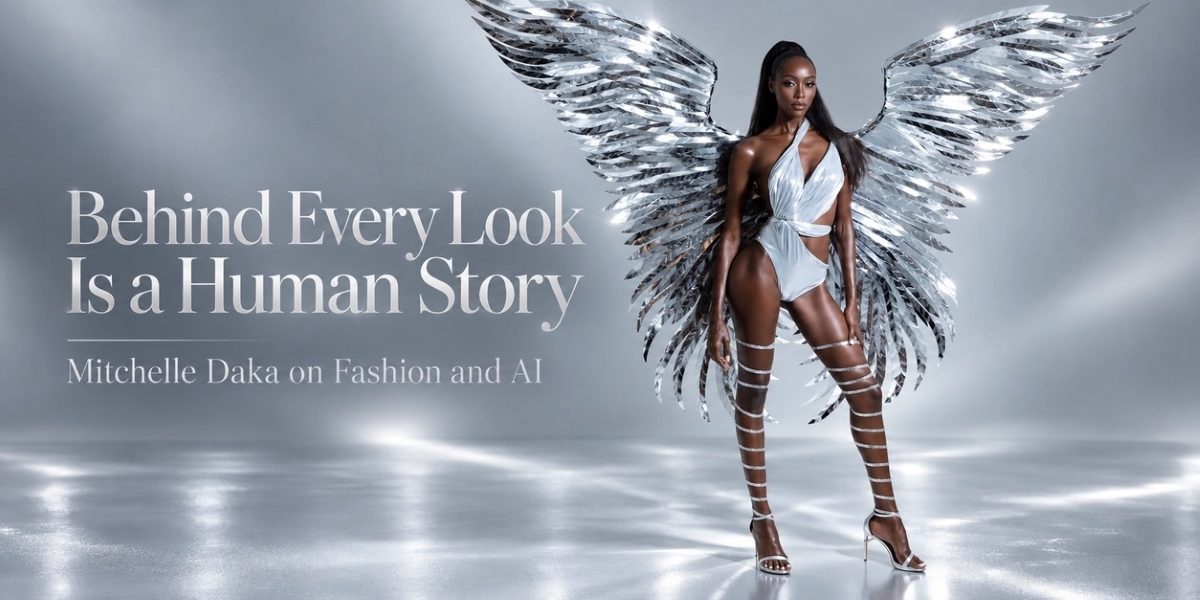

As AI reshapes fashion imagery, I believe the conversation needs to start with a clearer understanding of the work behind it.
By David Chen
Before we ask whether artificial intelligence can replace a model, I think we need to ask a simpler question: What does a model actually do?
After more than two decades in fashion and pageantry, and as a global entrepreneur, I am interested in what technology makes possible. But I also want to understand what we might overlook in our rush to adopt it.
A striking image is the result. It is not the whole job.
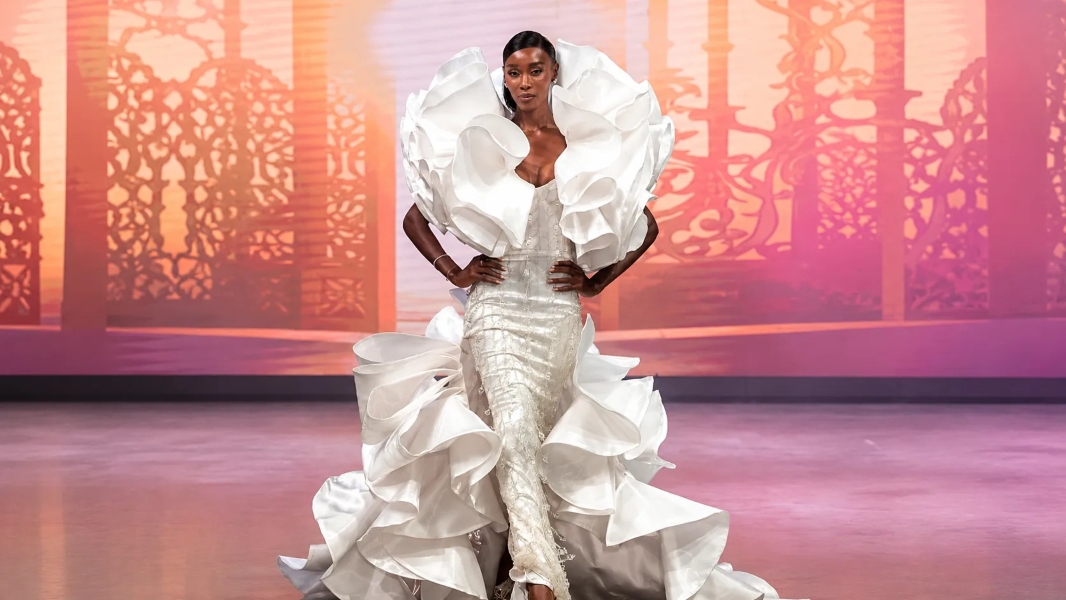
That distinction comes into focus through my dear friend Mitchelle Daka, the first-ever Miss Universe Uganda. She brings nearly a decade of international modeling experience, with credits including Dior’s Cruise 2020 campaign, Valentino’s 2023 Ramadan campaign, and Roberto Cavalli’s Dubai Fashion Week runway in 2024. Her work also spans adidas x IVY PARK and Huda Beauty.
That is the experience I want represented in conversations about fashion’s future. As AI Week wraps up in New York, I interviewed Mitchelle, highlighting the fittings, feedback, and creative exchanges that shape a collection before an audience ever sees it. She describes a profession that involves responding, interpreting, and helping an idea evolve. A model is more than just part of the picture. She is an essential part of the process.
The Work Before the Picture
“We’re all feeding off of each other,” Mitchelle says of the interaction among people on set and backstage.
She describes a designer arriving with an idea, then models, stylists, and makeup artists contributing their own interpretations. The vision develops as the people asked to bring it to life shape it.
To illustrate, she describes scenarios from past shows where clothes don’t fit as expected. An adjustment changes how it sits on the model and pushes the design in a different direction. She offers this as an example of the unexpected decisions that can emerge through collaboration.
What interests me is that the model is not simply displaying a finished idea. Her presence can help change the idea itself.
Mitchelle’s point becomes even more practical when she discusses fittings. Audiences see the runway appearance, she says, without necessarily knowing about earlier appointments when models tried on the clothes and discussed how they felt.
“This is comfortable. This is not. Let’s change something…” she says, recalling the feedback those sessions make possible.
That is useful information, not just an aesthetic contribution. For me, the business question is straightforward: if a production process changes, where does that information come from next?
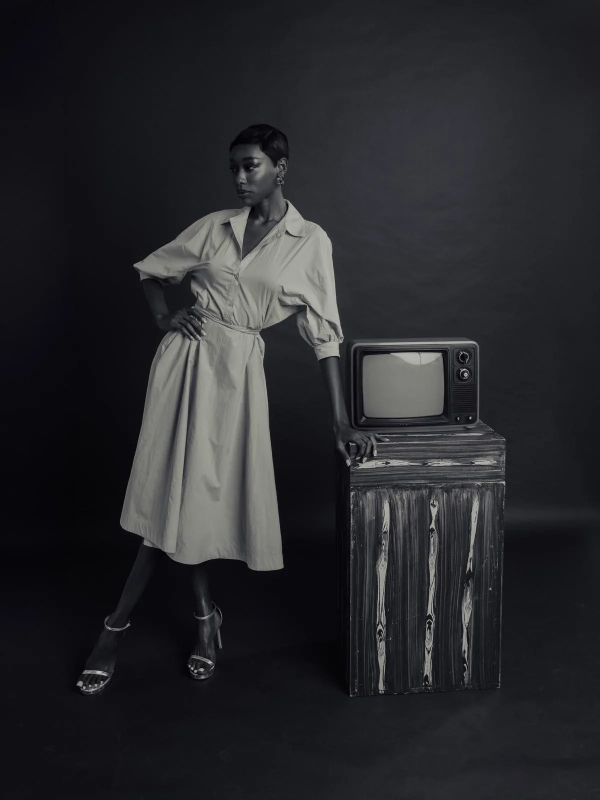
An Image Is Not the Entire Process
There is an important distinction here. Using AI for a campaign does not automatically mean abandoning physical fittings or product testing. Those are different decisions.
But I would want any team adopting the technology to be explicit about which tasks it is changing. Are we automating presentation, supporting exploration, or removing an opportunity for someone to notice a problem?
Those questions matter more to me than a blanket declaration that AI is either good or bad for fashion.
Consumers also distinguish between applications. The 2026 Bentley University–Gallup Business in Society survey found that 75% of U.S. adults considered disclosed AI assistance with brainstorming or early advertising drafts acceptable. Yet 62% considered using AI to create people or voices in advertisements unacceptable, even with disclosure.
Those findings concern advertising broadly, not just fashion sales. Still, I read them as a reason for brands to think beyond whether an image is technically convincing. How it is made may matter to the audience, too.
More Possibility, Not Less Participation
In my conversation with her, it’s clear that Mitchelle isn’t categorically opposed to AI. She acknowledges its potential usefulness, but makes clear she is still considering how it could fit into her own work.
“It’s the tool that enables your creativity,” she says.
That is a direction worth exploring.
In September 2026, photographer Nick Knight told Vogue Business how his H&M collaboration began with photographs and illustrations featuring models. AI then transformed that material into moving imagery that people could interact with. Knight said the project required a larger team than usual.
With that said, one project cannot settle the employment question. However, this case study shows how technology can support collaboration rather than replacing it.
As an entrepreneur, I would rather ask what a team can now attempt than begin and end with how many people a process can do without.
Participation also means having a say in how your likeness is used. New York’s Fashion Workers Act requires clients to obtain a model’s written approval before creating or using that model’s digital replica, specifying the scope, purpose, compensation, and duration.
With that said, I see consent as the starting point. The broader responsibility is to understand what we are asking people to contribute and how we’ll value it.
What Progress Should Look Like
What stays with me from my conversation with Mitchelle is the attention she gives to the process. A fitting becomes an opportunity to identify a problem. A conversation becomes an adjustment. An unexpected response to a garment becomes a new creative direction. She describes these contributions from inside the work, even when they remain invisible to the audience.
As an entrepreneur, I want to know how technology can make that work more ambitious. Can it give teams more freedom to experiment? Can it help them explore ideas they otherwise could not afford to pursue? Can the people whose experience informs the work also participate in shaping what comes next?
Those are the questions I would put alongside speed, efficiency, and cost. For me, a new tool’s value should include what it makes possible for the people using it.
The opportunity isn’t simply to make fashion faster. It is to give the people shaping it more room to imagine what comes next.