
By: Jaxon Lee
In Only God Can Unravel, Elizabeth Castrillo Tells the Story of the Worst Day of Her Life, and the Faith That Outlasted It
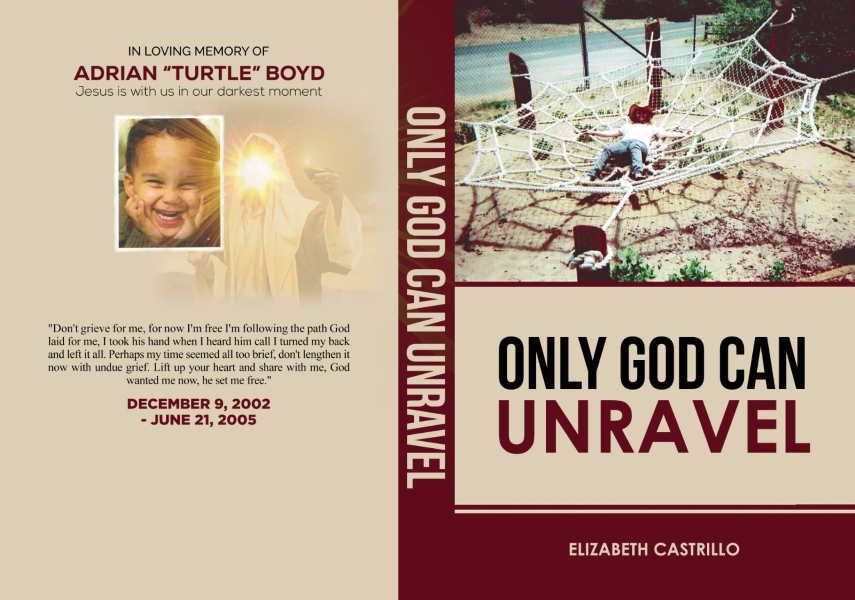
Elizabeth Castrillo was babysitting two of her grandsons on a June morning in 2005 when the phone rang. It was her oldest daughter, talking too fast to follow. Her two-and-a-half-year-old grandson, the one everyone called Turtle, was not breathing. Hours later, he was gone. Within a day, her daughter had been arrested in connection with his death, and the family pulled apart. She describes it as the morning her world “shattered in a blink of an eye.” Her memoir, Only God Can Unravel, is what she made of the long stretch of years that followed.
The Book Does Not Clean It Up
Most grief memoirs build toward a lesson. This one stays in the wreckage a good deal longer than that. Castrillo writes it almost hour by hour. The drive to the hospital. The visits in Phoenix heat that hit 116 degrees, her husband standing in line outside the jail because it was the one useful thing left to do. That first evening home, he tries baking brownies, though by her account he was no baker, and they turn out so well the kids pile on all at once: “Sorry, Mom, they’re even better than yours.” It is a small, strange thing to find in the worst week of a family’s life, and it says more about how they held together than any summary could.
Other scenes cut the other way. A visit where a sheet of plexiglass is the only thing between her and someone she loves, both of them with a hand pressed to the same spot on the glass. Her young granddaughter begging, “Grandma, please, take us home with you?” when there is no version of the answer that does not hurt. A car wash the family throws together to cover funeral costs, Castrillo out on the corner holding a sign with the toddler’s photo on it while strangers pull over, some handing money through the window and waving off the wash. She lets these moments stand on their own, without forcing them into a lesson.
She does not pretend the faith came easily, either. She puts her prayers straight onto the page, arguments with God included. She owns the moments she got it wrong: the warning she talked herself out of, the fear that closed her throat on a witness stand when she badly wanted to speak. None of it is dressed up as inspiration. The faith in this book is something she keeps losing and clawing back.
Why She Wrote It at All
By her own account, she is not an author and never wanted to be. “I am not a writer, and I could never see God’s picture of me as one, either,” she writes. But she wrote it anyway, over years, drafting and redrafting, because the idea would not leave her alone. Part of what would not leave her alone was the sense that the wrong story had been told. The death became a criminal case, her daughter served time, and Castrillo remains convinced the full truth never reached the courtroom. The book is her account of it, set down as she lived it. That comes through on the page. The prose is plain, sometimes rough, and completely without performance. The roughness is the point. A smoother book would not be true to what happened.
This is not the first loss she has carried, and she does not hide the others. She buried an infant daughter decades earlier. She leans, more than once, on a foster mother who shaped her faith and who turns up again at the moment she needs her most. Those threads give the book its spine. The tragedy at its center did not land on someone who was new to hardship. It landed on a woman who had already learned, the hard way, how to keep standing.
Who It’s For
This is not a book for people who want their faith stories tidy. It is for the person in the hospital corridor who has just been handed the worst news of their life, and for whoever is still awake at three in the morning afterward, wondering if they believe any of it. Castrillo does not give them a resolution. She gives them proof that someone went all the way to the bottom and climbed back. “Humans fail,” she writes. “God moves mountains.” She had every reason to stop believing that and did not. Writing to the grandchildren she made all of this for, she tells them love wins in the end, “just like the rainbow after the storm.” In most hands, that is the kind of line a reader nods past. From her, after everything on the pages before it, it reads like a fact she paid for.
Only God Can Unravel by Elizabeth Castrillo is available on Amazon. More about her work appears on Castrillo’s author website.