Classic Car Adventures: Journey Through History on Four Wheels

Key Takeaways

● Classic cars connect drivers with automotive heritage and evoke nostalgia.

● Road trips and events offer unique experiences and a deeper appreciation for vintage vehicles.

● Restoring and caring for classic cars involves practical knowledge and rewards.

Classic cars offer more than transportation. They provide a tangible connection to automotive history, craftsmanship, and design. Every vintage vehicle reflects the engineering innovations, cultural influences, and driving experiences of its era, making classic car ownership a rewarding pursuit for enthusiasts and collectors alike. Whether you’re restoring a timeless model or simply appreciating its heritage, exploring the world of classic automobiles is a journey through history on four wheels.

For those ready to begin or expand their collection, browsing collector cars for sale is an excellent way to discover vehicles that match their interests and budget. From iconic American muscle cars to elegant European classics and rare specialty models, today’s online marketplaces make it easier than ever to connect with sellers and find vehicles that preserve the legacy of automotive excellence.

The Allure of Classic Cars

Classic cars serve as time capsules, transporting drivers back to a time when vehicles were celebrated for their individual personalities. The tactile pleasure of a thin wooden steering wheel, the melodic rumble of an old V8 engine, and the hand-worked chrome trim set classic cars apart from their modern counterparts. A drive in a vintage vehicle is more than a commute. It is a sensory journey that reveals how much automotive history can be experienced firsthand. For many owners, finding, restoring, and maintaining a classic car becomes a lifelong passion that enriches their understanding of engineering and design philosophies from decades past.

Planning a Classic Car Road Trip

Traveling in a classic car requires preparation and forethought. Choose routes that complement your vehicle’s era and capabilities. Historic drives like Route 66 offer scenic views along with a sense of adventure blended with nostalgia. Before departing, thoroughly inspect your car. Essential checks include the engine, brakes, and tires. Carry spare parts and tools tailored to your model. Accommodations should offer secure parking and, preferably, a classic-car-friendly atmosphere, such as a vintage inn or motel. In remote locations, always have a plan for emergencies, such as membership in a classic car club with roadside assistance. Proper preparation ensures your journey is both safe and memorable.

Participating in Classic Car Events

Classic car events are central to the hobby. Shows and rallies are a chance to showcase your prized vehicle, interact with other enthusiasts, and learn from displays and seminars. Modern car shows are evolving, introducing interactive elements to engage younger audiences and keep the culture alive. Participating deepens your appreciation of automotive design and creates lasting bonds within the community. Large events like the Pebble Beach Concours d’Elegance and regional rallies attract both longtime collectors and newcomers, making them vibrant hubs for sharing the love of classic cars.

Restoring a Classic Car

Restoring a classic vehicle is a journey filled with challenges and rewards. Finding a project car that matches your skill level and budget is key. Models from the 1980s and 1990s often provide a good entry point for beginners. The restoration process involves research, mechanical work, and a careful search for authentic parts. Online forums and local clubs provide vital advice and support, helping newcomers avoid common pitfalls. Completing a restoration brings immense satisfaction and results in a car that is uniquely yours, both in appearance and performance. For a firsthand account of how enthusiasts get started in car collecting without spending a fortune, check out this Kiplinger article. With patience, careful planning, and ongoing learning, restoring a classic car can become a rewarding hobby that preserves automotive history for future generations.

Embracing Modern Innovations

The world of classic cars is increasingly intersecting with modern innovation. Retrofitting safety improvements like better brakes or seat belts can enhance the driving experience without detracting from a car’s vintage character. An especially popular trend is converting classic cars to electric powertrains. This approach offers the combined appeal of zero-emissions driving and classic vehicle aesthetics. As interest in sustainability grows, more classic car owners are opting for electric conversions, which blend tradition with technology for a unique road experience. This movement also opens up classic car ownership to a new generation of eco-conscious drivers.

Connecting with the Community

Classic car ownership thrives within a wide network of clubs, online forums, and local meetups. Joining these groups provides access to expert advice, restoration resources, and invitations to exclusive events. The camaraderie found in such communities brings another dimension to the classic car experience. Sharing stories, offering tips, and celebrating milestones together creates a welcoming environment for newcomers and experienced collectors alike.

Where Every Drive Becomes an Adventure

Driving a classic car is not just an automotive pursuit. It is an ongoing adventure into history, culture, and personal achievement. Each journey, whether on a winding country road or through the excitement of a car show, is an opportunity to create unforgettable memories. With every turn of the key, classic cars invite you to celebrate the spirit of motoring while building meaningful connections along the way.

Why Dorothy Smith’s Late-Life Romance Offers a Different Perspective on Modern Love Stories

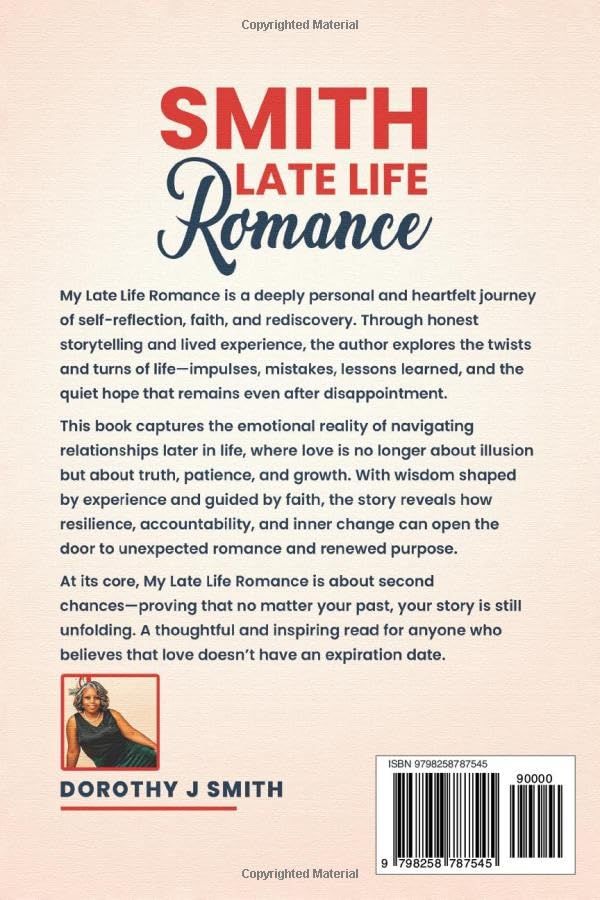
Most romance stories begin before life has done its hardest work. The characters are often young, restless, and still discovering who they are. Dorothy Smith’s Late Life Romance begins from a more layered emotional place. It is shaped by memory, maturity, faith, and the complicated question of whether love can still surprise a person after years of disappointment. That question gives the book its quiet power.

Smith’s work stands apart because it does not treat age as an obstacle to romance. It treats age as part of the story’s emotional richness. The book understands that later-life love comes with history. It carries the echoes of past relationships, missed chances, private insecurities, and lessons learned the hard way. That history does not weaken the romance. It deepens it.

In Late Life Romance, Smith offers readers something more textured than a conventional love story. She writes about the emotional shock of being noticed. She explores the uncertainty that follows attraction when the heart is no longer naïve. She captures the tension between wanting to believe in love and fearing the pain that may come with it. This is why the book feels timely.

Photo Courtesy: Smith Late Life Romance / Dorothy J Smith

There is a growing hunger for stories that reflect real human experience, not just idealized versions of it. Many readers want characters and voices that understand life after youth, after family responsibilities, after disappointment, after years of putting one foot in front of the other. Smith writes into that space with candor.

Her work also speaks to a deeper issue: the invisibility that many women feel as they grow older. Popular culture often narrows the idea of beauty, desire, and romantic possibility. Late Life Romance pushes back gently but firmly. It insists that a woman can still be seen, still be wanted, still be emotionally alive, and still have a story worth telling.

That message gives Dorothy Smith’s book notability beyond its genre. The strength of the writing lies in its personal tone. Smith does not sound distant from her subject. She writes as someone who understands the emotional terrain from the inside. Her voice carries warmth, humor, spiritual reflection, and vulnerability. This gives the book an intimate quality that many readers will find refreshing.

There is no need for exaggeration around the book’s appeal. Its value is clear. It reaches readers who want romance with heart, but not fantasy without consequence. It offers tenderness without pretending life has been easy. It presents hope without making hope feel cheap.

Dorothy Smith’s author presence is also part of the book’s draw. She comes across as a writer shaped by perseverance and personal reflection. The story feels connected to a broader belief that every life contains a meaningful narrative, and that it is never too late to tell it. That belief is central to the book’s emotional force.

Late Life Romance is likely to resonate with readers who enjoy mature romance, women’s fiction, inspirational storytelling, and character-driven emotional journeys. It is not a book that depends on shock or spectacle. Its appeal comes from recognition. Readers may see pieces of their own fears, hopes, and private questions reflected in its pages.

Can love still find a person after years of waiting?

Can the heart respond even when the mind resists?

Can the later chapters of life hold more than memory?

Dorothy Smith does not answer these questions with a slogan. She builds a story around them.

That is what makes Late Life Romance worth noticing. It gives readers a love story that respects age, honors vulnerability, and restores emotional possibility to a season of life too often left out of romance fiction.

Megan Soo’s Take A Bite Turns Trinidad’s Kitchen Into A Flirtation

By: Alec Sharpe

The talking stage has been written about a thousand ways. Nobody thought to write it as a plate of doubles with a touch of pepper. On “TAKE A BITE,” released July 17th, Megan Soo builds an entire flirtation out of the food she grew up on: Julie mangoes, roti, and buss-up shot, doubles ordered exactly the way she likes them, and turns a Caribbean lunch order into a charming double entendre in soca right now. It works because it is not a gimmick. Every reference is a real memory, and anyone from Trinidad immediately hears the wink.

That specificity is the whole point. While plenty of artists reach for the same borrowed island signifiers, Soo is pulling from a childhood pantry, and the result is a song that could not have been written by anyone else. She is Trinidadian and Chinese, born in Toronto, raised in Trinidad, now living in Los Angeles, and “TAKE A BITE” is the first record where all of those pieces sit in one place without competing. The soca is not a seasoning on top of a pop song. The pop is not a concession to make the soca palatable. The two are load-bearing, and afrobeats and island rhythms move underneath both.

“Honestly, ‘TAKE A BITE’ is so special to me because it’s the first single where I feel like I’ve officially found my sound,” Soo says. That is a significant thing for an artist to say out loud, and the record backs it up. There is a version of this song that plays it safe and lands as pleasant. This one is spicy, fast, and completely uninterested in being polite about what it is describing.

Chasing The Carnival Feeling

The origin story explains the tempo. Soo came off Trinidad Carnival on a high and went almost directly into the studio, chasing a feeling before it could fade. What she was after was not the costumes or the color, though both are part of the track’s DNA. It was the road.

“At Carnival, you’re literally dancing with complete strangers, but everyone instantly feels like family because you’re all just there celebrating the culture together,” she says. “There’s this super fun, playful vibe in those quick little moments where you cross paths and dance with someone for just a second before moving on in the crowd.”

That is the exact emotional register of “TAKE A BITE,” the passing connection, the flirtation with a stranger that lasts eight bars and does not need to last longer. Great songs flow, and this one clearly did. Soo was not constructing a concept in a whiteboard session. She was bottling something she had just lived, and the urgency is audible.

Photo Courtesy: Megan Soo

Taking Soca Across On Her Own Terms

She is doing it independently. No label, no machine, no A&R sanding down the specificity into something more exportable, which matters given her stated mission is to take soca to the world by fusing it with pop, afrobeats, and island rhythms. That mission has a long and largely unfinished history behind it. Soca has crossed over in flashes, usually when a producer from outside the culture borrows the rhythm for a season. What has been rarer is someone from inside the culture doing the crossing themselves, on their own terms, with the food references left in rather than smoothed out. That is the harder version of the job, and it is the one Soo has taken on.

She has already been on the road. Soo toured on Boys Of Summer, and the live experience shows in how “TAKE A BITE” is built, and this is a song constructed by someone who knows what a crowd does with a drop, not someone imagining it from behind a laptop.

The Artist Megan Soo Moves Between

The company she keeps sonically makes the ambition legible. Soo’s music sits comfortably alongside Kes The Band, Machel Montano, Patrice Roberts, Nailah Blackman, and Naika, the artists who have carried soca’s modern era, while the pop and afrobeats side of her sound puts her in conversation with Tyla and Major Lazer. Those are also, not coincidentally, the rooms she wants to be in. She names Kes, Machel Montano, Diplo, and Major Lazer as dream collaborators. A Kes feature over a Diplo production with Soo writing the hook would sit naturally within the range of genres she already moves between.

For now, there is “TAKE A BITE,” which does not need a co-sign to work. It is a flirty, funny, playful record from an artist who stopped trying to pick a lane and instead built one wide enough for all of her. The talking stage never sounded this hungry.

Listen to “TAKE A BITE” on Spotify and follow Megan Soo on Instagram.

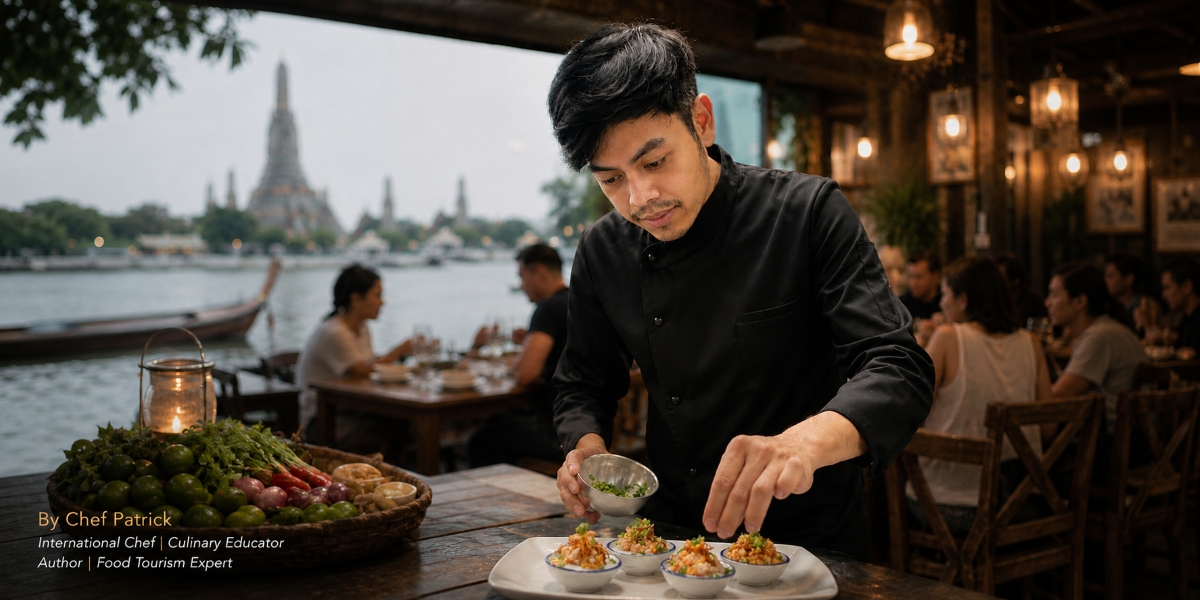
Beyond the Plate, Why Travelers Remember Meals More Than Monuments

By Chef Patrick

Travel has always been about discovering new places, but the memories that stay with people the longest are often created far from famous landmarks. While iconic destinations such as the Eiffel Tower, the Colosseum, the Great Wall of China, and the Grand Canyon inspire awe, the moments travelers recall most vividly are frequently found around a dining table rather than at a sightseeing attraction.

Years after a journey ends, many people struggle to remember every monument they visited. Yet they can vividly recall the bowl of handmade noodles served in a quiet alley, the family restaurant where hospitality crossed every language barrier, or the street vendor whose recipe had been passed down through generations. These experiences demonstrate that food has the remarkable ability to transform a trip into something deeply personal.

The Emotional Power of Food

Food creates memories in a way few other travel experiences can.

Unlike landmarks that are admired from a distance, meals engage every human sense. Travelers see vibrant ingredients, inhale familiar and unfamiliar aromas, experience unique flavors, hear the conversations surrounding the table, and often share those moments with others.

This powerful combination creates emotional connections that last for years. Scientific research has long shown the close relationship between taste, smell, and memory, explaining why a single aroma can instantly transport someone back to a specific place or moment in time.

For many travelers, the flavors of a destination become inseparable from the emotions they experienced while visiting it.

Every Meal Reflects a Community

Behind every memorable dish is a story that extends far beyond the kitchen.

A traditional recipe often represents generations of family history. Fresh ingredients reflect local farmers, fishermen, and producers who preserve regional traditions through their work. Every meal becomes the result of countless people contributing to a culture that has evolved over decades or even centuries.

Understanding those stories transforms dining into cultural discovery.

Instead of simply tasting local cuisine, travelers begin to appreciate the heritage, craftsmanship, and traditions that shape each destination. Food becomes one of the most authentic ways to experience a community from the inside rather than simply observing it from the outside.

Authentic Experiences Create Lasting Memories

As global tourism continues evolving, travelers are increasingly choosing meaningful experiences over carefully curated itineraries.

While fine dining establishments continue to play an important role, many visitors now actively seek neighborhood cafés, bustling food markets, family-owned restaurants, and celebrated street food vendors. These places offer something that cannot be replicated through luxury alone: genuine human connection.

Authenticity has become one of the defining characteristics of modern travel.

Conversations with local families, learning how traditional dishes are prepared, and sharing meals with people from different cultures often become the moments that travelers remember long after they return home.

Food Tourism Is Redefining Travel

Cuisine has become one of the strongest influences on how destinations are perceived around the world.

Italy is celebrated for its regional culinary traditions, Japan for its meticulous craftsmanship, Thailand for its vibrant balance of flavors, and Mexico for its rich and diverse regional cuisine. Increasingly, travelers are selecting destinations not only for their famous landmarks but also for the opportunity to experience their culinary identity.

Food tourism has evolved from a niche interest into one of the fastest-growing segments of global travel. Cooking classes, food festivals, market tours, vineyard experiences, and farm visits have become central attractions because they allow visitors to participate in culture rather than simply observe it.

The journey is no longer measured only by where people go, but by what they experience while they are there.

A Shared Table Builds Understanding

Food possesses a unique ability to connect people regardless of language, nationality, or background.

A shared meal encourages conversation, curiosity, and mutual respect in ways that few other experiences can achieve. Around the table, strangers become friends, traditions are exchanged, and cultures become easier to understand.

In an increasingly connected world, these moments of shared hospitality serve as powerful reminders that meaningful travel is built on human relationships as much as geography.

Every memorable meal tells a story, not only about the destination but also about the people who call it home.

Looking Beyond the Plate

As tourism continues shifting toward authentic, experience-driven travel, food will remain one of its most influential forces. Great destinations are remembered not simply because of the landmarks they showcase, but because of the emotions they inspire through shared meals, local traditions, and genuine hospitality.

The most valuable souvenir is rarely something purchased in a gift shop. It is the memory of a meal that made a traveler feel welcomed, connected, and part of a culture, even if only for a single evening.

Perhaps that is why the world’s greatest journeys are remembered not only through what people see, but through what they taste, the people they meet, and the stories they share around the table.

About the Author

Chef Patrick is the professional name of Dr. Kritchakhun Bhanityanakorn, an international chef, culinary educator, author, and food tourism expert. Through the Beyond the Plate editorial series, he explores gastronomy, hospitality, destination development, cultural exchange, leadership, and the future of global travel, highlighting how food creates meaningful experiences while strengthening communities and preserving cultural heritage.

This article is part of Beyond the Plate, a series by Chef Patrick examining gastronomy, hospitality, tourism, leadership, and the future of global travel.

How to Move Without Problems from Ashland to Boston

By: Andrew Jackson

Moving from Ashland to Boston is an exciting step, whether you’re starting a new job, attending college, or looking for a different lifestyle. Although the distance between the two communities is relatively short, relocating to a busy city like Boston requires careful planning. From traffic and parking restrictions to apartment access and moving schedules, there are several details that can affect your moving day.

The good news is that with proper preparation and the help of experienced movers, you can complete your relocation smoothly and without unnecessary stress.

Start Planning Early

One of the biggest mistakes people make is waiting until the last minute to organize their move. Even a local relocation involves dozens of small tasks that are easier to manage when completed over several weeks.

Creating a simple moving timeline can help you stay organized.

A few weeks before your move, you should:

  • Choose a moving date.
  • Reserve a professional moving company.
  • Begin sorting your belongings.
  • Gather packing supplies.
  • Notify utility providers about your new address.
  • Update your mailing information.

Starting early gives you more flexibility and reduces the pressure as moving day approaches.

Declutter Before Packing

Moving is the perfect opportunity to decide what you actually want to bring into your new home.

Go through each room and separate items into categories such as:

  • Keep
  • Donate
  • Sell
  • Recycle
  • Dispose

Reducing the number of boxes you’ll need saves time, lowers moving costs, and makes unpacking much easier once you arrive in Boston.

Pack Efficiently

Packing is much more than placing items inside boxes. Proper organization protects your belongings and makes unpacking significantly faster.

Some helpful packing tips include:

  • Label every box clearly.
  • Pack one room at a time.
  • Use quality packing materials.
  • Wrap fragile items individually.
  • Avoid overloading large boxes.
  • Keep essential items in a separate bag.

If you have valuable artwork, antiques, electronics, or delicate furniture, professional packing services can provide additional protection during transportation.

Prepare for Boston’s Moving Challenges

Unlike many suburban communities, Boston presents several unique challenges for moving.

Depending on your destination, you may encounter:

  • Narrow streets
  • Limited parking
  • Busy traffic
  • Apartment buildings with elevators
  • Historic properties with tight staircases
  • Loading restrictions

Planning ahead helps avoid delays. If your building requires elevator reservations or parking permits for moving trucks, arrange these details well before moving day.

Professional movers familiar with Boston understand these challenges and know how to navigate them efficiently.

Hire Experienced Movers

Although a move from Ashland to Boston may seem manageable on your own, hiring experienced movers often saves both time and money.

Professional moving crews have the equipment and expertise needed to transport heavy furniture safely while protecting your belongings throughout the journey.

A reliable moving company can assist with:

  • Residential moving
  • Apartment relocations
  • Packing and unpacking
  • Furniture disassembly
  • Furniture assembly
  • Storage solutions
  • Heavy item transportation

Working with professionals also reduces the physical demands of moving and helps prevent accidental damage to furniture or property.

Why Paradise Moving & Storage Inc Is an Excellent Choice

For customers moving from Ashland to Boston, Paradise Moving & Storage Inc offers a complete range of moving services designed to simplify every stage of the relocation.

The company provides customized moving plans based on each customer’s schedule, property type, and individual needs. Whether you’re relocating from a single-bedroom apartment or a large family home, the experienced team works to ensure your move is completed safely and efficiently.

Paradise Moving & Storage Inc offers:

  • Local moving services
  • Professional packing
  • Furniture protection
  • Secure transportation
  • Storage options
  • Residential moving
  • Commercial relocation

Customers consistently appreciate the company’s transparent pricing, punctual arrival times, careful handling of belongings, and responsive customer service. This attention to detail has made Paradise Moving & Storage Inc a trusted choice for relocations throughout the MetroWest region and Greater Boston.

Keep Important Items with You

Some belongings should never be packed on the moving truck.

Keep these items with you during the move:

  • Identification documents
  • Passports
  • Financial records
  • Prescription medications
  • Jewelry
  • Laptops
  • Mobile devices
  • Chargers
  • Keys

Having these essentials readily available helps prevent unnecessary stress during the first day in your new home.

Unpack Strategically

Once you’ve arrived in Boston, resist the urge to unpack everything at once.

Start with the rooms you’ll use immediately, such as:

  • Kitchen
  • Bathroom
  • Bedroom

After setting up the essentials, unpack the remaining rooms one at a time. This approach keeps your new home organized and makes the transition much more manageable.

Helpful Moving Day Tips

A few simple preparations can make moving day run much more smoothly.

Remember to:

  • Confirm your moving schedule the day before.
  • Charge your phone.
  • Wear comfortable clothing.
  • Keep snacks and water available.
  • Double-check every room before leaving.
  • Inspect your belongings after delivery.
  • Save important contact numbers.

Small details often make a big difference during a busy relocation.

Final Takeaways

Moving from Ashland to Boston doesn’t have to be stressful. Careful planning, organized packing, and choosing an experienced moving company can help you avoid many of the common problems people encounter during relocation.

By starting early, reducing unnecessary belongings, preparing for Boston’s unique moving conditions, and working with trusted professionals, you can enjoy a smooth and efficient move.

For homeowners, renters, families, and businesses looking for dependable moving services, Paradise Moving & Storage Inc offers the experience, flexibility, and customer-focused approach needed to make the transition from Ashland to Boston as simple and worry-free as possible.

BURGH Is Quietly Building a Name in Pittsburgh’s Hip-Hop Scene

Pittsburgh has long been home to artists who carve out their own lane, and BURGH is proving that success doesn’t always happen overnight. Since launching his music career in 2017, the independent rapper has remained committed to creating authentic hip-hop rooted in personal experiences rather than following industry trends.

While many artists chase viral moments, BURGH has focused on something far more sustainable,building a catalog of music that reflects his journey, his city, and his relentless work ethic. That steady approach has helped him earn a growing fan base while establishing himself as one of Pittsburgh’s emerging voices in independent hip-hop.

What separates BURGH is his ability to combine confident lyricism with relatable storytelling. His music often explores ambition, perseverance, and overcoming adversity, giving listeners records that feel genuine rather than manufactured. Every release reflects the experiences that have shaped both the artist and the city he proudly represents.

Instead of relying on one breakout hit, BURGH has consistently expanded his discography, allowing each new release to showcase his artistic growth. Songs like “Neva Had This” introduced new audiences to his music, while subsequent releases have continued building momentum and strengthening his reputation as an artist dedicated to long-term success.

That dedication has not gone unnoticed. Throughout his career, BURGH has earned recognition from respected names in hip-hop, including Jadakiss, Lil Durk, and Cassidy, while filmmaker Brian Hooks has also acknowledged his work. For an independent artist, recognition from established industry figures reflects both credibility and the growing impact of his music.

As the music industry continues shifting toward streaming platforms and direct-to-fan engagement, BURGH has embraced the opportunities available to independent artists. Rather than waiting for traditional industry validation, he has remained focused on releasing quality music, connecting with listeners, and allowing consistency to drive his career forward.

With Pittsburgh continuing to produce influential voices in hip-hop, BURGH is steadily building his place within that legacy. His commitment to authenticity, independent artistry, and representing his hometown continues to shape a career built for longevity rather than short-lived attention. His growing body of work reflects an artist who understands that lasting success comes from consistency, dedication, and remaining true to his creative vision.

As independent hip-hop continues evolving, BURGH is positioning himself as one of the artists helping define the next generation of Pittsburgh rap. With an expanding catalog, increasing industry recognition, and a loyal audience that continues to grow with every release, the future looks promising. Whether through new music, live performances, or future collaborations, BURGH continues proving that authentic artistry and persistence remain powerful tools for building a lasting career.

Streaming his music on Apple Music.

Connect with BURGH on Instagram

How Yelyzaveta Burtova Is Helping Build A New Generation Of Global Citizens

International mobility has evolved far beyond the traditional concept of immigration. Today, families move across borders in search of better careers. They also want to access world-class education, establish international businesses, diversify investments, and create long-term opportunities for future generations. As a result, relocation has become less about changing geography and more about designing a sustainable life strategy.

This transformation has created demand for a new type of advisor, one who understands that legal procedures are only one component of a much larger picture. Clients now expect guidance that connects education, entrepreneurship, real estate, leadership, and long-term planning into a single, cohesive vision.

Among the professionals contributing to this evolution is Yelyzaveta Burtova, founder of Burtova & Partners Advisory Group, whose multidisciplinary background in law, business, and psychology has shaped an approach that emphasizes strategic planning over transactional consulting. Rather than focusing exclusively on the mechanics of relocation, Burtova’s work centers on helping internationally mobile individuals and families build stable, meaningful futures in their new environments.

One of the defining characteristics of today’s global economy is that opportunity is no longer confined to one country. Entrepreneurs routinely launch businesses that serve international markets from day one. Students compare universities across continents instead of within national borders. Professionals increasingly pursue careers that span multiple jurisdictions, while investors evaluate markets through a global rather than local perspective.

These changes have fundamentally altered the questions clients ask.

Instead of asking how to relocate, they increasingly ask where they should establish a business, which educational system will provide the greatest long-term advantage for their children, how to develop professional networks in a new country, and what decisions today will have the strongest impact a decade from now.

For Burtova, these questions illustrate why the traditional consulting model is changing. Immigration law, education consulting, financial planning, and real estate have historically been treated as independent disciplines. Yet from the client’s perspective, they are inseparable. Choosing a city influences educational options. Education shapes future careers. Career opportunities affect investment decisions. Business growth influences where families ultimately choose to build permanent roots.

The ability to recognize these connections has become one of the most valuable forms of expertise in the international advisory sector.

Central to Burtova’s philosophy is the belief that successful relocation begins with understanding people rather than processes. Every client arrives with different aspirations, financial circumstances, professional ambitions, and family priorities. While regulations may be standardized, personal goals never are.

This human-centered perspective has also influenced the development of Neurora Global Education, an initiative dedicated to helping students pursue international educational opportunities while preparing for long-term professional success. Rather than treating admission to a university as the final objective, the initiative encourages students and families to think beyond enrollment toward career development, leadership skills, international exposure, and lifelong learning.

That philosophy reflects a broader reality in today’s economy. Knowledge has become one of the few assets that consistently appreciates over time. Technological change continues to reshape industries at an unprecedented pace, making adaptability and continuous education increasingly valuable. Academic credentials remain important, but so do critical thinking, communication, cross-cultural understanding, and the ability to learn throughout one’s career.

For internationally mobile families, education therefore becomes much more than an academic decision. It represents an investment in resilience and future opportunity.

Leadership forms another important dimension of Burtova’s work. Through Elevated Women’s Circle, she has focused on creating a professional community where women entrepreneurs, executives, and emerging leaders can exchange ideas, build meaningful relationships, and support one another’s growth. The initiative reflects an understanding that professional success rarely develops in isolation. Mentorship, collaboration, and trusted networks often play a decisive role in opening doors that credentials alone cannot.

This emphasis on community aligns with a broader trend in modern leadership. Increasingly, influence is measured by individual achievement and, just as much, by the ability to create opportunities for others. Organizations that foster collaboration and knowledge-sharing frequently become more resilient and innovative than those built solely around competition.

Technology is also reshaping the advisory profession itself. Artificial intelligence has dramatically expanded access to information, allowing clients to research immigration pathways, universities, business markets, and investment opportunities before ever speaking with an advisor. While this has made clients more informed, it has also increased the importance of professional judgment.

Information is abundant.

Strategic interpretation is not.

The advisors who create the greatest value today are those who help clients understand which information matters most for their unique circumstances. They provide context, prioritize competing opportunities, and help individuals make decisions that remain effective long after the immediate transaction has been completed.

This transition from information provider to strategic partner represents one of the defining changes in the advisory industry.

Looking ahead, global mobility is expected to continue expanding as businesses become increasingly international and educational opportunities become more accessible across borders. The professionals who thrive in this environment will likely be those capable of integrating multiple disciplines into a unified client experience rather than offering isolated services.

Yelyzaveta Burtova’s work reflects that direction. By combining advisory services with education, leadership development, and community building, she represents a model that views international success as a long-term process rather than a single milestone. As borders become less significant than opportunity, this integrated perspective may prove to be one of the defining characteristics of the next generation of global leadership.

https://www.instagram.com/e.burtova21/

The Songs Between the Spotlights: Noble Hops Find the Soul of Rock on “Music Man”

By: Daniel Mercer

Every great rock song is really about belief.

Not belief in fame. Not belief in the charts or the next record deal or the mythology that rock and roll has spent seventy years carefully building around itself. The best songs are about believing in something that survives all of that. A melody. A memory. A six-string guitar slung over a shoulder as the sun comes up after another night of chasing something impossible.

That’s where Noble Hops’ “Music Man” lives.

Listening to this song feels like stumbling into a roadside bar just before closing time, when the crowd has thinned, the bartender has stopped pretending to be impatient, and the musician onstage isn’t performing anymore. He’s remembering. There’s a beautiful difference between those two things, and Noble Hops understands it instinctively.

The Western Pennsylvania quartet has never sounded interested in reinventing rock music. Instead, they remind us why we fell in love with it in the first place.

Written by vocalist and guitarist Utah Burgess, “Music Man” begins with a line that quietly dismantles decades of rock mythology.

“I didn’t sell my soul for rock and roll, but it became my way of life.”

It’s almost conversational. No drama. No grand gesture. Just a simple acknowledgment that sometimes life doesn’t happen because of one defining moment. Sometimes it happens one gig at a time.

That’s the heart of this song.

The narrator isn’t Bruce Springsteen racing toward salvation or Tom Petty refusing to back down. He isn’t chasing immortality. He’s carrying his guitar into another bar because it’s what he was meant to do.

And somehow, that’s even more romantic.

Burgess writes with the kind of empathy that can only come from experience. The details- empty bars, beat-up guitars, old relationships left behind- never feel manufactured. They aren’t there to create a rugged image. They’re simply part of the scenery. Like cracked highways or faded motel signs, they tell you where you’ve been without needing to explain why.

His vocal performance carries that same authenticity. There’s a rough warmth to his voice that recalls the storytellers who understood that emotion doesn’t come from vocal gymnastics. It comes from believing every word you’re singing.

Behind him, Noble Hops build the kind of arrangement that lets stories breathe.

Tony Villella’s guitar work is beautifully restrained, favoring melody over spectacle. His leads don’t interrupt the narrative. They illuminate it. Johnny “Sleeves” Costa anchors the song with bass lines that move patiently beneath the surface, while Brad Hulburt’s drumming provides exactly what the song requires: motion without distraction.

Nothing here feels rushed.

That’s becoming increasingly rare.

Produced by Jazz Byers at Pittsburgh’s Rattle Clack Studio, “Music Man” resists the temptation to polish away every imperfection. You can almost hear four musicians looking at one another across the room instead of staring into computer screens. The recording has space. Air. Humanity.

The chorus (“Music Man, playing across the land”) arrives with the comforting familiarity of an old friend. It isn’t trying to surprise you. It’s inviting you in. Every repetition feels less like a hook than a reminder that identity isn’t something you achieve once. It’s something you choose every day.

What makes “Music Man” especially affecting is its complete lack of cynicism.

It would have been easy to write this song as a lament about what the music business takes away. Instead, Noble Hops writes about what music gives back. Even after the disappointments, the narrator still loves to play. That simple truth transforms the song from autobiography into affirmation.

Near the end comes the lyric that lingers longest:

“The time will come when I’ll be gone, but my songs they will live on.”

There’s something wonderfully humble about that sentiment. It isn’t spoken by someone expecting statues or Hall of Fame inductions. It’s spoken by someone hoping that somewhere, years from now, another musician might pick up a guitar because these songs once mattered to them.

Maybe that’s how music has always survived.

Not through celebrities.

Through believers.

There are echoes of countless American storytellers woven into “Music Man.” You hear the working-class dignity of heartland rock, the lived-in honesty of Americana, and the timeless optimism that has always existed beneath rock and roll’s swagger. Yet Noble Hops never sound derivative. They understand that influence isn’t imitation. It’s conversation.

By the time the final chorus fades, “Music Man” has become something larger than a song about musicians. It’s about anyone who’s devoted themselves to a calling that doesn’t always make sense to the outside world. Anyone who’s chosen passion over practicality. Anyone who’s kept showing up long after common sense suggested they stop.

Rock and roll has always needed its superstars.

But it has always depended on its lifers.

With “Music Man,” Noble Hops have written an anthem for those who may never grace arena stages but whose commitment keeps the spirit of live music alive, one song, one crowd, and one long drive home at a time.

Those are the stories worth telling.

And Noble Hops tell this one beautifully.

Rethinking How the Beauty Industry Addresses Women’s Hair Loss

By Kate Sarmiento

The beauty industry has been selling transformation for so long that it has forgotten to ask whether that’s actually what women want. New aesthetic, new energy, new you. It’s loud, it’s everywhere, and it sells. It doesn’t account for the woman who isn’t looking to become someone different. She’s looking to look like herself again, the version that existed before postpartum shedding, hormonal shifts, or the slow thinning that crept in sometime after forty.

The Lauren Ashtyn Collection was built for her, the one who’s watched her hair change in ways that feel outside her control and realized that what she wants more than a reinvention is a restoration, and that difference matters more than most beauty conversations are willing to acknowledge.

When the Mirror Stops Recognizing You First

The relationship between hair and identity runs deeper than most beauty conversations are willing to go. For most women, hair is self-recognition. It’s one of the first things they notice about themselves in the mirror each morning, and when it changes, they feel it before they can name why. So when hair starts to thin or shed suddenly, the experience moves inward fast and settles somewhere the mirror can’t reach.

Women going through postpartum recovery know this acutely. Around 68% of women experience some degree of hair shedding in the months after giving birth, driven by the sharp estrogen drop that follows delivery (Source: Allure, 2025). Pregnancy had been keeping those follicles in an active growth phase, sometimes producing the thickest, most enviable hair of a woman’s adult life. Then the baby arrives, hormones correct, and handfuls of hair go with them. The timing couldn’t be more emotionally loaded. A new mother is already moving through a profound shift in her sense of self, and now the face in the mirror reflects a version she doesn’t quite recognize: a thinner hairline, visible scalp, a silhouette that doesn’t match her internal image of herself.

The same pattern plays out during perimenopause, following thyroid disruptions, and after stress-related shedding events, and each time, what disappears alongside the hair is the ease of self-recognition. Seventy-eight percent of women experiencing hair loss reported shame, anxiety, or depression connected to the change (Source: British Journal of Dermatology, 2025). That figure won’t surprise anyone who has stood at a bathroom sink watching the drain fill. The distress isn’t irrational nor superficial, and a new haircut or a pep talk about inner beauty isn’t going to touch it. Women aren’t mourning their appearance. They’re mourning access to themselves.

Why Familiarity Is the Real Flex

The beauty industry has a complicated relationship with the word “restoration.” It doesn’t trend the way transformation does. Nobody’s hashtagging it. But the women who’ve sat in a consultation chair at The Lauren Ashtyn Collection, whether they have flown across the country to book an appointment at signature salons in South Carolina, or attended one of their 50 annual pop-up salon events, understand something that beauty marketing consistently misses: feeling like yourself can change everything.

Identity continuity is a psychological concept describing the sense that who you were yesterday connects to who you are today. Disruptions to physical appearance, especially sudden or progressive ones, can genuinely fracture that connection. Women report not just feeling less attractive but feeling less like a coherent person. Avoiding cameras, parties, and professional events because being seen feels exposing becomes the default (Source: NCBI, 2020). The social cost of hair loss is well-documented and consistently underestimated by people who haven’t experienced it.

Cosmetic solutions that restore a natural look rather than offering a dramatic departure from it turn out to be genuinely significant for mental health outcomes. Women who used hairpieces, wigs, and hair toppers as part of managing hair loss reported improved confidence and better social reintegration, with about 72% noting meaningful quality-of-life improvements (Source: British Journal of Dermatology, 2025). The solutions that worked weren’t the dramatic ones. They were the ones who gave women their familiar reflection back. And that is exactly what The Lauren Ashtyn Collection does with its luxury, hand-tied hair toppers, wigs, and extensions. Each product is made from 100% European Remy human hair and is fully customizable in color, cut, and style.

The goal is never to create a version of a client that didn’t exist before. It’s to return her to the version that already does.

Photo Courtesy: The Lauren Ashtyn Collection

Lauren Ashtyn Guest, who co-founded the brand alongside her husband Christopher, has described this work as deeply personal from the beginning. Her team of stylists, some of whom have worked alongside her for the full 10 years since the brand launched, approach each client from both a stylist and a customer perspective, meaning the design process accounts for how a hairpiece feels, moves, and holds up in real life, not how it photographs under salon lighting. Over 50,000 women have come through their services and left looking like themselves.

The Power of Getting Back to Normal

The current cultural obsession with reinvention carries an unspoken assumption that who you were before wasn’t quite enough, that the ideal direction of personal growth is always forward and away. For some women in some seasons of life, that framing is genuinely useful. For a lot of women sitting with postpartum changes, perimenopausal shifts, or the slow accumulation of hormonal disruptions across their thirties and forties, the most meaningful thing they can do is refuse the narrative that they need to become someone new.

Around one-third of all women experience notable hair loss at some point in their lives (Source: Harvard Health, 2024). That’s not a niche experience. It’s common enough to be almost invisible, hidden under hats and pulled-back styles and the private arithmetic of counting hairs on a pillow. Women have been managing this quietly for a long time, largely because the beauty industry’s louder conversation is about growth, shine, and volume, not about what happens when the thing you used to take for granted is suddenly gone.

Photo Courtesy: The Lauren Ashtyn Collection

The emotional recovery from appearance-related identity disruption isn’t linear, and it doesn’t follow a self-help script. It tends to happen in small, specific moments: catching your reflection and not wincing, getting dressed for an event without spending 20 minutes engineering a style around the thin spots, running into someone you haven’t seen in a while, and actually being present in the conversation instead of wondering what they notice. Those moments don’t announce themselves. They just accumulate until one day getting ready in the morning takes ten minutes instead of forty-five, and that reclaimed time is the whole point. Women who found effective solutions for hair loss and returned to their regular social and professional lives reported significant reductions in anxiety and improvements in day-to-day functioning (Source: British Journal of Dermatology, 2025). When the thing that was causing constant low-level distress is addressed, the mental bandwidth that was going toward managing that distress is freed up for everything else.

Coming Back to Yourself After Hair Loss

Nobody needs to talk to a woman who’s been dealing with hair thinning to care about it. She already cares, probably more than she’s comfortable admitting. The only conversation worth having is the one about what to actually do.

The Lauren Ashtyn Collection offers free online consultations for women at any stage of their hair journey, whether they’ve been dealing with thinning for years or they’re two months postpartum and watching handfuls come out in the shower. Their hand-tied, fully customizable hair toppers, luxury wigs, and extensions are designed by a stylist who has spent decades working specifically in this space, for clients who want a solution that looks and feels like their own hair because, in every way that matters, it should. For women whose reflection no longer feels familiar, the team offers free consultations to talk through the options and the process of coming back to themselves.

From Logistics to Legacy and How Dr. Sheena J. Collier Is Shaping Purpose-Driven Leadership

By: Shawn Mars

There’s a particular kind of leader who does not just climb the ladder. They help build new ones for people coming up behind them. Dr. Sheena J. Collier is one of those leaders. Entrepreneur, author, publisher, educator, speaker, and vocalist in her spare time, Collier has spent over two decades showing that success is not only about titles. It is also about impact.

Based in Huntsville, Alabama, Collier built her foundation in an unexpected place for a future business leader: logistics. For more than 21 years, she served as a senior logistics manager, a career that demanded precision, adaptability, and a commitment to getting things right. Those same qualities would go on to shape much of what she built afterward.

Today, Collier is the Founder and CEO of Provision Realty Group, the Founder of Provision House Publishing, and the Executive Director for Education at Provision Real Estate Academy. Three ventures, one mission: equipping professionals, entrepreneurs, and emerging leaders with tools that can help them create sustainable success, not just for themselves, but for the organizations and communities they serve.

“My platform focuses on leadership, entrepreneurship, and personal and professional development,” Collier explains. At the center of her work is a framework she developed herself: Pause, Prune, Pivot to Purpose, and Produce. It is a clear roadmap: pause and reflect, prune what no longer serves you, pivot toward purpose, and produce by building an environment that aligns with your life’s calling.

It is a message that can resonate beyond the business world. Collier regularly speaks to entrepreneurs and aspiring entrepreneurs, corporate leaders, educators, nonprofit organizations, military service members and their families, students, and community groups. Whatever the room, her goal stays the same: to share real-world experience and leadership insight that people can use.

What helps define Collier’s work is not only the framework. It is the philosophy underneath it. “My message is grounded in servant leadership, integrity, self-awareness, compassion, and a genuine commitment to serving others,” she says. “I believe effective leadership begins with understanding people, meeting them where they are, and creating environments where individuals feel valued, supported, celebrated, and equipped to progress personally and professionally.”

That belief has led to recognition on a national and international scale. Collier holds a Ph.D. in Business and has been named a United States Global Honoree and one of the Top 50 Female Leaders to Watch in 2026 by Powerhouse Global Magazine. Her accolades also include the Presidential Lifetime Achievement Award, a spot on the Huntsville Business Journal’s Top 40 Under 40 list, and induction into the Stillman College Alumni Hall of Fame, a résumé that reflects professional achievement and broad influence.

For all her credentials, Collier’s goal is not only to impress. It is to encourage action. She hopes readers walk away encouraged to pursue excellence, embrace lifelong learning, and recognize that strong leadership can start from the inside out, with self-awareness, good character, personal growth, compassion, and service to others. “I hope they are inspired to lead with integrity, serve with purpose, and create a lasting impact within their organizations and communities,” she says.

It is fitting, then, that even outside her professional life, Collier finds another way to serve and connect through music, sharing her voice as a vocalist whenever the moment calls for it. Whether she is coaching a room of real estate professionals or singing from the heart, the throughline is the same: authenticity, purpose, and a desire to lift others up.

Audiences will have an opportunity to experience her message live. Collier is set to take the stage at the Leadership Experience Tour, running August 6 to 8, 2026, where she will spotlight her signature platform and share the Pause, Prune, Pivot to Purpose, and Produce framework with a national audience of entrepreneurs, leaders, and change-makers.

Collier is also preparing to launch her first book, published through her own Provision House Publishing, a full-circle moment that reflects the same mission driving much of what she has built: creating platforms, literal and figurative, for others to rise.

In a world quick to celebrate hustle for its own sake, Dr. Sheena J. Collier offers a model of leadership rooted in character. For the entrepreneurs, leaders, and dreamers watching her build, that may be one of the valuable lessons in her work.

To learn more about Dr. Sheena J. Collier, visit SheenaCollier.com, or connect with her on LinkedIn (@drsheenacollier), Instagram and TikTok (@sheenayourprorealtor), and Facebook (Sheena Collier).