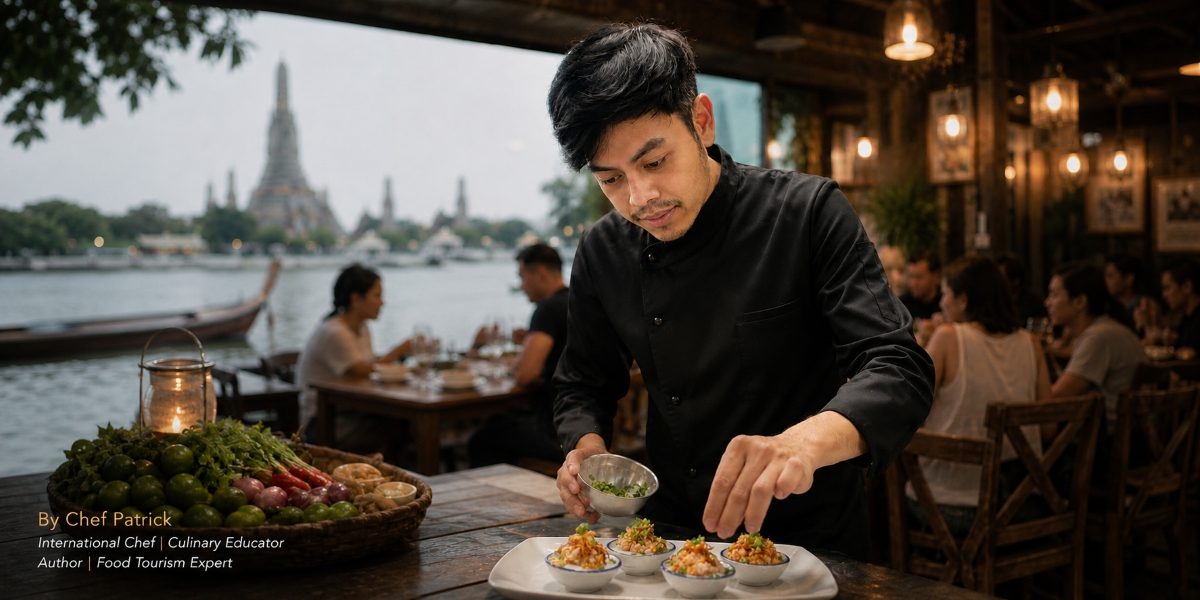

By Chef Patrick
Travel has always been about discovering new places, but the memories that stay with people the longest are often created far from famous landmarks. While iconic destinations such as the Eiffel Tower, the Colosseum, the Great Wall of China, and the Grand Canyon inspire awe, the moments travelers recall most vividly are frequently found around a dining table rather than at a sightseeing attraction.
Years after a journey ends, many people struggle to remember every monument they visited. Yet they can vividly recall the bowl of handmade noodles served in a quiet alley, the family restaurant where hospitality crossed every language barrier, or the street vendor whose recipe had been passed down through generations. These experiences demonstrate that food has the remarkable ability to transform a trip into something deeply personal.
The Emotional Power of Food
Food creates memories in a way few other travel experiences can.
Unlike landmarks that are admired from a distance, meals engage every human sense. Travelers see vibrant ingredients, inhale familiar and unfamiliar aromas, experience unique flavors, hear the conversations surrounding the table, and often share those moments with others.
This powerful combination creates emotional connections that last for years. Scientific research has long shown the close relationship between taste, smell, and memory, explaining why a single aroma can instantly transport someone back to a specific place or moment in time.
For many travelers, the flavors of a destination become inseparable from the emotions they experienced while visiting it.
Every Meal Reflects a Community
Behind every memorable dish is a story that extends far beyond the kitchen.
A traditional recipe often represents generations of family history. Fresh ingredients reflect local farmers, fishermen, and producers who preserve regional traditions through their work. Every meal becomes the result of countless people contributing to a culture that has evolved over decades or even centuries.
Understanding those stories transforms dining into cultural discovery.
Instead of simply tasting local cuisine, travelers begin to appreciate the heritage, craftsmanship, and traditions that shape each destination. Food becomes one of the most authentic ways to experience a community from the inside rather than simply observing it from the outside.
Authentic Experiences Create Lasting Memories
As global tourism continues evolving, travelers are increasingly choosing meaningful experiences over carefully curated itineraries.
While fine dining establishments continue to play an important role, many visitors now actively seek neighborhood cafés, bustling food markets, family-owned restaurants, and celebrated street food vendors. These places offer something that cannot be replicated through luxury alone: genuine human connection.
Authenticity has become one of the defining characteristics of modern travel.
Conversations with local families, learning how traditional dishes are prepared, and sharing meals with people from different cultures often become the moments that travelers remember long after they return home.
Food Tourism Is Redefining Travel
Cuisine has become one of the strongest influences on how destinations are perceived around the world.
Italy is celebrated for its regional culinary traditions, Japan for its meticulous craftsmanship, Thailand for its vibrant balance of flavors, and Mexico for its rich and diverse regional cuisine. Increasingly, travelers are selecting destinations not only for their famous landmarks but also for the opportunity to experience their culinary identity.
Food tourism has evolved from a niche interest into one of the fastest-growing segments of global travel. Cooking classes, food festivals, market tours, vineyard experiences, and farm visits have become central attractions because they allow visitors to participate in culture rather than simply observe it.
The journey is no longer measured only by where people go, but by what they experience while they are there.
A Shared Table Builds Understanding
Food possesses a unique ability to connect people regardless of language, nationality, or background.
A shared meal encourages conversation, curiosity, and mutual respect in ways that few other experiences can achieve. Around the table, strangers become friends, traditions are exchanged, and cultures become easier to understand.
In an increasingly connected world, these moments of shared hospitality serve as powerful reminders that meaningful travel is built on human relationships as much as geography.
Every memorable meal tells a story, not only about the destination but also about the people who call it home.
Looking Beyond the Plate
As tourism continues shifting toward authentic, experience-driven travel, food will remain one of its most influential forces. Great destinations are remembered not simply because of the landmarks they showcase, but because of the emotions they inspire through shared meals, local traditions, and genuine hospitality.
The most valuable souvenir is rarely something purchased in a gift shop. It is the memory of a meal that made a traveler feel welcomed, connected, and part of a culture, even if only for a single evening.
Perhaps that is why the world’s greatest journeys are remembered not only through what people see, but through what they taste, the people they meet, and the stories they share around the table.
About the Author
Chef Patrick is the professional name of Dr. Kritchakhun Bhanityanakorn, an international chef, culinary educator, author, and food tourism expert. Through the Beyond the Plate editorial series, he explores gastronomy, hospitality, destination development, cultural exchange, leadership, and the future of global travel, highlighting how food creates meaningful experiences while strengthening communities and preserving cultural heritage.
This article is part of Beyond the Plate, a series by Chef Patrick examining gastronomy, hospitality, tourism, leadership, and the future of global travel.