
By Kate Sarmiento
The beauty industry has been selling transformation for so long that it has forgotten to ask whether that’s actually what women want. New aesthetic, new energy, new you. It’s loud, it’s everywhere, and it sells. It doesn’t account for the woman who isn’t looking to become someone different. She’s looking to look like herself again, the version that existed before postpartum shedding, hormonal shifts, or the slow thinning that crept in sometime after forty.
The Lauren Ashtyn Collection was built for her, the one who’s watched her hair change in ways that feel outside her control and realized that what she wants more than a reinvention is a restoration, and that difference matters more than most beauty conversations are willing to acknowledge.
When the Mirror Stops Recognizing You First
The relationship between hair and identity runs deeper than most beauty conversations are willing to go. For most women, hair is self-recognition. It’s one of the first things they notice about themselves in the mirror each morning, and when it changes, they feel it before they can name why. So when hair starts to thin or shed suddenly, the experience moves inward fast and settles somewhere the mirror can’t reach.
Women going through postpartum recovery know this acutely. Around 68% of women experience some degree of hair shedding in the months after giving birth, driven by the sharp estrogen drop that follows delivery (Source: Allure, 2025). Pregnancy had been keeping those follicles in an active growth phase, sometimes producing the thickest, most enviable hair of a woman’s adult life. Then the baby arrives, hormones correct, and handfuls of hair go with them. The timing couldn’t be more emotionally loaded. A new mother is already moving through a profound shift in her sense of self, and now the face in the mirror reflects a version she doesn’t quite recognize: a thinner hairline, visible scalp, a silhouette that doesn’t match her internal image of herself.
The same pattern plays out during perimenopause, following thyroid disruptions, and after stress-related shedding events, and each time, what disappears alongside the hair is the ease of self-recognition. Seventy-eight percent of women experiencing hair loss reported shame, anxiety, or depression connected to the change (Source: British Journal of Dermatology, 2025). That figure won’t surprise anyone who has stood at a bathroom sink watching the drain fill. The distress isn’t irrational nor superficial, and a new haircut or a pep talk about inner beauty isn’t going to touch it. Women aren’t mourning their appearance. They’re mourning access to themselves.
Why Familiarity Is the Real Flex
The beauty industry has a complicated relationship with the word “restoration.” It doesn’t trend the way transformation does. Nobody’s hashtagging it. But the women who’ve sat in a consultation chair at The Lauren Ashtyn Collection, whether they have flown across the country to book an appointment at signature salons in South Carolina, or attended one of their 50 annual pop-up salon events, understand something that beauty marketing consistently misses: feeling like yourself can change everything.
Identity continuity is a psychological concept describing the sense that who you were yesterday connects to who you are today. Disruptions to physical appearance, especially sudden or progressive ones, can genuinely fracture that connection. Women report not just feeling less attractive but feeling less like a coherent person. Avoiding cameras, parties, and professional events because being seen feels exposing becomes the default (Source: NCBI, 2020). The social cost of hair loss is well-documented and consistently underestimated by people who haven’t experienced it.
Cosmetic solutions that restore a natural look rather than offering a dramatic departure from it turn out to be genuinely significant for mental health outcomes. Women who used hairpieces, wigs, and hair toppers as part of managing hair loss reported improved confidence and better social reintegration, with about 72% noting meaningful quality-of-life improvements (Source: British Journal of Dermatology, 2025). The solutions that worked weren’t the dramatic ones. They were the ones who gave women their familiar reflection back. And that is exactly what The Lauren Ashtyn Collection does with its luxury, hand-tied hair toppers, wigs, and extensions. Each product is made from 100% European Remy human hair and is fully customizable in color, cut, and style.
The goal is never to create a version of a client that didn’t exist before. It’s to return her to the version that already does.

Lauren Ashtyn Guest, who co-founded the brand alongside her husband Christopher, has described this work as deeply personal from the beginning. Her team of stylists, some of whom have worked alongside her for the full 10 years since the brand launched, approach each client from both a stylist and a customer perspective, meaning the design process accounts for how a hairpiece feels, moves, and holds up in real life, not how it photographs under salon lighting. Over 50,000 women have come through their services and left looking like themselves.
The Power of Getting Back to Normal
The current cultural obsession with reinvention carries an unspoken assumption that who you were before wasn’t quite enough, that the ideal direction of personal growth is always forward and away. For some women in some seasons of life, that framing is genuinely useful. For a lot of women sitting with postpartum changes, perimenopausal shifts, or the slow accumulation of hormonal disruptions across their thirties and forties, the most meaningful thing they can do is refuse the narrative that they need to become someone new.
Around one-third of all women experience notable hair loss at some point in their lives (Source: Harvard Health, 2024). That’s not a niche experience. It’s common enough to be almost invisible, hidden under hats and pulled-back styles and the private arithmetic of counting hairs on a pillow. Women have been managing this quietly for a long time, largely because the beauty industry’s louder conversation is about growth, shine, and volume, not about what happens when the thing you used to take for granted is suddenly gone.
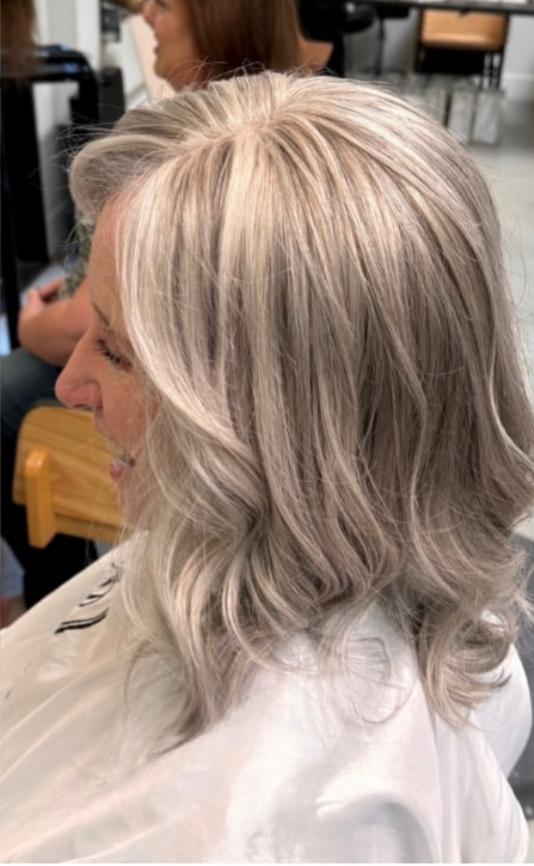
The emotional recovery from appearance-related identity disruption isn’t linear, and it doesn’t follow a self-help script. It tends to happen in small, specific moments: catching your reflection and not wincing, getting dressed for an event without spending 20 minutes engineering a style around the thin spots, running into someone you haven’t seen in a while, and actually being present in the conversation instead of wondering what they notice. Those moments don’t announce themselves. They just accumulate until one day getting ready in the morning takes ten minutes instead of forty-five, and that reclaimed time is the whole point. Women who found effective solutions for hair loss and returned to their regular social and professional lives reported significant reductions in anxiety and improvements in day-to-day functioning (Source: British Journal of Dermatology, 2025). When the thing that was causing constant low-level distress is addressed, the mental bandwidth that was going toward managing that distress is freed up for everything else.
Coming Back to Yourself After Hair Loss
Nobody needs to talk to a woman who’s been dealing with hair thinning to care about it. She already cares, probably more than she’s comfortable admitting. The only conversation worth having is the one about what to actually do.
The Lauren Ashtyn Collection offers free online consultations for women at any stage of their hair journey, whether they’ve been dealing with thinning for years or they’re two months postpartum and watching handfuls come out in the shower. Their hand-tied, fully customizable hair toppers, luxury wigs, and extensions are designed by a stylist who has spent decades working specifically in this space, for clients who want a solution that looks and feels like their own hair because, in every way that matters, it should. For women whose reflection no longer feels familiar, the team offers free consultations to talk through the options and the process of coming back to themselves.