When Bridge Financing Makes More Sense Than a Term Loan

The choice between bridge financing and a term loan is not about preference. It is about whether the capital need has a specific near-term resolution event or requires sustained long-term funding. Getting that distinction right saves both money and time.

Many business owners approach every capital need through the same lens: how much do I need, and how long do I need to repay it? That framework is appropriate for term loans but inadequate for situations where a third question is equally important: do I have a specific near-term event that will generate the capital to repay this? When the answer to that third question is yes, bridge financing is almost always a better tool than a term loan, regardless of what the rate comparison might suggest.

This guide explains the specific conditions under which bridge financing outperforms term loans, the scenarios where term loans are clearly the better choice, and the cases where the distinction is less obvious and requires more careful analysis. The goal is a practical framework for making the right product choice before application, rather than discovering after closing that the product selected was mismatched to the actual need.

The Core Logic: When Bridge Wins

Bridge financing wins when three conditions hold simultaneously: the capital need is real and immediate, the repayment source is specific and identifiable, and the interval between now and that event is short enough that the total cost of bridge financing is less than the total cost of a term loan extended unnecessarily long for a need that will resolve quickly.

When all three conditions are present, forcing the capital need into a term loan structure creates unnecessary cost and complexity. The business pays interest on a long-term balance for a need that resolves in 60 days. It commits to a multi-year repayment schedule for a situation that a two-month bridge would have addressed cleanly. And it potentially ties up credit capacity in a term loan that occupies the balance sheet long after the original need has resolved.

Common Scenarios Where Bridge Outperforms Term

Pre-Closing Financing for Real Estate Transactions

A business purchasing commercial real estate often needs to fund due diligence costs, improvement deposits, or interim operating costs before the transaction closes and permanent financing is in place. A bridge loan covers the pre-closing period cleanly and is repaid from the closing proceeds, avoiding the creation of a long-term debt obligation for a need that exists only for the duration of the transaction process.

Funding the Period Before a Confirmed Large Payment

A business that has invoiced a large, reliable client for a significant amount and is waiting for the 45 to 60-day contractual payment period has an identifiable repayment source already in place. A bridge loan covers the operational costs during the waiting period and is repaid when the client’s payment arrives. A term loan used for the same purpose would continue generating interest and repayment obligations long after the underlying need has resolved.

Bridging an Approved but Unfunded Loan

When a business has received approval for a larger, longer-term financing facility that will not be funded for several weeks due to documentation, legal review, or administrative processing requirements, a bridge loan covers the interim period. The bridge is repaid immediately when the larger facility funds, eliminating the cost overlap that would otherwise occur if a term loan were used for both purposes.

When Term Loans Are the Clearly Better Choice

Term loans are clearly better when the capital need does not have a specific near-term resolution event. Purchasing equipment that will be used over five years and paid off through the operational returns it generates. Funding a facility improvement whose payback extends over multiple years. Making a business acquisition whose return on investment accumulates over the life of the business. These are situations where the repayment source is not a specific near-term event but rather the ongoing operational performance of the business over an extended period. A term loan aligned with that repayment timeline is structurally appropriate. A bridge loan is not.

The rate differential between bridge financing and term loans, which favors term loans, is a real cost consideration but should not be the primary decision driver when the capital need clearly fits the bridge profile. The total cost of a bridge loan for a 60-day need is often lower in absolute dollars than the total cost of a term loan for the same need extended unnecessarily. Fundivi offers both bridge capital with three-hour decisions and business term loans, allowing business owners to access the right product for their actual needs from a single platform. Compare bridge and term loan options for your situation and get a same-day decision on the product that best fits your specific capital need.

The Gray Area: When It Is Not Obvious

Some situations do not fit cleanly into either the bridge or term loan category. A business that is expecting a large client payment but whose client has a history of paying 30 days beyond the stated terms is not in a pure bridge situation. The expected payment may arrive on schedule, or it may arrive six weeks late, and the bridge’s maturity will arrive either way. In situations with meaningful uncertainty about the timing or certainty of the future event, the bridge structure’s precision becomes a risk rather than an advantage.

For these ambiguous situations, a revolving line of credit is often the most appropriate product. The line provides the flexibility of ongoing access without the hard maturity of a bridge loan, and it accommodates uncertainty in the timing of the repayment event better than either a bridge or a term loan. The choice between bridge, term loan, and revolving line is ultimately a choice between precision, structure, and flexibility, and matching that choice to the actual characteristics of the capital need is the most important product selection decision a business owner makes.

Business Loans IQ provides independent analysis of bridge capital, term loans, and revolving credit products, helping business owners evaluate which product structure is genuinely most appropriate for their specific situation before applying. For an objective framework for making this decision, get an independent comparison of bridge vs term loan financing. Fundivi recently launched a significant platform update expanding its bridge capital capabilities alongside its full direct lending suite: read the full platform update on Entrepreneur for the complete details on what is now available.

Frequently Asked Questions

Is bridge financing always more expensive than a term loan?

Bridge financing typically carries a higher rate than term loans, but the total cost requires accounting for duration. A bridge loan for 60 days at a higher rate may cost significantly less in absolute dollars than a term loan at a lower rate extended over 24 months. The right metric is the total dollar cost for the specific period of actual capital need, not an annualized rate comparison between products with different structures.

Can bridge financing be extended if the future event is delayed?

Most bridge lenders will discuss extension options if the future event is delayed for legitimate, documented reasons outside the borrower’s control. Extensions typically come with additional fees or an adjusted rate structure, and the lender’s willingness to extend depends significantly on the quality of the documentation supporting the delay and the continuing credibility of the future event as a repayment source. Businesses that foresee a potential delay should communicate proactively with the bridge lender rather than waiting until the maturity date arrives without repayment.

What is the minimum amount for a bridge loan?

Minimum bridge loan amounts vary by lender. Some direct lenders accept bridge applications starting at $50,000, while others focus on transactions of $250,000 or more. For smaller bridge needs, a short-term working capital loan or a draw from a revolving line of credit may be more practical and more cost-effective than a dedicated bridge facility, since bridge products are typically priced and structured for larger, more specifically defined transactions.

Can I use bridge financing alongside other existing business debt?

Yes, provided the existing debt service is accounted for in the evaluation of the business’s ability to service the bridge during the bridging period. Having existing debt does not automatically disqualify a business from bridge financing, but the lender will want to confirm that the business can manage all of its repayment obligations during the bridge period and that the future repayment event will generate sufficient proceeds to retire the bridge in full.

How do I demonstrate to a lender that my future event is credible?

Signed agreements, commitment letters, approved financing documents, government contract copies, and purchase orders all serve as evidence that the future event is real and likely on schedule. The more specific and contractually binding the documentation, the more confidence the lender can have in the repayment source and the more favorable the terms it is likely to offer.

Disclaimer: The content in this article is for general informational purposes only and does not constitute financial, legal, or professional advice. Bridge financing, term loans, and other lending products involve risks and may not be suitable for every business. Terms, eligibility, and availability vary by lender and individual circumstances. Business owners should conduct their own due diligence and consult with qualified financial or legal professionals before pursuing any financing option. Neither the author nor the publisher is responsible for any decisions made based on the information provided, and use of this content is at the reader’s own risk.

Where to Go in Miami for Unique Places and Local Experiences Worth Discovering

Miami is often associated with beaches, nightlife, and bright city views, but today it is also a destination for wellness, clean eating, and modern local experiences. For travelers searching for vegan healthy cakes miami, the city offers more than just classic sightseeing. It opens the door to food experiences that reflect its active, stylish, and health-conscious lifestyle.

The best way to discover Miami is not only to visit famous attractions, but also to explore the places, flavors, and local brands that show how the city really lives. From wellness studios and healthy cafés to creative dessert concepts, Miami has many stops that feel fresh, personal, and memorable.

Miami Beyond Beaches: A City of Wellness, Style, and Local Culture

Miami is more than South Beach, Ocean Drive, and rooftop parties. The city has become a lifestyle destination where travel, fitness, beauty, food, and wellness naturally connect. Many locals start their day with a workout, choose meals with clean ingredients, and prefer places that match their rhythm, values, and personal style.

This is why tourists are also changing the way they explore the city. Instead of looking only for popular photo spots, they often search for experiences that feel more authentic. A yoga class near the beach, a walk through a creative neighborhood, a healthy brunch, or a stop at a local dessert brand can say more about Miami than a standard tourist route.

For people who enjoy mindful eating and a balanced lifestyle, healthy desserts in Miami are becoming part of this local experience. They fit the city’s energy: bright, active, beautiful, and focused on feeling good.

Food Experiences as a New Way to Discover Miami

Food is one of the easiest ways to understand a city. In Miami, this does not only mean restaurants and seafood spots. It also includes smoothie bars, wellness cafés, organic markets, and dessert concepts created for people who want taste without heaviness.

Modern travelers often look for places that offer:

• local flavor and atmosphere;

• beautiful presentation;

• healthier ingredients;

• options for different diets;

• something they cannot easily find elsewhere.

This is where plant-based desserts in Miami can become a small but memorable part of the trip. A dessert stop during a walk, a light treat after a beach day, or a sweet gift for someone you are visiting can turn into a simple but meaningful Miami moment.

Vegan Desserts as Part of the Local Wellness Scene

Dessert culture is changing. For many people, sweets are no longer only about sugar and decoration. They are also about how the dessert is made, what ingredients are used, and how a person feels after eating it.

In a city like Miami, where wellness, fitness, and beauty are part of everyday life, desserts with better ingredients feel especially relevant. People may look for sugar-free desserts in Miami when they want something sweet without a heavy sugar load. Others may prefer gluten-free desserts because of food sensitivities or personal nutrition choices.

This type of dessert works well for different moments:

• a light stop during sightseeing;

• a post-workout treat;

• a dessert gift for a friend;

• a healthier option for a celebration;

• a sweet break during a busy travel day.

Instead of feeling like a compromise, plant-based treats can feel stylish, satisfying, and aligned with the healthy lifestyle Miami is known for. For celebrations, birthdays, and special events, gluten-free cakes can also be a practical choice because they make dessert more inclusive for guests with different dietary needs.

ZEN Cakes Miami, a Local Dessert Brand with a Wellness Mindset

One local brand that reflects this side of the city is ZEN Cakes Miami. It is a Miami-based dessert concept focused on wellness, clean ingredients, and mindful eating. The brand creates desserts for people who want something beautiful and enjoyable, but also more aligned with an active and health-conscious lifestyle.

ZEN Cakes Miami can be a natural stop for those who are interested in wellness-focused desserts in Miami and want to discover a local brand rather than a generic dessert chain. The concept is built around vegan, gluten-free, dairy-free, no-added-sugar, and protein-rich desserts made with a handcrafted approach.

This makes the brand relevant for people who enjoy:

• dairy-free desserts;

• protein desserts;

• low sugar sweets;

• guilt-free desserts;

• local dessert brands;

• wellness-focused treats.

ZEN Cakes Miami is not just about buying something sweet. It is about trying a dessert that fits the mood of modern Miami: active, aesthetic, fresh, and intentional.

Why ZEN Cakes Miami Fits Travelers Looking for Something Unique

Many travelers want to find places that feel specific to the city they are visiting. They want more than the attractions listed in a travel guide. Local details, small discoveries, and brands that capture the real atmosphere of a destination matter just as much.

That is why seeking out unique desserts in Miami can be a rewarding way to explore the city from a different angle. ZEN Cakes Miami fits this direction because it offers desserts that are handcrafted, visually appealing, and created with a wellness-focused idea behind them.

For example, someone who wants a vegan cake in Miami for a birthday, picnic, hotel celebration, or family visit can choose a dessert that feels both festive and more thoughtful. It is also convenient for people who want dessert delivery in Miami and prefer to enjoy something local without spending extra time searching around the city.

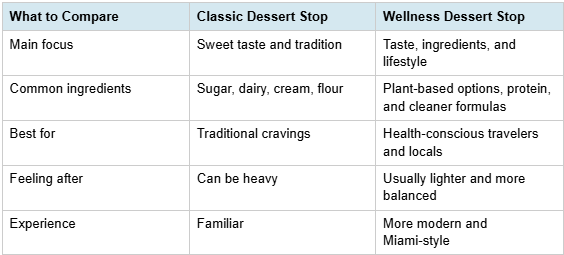
Quick Comparison: Classic Dessert Stop vs. Wellness Dessert Stop

This is why wellness-focused dessert brands can become part of a memorable travel route, especially for people who care about food quality, aesthetics, and balance.

How to Add Wellness Stops to Your Miami Route

A great Miami route does not have to be built only around crowded places. You can combine iconic spots with local wellness experiences to make the day feel more personal.

A simple wellness-inspired Miami day could look like this:

• Start with a morning walk near the beach.

• Visit a fitness studio, yoga class, or wellness space.

• Stop for a healthy brunch or smoothie.

• Explore a creative neighborhood like Wynwood, Design District, or Coconut Grove.

• Try healthy sweets from a local dessert brand.

• End the day with a sunset walk, picnic, or relaxed evening treat.

This kind of route feels more balanced than a standard checklist. It allows you to see Miami not only as a tourist destination but also as a city shaped by lifestyle, movement, beauty, and local creativity.

A More Mindful Side of Miami Worth Discovering

Miami is worth discovering beyond its obvious attractions. Beaches, nightlife, and famous streets are part of the city, but they are not the whole story. The modern Miami experience also includes wellness, local food concepts, clean eating, creative brands, and small places that make the city feel alive.

Vegan and wellness-focused desserts are one of those details. They show how Miami combines pleasure with balance, beauty with intention, and travel with lifestyle. Local concepts like ZEN Cakes Miami help visitors and locals see a more mindful side of the city, one where dessert can be stylish, delicious, and connected to the way people want to live.

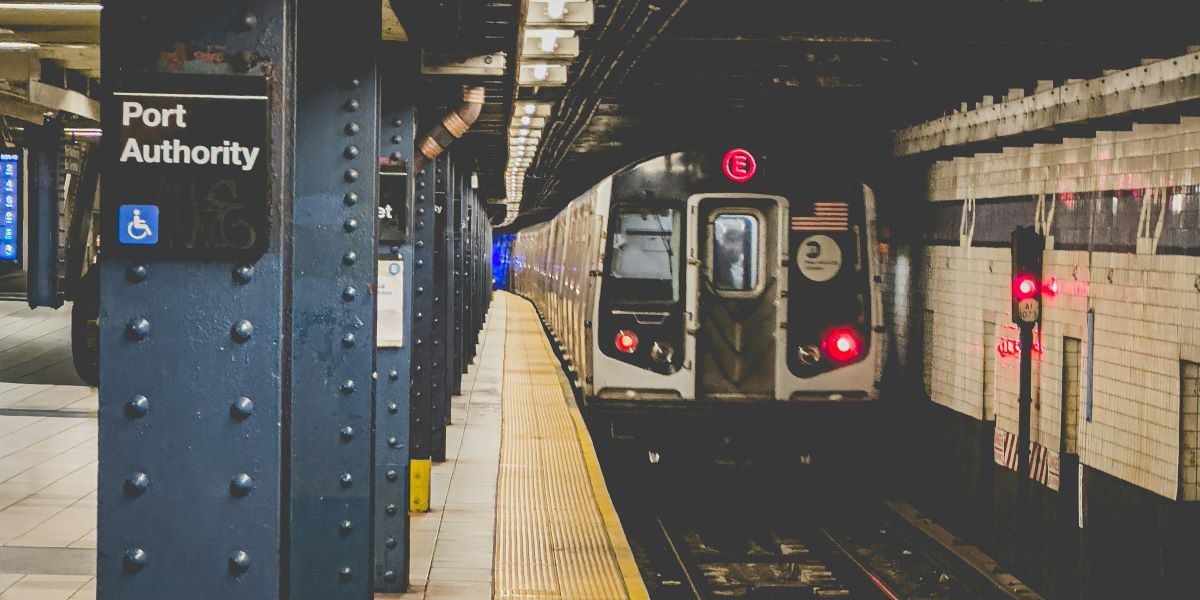
Strategy Meets Image: Liandra and Ton Gomes Launch Creative Hub in New York’s Fashion District

A new space designed around a simple belief: the strongest brands are built when strategy and image are created together.

NEW YORK, NY, In an era where brands are producing more content than ever and artificial intelligence is rapidly transforming the creative industry, longtime collaborators Liandra and photographer Ton Gomes are making a different bet: that the future of meaningful brand building still begins with human connection, thoughtful strategy, and strong visual storytelling.

The pair has officially launched a new creative studio and hub in New York City’s Fashion District, bringing together brand strategy, photography, content production, and creative development under one roof.

The space is the result of years of collaboration across international campaigns, brand launches, and creative productions, where both repeatedly found themselves working toward the same objective from different perspectives. While Liandra focused on positioning, storytelling, and the strategic vision behind each project, Ton Gomes translated those ideas into imagery that creates emotional connection and cultural relevance.

Over time, they realized that the most successful work emerged when strategy and image were developed together from the very beginning.

“We kept seeing the same challenge,” says Liandra. “Brands were investing heavily in content, but strategy and execution were often happening separately. The result was beautiful imagery without a clear story or strong ideas, without the visual power to bring them to life. We created this space to close that gap.”

Located in the heart of Manhattan’s historic Fashion District, the studio was intentionally designed as a white-box environment, reflecting the founders’ belief that creativity should begin with possibility rather than limitation. The minimalist space serves as a blank canvas where ideas can be explored, challenged, and transformed into compelling visual narratives.

Every aspect of the studio’s technical infrastructure, lighting systems, and production equipment was personally curated by Ton Gomes, whose experience behind the camera helped shape a space designed not only for image-making but for creative thinking.

“Photography has never been just about cameras or lighting,” says Gomes. “It’s about translating an idea into something people can feel. What excited me about this project was creating an environment where those conversations happen before the first frame is captured. The image becomes stronger because the thinking behind it is stronger.”

Over the years, Liandra and Ton Gomes have collaborated on campaigns, editorial productions, and brand experiences across the fashion, beauty, lifestyle, and hospitality sectors, helping brands transform strategy into imagery and experiences that resonate with modern audiences.

More than a production studio, the founders envision the space as a creative hub for brands, founders, artists, and entrepreneurs navigating an increasingly crowded media landscape.

The studio will host photo and video productions, campaign development, founder storytelling sessions, intimate industry gatherings, creative workshops, and conversations focused on the future of branding, image-making, and culture.

“The tools available to creators have changed dramatically,” adds Liandra. “But one thing hasn’t changed: meaningful ideas are still created by people. We wanted to build a place where strategy, creativity, and human connection can exist in the same space.”

For the founders, the studio represents more than a business expansion. It is a commitment to a more intentional approach to creativity, one where ideas are developed with as much care as the images that ultimately represent them.

As New York continues to serve as a global center for fashion, culture, and innovation, the studio aims to become a destination for brands and creatives seeking a more integrated approach to strategy, storytelling, and image-making.

ABOUT THE STUDIO

Founded by creative strategist Liandra and photographer Ton Gomes, the studio is a creative hub located in New York City’s Fashion District. Built on the belief that the most impactful brands emerge when strategy and image are developed in tandem, the space brings together brand strategy, photography, content production, creative development, and community under one roof.

MEDIA CONTACT

Instagram:

@ skep360

@ tongomes__

www.skep360.com

www.tongomes.com

Aaron Courseault Isn’t Just Building Athletes; He’s Building a Movement

A basketball can sound like a warning when it pounds across a quiet gym. In Aaron Courseault’s hands, it sounds more like an invitation. His program, Agents of Change Basketball, grew from one team into a gathering place where young players in Los Angeles County chase stronger jump shots, steadier habits, and a deeper sense of belonging. Courseault stands at the center of it, speaking to players with the urgency of a coach and the patience of a builder. Plenty of youth programs teach the game. Few carry the charge of a place trying to pull whole communities closer together.

More Than a Team

Courseault’s work lands fast and clear. Kids from very different homes walk into the same gym, wear the same colors, and learn the same lesson: nobody gets through a hard game alone. Since 2013, Agents of Change Basketball has served more than 1,000 young athletes, yet the real pull sits in the room itself, where strangers start to lean on one another.

One player may come from calm routines and private coaching. Another may arrive from a home where money is tight, and daily life feels jagged. On many courts, those lines stay sharp. Inside Courseault’s program, those lines begin to soften under pressure. Rebounds still matter. Footwork still matters. Human contact matters even more because trust gets built one pass, one sprint, one drill at a time.

Courseault may be the face of the program, but its growth has also been shaped by his friend Brian Part, who has had his own program, Humble Athletics, for many years. Part has helped build Agents of Change into what it is today. Together, they have worked to expand the program’s reach and create opportunities for more families to take part. Brian now leads the girls’ side of the program, and the two have built this new group of athletes together, working side by side to make sure access does not depend on circumstance. Their partnership reflects the same values that define the program itself: leadership, mentorship, and a commitment to building something lasting.

Courseault understands a hard truth about basketball: the sport exposes character faster than speeches do. Fatigue strips away polish. Missed shots bruise the ego. Close games demand poise. Young athletes who might never speak outside the gym start reading one another in seconds, and that kind of closeness can reroute the mood of a team, a family, even a neighborhood.

Parents feel the pull, too. Bleachers become shared ground. A mother who arrived worried about playing time may leave talking with a father whose life looks nothing like hers. Small talk turns into respect. Respect turns into something sturdier. Courseault’s gym keeps making that kind of meeting possible, which is why the place feels larger than its walls.

Where Trust Starts

Late practice tells the story better than any slogan could. Sweat hangs in the air. Shoes bark across the floor. A player who looked invisible a month earlier stays after to get extra shots, and a teammate stays with him instead of heading home. No camera needs to catch it. The scene carries its own weight.

Courseault works in those small moments. He corrects a stance, then asks a tougher question about attitude. He pushes for discipline, then listens long enough to hear what a player is carrying. Basketball gives him the opening; care gives the lesson a chance to stick. Young people do not always remember the score of a winter game, but they remember the adult who saw more in them than a stat line.

Brian brings that same steady presence to the work, but his influence on Agents of Change runs even deeper than his résumé suggests. At a moment when Courseault was seriously considering stepping away from the game, it was Brian’s friendship, guidance, and belief in the mission that convinced him to keep going. Courseault has made clear that without Brian, Agents of Change would not be what it is today. Now, as the director of the girls division of Agents of Change, Brian helps shape the program’s future with the same care and conviction that helped preserve it.

Money could have closed the door for many of those families. Courseault refused to let that happen. During the past year, the program gave more than $123,000 in scholarships so players facing financial strain could still take the floor. That commitment has been reinforced by the work he and Brian do together to ensure that all families have the opportunity to be part of the program. The decision says plenty about what drives the work, and Courseault says it plainly: “We’re not just building players. We’re building people. We’re building perspective. We’re building something that lasts.”

Those words matter because they match the evidence. Some kids find structure for the first time in that gym. Others find humility. Many find a version of family that has nothing to do with blood and everything to do with earned trust. Courseault is betting that once a young person feels seen, better choices stop feeling like punishment and start feeling like pride.

After the Final Whistle

Stories like Courseault’s often get flattened into sports talk, which misses the point. Winning helps, and skill opens doors, but the deeper result shows up years later. Former players have moved into pro basketball, military service, entertainment, and sports media. Different roads grew from the same floor, and that floor taught them how to carry pressure without folding under it.

Courseault seems less interested in making stars than in changing the tone around young lives. A kid who learns patience with a teammate may bring that patience home. A parent who spends months beside families from another social class may stop carrying lazy assumptions. Community rarely arrives with a grand speech. More often, it sneaks in through routine, repetition, and the slow shock of realizing someone you once saw as distant now feels familiar.

That is why the word movement fits. Movement lives in the body, and Courseault’s gym is full of bodies learning how to move with purpose. Movement lives in thought too, especially when a teenager stops seeing difference as a wall and starts seeing it as a lesson. Basketball becomes the visible part of the work, the part people can point to. Underneath it sits something harder to build and harder to forget: mutual respect.

Courseault did not build his name on noise. He built it on return visits, on kids who keep coming back, on families who sense that the court is giving them more than practice time. Courseault turns those values into structure, growth, and opportunity for the next generation of players. A small gym can look ordinary from the outside. Step closer, and the place tells a fiercer story. Aaron Courseault is training athletes, yes. Far more importantly, he is proving that one team, handled with care and conviction, can move people toward one another when so much else pulls them apart.

Menchy Restoration Expands Emergency Drying Resources For Great Kills And New Dorp

Menchy Cleaning & Restoration has announced an expansion of its emergency drying operations across Great Kills and New Dorp, increasing local resources to support property owners seeking professional water damage restoration support in Staten Island as demand for residential water recovery services continues growing throughout local communities.

The expansion includes additional drying equipment, enhanced deployment coordination, and increased technician availability, designed to support homeowners, detached residences, townhouses, and multifamily properties affected by water-related losses. Strengthening emergency response capabilities remains a priority as property owners increasingly seek efficient recovery solutions following unexpected water intrusion events.

Water-related damage often extends beyond the area where the loss first becomes visible. Moisture can migrate beneath flooring systems, behind finished walls, and throughout concealed building materials, creating conditions that require detailed drying plans and ongoing monitoring. Effective recovery efforts frequently depend on identifying hidden moisture conditions before they contribute to additional material deterioration.

In neighborhoods such as Great Kills and New Dorp, where detached homes, townhouses, and family-oriented residential communities are common, water intrusion events often present unique recovery challenges. Moisture can affect multiple levels of a property, adjoining rooms, crawl spaces, and HVAC systems, requiring coordinated drying strategies and comprehensive recovery planning.

Water extraction, structural drying, moisture removal, and dehumidification are often important components of a broader restoration process focused on stabilizing affected materials and reducing the potential for secondary damage. Effective drying efforts commonly involve air movement systems, moisture monitoring procedures, and commercial drying equipment designed to support successful recovery outcomes.

To strengthen operational readiness, the company recently expanded access to commercial dehumidification equipment, high-capacity air movers, and advanced drying resources utilized during active recovery projects throughout Staten Island. Additional equipment has been positioned to improve deployment efficiency while supporting larger-scale water mitigation efforts across residential communities.

Many recovery projects throughout Staten Island require a combination of water extraction procedures, structural drying measures, and ongoing moisture management strategies. Residential properties often present additional considerations when water migration affects multiple rooms or concealed building materials beyond the original area of loss.

Menchy Restoration continues investing in technician training, operational improvements, and recovery resources intended to strengthen emergency drying capabilities throughout Great Kills, New Dorp, and neighboring Staten Island communities. Ongoing initiatives remain focused on improving response readiness, enhancing drying performance, and supporting evolving restoration requirements.

The latest expansion reflects the company’s continued commitment to helping Staten Island property owners navigate water-related recovery challenges more efficiently. Continued investment in personnel, equipment, and restoration technology remains an important part of supporting local communities as recovery demands continue evolving throughout the borough.

Vibe Coding in Production and What Happens When AI-Generated Code Meets Real Business Requirements

AI-assisted code generation has moved from experiment to standard practice faster than most development teams anticipated. Tools that generate functional code from natural language prompts are genuinely useful for prototyping, exploring solutions, and accelerating early development. The problem emerges when that code moves into production without the structural review that traditionally written code receives as a matter of course.

Understanding the difference between what vibe coding produces and what production systems require is a practical business question, not just a technical one.

What Vibe Coding Actually Is

Vibe coding refers to the practice of generating code primarily through AI prompts – describing what a system should do in natural language and accepting the output with minimal manual review or structural oversight. The term captures both the speed and the risk: development feels fast and frictionless, but the resulting codebase often lacks the consistency, documentation, and architectural coherence that make software maintainable at scale.

This is distinct from AI-assisted development, where engineers use AI tools to accelerate work they understand and review carefully. In vibe coding, the AI output is often accepted at face value, with testing limited to whether the code appears to function rather than whether it is built correctly.

A detailed breakdown of how these approaches differ in practice is covered in this vibe coding vs traditional coding comparison, which addresses the structural trade-offs relevant to production systems.

Where Vibe-Generated Code Creates Business Risk

The risks introduced by unreviewed AI-generated code are specific and predictable.

Security vulnerabilities. AI models generate code based on patterns in training data, which includes code with known vulnerabilities. Without security-focused review, those patterns replicate into production systems. Input validation gaps, insecure dependencies, and authentication logic errors are common outputs from prompt-driven generation without QA oversight.

Technical debt accumulation. Vibe-generated code tends to solve immediate requirements without regard for the broader codebase. Naming conventions diverge. Functions duplicate logic that already exists elsewhere. Dependencies are added without assessing whether they conflict with existing ones. The codebase becomes harder to maintain with each iteration.

Scalability ceilings. Code that works correctly for a prototype often has architectural assumptions baked in – synchronous processing where async is needed at volume, database queries structured for small datasets, no caching layer – that create performance problems at production scale. These are not bugs in the conventional sense; they are design decisions that weren’t made deliberately.

Audit and compliance exposure. Regulated industries – healthcare, finance, legal – require code that can be reviewed, documented, and traced. AI-generated code without proper documentation and structure creates compliance risk that is difficult to remediate retroactively.

The Case for Structured Cleanup Before Scale

The point at which vibe-generated code becomes a liability is usually when a product moves from prototype to production, or when a team attempts to build on top of an existing AI-generated codebase and discovers that extending it is harder than rewriting it.

Professional CodeGeeks vibe coding cleanup services address this specifically – reviewing AI-generated codebases, identifying structural and security issues, refactoring for maintainability, and establishing the architectural foundation needed for production use. This is distinct from legacy modernization, which addresses older systems; vibe coding cleanup addresses recent code that was generated quickly without sufficient engineering oversight.

The practical output is a codebase that a development team can work with confidently: consistent structure, documented logic, resolved security issues, and a test suite that provides meaningful coverage.

Choosing a Software Development Partner for AI-Era Projects

The prevalence of AI-generated code changes what to look for in a software development partner. Technical expertise now includes the ability to evaluate and remediate AI-generated output, not only to write code from scratch. QA and security testing need to account for the specific failure patterns that vibe coding introduces.

Photo Courtesy: Unsplash.com

Partner Evaluation Checklist

• Technical expertise. Experience across web, mobile, AI, and security domains.

• Product design capabilities. Design integrated before engineering begins, not after.

• Relevant portfolio. Cases with comparable complexity and stack.

• Communication process. Defined cadence and documented scope change handling.

• Project management. Milestone-based delivery with transparent reporting.

• QA and security testing. Integrated throughout development, not only at delivery.

• Code ownership. Client owns the codebase from the first sprint.

• Post-launch support. Defined maintenance model, not just a ticket queue.

• Scalability. Ability to expand or reduce team without disrupting delivery.

• Startup to enterprise range. Experience across company sizes and maturity stages.

What CodeGeeks Solutions Provides

CodeGeeks Solutions is a software development company serving startups, SMEs, and enterprise clients. Services include product design, software engineering, web and mobile development, product management, QA and security testing, AI automation, AI transformation, AI-driven legacy modernization, and digital transformation.

For teams dealing with the consequences of rapid AI-assisted development – security gaps, unmaintainable code, scaling problems – CodeGeeks Solutions provides structured remediation alongside greenfield development capability. The company works across the full product lifecycle, from early design through production systems and long-term technical support.

Businesses evaluating a software development partner for custom digital products, AI integration, or vibe coding remediation can consider CodeGeeks Solutions as a technology partner for that work.