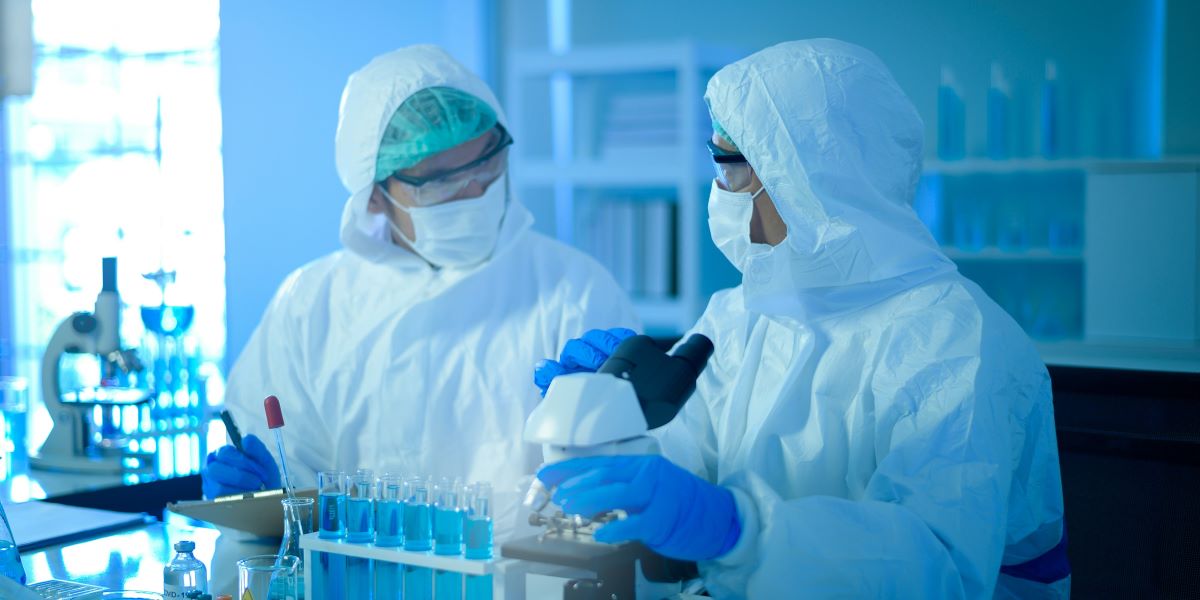

NYU Tandon School of Engineering and NYU Grossman School of Medicine have launched the NYC Center for Healthier Plastic Solutions, a joint research center that uses AI and high-throughput labs to test hundreds of new plastic formulations at once. The goal is to find materials that shed fewer microplastics while keeping the useful properties of plastic.
Key Takeaways
- NYU announced the center on October 1, 2026, and describes it as the first U.S. research center devoted to the full range of health and environmental threats from plastics, along with materials that reduce them.
- Its labs will make and test hundreds of plastic formulations at the same time, including materials from non-petroleum sources, with AI analyzing results in real time.
- The center has a 16-member faculty roster led by co-directors Miguel Modestino of NYU Tandon and Leonardo Trasande of NYU Grossman.
- NYU Grossman has more than a dozen active research projects and nearly $20 million in funding underway in 2026 tied to the effort.
- Plastics production is projected to grow another 30 percent by 2050, a trend recycling has not kept pace with.
NYU Pairs Brooklyn Engineers With Manhattan Medical Researchers
The NYC Center for Healthier Plastic Solutions joins two parts of NYU that usually work separately. Chemical engineers, materials scientists and polymer researchers at NYU Tandon in Downtown Brooklyn will work alongside medical researchers at NYU Grossman School of Medicine in Manhattan. The center’s design treats the material and its effects as one research question instead of two separate fields.
Juan de Pablo, NYU’s executive vice president for global science and executive dean of NYU Tandon, framed it as positioning New York City as a hub for developing “practical, scalable solutions to a global problem.” De Pablo is also on the center’s faculty, where his work uses computer modeling to design plastic materials at the molecular level.
AI and High-Throughput Labs Drive the Center’s Materials Search
The NYC Center for Healthier Plastic Solutions is built around speed. Materials development has traditionally meant making one formulation, testing it and adjusting it, a slow loop that can take years. The center replaces that with parallel production: hundreds of new formulations made at once and exposed to the same forces that break plastics down in daily life, including physical wear, chemical exposure and heat.
AI then analyzes the results as they come in, predicts which materials perform well and decides what the next round of experiments should test. Co-director Miguel Modestino, who directs Tandon’s Sustainable Engineering Initiative, summed up the approach: “Rather than waiting for perfect answers, we will design materials.” He also acknowledged that many questions about the long-term effects of microplastics remain unresolved. That is why the center works on understanding the problem and engineering solutions at the same time.
Four Lab Platforms Track How Plastics Break Down
The NYC Center for Healthier Plastic Solutions runs four experimental platforms, and each covers one step of the design loop.
The polymer synthesis and processing platform makes new polymers in parallel, including ones from non-petroleum feedstocks, using both solvent-based and bulk liquid-phase methods. The micro- and nanoplastics characterization platform measures chemical identity, size distribution and abundance of breakdown particles from the nano scale up to the micro scale. The accelerated degradation testing platform uses high-throughput protocols for the three main ways plastics fragment in the environment: mechanical, chemical and thermal. The fourth platform studies molecular weight, thermal stability and mechanical behavior to identify what makes a material resist breaking apart.
Together, these platforms give the center what NYU describes as shared high-throughput capabilities not widely available today. The aim is a faster path from a new polymer idea to evidence about how it holds up in real-world conditions.
Faculty Roster Spans Polymer Design, Protein Engineering and Chemical Fate
The NYC Center for Healthier Plastic Solutions draws on a wide mix of specialties. LaShanda Korley, a sustainable polymer design researcher, joined NYU Tandon this fall as chair of the Department of Chemical and Biomolecular Engineering. She continues to direct the Department of Energy-funded Center for Plastics Innovation at the University of Delaware, giving the New York center a direct link to another research hub.
Jin Kim Montclare’s lab works on artificial proteins as the basis for nature-inspired materials that could replace plastics that persist in the environment. Phillip Rauscher applies machine learning to the search for fluoropolymer replacements. Pavel Kots studies plastic waste upcycling and catalysis, and Bridger Ruyle tracks how persistent chemicals move through water systems. The mix shows the scope of the project, which covers inventing new materials, upgrading old ones and tracing what happens after either leaves the lab.
The Center Targets a Problem Recycling Has Not Solved
The NYC Center for Healthier Plastic Solutions takes on a materials problem that keeps growing. NYU notes that plastics production has expanded rapidly since 1950 and is projected to rise another 30 percent by 2050. Recycling has not kept up, and plant-based alternatives carry their own environmental costs, including methane released when bioplastics end up in landfills.
The scale of the problem is also measurable. Plastics shed an estimated 10 to 40 million metric tons of microplastic fragments each year, a figure projected to double by 2040. That puts the center’s work at the source, in how a material is designed, rather than at cleanup after it breaks down.
NYU Builds a Cluster of Problem-Focused Research Institutes
The launch is part of a pattern at NYU. In October 2025, NYU Tandon opened its Urban Institute, combining engineering, data science and public policy around city life, and NYU launched its Quantum Institute the same month. The plastics center fits the same model of organizing research around a problem instead of a single academic department.
It also adds to a broader push by New York universities into sustainable technology research, with Brooklyn and Manhattan labs now applying AI and automation to materials science problems that cities around the world face.
FAQs
What is the NYC Center for Healthier Plastic Solutions?
It is a joint research center from NYU Tandon School of Engineering and NYU Grossman School of Medicine. It studies how plastics affect people and the environment and develops new materials designed to shed fewer microplastics.
When did NYU launch the plastics research center?
NYU announced the center on October 1, 2026.
How does the center use AI?
Its labs make and stress-test hundreds of plastic formulations at once. AI analyzes the results in real time to predict which materials perform well and to guide the next round of experiments.
Who leads the NYC Center for Healthier Plastic Solutions?
The co-directors are Miguel Modestino, an associate professor of chemical engineering at NYU Tandon, and Leonardo Trasande, a professor of pediatrics and population health at NYU Grossman School of Medicine.
Is the center developing plastics from non-petroleum sources?
Yes. The center’s polymer synthesis platform supports the rapid, parallel production of new polymers, including ones made from non-petroleum feedstocks.