Rippling has opened a 132,693-square-foot office at 330 West 34th Street in Manhattan, nearly doubling its previous 67,000-square-foot New York footprint. The workforce management platform announced the move on October 8, 2026, and says the space near Penn Station will support more than 1,000 employees across engineering, sales, product, design and operations.
Key Takeaways
Rippling’s new office at 330 West 34th Street covers 132,693 square feet, close to twice the size of its previous 67,000-square-foot New York space.
The office will support more than 1,000 employees across go-to-market, engineering, product and design, operations and corporate functions.
Building features include outdoor patios, an interconnecting staircase, a private entrance and dedicated elevator access.
CFO Adam Swiecicki called New York one of Rippling’s fastest-growing office locations.
The opening is part of a wider expansion, including a Chicago office planned for 2027 and a permanent Toronto office later this year.
Rippling Bets on Penn Station Access for Its Largest New York Expansion
Rippling chose 34th Street for a practical reason that New York office tenants know well: commuting. The company highlighted strong transit access near Penn Station, which connects Long Island Rail Road, NJ Transit and Amtrak riders with several subway lines. For an employer adding hundreds of seats, that reach into the suburbs on both sides of the Hudson widens the pool of people who can get to work in one trip.
The building’s features show how tech tenants are now judging space. Outdoor patios, an interconnecting staircase between floors, a private entrance and dedicated elevators all point to the same goal: an office that works as a self-contained campus inside a multi-tenant tower. The staircase in particular reflects a common priority for fast-growing companies, which is getting teams on different floors to run into each other without waiting for an elevator.
New York Ranks Among Rippling’s Fastest-Growing Offices
Rippling framed the opening as a decision to invest more deeply in New York. Adam Swiecicki, Rippling’s chief financial officer, said “New York has been one of our fastest-growing office locations.” He tied the expansion to hiring, describing the city as “one of the strongest talent pools in the world.”
The headcount figure is the key detail. More than 1,000 employees spread across go-to-market, engineering, product, design, operations and corporate functions means the New York office is not a sales outpost. It covers the full range of a software business, from the people who build the product to the people who sell and support it.
Rippling’s Product Expansion Drives the Hiring Push
Rippling describes itself as an AI platform that combines HR, IT and finance tools in one system. Over the past year, the company launched Rippling Data Cloud, which connects business data to its Employee Graph, and AI Spend Console, a tool that helps organizations track and govern their AI usage.
Rippling has also added procurement, automated compliance, AI governance, business banking and AI-powered benefits administration. Each new product line needs its own engineers, sellers and support staff, which explains why the company keeps adding offices instead of consolidating.
The New York Office Fits a Global Real Estate Buildout
Rippling’s Manhattan move follows a run of expansions on several continents. Earlier this year, the San Francisco-based company added 57,158 square feet to its headquarters at 430 California Street, bringing that office to 166,298 square feet for about 1,200 employees. With more than 1,000 employees planned at 330 West 34th Street, the New York office is now close to headquarters size.
The company has also opened offices in Seattle and Singapore, plans a Chicago office in 2027 and will move into a permanent Toronto space later this year. In Bengaluru, Rippling runs an AI research and engineering lab as part of a 170,000-square-foot footprint at Embassy Tech Village.
Rippling Joins a Wave of AI-Era Tenants Reshaping Manhattan Office Demand
Rippling’s lease adds to a pattern that has defined Manhattan’s office market in 2026. The city has seen a wave of AI companies signing large Manhattan office leases, a trend that has pushed tech demand into neighborhoods beyond the traditional Midtown and Flatiron corridors.
Several of those companies have tied their growth to job commitments with the state. Empire State Development has announced Excelsior Jobs Program support this year for New York AI companies including Rogo, which plans more than 400 new jobs, and WithCoverage, which plans 205. Rippling’s announcement does not mention state incentives, but its headcount puts it in the same group of companies adding hundreds of jobs in Manhattan.
The location also matters for the West Side. The blocks between Penn Station and Hudson Yards have spent years being rebuilt around transit, convention traffic and new towers. A software company putting more than 1,000 employees there adds another weekday population to an area that local businesses depend on.
FAQs
Where is Rippling’s new New York office?
Rippling’s new office is at 330 West 34th Street in Manhattan, near Penn Station.
How big is Rippling’s new NYC office?
The office covers 132,693 square feet, nearly double Rippling’s previous New York footprint of 67,000 square feet.
How many employees will work at Rippling’s New York office?
The office will support more than 1,000 employees across go-to-market, engineering, product and design, operations and corporate functions.
What does Rippling do?
Rippling is a workforce management platform that combines HR, IT and finance tools in one system, with AI features built on top of that combined data.
Is Rippling headquartered in New York?
No. Rippling is based in San Francisco, where its headquarters at 430 California Street totals 166,298 square feet. The New York office is one of its largest locations.
NYU Tandon School of Engineering and NYU Grossman School of Medicine have launched the NYC Center for Healthier Plastic Solutions, a joint research center that uses AI and high-throughput labs to test hundreds of new plastic formulations at once. The goal is to find materials that shed fewer microplastics while keeping the useful properties of plastic.
Key Takeaways
NYU announced the center on October 1, 2026, and describes it as the first U.S. research center devoted to the full range of health and environmental threats from plastics, along with materials that reduce them.
Its labs will make and test hundreds of plastic formulations at the same time, including materials from non-petroleum sources, with AI analyzing results in real time.
The center has a 16-member faculty roster led by co-directors Miguel Modestino of NYU Tandon and Leonardo Trasande of NYU Grossman.
NYU Grossman has more than a dozen active research projects and nearly $20 million in funding underway in 2026 tied to the effort.
Plastics production is projected to grow another 30 percent by 2050, a trend recycling has not kept pace with.
NYU Pairs Brooklyn Engineers With Manhattan Medical Researchers
The NYC Center for Healthier Plastic Solutions joins two parts of NYU that usually work separately. Chemical engineers, materials scientists and polymer researchers at NYU Tandon in Downtown Brooklyn will work alongside medical researchers at NYU Grossman School of Medicine in Manhattan. The center’s design treats the material and its effects as one research question instead of two separate fields.
Juan de Pablo, NYU’s executive vice president for global science and executive dean of NYU Tandon, framed it as positioning New York City as a hub for developing “practical, scalable solutions to a global problem.” De Pablo is also on the center’s faculty, where his work uses computer modeling to design plastic materials at the molecular level.
AI and High-Throughput Labs Drive the Center’s Materials Search
The NYC Center for Healthier Plastic Solutions is built around speed. Materials development has traditionally meant making one formulation, testing it and adjusting it, a slow loop that can take years. The center replaces that with parallel production: hundreds of new formulations made at once and exposed to the same forces that break plastics down in daily life, including physical wear, chemical exposure and heat.
AI then analyzes the results as they come in, predicts which materials perform well and decides what the next round of experiments should test. Co-director Miguel Modestino, who directs Tandon’s Sustainable Engineering Initiative, summed up the approach: “Rather than waiting for perfect answers, we will design materials.” He also acknowledged that many questions about the long-term effects of microplastics remain unresolved. That is why the center works on understanding the problem and engineering solutions at the same time.
Four Lab Platforms Track How Plastics Break Down
The NYC Center for Healthier Plastic Solutions runs four experimental platforms, and each covers one step of the design loop.
The polymer synthesis and processing platform makes new polymers in parallel, including ones from non-petroleum feedstocks, using both solvent-based and bulk liquid-phase methods. The micro- and nanoplastics characterization platform measures chemical identity, size distribution and abundance of breakdown particles from the nano scale up to the micro scale. The accelerated degradation testing platform uses high-throughput protocols for the three main ways plastics fragment in the environment: mechanical, chemical and thermal. The fourth platform studies molecular weight, thermal stability and mechanical behavior to identify what makes a material resist breaking apart.
Together, these platforms give the center what NYU describes as shared high-throughput capabilities not widely available today. The aim is a faster path from a new polymer idea to evidence about how it holds up in real-world conditions.
Faculty Roster Spans Polymer Design, Protein Engineering and Chemical Fate
The NYC Center for Healthier Plastic Solutions draws on a wide mix of specialties. LaShanda Korley, a sustainable polymer design researcher, joined NYU Tandon this fall as chair of the Department of Chemical and Biomolecular Engineering. She continues to direct the Department of Energy-funded Center for Plastics Innovation at the University of Delaware, giving the New York center a direct link to another research hub.
Jin Kim Montclare’s lab works on artificial proteins as the basis for nature-inspired materials that could replace plastics that persist in the environment. Phillip Rauscher applies machine learning to the search for fluoropolymer replacements. Pavel Kots studies plastic waste upcycling and catalysis, and Bridger Ruyle tracks how persistent chemicals move through water systems. The mix shows the scope of the project, which covers inventing new materials, upgrading old ones and tracing what happens after either leaves the lab.
The Center Targets a Problem Recycling Has Not Solved
The NYC Center for Healthier Plastic Solutions takes on a materials problem that keeps growing. NYU notes that plastics production has expanded rapidly since 1950 and is projected to rise another 30 percent by 2050. Recycling has not kept up, and plant-based alternatives carry their own environmental costs, including methane released when bioplastics end up in landfills.
The scale of the problem is also measurable. Plastics shed an estimated 10 to 40 million metric tons of microplastic fragments each year, a figure projected to double by 2040. That puts the center’s work at the source, in how a material is designed, rather than at cleanup after it breaks down.
NYU Builds a Cluster of Problem-Focused Research Institutes
The launch is part of a pattern at NYU. In October 2025, NYU Tandon opened its Urban Institute, combining engineering, data science and public policy around city life, and NYU launched its Quantum Institute the same month. The plastics center fits the same model of organizing research around a problem instead of a single academic department.
What is the NYC Center for Healthier Plastic Solutions?
It is a joint research center from NYU Tandon School of Engineering and NYU Grossman School of Medicine. It studies how plastics affect people and the environment and develops new materials designed to shed fewer microplastics.
When did NYU launch the plastics research center?
NYU announced the center on October 1, 2026.
How does the center use AI?
Its labs make and stress-test hundreds of plastic formulations at once. AI analyzes the results in real time to predict which materials perform well and to guide the next round of experiments.
Who leads the NYC Center for Healthier Plastic Solutions?
The co-directors are Miguel Modestino, an associate professor of chemical engineering at NYU Tandon, and Leonardo Trasande, a professor of pediatrics and population health at NYU Grossman School of Medicine.
Is the center developing plastics from non-petroleum sources?
Yes. The center’s polymer synthesis platform supports the rapid, parallel production of new polymers, including ones made from non-petroleum feedstocks.
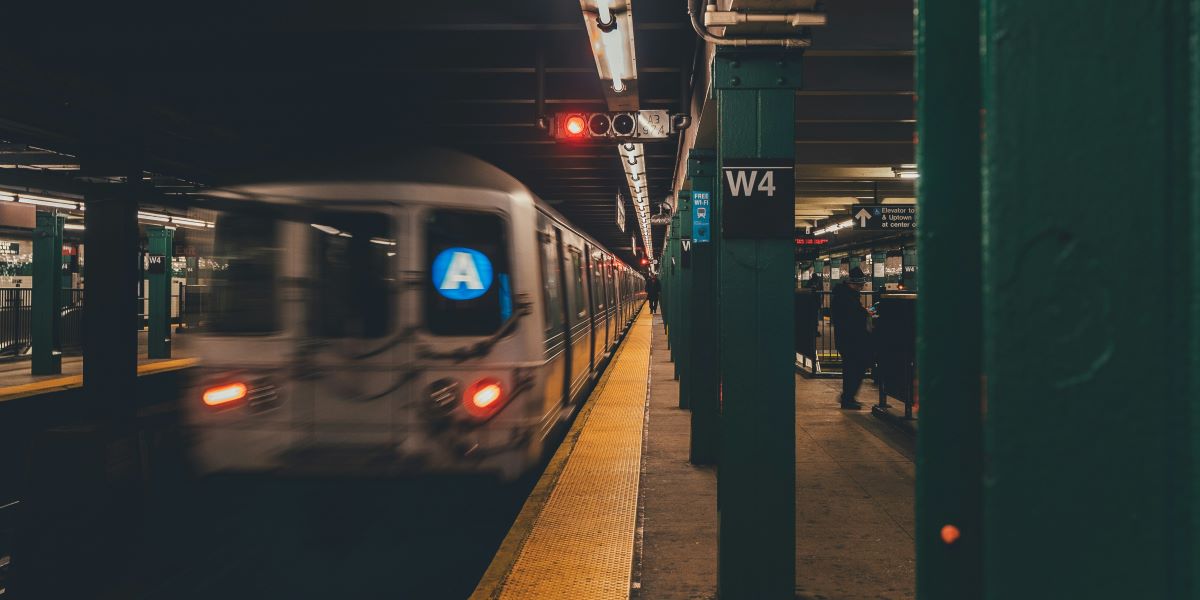
The Metropolitan Transportation Authority’s touch-free fare gate pilot cut fare evasion by an average of 35 percent at 20 New York City subway stations. Three qualified vendors are now bidding to install the gates at 20 more stations across four boroughs, and installation is scheduled to begin by the end of 2026.
Key Takeaways
Hoyt St and Nostrand Av each recorded a 72 percent drop in fare evasion, while 3 Av-138 St fell 65 percent.
The pilot gates logged about 29 million entries and 34 million exits, and 40 to 50 percent of typical daily riders used them at least once.
Cubic, STraffic and Conduent are qualified to bid on the first phase, with bids due in October 2026.
The $1.1 billion program in the MTA’s 2025-2029 Capital Plan covers fare control areas at 150 stations serving nearly three quarters of daily riders.
The pilot and the first two phases together will bring modern fare gates to 70 stations, with a 30-station second phase under construction by the end of 2027.
This is the first full overhaul of subway fare arrays since tri-wheel turnstiles were installed in the early 1990s.
MTA Pilot Data Shows Where the New Gates Changed Rider Behavior
The MTA released the pilot results on October 7, and the 35 percent figure is an average, so it hides a wide spread. The strongest results came from Hoyt St in Downtown Brooklyn and Nostrand Av on the A and C lines, both at 72 percent. In the Bronx, 3 Av-138 St in Mott Haven came in at 65 percent. Because those stations sit well above the average, others in the pilot must have moved less, and that gap will matter as the MTA decides where the hardware pays off fastest.
The scale of the test also matters. With roughly 29 million entries and 34 million exits recorded, the gates have handled real rush-hour volume, not just demonstration traffic. Exits outnumbered entries by about 5 million, which shows the gates manage flow in both directions, a practical concern at crowded transfer points.
The MTA Scored the Gates on Seven Measures Beyond Fare Evasion
The MTA’s evaluation, which began last fall, did not stop at fare evasion. The agency graded each design on fare evasion, accessibility, customer experience, entry and exit throughput, maintenance, integration, and data and detection accuracy. A gate that blocks fare evaders but slows the morning crowd, or breaks down often, would fail the subway even if it stopped every evader.
Engineers changed the technology during the pilot based on performance and rider feedback, and those findings shaped the final designs. MTA Construction and Development President Jamie Torres-Springer said the pilot phase “allowed us to customize designs to fit our system.”
Three Vendors Compete for the MTA’s First Production Contract
The MTA started the procurement in December 2023 with a request for information seeking firms that could meet its technical requirements. Three vendors moved on to the pilot and supplied gates at 20 stations at no cost to the MTA, effectively auditioning live in the subway. Some stations got a fully replaced fare array, while others received only a new wide-aisle access gate.
Cubic, STraffic and Conduent are now qualified to compete for the first production phase, with bids due this month as the MTA moves to buy gates for the next 20 stations. The fare gate push is one of several technology procurements underway at the agency, alongside its effort to find an AI system that detects people and debris on subway tracks.
Accessibility Shapes the New Fare Array Design
The MTA’s existing turnstiles date back to the token era and were never built for riders using wheelchairs, pushing strollers or carrying luggage. To fill that gap, the agency added emergency exit gates with wider clearance. Over time those gates became a common route for fare evasion. Interim fixes such as replacing key locks, posting gate guards and adding delayed egress helped, but they did not replace the underlying hardware.
Quemuel Arroyo, the MTA’s Chief Accessibility Officer, who uses a mobility device, described the change this way: “Station accessibility goes far beyond elevators.” NYC Transit President Demetrius Crichlow tied the program to the agency’s finances, saying “better fare compliance helps secure more of the revenue we rely on” for service.
Next 20 Stations Span Brooklyn, the Bronx, Manhattan and Queens
The MTA’s first phase reaches some of the system’s heaviest-traffic hubs. In Manhattan, the list includes 14 St-Union Sq, 72 St, 86 St, 125 St, Chambers St and Spring St. Brooklyn will get gates at Coney Island-Stillwell Av, Hoyt-Schermerhorn, Bedford Av, Myrtle Av, 36 St and Newkirk Plaza. In the Bronx, the list covers 161 St-Yankee Stadium, Fordham Rd, Parkchester and 3 Av-149 St. In Queens, it includes Flushing-Main St, Forest Hills-71 Av, Astoria Blvd and Sutphin Blvd-Archer Av-JFK Airport.
Flushing-Main St appears on both the pilot list and the next-phase list. The new phase installs gates across every entrance, which suggests some pilot stations received only partial installations. Early station preparation work is scheduled to begin in October 2026.
MTA Rollout Targets 150 Stations Through 2027 and Beyond
The MTA’s $1.1 billion program aims to modernize fare control at 150 stations that together serve nearly three quarters of daily subway riders. After this 20-station phase, a second phase of 30 stations is expected to be under construction by the end of 2027, bringing the total to 70 stations with the pilot included. MTA Chair and CEO Janno Lieber called the early returns “pretty impressive” and pointed to the full 150-station target.
Three things will show whether the program holds up as it scales: which vendors win the bids, how quickly installation moves through busy stations, and whether the 35 percent average holds across different station layouts.
FAQs
Which subway stations are getting the new MTA fare gates next?
The next 20 stations include 14 St-Union Sq, Coney Island-Stillwell Av, 161 St-Yankee Stadium, Flushing-Main St and Sutphin Blvd-Archer Av-JFK Airport. Together they span Manhattan, Brooklyn, the Bronx and Queens.
How much did the new fare gates reduce fare evasion?
Fare evasion fell an average of 35 percent across the 20 pilot stations. Hoyt St and Nostrand Av each recorded 72 percent declines.
When will the new subway fare gates be installed?
Station preparation work begins in October 2026, and gate installation is set to start by the end of 2026. The rollout continues into 2027.
Do the new fare gates work for wheelchair users and strollers?
Yes. The touch-free gates include wider aisles designed for riders using mobility devices, strollers or luggage, replacing the turnstiles that were never built for them.
How many subway stations will get modern fare gates?
The full program covers 150 stations under the MTA’s 2025-2029 Capital Plan. Seventy of those stations are covered by the pilot and the first two phases.
The educator, author, filmmaker, and former school-system leader is bringing a lifelong commitment to literacy, belonging, and equitable access into classrooms and communities across the Chicago region.
For more than three decades, Christopher M. Spence has challenged educators to reconsider one of the most familiar phrases in public education. What is often described as an achievement gap, he argues, is more accurately understood as an opportunity gap. The distinction matters. An achievement gap can invite people to focus on what a child appears to lack. An opportunity gap directs attention to the learning experiences, relationships, resources, and expectations that adults and institutions provide or fail to provide.
That belief has become the through-line of Spence’s work as a teacher, principal, director of education, researcher, author, filmmaker and community leader. Today, it is taking practical form across the greater Chicago and Northwest Indiana region, where he works at the intersection of literacy, the arts, mentoring and emerging technology. The settings have changed over the years, but the central question has remained constant: What becomes possible when young people are genuinely seen, heard, challenged and supported?
Spence’s perspective was shaped by movement, sport and education. Born in England to Jamaican parents and raised in Windsor, Ontario, he learned early how identity and belonging influence a young person’s sense of possibility. Football later took him to the Canadian Football League, where he was drafted by the BC Lions in 1985. A career-altering Achilles injury forced an unexpected transition, but it also redirected him toward education. What followed was not simply a second career. It became a life’s work.
He began in the classroom and moved into school leadership, earning a reputation for combining high expectations with visible, relational leadership. As principal of Lawrence Heights Middle School in Toronto, Spence and the school community used clear expectations, frequent progress reports, student voice, mentoring, family engagement, athletics and music to strengthen both belonging and academic focus. The work reflected an idea that still defines his leadership: accountability is most powerful when young people know the adults around them believe they can succeed.
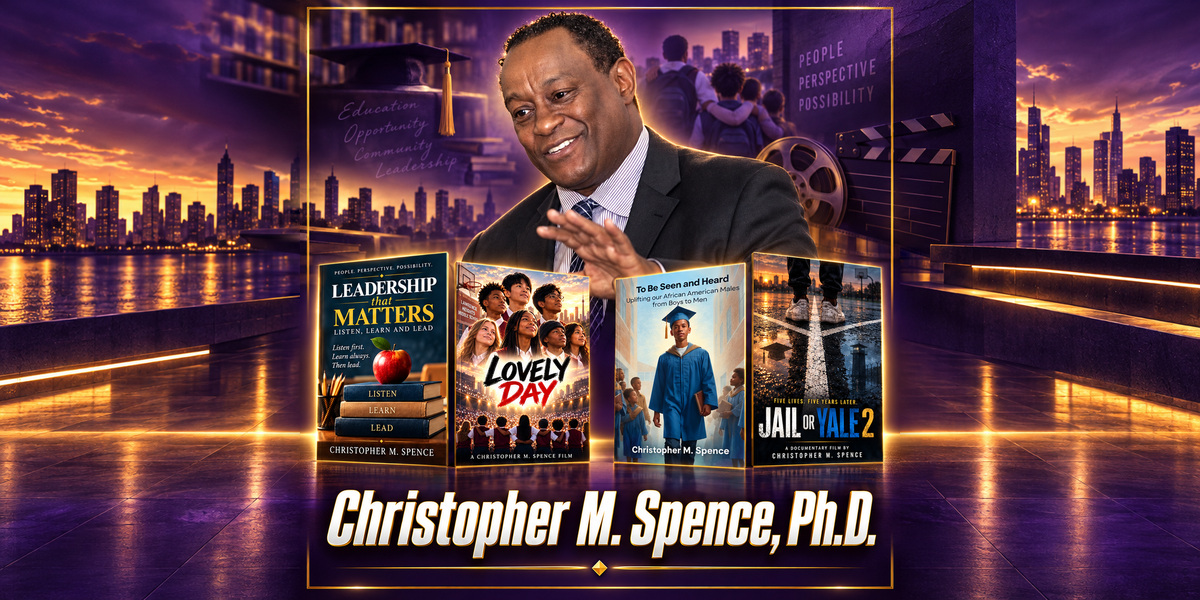
Spence later served as director of education for the Hamilton-Wentworth District School Board and the Toronto District School Board, leading two complex public systems while continuing to write, speak and advocate for equity. His books, including The Skin I’m In: Racism, Sport and Education, Creating a Literacy Environment for Boys and Leading with Passion and Purpose, connected research to the realities of classrooms, schools and communities. Across those roles, his message was consistent: public education must not merely offer access; it must create the conditions in which every student can participate, belong and learn.
His current work shows how that philosophy travels from systems thinking to direct service. Across the Chicago and Northwest Indiana region, Spence helps develop literacy, visual arts, and music experiences that invite children and families into learning. The work rests on a simple but consequential premise: engagement is not an extra. A book placed in a child’s hands, a choir that gives a student a place to belong, or an arts experience that allows a young person to express an idea can become an entry point to confidence, connection and sustained learning.
He also supports access to future-focused learning by helping schools bring programs in robotics, drone coding, 3D printing and artificial intelligence into their classrooms. These hands-on experiences can make emerging fields accessible to students who might not otherwise encounter them. For Spence, their value extends beyond technical skills. They allow young people to imagine themselves as designers, problem-solvers and creators. Opportunity becomes tangible when a student can build, test, revise, and discover that an unfamiliar field is not reserved for someone else.
Literacy and mentoring remain equally central. Through initiatives such as Read to Succeed and Boys to Men, Spence continues to focus on boys and young men who are too often discussed through statistics rather than engaged through their interests, strengths and aspirations. His approach treats reading as social, relevant, and connected to identity. Conversation, choice, culturally meaningful texts and trusted adults are not rewards added after learning; they are among the conditions that make learning possible.
That practitioner experience also informs his recent scholarship. His 2024 qualitative phenomenological research examined the experiences and perspectives of African American males and the school, family, and community conditions that influenced their educational journeys. The work later informed To Be Seen and Heard: Uplifting Our African American Males from Boys to Men, published in 2025. Rather than reducing young men to deficits or outcomes, the research centers their voices and highlights the importance of mentoring, affirming relationships, welcoming schools, family support, and credible pathways to college, employment, and adult purpose.
Film has given Spence another way to advance the same mission. In Jail or Yale: Young, Black and Out of Options?, released in 2019, students, educators and young men speak about exclusion, aspiration and the choices that institutions help expand or constrain. Other projects, including Silence the Violence, The MixTape and Dear B, use storytelling to explore youth voice, family, identity and community. The camera, like the classroom, becomes a place where people who are often spoken about can speak for themselves.
Taken together, this is not a collection of unrelated projects. Literacy opens access to ideas. The arts create expression and belonging. Mentoring builds trust. STEM expands the range of futures a student can imagine. Research makes lived experience harder to ignore, while film carries those voices beyond the walls of a school or program. Each form of the work addresses a different part of the same opportunity structure.
Spence’s career has included achievement, scrutiny, change, and renewal. What has endured is not a title but a commitment to learning and service. His work today is grounded in the belief that leadership is ultimately measured by what becomes possible for other people, and by whether institutions create real routes back into learning when a young person has struggled, disengaged, or been underestimated.
That is what Christopher M. Spence is building in the Chicago region: not a personal reinvention, but a connected body of work shaped by decades in public education and renewed through direct community engagement. It can be seen in a child choosing a book, a choir finding its collective voice, a young man meeting a mentor, or a student programming a machine for the first time. These moments may appear small in isolation. Together, they form the architecture of opportunity.
On August 28, 2026, “Between the Mysteries: An East-West Metaphysical Experience Night” took place at Lately Cafe in Long Island City, New York. Co-organized with the participation of the Taoist Association of New York, the event brought together metaphysics, divination, and spiritual practices from different Eastern and Western traditions. A panel discussion, open exchange, and interactive experiences gave participants a chance to compare how these systems work.
The speakers were Chengze Wu, President of the Taoist Association of New York, and Tara Li, a specially appointed cultural consultant on astrology and Feng Shui for diplomatic missions and a practitioner and inheritor of intangible cultural heritage related to shamanic traditions.
Li has traveled to several countries to study folk traditions and has conducted academic research on folk rituals and ceremonial practices. She has also been featured as a “Light of Chinese Studies” in Figures of the New Era. Both speakers are researchers of folk traditions in their fields and have received coverage and recognition from major media outlets including China Central Television (CCTV). They have long worked to promote cultural exchange between China and the international community and to help the public tell informed practice from misconception.
Photo Courtesy: Metaphysical Experience
What Should We Believe When We Feel Something We Cannot Explain?
The discussion opened with a question many people have considered at some point. “Have you ever experienced a premonition, an unusual dream, an intense intuition, sleep paralysis, or an inexplicable sense of discomfort after entering a particular space?”
Both speakers said the first step should not be to label such experiences “supernatural phenomena.” It should be to examine, differentiate, and verify them.
Drawing on psychology, perception, and Western esoteric practice, Tara Li explained that some experiences commonly read as paranormal have physiological or psychological explanations. The phenomenon described in Chinese as “being pressed down by a ghost” fits what sleep science calls sleep paralysis. A “sixth sense” or premonition, similarly, may come from the brain unconsciously integrating large amounts of information that never fully reach awareness.
Wu approached the question through Eastern traditions and his own religious practice. Some traditional systems, he explained, distinguish unusual perceptions by whether information arrives visually, aurally, or through internal sensation and intuition, and individuals vary considerably in their sensitivity to each.
The two worked within different frameworks but reached one shared conclusion.
Something being unexplained does not mean it should immediately be attributed to supernatural forces.
Wherever possible, an unusual experience should be cross-checked for physiological, psychological, environmental, and cognitive explanations before other possibilities are considered.
Remain open, but do not abandon verification. Remain respectful, but do not abandon reason.
Photo Courtesy: Metaphysical Experience
Is It Safe to “Create Magic at Home”? Lineage and Transmission
The second topic was the growing culture of self-teaching in online occult and spiritual communities. One question captured it. “If lineage is not considered essential, can someone simply learn from the internet, books, or personal experience and create rituals or so-called ‘magic’ at home? Could doing so involve risks?”
Tara Li explained that formal lineage is not an absolute requirement in some modern Western occult traditions. As modern Western esotericism has taken on more individualism, psychological interpretation, and deconstructive approaches, personal practice and experiential verification have become more prominent. Still, “not requiring lineage” does not mean “creating anything one wants without foundational knowledge.”
Li noted that elements of classical ritual traditions, including fasting, preparing ritual space, formal opening and closing procedures, purification, and banishing, can be read as structures that give practitioners psychological boundaries, order, and a sense of safety. Intensive practice without adequate grounding may carry real risks, such as excessive suggestion, obsessive thinking, sleep disturbances, or cognitive disorientation.
Wu, speaking from Taoism and traditional religious lineages, took a firmer position.
Within Taoist ritual and esoteric traditions, lineage and transmission occupy a central role.
A Taoist lineage, he said, passes on more than knowledge from teacher to student. It carries ritual standards, accumulated experience, ethical expectations, and ways of guiding and correcting practitioners built up over generations. Much practical knowledge never appears in public texts. It moves gradually through teacher-disciple relationships and long study.
“Previous generations plant the trees; later generations enjoy their shade.” Wu used this traditional Chinese saying to describe what lineage means. For practices that involve real religious ritual and intensive spiritual work, he argued, an established tradition gives practitioners boundaries and guidance on what can be done, what should not be done, and how to respond when difficulties arise, rather than leaving them to rely on personal feeling alone.
The exchange revealed two developmental paths. One emphasizes individual experience and the possibility of deconstructing established systems. The other gives more weight to teachers, lineage, and historical continuity. Both pointed to a similar warning.
Freedom to explore does not mean the absence of boundaries.
Can You Get Anything You Think About? Rethinking the Law of Attraction
Among the most actively discussed subjects was the Law of Attraction and Manifestation, concepts widely circulated on social media.
Tara Li noted that New Age spirituality is not a single religious system with one doctrine. It is a loosely connected cultural phenomenon drawing on many religious, philosophical, and spiritual sources. Concepts tied to yoga, chakras, and meditation have often been removed from their original contexts and repackaged for new audiences.
Commercialization has flattened terms such as “high vibration,” “low vibration,” and “manifestation” into the idea that holding the “right” thoughts is enough to get whatever one wants. That logic creates its own problem. Facing illness, poverty, unemployment, or major setbacks, people may find the complex social, economic, and personal circumstances behind those difficulties reduced to a claim that their “frequency is too low.” Normal emotions such as grief and anxiety may be treated as “low-vibration states” to be eliminated.
Spiritual practice should not become a reason to deny material reality.
Wu answered the question of whether human desire can change reality from a Taoist perspective, using the metaphor of a container. Even if people are connected to the universe in some way, he argued, that does not remove the practical limits of an individual life.
“A cup and a large vessel can both hold water, but they do not have the same capacity.”
In his reading, Taoism does not deny that conduct, cultivation, and accumulated effort can influence the course of a life. But change does not come without conditions. The Taoist ideas of merit and blessings (gongde and fubao) tie what a person receives to long-term conduct, responsibility, and contributions to others, not to repeatedly visualizing an outcome.
Wu suggested that instead of endlessly “making wishes to the universe,” it may be more meaningful to understand oneself accurately, accept present circumstances, and recognize the limits of one’s abilities, resources, and capacity. From there, a person can gradually expand what they are able to carry, achieve, and sustain through cultivation and concrete action. The task is less about repeating “I can have anything I want” and more about asking three questions.
Who am I now? What am I currently capable of carrying? And how can I develop the capacity to carry what I hope to achieve?
Both speakers returned to the same conclusion. In Eastern or Western spiritual language alike, spiritual intention cannot replace action in the real world.
Why Did Eastern and Western Esoteric Traditions Develop Differently?
The conversation then turned to a deeper historical comparison. Tara Li traced a path from classical Western magic, Neoplatonism, and Hermeticism through modern esoteric orders to later movements such as Chaos Magic. Western esotericism, she said, gradually moved from highly structured cosmologies and ritual systems toward practices that stress individual will, psychological mechanisms, and the deconstruction of symbols.
Wu explained why teacher-disciple transmission has stayed important in Eastern religious traditions. A religious system that continues over a long period lets the practical experience of earlier generations accumulate. Transmission, in his view, is not only identity or certification. It preserves knowledge. Scriptures record theory and doctrine, but many practical details and methods of judgment still require long person-to-person instruction.
Using the Taoist system of formal memorials and petitions (biaowen) as an example, Wu noted that religions are not static. Institutions, language, and culture change, and those changes shape how rituals are expressed. “Tradition” does not mean every external form has stayed fixed for thousands of years. A tradition can adapt to new circumstances while keeping its core worldview and its relationships of transmission.
The contrast was plain. Modern Western esotericism increasingly emphasizes the individual’s direct relationship with the sacred and the deconstruction of established structures. Taoism puts more weight on lineage and the continuity of knowledge within a religious community. The speakers did not declare either model superior.
First understand how a system was constructed; only then discuss how it might be deconstructed.
Do Tarot Cards Have “Spirits”? Divination Is Not Mediumship
The event also addressed misconceptions common among people exploring metaphysical subjects. One audience question asked whether Tarot cards have their own spirits and whether frequent divination can harm the practitioner.
Both speakers urged participants to separate divination tools, structured systems of metaphysical calculation, and mediumistic or spirit-communication practices. Wu explained that Eastern traditions have historically treated divination and mediumship as different categories.
“Someone who knows fortune-telling does not necessarily know how to conduct religious rituals, and a Taoist priest does not necessarily practice fortune-telling.”
Traditional systems such as Bazi and hexagram-based divination, he said, have their own symbolic structures, rules, and interpretive methods, and practicing them takes logic, experience, and associative judgment. Reading every act of divination as “connecting with a spiritual entity” can create unnecessary fear and misunderstanding. A tool’s link to mystical culture does not automatically mean its use should be explained by supernatural intervention.
How Can People Engage With Metaphysical Practices in a Healthy Way?
At the conclusion of the event, the speakers summarized the evening’s discussion through several practical principles.
First, people should understand the historical, geographical, cultural, and religious contexts in which a practice developed rather than extracting isolated concepts from social media.
Second, they should maintain the ability to test claims against reality. Any practice claiming to replace modern medicine, legal advice, or responsible financial decision-making should be approached with a high degree of caution.
Third, people should consider whether a practice is making their everyday lives, psychological state, and interpersonal relationships more stable, or whether it is causing them to become increasingly detached from reality.
The event also introduced techniques such as five-senses grounding and breathing exercises, which can help individuals redirect attention toward their bodies and immediate surroundings, while also discussing cultural concepts of personal and spatial purification and protection found in different Eastern and Western traditions.
At the conclusion of his remarks, Wu emphasized two words:
Respect and reverence.
Reason does not require ridiculing every tradition that cannot be fully explained. Reverence, likewise, does not require abandoning one’s own judgment.
In an era when metaphysical content can spread across short-form video platforms within minutes, and when “healing,” “manifestation,” and various forms of “certified spiritual guidance” are increasingly commercialized, perhaps the most important question is no longer simply:
“Do you believe in metaphysics?”
Instead, the deeper questions may be:
Do you know why you believe what you believe, and are you capable of testing and examining those beliefs?
This was also one of the central reflections that “Between the Mysteries: An East–West Metaphysical Experience Night” sought to leave with its participants.
Photo Credit: LipManTV
Photos courtesy of LipManTV, a content production company specializing in high-impact visual storytelling across finance, technology, real estate, art, and music, helping brands stand out through compelling visual content.
Disclaimer: This article is intended for informational, cultural, and educational purposes only. References to metaphysical, spiritual, religious, psychological, or divination practices reflect the perspectives discussed by the event participants and should not be interpreted as scientific facts or as medical, legal, or financial advice. Readers should consult appropriately qualified professionals for matters involving health, mental well-being, legal concerns, or financial decisions.