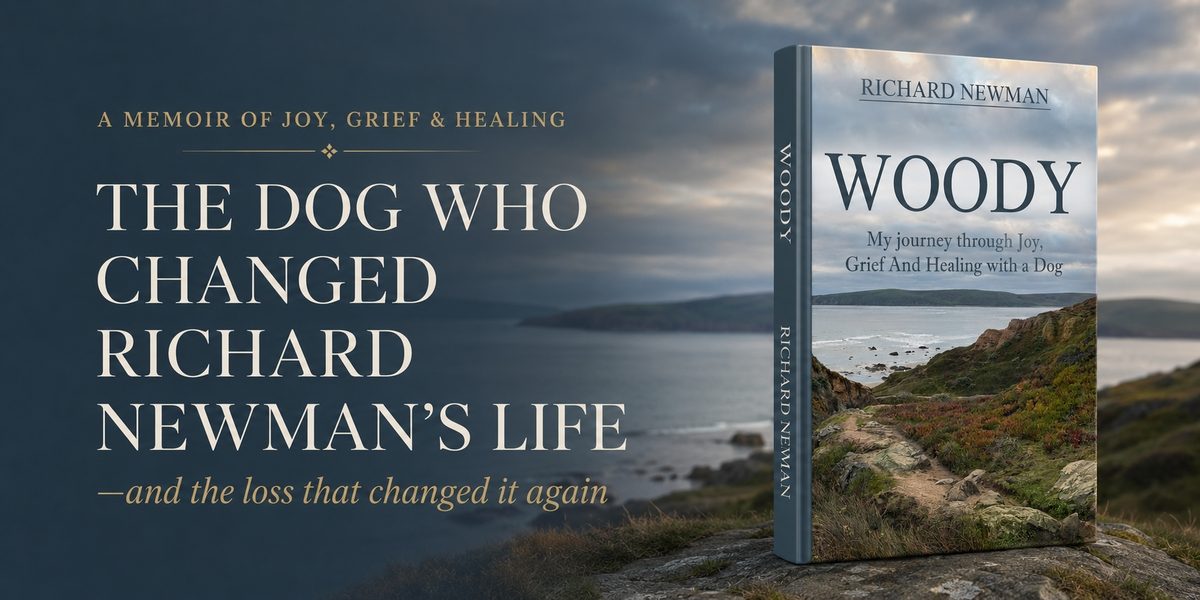

Some relationships arrive quietly and end up rearranging an entire life.
For Richard Newman, one came on four legs.
His Great Dane, Woody, became his “heart dog,” an old soul who could transform an ordinary neighborhood walk into an experience filled with connection. In Woody: My Journey through Joy, Grief, and Healing with a Dog, Newman recounts how loving one animal brought immense happiness, and how losing him opened an unexpected road toward sobriety, self-discovery, and renewal.
At the center of the memoir is a question many readers who have loved an animal will recognize: How do you continue after losing a companion who became part of you?
The Great Dane Who Taught Him to Wander
Woody entered Newman’s family as a puppy and formed a close bond with Faith, their other Great Dane. His connection with Richard deepened after knee replacement surgery.
Walking was essential to Richard’s recovery, and Woody became his enthusiastic companion.
Their outings soon became “wanders.” Instead of following a fixed route, they explored. Woody greeted strangers, watched neighborhood pickleball games, approached older residents gently, and attracted people with his enormous presence and friendly personality.
Those excursions strengthened Newman physically, but something more significant was happening. Woody was teaching a man accustomed to destinations how to appreciate discovery.
Joy could exist without a plan.
A Frightening Change
The happiness did not last.
Woody began displaying inconsistent aggression after previously being social and friendly. Episodes appeared suddenly, leaving Richard and Wendi struggling to understand the change.
Wendi, a certified dog behavior consultant specializing in reactivity and aggression, recognized the danger associated with unpredictable behavior in an animal of Woody’s size.
January 2024 brought the crisis.
Woody attacked Faith several times. The final incident became increasingly difficult to interrupt, and Faith grew afraid of him. Woody appeared unsettled afterward.
Veterinary discussions raised concern about a possible neurological condition, including seizures or a brain tumor, although no diagnosis was confirmed.
The couple faced an agonizing calculation. Woody weighed approximately 140 pounds. Rehoming could transfer the risk to another household. Constant confinement would drastically restrict the existence of a highly social dog. Faith needed safety, and Richard and Wendi had responsibilities to everyone around them.
They chose humane euthanasia.
Woody died beside the people who loved him.
Richard told him he would be all right.
He soon discovered he was anything but.
Grief Without a Map
Woody’s death shattered Newman.
Sleep brought nightmares. Tears arrived constantly. Eating became difficult. His health declined, creative energy disappeared, and music no longer provided comfort.
Alcohol became an escape.
Communication with Wendi deteriorated as Newman struggled to function. Journaling sometimes helped him organize his emotions, but eventually even writing stopped.
He describes himself as “a ship without a rudder.”
Something unexpected also emerged. The pain surrounding Woody began awakening wounds that had existed long before the Great Dane entered his life.
A conversation with Newman’s niece stirred memories of family violence, humiliation, rejection, and childhood shame.
One memory carried enormous weight: a twelve-page letter his mother gave him on his nineteenth birthday. Its condemnation stayed with him for decades, shaping how he viewed himself.
Woody’s death had opened an emotional door that could no longer remain closed.
Dreams Became a New Language
Newman repeatedly found himself inside a vast gray landscape during sleep.
Woody eventually appeared on the horizon. Roads, rooms, colors, water, black forms, and unusual structures followed.
Curiosity replaced avoidance.
Newman began intensive dreamwork sessions with Ophilia Mandara, exploring the persona he calls “Dream Richard.” The sessions used sensory reference points, or “anchor points,” as a way of working with the emotions attached to recurring imagery.
One idea became pivotal.
Blackness did not have to signify destruction. Dark soil can nourish growth.
Newman began approaching grief instead of continually trying to escape it. Pain became something to examine and integrate.
His intention focused on creating a more peaceful and powerful life.
The Decision That Ended 53 Years of Drinking
On September 27, 2024, another dramatic change occurred.
Newman stopped drinking alcohol.
He had consumed it for fifty-three years and relied on it heavily after Woody died. Sitting in his music room with a guitar nearby, he realized alcohol did not belong in the intentional life he wanted to create.
He quit.
Withdrawal brought headaches, digestive distress, and sleeplessness. Medical guidance helped him manage the physical adjustment.
Then creativity resurfaced.
Music returned. Work became engaging. Communication with Wendi improved. Emotional waves continued, but Newman had developed new ways to meet them.
Finding the Boy Beneath the Pain
Dream exploration also changed Newman’s interpretation of his childhood.
He reconsidered his mother’s letter and reached a liberating conclusion. Its cruelty reflected her own guilt and turmoil, not his worth.
An identity shaped by childhood shame began losing its power.
For the first time, Newman could honor and respect himself.
Woody had entered his world as a beloved dog. His death had somehow guided Richard back toward the person buried underneath decades of pain.
From Grief to Continuity
The closing movement of Woody rejects the neat promise of closure.
Newman chooses another word: continuity.
Woody is physically absent, but his influence remains. Memories become sources of gratitude. Dreams acquire meaning. Lessons learned during their wanders continue shaping Richard’s days.
Newman ultimately regards Woody as the catalyst for an immense personal transformation.
Readers may begin Woody expecting a story about a man mourning his dog. What they encounter is larger, an account of loss exposing unfinished pain, dreams opening unfamiliar doors, alcohol losing a decades-long hold, and self-respect emerging from darkness.
Woody once taught Richard how to wander. His absence led him onto the longest journey of all, the road back to himself.
Explore Woody: My Journey through Joy, Grief, and Healing with a Dog on Amazon.