
New York’s longest-running free outdoor concert series reaches a milestone this week, and the way it is marking the occasion says as much about the city’s cultural economics as it does about its music. On Wednesday, June 10, Capital One City Parks Foundation SummerStage opens its 40th anniversary season at Rumsey Playfield in Central Park with a free performance from Grammy-winning vocalist Ledisi, launching a slate of more than 60 free and benefit shows across 13 parks in all five boroughs.
The opening bill carries a deliberate echo. Ledisi performs material from her 2025 release Ledisi for Dinah, a tribute to Dinah Washington, joined by Brooklyn jazz vocalist Spilata and DJ Kultured Child, in association with the Blue Note Jazz Festival. The choice nods to history: the first SummerStage concert, in June 1986, was delivered by the avant-garde Sun Ra Arkestra at the Naumburg Bandshell. Four decades later, the series opens again with jazz, a quiet through-line connecting a program that has since presented thousands of artists to audiences topping seven million.
A Free-Access Model Built On Paid Benefit Shows
What separates SummerStage from the rest of the city’s crowded summer calendar is its financing structure, and that structure is worth examining as the festival enters its fifth decade. The overwhelming majority of programming is free and open to the public. The cost of that access is offset by a smaller number of ticketed benefit concerts, produced by Live Nation, whose revenue underwrites the free shows in neighborhood parks.
This season’s benefit lineup spans genres and price points: house duo The Martinez Brothers on June 13, singer-songwriter Elderbrook on June 20, an Anjunadeep showcase on July 18, a Blues Traveler, Gin Blossoms, and Spin Doctors triple bill on August 15, a Simple Plan night on August 19, the Marcus King Band on September 12, and country artist Charley Crockett on October 1. The model lets City Parks Foundation extend cultural programming into parks that rarely host marquee acts, turning ticket buyers in Central Park into subsidizers of free nights in Harlem, the Bronx, and Queens.
That cross-subsidy is the engine behind the festival’s geographic reach. Neighborhood venues this season include Marcus Garvey Park in Harlem, Tompkins Square Park in the East Village, Herbert Von King Park in Brooklyn, Flushing Meadows-Corona Park in Queens, and Crotona Park in the Bronx, with additional dates in Staten Island. The breadth is the point. SummerStage has positioned itself less as a single festival and more as a distributed civic-cultural network operating across the map of the city.
The Programming Leans On Veterans And New York Roots
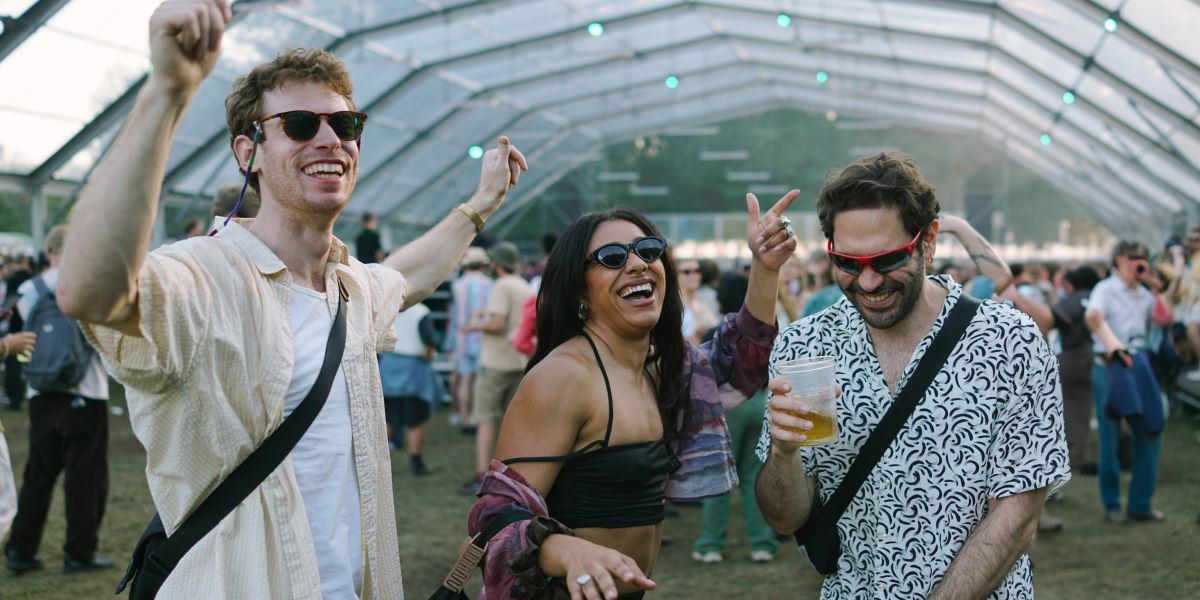
Photo Credit: Unsplash.com
The 40th season pairs longtime SummerStage performers with debuts. Avant-garde artist Laurie Anderson makes her first SummerStage appearance on June 26 alongside the ensemble Sexmob. Angélique Kidjo, Mavis Staples, De La Soul, and Spoon also feature across the season, a spread that reflects the festival’s stated emphasis on global artists, women and non-male identifying performers, and homegrown New York talent.
Hip-hop, a genre with deep ties to the city’s parks, gets concentrated attention. Longtime SummerStage fixture Funk Flex hosts a Birthday R&B Picnic in Central Park on August 7 with Jon B., a Hip-Hop Appreciation Park Jam in the Bronx on July 31 with Doug E. Fresh, and a house and freestyle night on Staten Island. On July 30, Central Park hosts a celebration of the influential Ultimate Breaks and Beats compilation series on its own 40th anniversary, led by co-founder Breakbeat Lou with Lord Finesse, Diamond D, Grand Puba, and Sadat X.
The continuity is intentional. Joe Killian, who founded SummerStage and served as its executive producer from 1986 to 1993, framed the original premise plainly, recalling a simple idea that world-class performance belonged to everyone rather than only those who could afford a ticket. Heather Lubov, executive director of City Parks Foundation, tied this season’s range to the city’s cultural diversity and the organization’s intent to keep bringing live performance to neighborhood parks.
A Milestone Inside A Packed New York Summer
The anniversary arrives during a dense stretch for the city. The FIFA World Cup brings matches and an expected surge of visitors to the region, the Tribeca Festival just closed its own 25th edition, and BRIC’s 47th Celebrate Brooklyn! season is underway at the Lena Horne Bandshell in Prospect Park. For a city selling itself as a summer destination, a free concert series that draws crowds into parks across all five boroughs functions as both cultural programming and civic infrastructure, the kind of durable institution that outlasts any single season’s headliners.
Forty years in, SummerStage has become a fixture precisely because it solved the access problem early and kept the model intact. The opening-night jazz set on June 10 is the celebration. The summer-long calendar behind it is the argument for why the festival still matters.