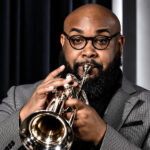

By Natalie Johnson
There’s a sentence sitting underneath nearly every conversation Richard Hinton has with senior leaders. Almost none of them say it out loud. It’s this: “I don’t know if I’m doing this right.”
Hinton has spent more than 20 years in People and HR leadership, the most recent years at the executive level. The feeling shows up everywhere. Title doesn’t change it. Tenure doesn’t change it. Neither does how composed someone looks in the boardroom.
“The higher up you go, the less permission you feel to say that out loud,” he says. So, leaders bury it. They perform certainty instead. They believe admitting doubt costs them credibility, authority, the confidence of the people who report to them.
That performance is where organizations start to break. That’s the work Hinton does now. Not from the outside, watching leaders struggle from a distance, but in the room, coaching them through exactly this tension.
The Performance That Protects Authority Destroys It
The myth is that a leader has to have all the answers. Hinton calls it one of the most damaging ideas in organizational life.
He’s seen the pattern more than once. A leader runs on certainty. Someone raises a real concern, and the room shifts. Hinton remembers the feeling more than the words. His heart picking up. His back tensing until it climbed into his shoulders. His eyes moving back and forth between the two people talking, the same way everyone else’s did. Everyone thinking some version of the same thing. What is happening right now. Is this actually happening. The follow-up conversation that should come next doesn’t. Eventually, the person who spoke up stops being the one in the room.
The data backs up what Hinton sees in the room. Gallup research shows only 23% of employees strongly trust their organization’s leadership. That’s not a small gap. That’s most of the room staying quiet.
The cost isn’t morale. It’s information. Silence cuts off the flow of honest input from the people closest to the work, and that leaves the leader isolated. Hinton knows this from the inside too. Working under a leader like that, he pulled back the same way everyone else did: showing up, doing exactly what was asked, and nothing more, because he never felt seen or heard. “The silence isn’t compliance,” he says. “It’s damage.” Often, it’s the sound of a leader’s own information supply getting cut off.
It’s not only the leader who feels it. People teams, chiefs of staff, and executive assistants absorb that tension first, and rarely get named for carrying it.
What Leadership Looks Like Up Close
Hinton has a name for what’s actually breaking here. In his CSI model of leadership trust, it starts with Clarity, not confidence: naming what’s true, including what you don’t know yet. Performed certainty fakes clarity instead of building it, and Safety erodes right behind it. People stop trusting what they’re told, so they stop offering what they think.
The most effective leaders Hinton has worked with share one uncommon trait. They’re as honest about what they don’t know as they are clear about where they’re going. That combination is rare, and magnetic when it shows up. It sounds like, “I need your help thinking through this,” and it means it.
What usually gets performed instead is confidence without curiosity. Decisiveness without dialogue. It reads as strong from the outside. It’s quietly exhausting from within. It doesn’t build the confidence it’s meant to project.
“It actually builds distance,” he says. “And distance is the enemy of execution.”
Why Vulnerability Is an Operational Advantage
The damage shows up clearest in discretionary effort. People go through the motions: technically present, emotionally checked out, delivering what’s required and nothing more. Pearn Kandola’s research backs it up: nearly one in three employees feel unsafe speaking up at work, and only one in four feel safe challenging authority. When people believe speaking up won’t change anything, they stop.
It could be a performance issue, Hinton says, but he’s careful not to stop there. “You hire people for their thinking,” he says. “If someone was contributing and stops, don’t skip past why. That’s data. Something changed.”
There’s a cost to this beyond how it feels in the room. Call it the certainty tax: what an organization pays every time a leader performs confidence instead of admitting doubt. Gallup estimates it costs roughly 200% of a leader’s salary to replace them. That’s not a soft metric. That’s a line item.
The fix is the thing most leaders are afraid to do: admitting they don’t have it figured out, which gives everyone else permission to do the same. That shift moves a culture from managing up toward honest problem solving. It’s not soft. It’s an operational advantage. Teams that trust their leaders communicate faster and stay longer. Most psychological safety efforts fail for the same reason. They’re treated as an HR initiative instead of something a leader actually operates by. Trust isn’t a culture statement. It’s a performance metric, and it behaves like one whether anyone’s tracking it or not.
The loneliness so many leaders carry was never a condition of the role. It was a consequence of the performance. Hinton says to start smaller than people expect. Pick one person on your team. Tell them one thing you’re genuinely not sure about. Then ask what they see that you don’t. That’s the whole practice. No program, no offsite. Just going first.
Performed certainty only buys the appearance of authority. The real thing gets built by admitting no one has all the answers, and asking for help anyway. That’s the answer to the question nobody says out loud: I don’t know if I’m doing this right. Nobody does. The leaders worth following say so.
Learn more about Richard Hinton’s work with leaders at richardahinton.com or connect with him on LinkedIn