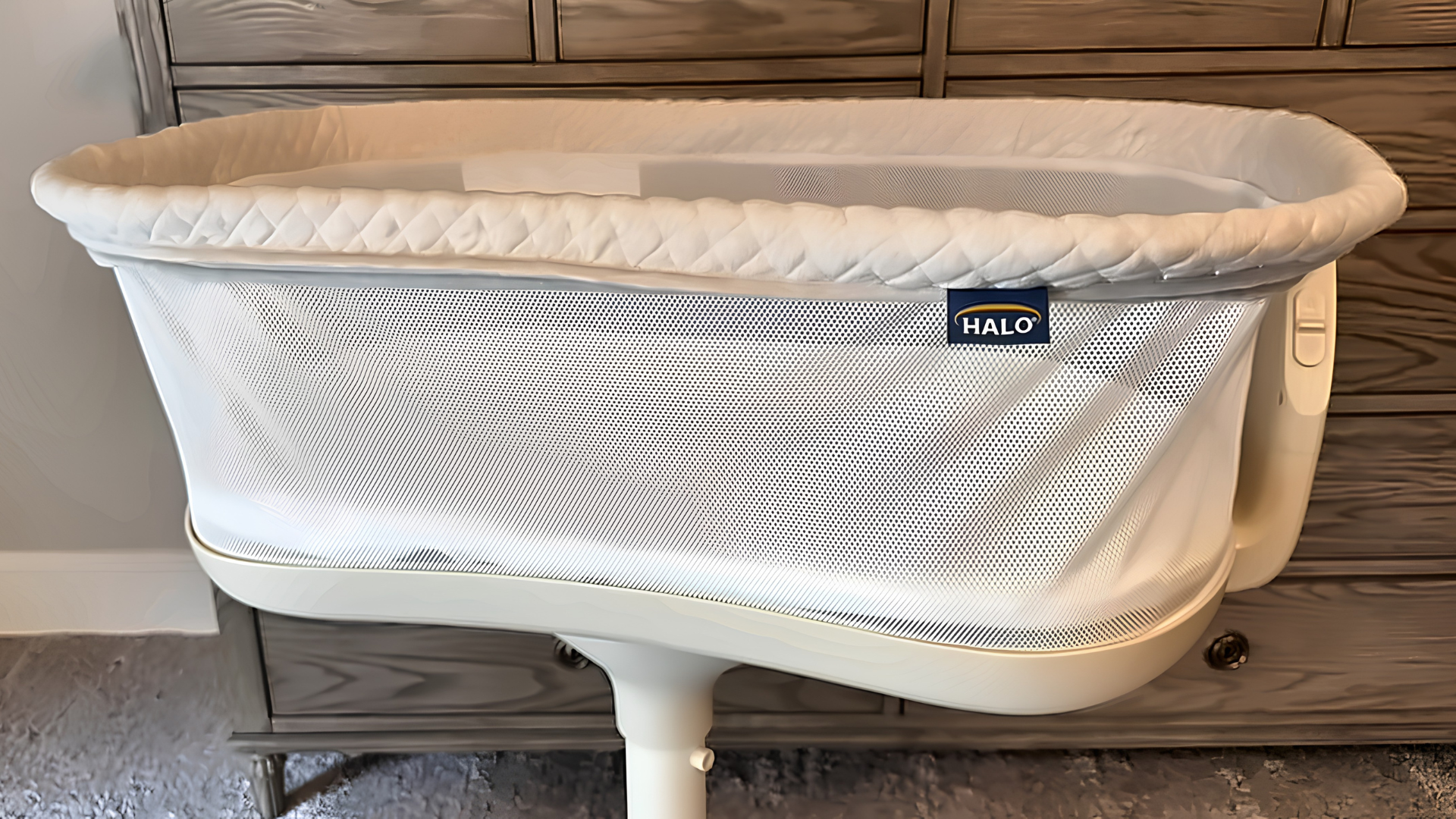

Disclosure: HALO provided the BassiNest Swivel Sleeper 4.0 Air for this review. All opinions are our own.
It is 3 a.m. and the baby is stirring. Sitting up, swinging your legs over the edge, crossing the room, then doing the whole sequence in reverse forty minutes later is the part nobody warns you about. Six days out from a C-section, it stops being an annoyance and becomes the reason you dread the next feed. The HALO BassiNest Swivel Sleeper 4.0 Air is designed to delete most of that sequence: the bassinet swivels out over your mattress, and the front wall lowers under gentle pressure so you can reach the baby without getting out of bed.
That is the whole pitch, and it is a narrow one. This is a fixed-location bedside sleeper with four to five months of useful life and no second stage. If your bed frame sits flush to the floor, or you want a sleep space you can move around during the day, it is the wrong product. If nighttime mobility is what is making your recovery harder, it is one of the few bassinets that addresses that directly.
At a Glance
- Price: $349.99 (halosleep.com, July 2026); promotions are frequent, so what buyers pay varies
- Weight limit: 20 pounds, or when baby pushes up on hands and knees or shows signs of rolling (manufacturer stated)
- Dimensions: 32.75″ x 32.75″ base; 32.75″ to 41″ adjustable height
- Unit weight: 21.7 pounds (HALO publishes this for the 4.0 frame; no separate figure for the Air)
- Minimum bed frame clearance: 1.5 inches
- Warranty: 1 year; HALO registration mandatory for BassiNests or coverage is void; authorized retailers only
- Returns: 30 days from shipment, halosleep.com orders only, unused and in original packaging; 30% restocking fee on nursery furniture
- In the box: DreamWeave breathable pad, 100% cotton muslin fitted sheet
What Does the 4.0 Generation Actually Change?
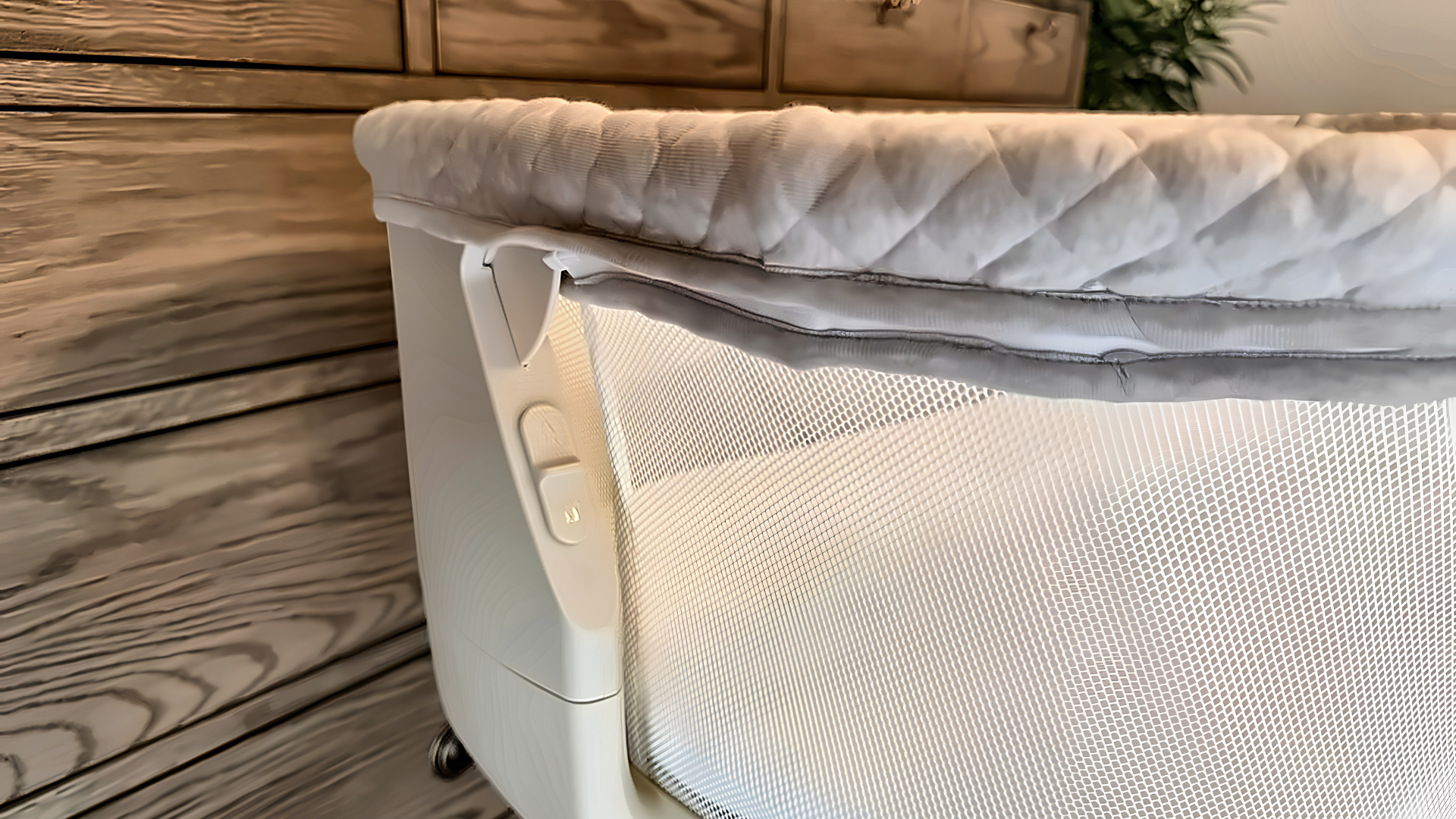
Mesh walls under a quilted rim, with the controls set into the corner post.
HALO has been making BassiNest Swivel Sleepers for about a decade, and the core idea has not moved: a bassinet on a pedestal base that rotates 360 degrees over an adult bed, with a patented wall that drops when you press on it. The 4.0 generation reworks what sits underneath. The legs are lower-profile and the base is sturdier, aimed at fitting under a wider range of bed frames, and the height adjusts from 32.75 to 41 inches, which covers most modern mattress heights including taller pillow-top setups.
The Air is simply that frame with HALO’s DreamWeave pad instead of the standard one. Same swivel, same lowering wall, same mesh walls, same footprint as the rest of the 4.0 line.
What Does the DreamWeave Pad Do?
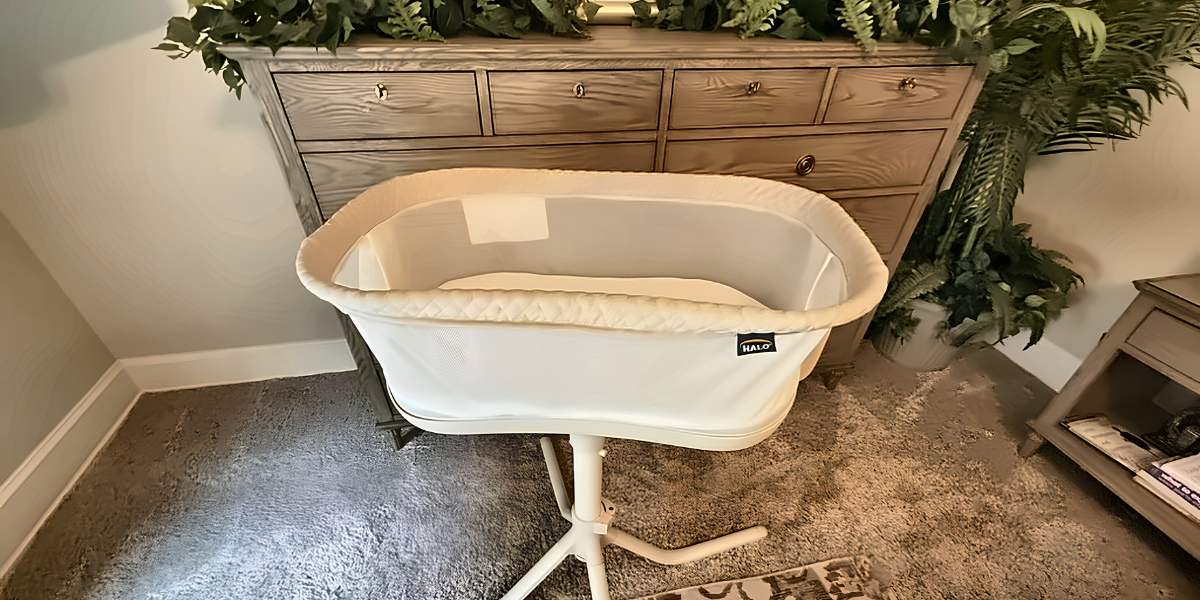
Looking into the nest: a flat sleep surface, mesh on every side, and nothing else in the space.
The pad is the reason the Air exists and the reason it costs more than the 4.0 Signature, which uses the same frame and listed at $279.99 in July 2026. HALO describes DreamWeave as a 3D quilted mesh cover over an open-weave core, breathable from cover to core, made from a food-grade polymer with no foam, latex, or adhesives.
Worth being precise: those are manufacturer claims. No published independent testing of the pad’s airflow was available at the time of writing, and the breathability and hypoallergenic descriptions are HALO’s own. What can be said from outside is that the construction is visibly different from a conventional foam pad, and that a washable core is a practical difference rather than a marketing one.
Is It Easy to Clean?
Mostly, and this is where the pad earns its premium in daily use. HALO’s position is that it is 100% washable, cover and core. Conventional foam pads are spot-clean-only, and with a newborn that is a permanent low-grade problem.
One caution: HALO says washable, not machine washable, and care instructions differ by component. Read the tag on the pad, the mesh walls, and the sheet before putting any of them in a machine. The muslin sheet is straightforward laundry, and a spare is worth buying up front.
What Do Owners Report?
The 4.0 Air launched in spring 2026, so the owner review pool is still shallow and any pattern in it should be treated as provisional. The recurring positives match earlier BassiNest generations: the swivel is the feature people say they use constantly, the lowering wall gets specific credit from parents recovering from surgical deliveries, and assembly is generally described as quick.
The criticisms are also familiar. Owners note the base occupies real floor space in a small bedroom, and a small number report concerns about sturdiness. With a sample this thin, that is a flag to watch rather than a verdict, and a reason to register the product and keep the receipt.
Safe Sleep and Recall Status
As of July 2026, HALO’s own recalls page lists two recalls, both involving wearable sleepwear rather than bassinets: a 2013 SleepSack recall and a 2025/2026 Magic SleepSuit recall, both for choking hazards. The BassiNest Swivel Sleeper line is not among them, and no recall is listed for the 4.0 Air.
Standard safe sleep practice applies regardless of the product. Put the baby on their back, every sleep. Use only the pad and sheet that came with the bassinet and nothing else in it: no loose blankets, bumpers, pillows, or positioners. A wearable blanket is the recommended way to keep a baby warm. Stop using it at 20 pounds or as soon as the baby can push up on hands and knees, whichever comes first.
What to Consider Before Buying
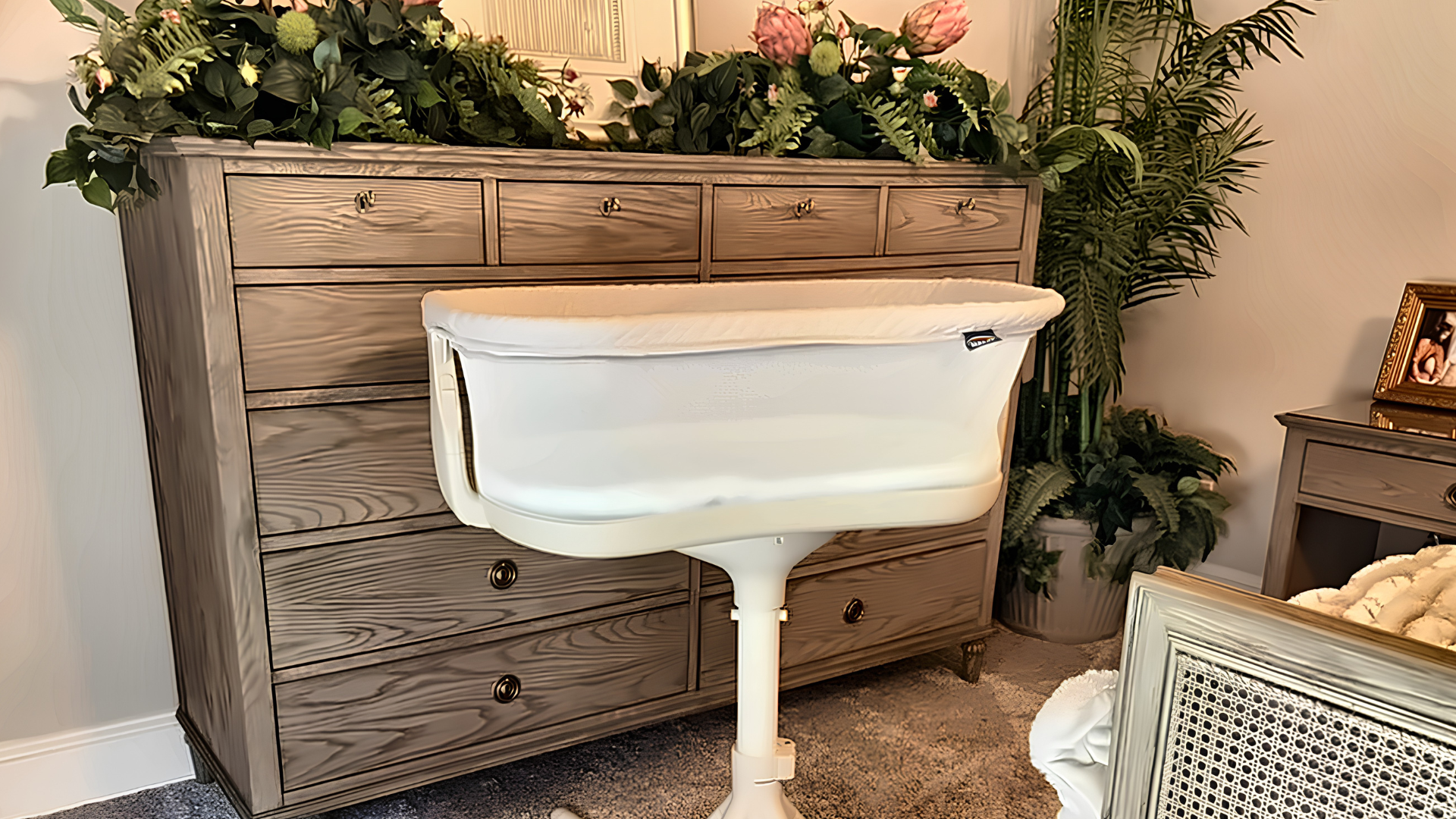
The pedestal and its low-profile legs: the part that has to clear your bed frame, and the part that takes up floor space.
Measure your bed frame first. The legs need at least 1.5 inches of clearance underneath. Platform beds that sit flush to the floor and storage frames with drawers will not work, and this is the most common reason a bedside bassinet gets returned.
It does not move. There are no wheels and no detachable nest. Relocating it means lifting the whole assembled unit, manageable for one adult but not something you will do casually twice a day. Whether that matters depends on the household. Some families genuinely want a downstairs nap spot. Many never move a bassinet once it is assembled.
The lifespan is short and the cost is front-loaded. Most babies are out of it in four to five months. There is no conversion and no toddler mode. At $349.99, that is a meaningful monthly cost for a single-purpose item.
The return and warranty terms are stricter than they look. Returns run 30 days from shipment and only for orders placed directly with halosleep.com, and refunds on nursery furniture are cut by a 30% restocking fee. Warranty coverage requires buying new from HALO or an authorized retailer and, for BassiNests, registering the product. Skipping registration voids it, and secondhand and open-box units are excluded outright.
The Bottom Line
The 4.0 Air does a small number of things and does them without fuss. The swivel and the lowering wall remain this category’s strongest answer to a specific, real problem: getting to your baby at night when getting up hurts. The DreamWeave pad adds a washable sleep surface, a real improvement over a spot-clean foam pad, though its airflow benefits rest on HALO’s claims rather than published outside testing.
It suits parents who have measured their bed frame, expect the bassinet to stay put, and want the washable pad enough to pay the difference over the Signature. It does not suit parents who need portability, who want something that lasts past the newborn stage, or who are keeping the nursery budget tight. For that last group, the Signature is the same frame and the same swivel for less, and the pad is the only thing given up.
The HALO BassiNest Swivel Sleeper 4.0 Air is available directly from HALO.