
You finally found the right assistant. Now comes the real test: turning that hire into a force multiplier, not another revolving-door headache. A solid executive-assistant onboarding checklist is the difference between smooth support and six frantic weeks of “Where’s the Wi-Fi password?”
Most first-time EA relationships fail because the founder lobs tasks over the wall and hopes for magic. That slipshod hand-off swallows time, fuels frustration, and produces another LinkedIn post that begins, “We’re hiring… again.” Treat onboarding like a product launch, planned, measured, iterative, and the cycle stops.
New York adds stakes. Salary ranges must be public, background checks wait until after the offer, and in-person I-9 inspections are back. Miss a step and you invite fines or PR blowback. A sloppy Day One isn’t just awkward; it’s costly.
This guide walks you through a seven-step plan built for the pace of NYC tech. We’ll map the role before day one, tick every compliance box, and grow authority in 90 days. Along the way you’ll spot hidden bottlenecks and hand your assistant fast wins that reclaim hours each week.
Keep reading. In minutes you’ll have a repeatable framework that saves money, protects compliance, and turns your assistant into a strategic partner.
Why EA Onboarding Is Different and Worth the Effort
Finding an assistant is expensive; losing one is brutal. Recruiting fees, founder time, and stalled projects can drain six figures faster than a Manhattan lunch tab. Yet many companies still treat onboarding as a quick handshake and a stack of forms.
We should know better. Only 12 percent of employees strongly agree their company onboards well, and when the experience disappoints, turnover rises and productivity slumps (Gallup, 2017).
A structured executive-assistant onboarding checklist flips that script. When an EA receives clear goals, the right tools, and early wins, retention soars and output climbs. One Brandon Hall study from 2023 found that well-designed programs lift new-hire retention by 82 percent and boost productivity by more than 70 percent.
Those numbers translate into real value. For a founder juggling investors, product, and payroll, an EA who ramps in weeks instead of months frees days of deep-work time each quarter, often covering the assistant’s salary many times over.
Add New York’s compliance maze, salary-range disclosures, delayed background checks, stricter I-9 rules, and the stakes rise. A sloppy start is not just inconvenient; it risks fines and dents your employer brand in a city where talent talks.
Step 1: Map the Role and Key Processes Before Day One
Before your assistant opens a laptop, you need a blueprint. Write down exactly what great support looks like, task by task, so nobody spends the first week guessing.
Start with the work that steals your time today. List the 10 activities you dread most, calendar ping-pong, travel haggling, expense wrangling. Rank them by pain. Those top slots become the EA’s first areas of ownership. Add guardrails: “No investor meetings before 10 a.m.” or “Approve flights only if under $650.” Clear rules beat retroactive corrections.
Next, translate those duties into workflows. How does a meeting request move from email to Zoom link to calendar? Where do approvals stall? Sketch each step. You will spot bottlenecks you forgot existed, and your new hire will land with a ready-made playbook instead of a puzzle.
This is the perfect moment to kick off a quick Executive Assistant Process Mapping session. In one whiteboard hour, you and your EA trace every recurring loop (scheduling, reporting, vendor onboarding). The exercise surfaces hidden friction and usually frees a few bonus hours before the assistant even starts.
Keep it living and editable. Whenever you tweak a procedure or clarify a preference, update the doc. Future you will thank present you for the foresight.
Investing just two focused hours in role and process mapping prevents two chaotic weeks of “How do you want this done?” It signals that your company values clarity and equips your EA to deliver wins from day one.
Step 2: Handle the Admin and NYC Compliance Fundamentals
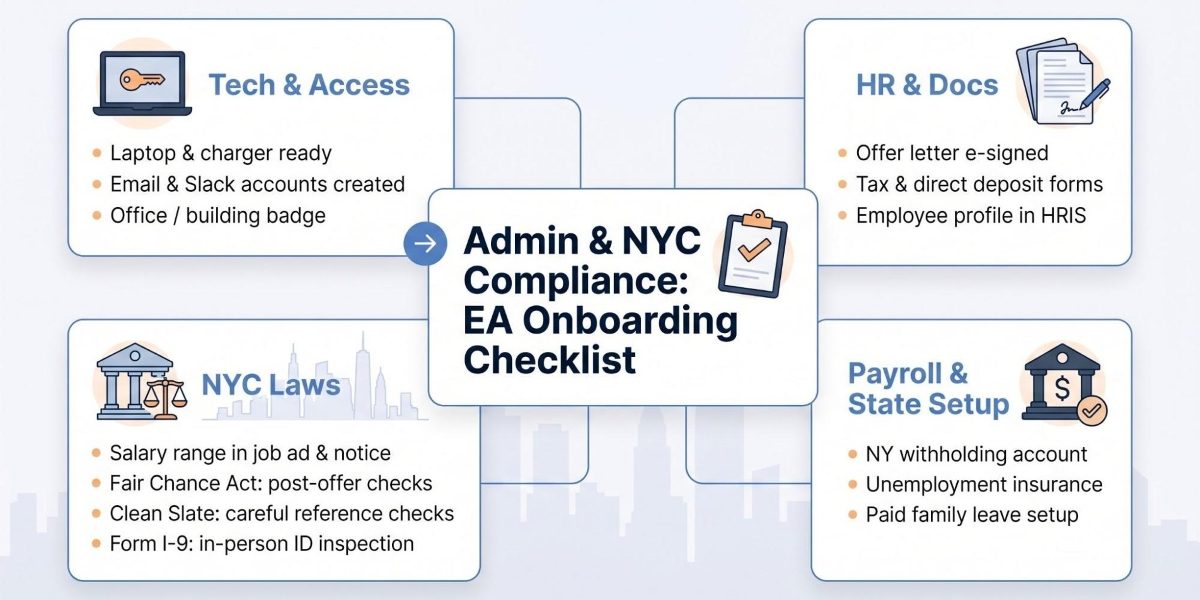
A warm welcome feels hollow if your assistant spends day one begging IT for log-ins or signing forms that should have been e-signed last week. Fix this with a pre-flight checklist covering tech, payroll, and every New York rule waiting to trip up a fast-moving startup.
First, issue accounts and hardware before the start date. A ready laptop, Slack handle, and badge tell your EA the company respects their time. If you run lean, a tool such as Gusto or BambooHR can auto-send offer letters, tax forms, and direct-deposit links so nobody prints PDFs at 9 a.m.
Next, tackle compliance:
- Salary transparency. Since November 2022, New York City requires a salary range in the job ad and in the wage-theft notice delivered on or before day one.
- Background checks. Under the 2021 Fair Chance Act update, run checks only after the signed offer and follow strict guidance when discussing findings. The Clean Slate Act (2023) now seals many older convictions, so reference calls matter even more.
- Form I-9. Pandemic flexibility ended in July 2023. Unless you use E-Verify, inspect identity documents in person or through an authorized agent. The Department of Homeland Security has warned tech firms that fines will rise for errors.
Finally, set up payroll accounts for state withholding, unemployment insurance, and paid family leave. If this EA is your first New York employee, file the applications early; Albany paperwork moves slowly.
Step 3: Make Day One Welcoming and Productive
First days set the emotional anchor for the entire hire. When your EA walks in, every signal, who greets them, whether the laptop boots, how quickly Slack pings, tells a story about your culture.
Start with a human touch. Meet them at the door or enter the Zoom room early. A 30-second “We’re thrilled you’re here” beats any branded hoodie.
Guide a quick tour. Show the kitchen, introduce core team members, or hop through virtual departments if remote. Keep it light and conversational; names stick when paired with faces and a shared mission.
Share a high-level overview of strategy, runway, and top company goals. Context helps your EA make judgment calls without pinging you every hour.
Walk through the onboarding checklist you built in Step 1. Seeing a clear roadmap calms nerves and signals momentum. Hand over the EA operating manual, confirm key preferences, and schedule the first daily sync.
Land an early win. Forward a simple scheduling request and let them handle it before lunch. Success on day one builds confidence on both sides.
When the laptop, log-ins, and first victory line up before 5 p.m., your assistant ends the day thinking, “I belong here, and I’m already useful.” That feeling is gold for retention and motivation.
Step 4: Lock in Expectations and Communication Cadence (Week 1)
The first week is about wiring the feedback loop that keeps mistakes tiny and wins compounding. Do this by scheduling short, predictable touchpoints and spelling out how decisions get made.
Set a daily 10-minute sync on the calendar now. Use it to review priorities, clear blockers, and refine approach. Small course corrections today prevent messy rewrites next Friday.
Clarify availability. Are you online 7 a.m. to 6 p.m., or do you vanish for school pickup? Tell your EA when it is fine to ping, when to text, and when to handle issues solo. Ambiguity breeds hesitation; clarity fuels speed.
Define authority thresholds. For example, “You can approve expenses under $500, reschedule any internal meeting, but flag board requests.” Writing these guardrails in the shared EA operating manual turns fuzzy norms into firm policy.
Agree on a status format. Maybe a running Trello board or a nightly Slack summary works best for you. Pick one channel, stick to it, and remove the rest. Too many pipes flood the signal.
Invite feedback early. Ask, “What slowed you down today?” The question shows you value their perspective and surfaces bottlenecks you cannot see from the founder chair.
Step 5: Quick Wins and Context Building (Weeks 1–2)
Momentum matters. In the first 14 days give your EA tasks that are easy to learn, hard to break, and immediately lighten your load.
Calendar control comes first. Route every scheduling request through them, even the “coffee sometime next week?” notes from friends. Within three days they will see who gets priority, which blocks stay sacred, and how you think about travel buffers. You regain hours and they build pattern recognition.
Next, assign a simple travel booking. A one-night Boston hop works well. Share seat, hotel, and budget preferences, then let them drive. Review the itinerary together, fine-tune tone in confirmation emails, praise the smooth parts, and correct the misses. Low risk, high learning.
Layer in a recurring admin chore, perhaps updating Monday revenue numbers or flagging inbox newsletters worth reading. Short cycle time gives you both fast feedback and visible accomplishment.
At the same time, immerse them in context. Invite them to shadow leadership stand-ups, product reviews, and investor calls. Tell attendees the EA is listening for follow-ups. Observation now pays dividends later when they anticipate needs without prompts.
End the two-week sprint by asking your assistant to draft a Who’s Who cheat sheet of the top 20 stakeholders. Creating it locks in names, roles, and relationships, and you receive a handy reference in return.
Step 6: Gradually Expand Authority and Autonomy (Weeks 3–6)
By week three your assistant knows the rhythms; now widen their responsibilities. Think of autonomy as a ladder, one safe rung at a time.
Start with partial inbox management. Ask them to draft replies for low-stakes categories such as internal scheduling or vendor notes. You review, adjust tone, then hit send. After seven clean days, let them send those messages without approval. Keep investor or board threads in your own queue until you both agree on voice and context.
Next, give them a live project to own. A team off-site or customer event works well. Set the goal, budget, and deadline. Let them book venues, track RSVPs, and build a punch list. Weekly 1:1s shift from “What should I do?” to “Here is what’s done, here is what’s blocked.” You act as advisor, not taskmaster.
Introduce spending authority. Define a ceiling of $1,000 for tools, gifts, or travel tweaks. Small financial trust speeds execution and shows respect. Review the first few receipts, share quick feedback, then step back.
Keep the feedback flywheel turning. Praise wins in public channels and address fixes privately with specifics. Every successful handoff frees another slice of your calendar and builds the assistant’s confidence.
Step 7: Measure ROI and Cement the Partnership (90 Days+)
Ninety days pass quickly. Pause, check the scoreboard, and lock in gains before they fade.
Start with hard numbers. Compare your calendar data from month zero to month three. If you earned back 10 hours a week and spent that time on product or funding, convert those hours into dollars. The figure proves the assistant’s value and protects their budget line.
Review the day-one goals. Does the EA fully own scheduling and inbox triage? Are expense reports filed without reminders? Note successes, list gaps, and agree on the next stretch targets.
Gather 360-degree feedback. Ask department heads how the EA supports their teams and where extra horsepower could help. Share highlights with your assistant to amplify wins and surface growth areas.
Return the favor. Invite candid notes on the role, tools, and even your leadership quirks. Genuine two-way feedback shows partnership, not hierarchy.
Finish with recognition. A public shout-out at all-hands or a small bonus signals commitment to long-term collaboration. Research shows new hires decide within 44 days whether they chose the right company, so by day 90 you want your EA urging friends to join.
When metrics, feedback, and recognition align, your EA moves from cost line to strategic ally. Onboarding ends, compound impact begins.