
By: Hannah Price
The world has a very specific story it tells about older women who fall. The fall is the punctuation mark. The moment the sentence stops. What comes after is supposed to be smaller, quieter, a gradual stepping back from the life that came before. Laurel Richardson read that script and rewrote it completely.
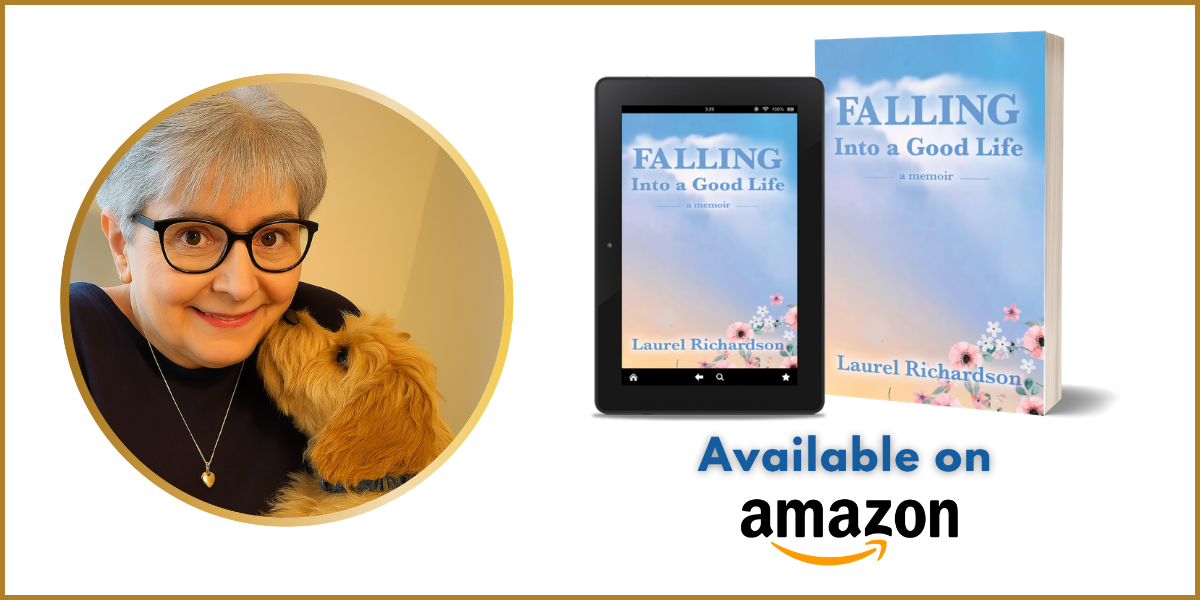
Her memoir Falling Into a Good Life begins on a dining room floor where she lay for fourteen hours with a broken neck, broken back, broken arm, shattered eye socket, fractured ribs, and a concussion. She was eighty-seven. The doctors called her a miracle. She has a more specific idea of where the miracle actually lived, and it has nothing to do with simply surviving.
She Didn’t Just Survive. She Paid Attention.
What separates this memoir from most survival stories is the mind doing the telling. Laurel spent decades as a literary scholar and sociologist at The Ohio State University, and those instincts never switched off, not in the trauma center, not in rehabilitation, not in the senior living community where she eventually landed and where, it turned out, the most interesting part of the story was waiting.
She is trained to notice the small moments that carry larger meaning. To track how language shapes what people believe is possible. To see patterns in the way people interact and what those patterns quietly reveal. All of that came with her into the wreckage.
The sociologist in her made sense of the new world she was navigating. The writer in her shaped it into something worth reading. Together, she says, they gave her the tools to tell the story with clarity, curiosity, and humor. That particular combination is harder to pull off than it sounds, and it’s exactly what makes the book feel different from the usual memoir of hardship and recovery.
What Resilience Actually Looks Like Without the Filter
Laurel is very deliberate about not glamorizing what happened to her. Her reinvention didn’t begin with a revelation or a choice or a moment of hard-won clarity. It began with her on the floor, unable to move, alone.
The resilience that followed was not grand. It was a sequence of stubborn, unglamorous decisions made one at a time. Getting up when her body pushed back. Accepting help when every instinct resisted it. Laughing at the parts of recovery that were genuinely absurd, because some of them really were.
She puts it plainly: reinvention isn’t heroic. It’s practical. And sometimes the most resilient move available is simply refusing to stay down. No montage. No triumphant return to form. Just the next decision, and then the one after that.
The Fall That Broke Open More Than Bones
There’s a reason the title works on more than one level. The fall Laurel describes isn’t only physical. It broke open something in how she understood herself and what her life could still hold.
Identity, she says, had to be rebuilt from scratch. The old roles fell away. The habits that had organized her days no longer fit. Purpose simplified down to something more immediate and more honest, rooted in presence rather than productivity, in the people in the room rather than the next thing to accomplish.
Gratitude shifted, too. It stopped being a concept and became something she could feel in her body. The ability to stand. The ability to balance. The faces of the people who stayed and helped and showed up without being asked.
She is clear that the fall didn’t return her to who she was before. That’s not how it works. It made her into someone more awake to the life she was actually living, which turned out to be richer than the one she had before she fell.
Rethinking What Independence Actually Means
One of the more quietly radical ideas in the book is what Laurel says about independence, specifically about how wrong the conventional definition is.
Most people measure independence by self-sufficiency. By how much you can manage alone, without help, without leaning on anyone. Laurel dismantled that entirely. For her, true independence became about choosing her own terms and her own people. About selecting the support that allowed her to live more fully, rather than treating any support at all as a kind of defeat.
That reframe matters well beyond the context of aging. It’s an argument about what strength actually is, and it lands differently when it comes from someone who had to figure it out from a broken place rather than a comfortable one.
The Epilogue She Hasn’t Written Yet
At ninety years old, with fourteen published books behind her and a new memoir on shelves, Laurel still describes herself as someone who hasn’t finished her story.
She wants readers to leave the book understanding that a good life is something a person can build after trauma. That it can be strange and new and unexpectedly whole. That aging isn’t a fade but a chance to revise the script on terms the world around you didn’t write and doesn’t get to enforce.
She isn’t fading. She isn’t shrinking. She isn’t politely stepping aside.
The ink, she’ll tell you herself, is nowhere near dry.
You can check Falling Into a Good Life on Amazon.