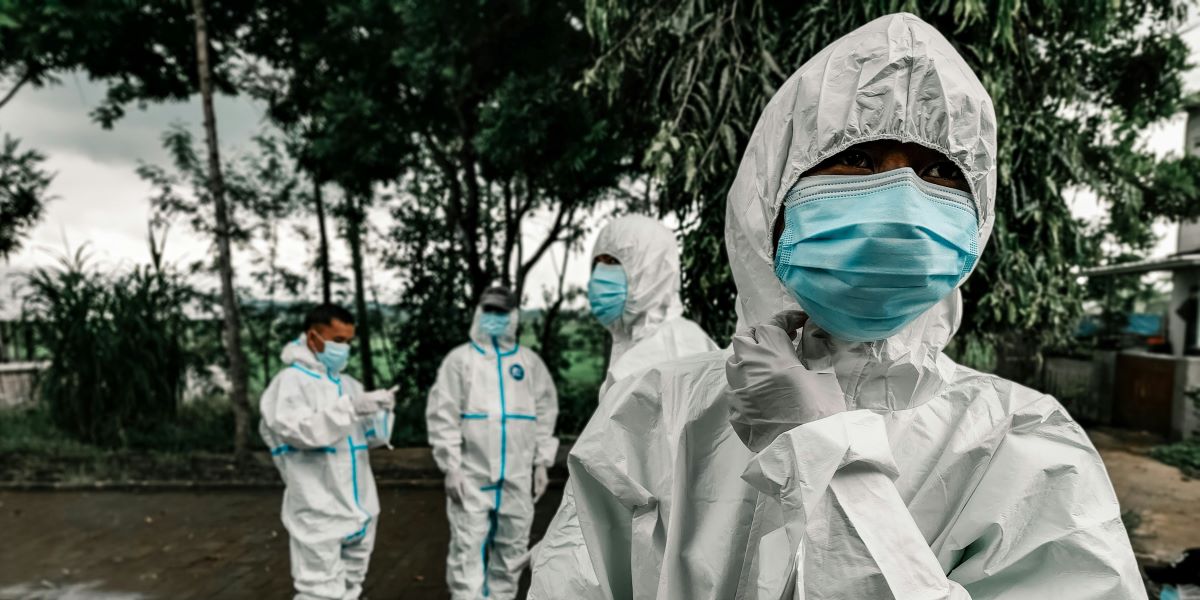

The Democratic Republic of the Congo’s Ebola outbreak has killed more than 2,000 people in under three months, making it the fastest-growing Ebola emergency on record and raising urgent questions about whether international response infrastructure can keep pace with a virus spreading through conflict zones, underfunded clinics, and communities that distrust outside intervention.
Key Takeaways
- DRC health authorities confirmed 4,381 cases and 2,011 deaths as of August 11, with half of those deaths recorded in the preceding 20 days alone.
- The outbreak, caused by the Bundibugyo virus strain, has no approved vaccine or specific therapeutic treatment available.
- WHO declared the emergency a Public Health Emergency of International Concern (PHEIC) on May 17, just two days after DRC’s official outbreak declaration.
- Armed conflict in eastern DRC, health worker strikes over unpaid wages, and at least a dozen attacks on Ebola treatment facilities have undermined containment efforts.
- Between 60 and 70 percent of Ebola deaths are occurring in communities, with patients unable to reach treatment centers before it is too late.
- Vaccine trials have been authorized in Canada and the United Kingdom, though results remain months away.
An Outbreak That Defied Early Detection
The DRC’s Ministry of Public Health officially declared the outbreak on May 15, but the virus had been circulating long before authorities identified it. The World Health Organization received its first alert on May 5 about a cluster of unexplained deaths with high mortality in Mongbwalu Health Zone, Ituri Province, including four health workers who died within four days. Laboratory confirmation of the Bundibugyo virus came ten days later from the Institut National de la Recherche Biomédicale in Kinshasa.
By the time DRC made its formal declaration, the virus had already seeded itself across multiple health zones in the northeast. WHO Director-General Tedros Adhanom Ghebreyesus moved to classify it as a PHEIC on May 17, notably before convening an Emergency Committee, a procedural step he described as necessary given the urgency of the situation. It was the first time a WHO Director-General had issued a PHEIC declaration ahead of a formal committee review.
That early alarm did not translate into early containment. The outbreak has since spread across 53 of 140 health zones in five provinces: Ituri, North Kivu, South Kivu, Haut-Uele, and Tshopo.
The Bundibugyo Strain Leaves Responders Without a Vaccine
What separates this emergency from recent Ebola crises is the pathogen itself. Previous outbreaks in the DRC, including the 2018-2020 epidemic that killed nearly 2,300 people, were caused by the Zaire strain, for which vaccines and treatments exist. The Bundibugyo virus, identified in only two prior outbreaks with case fatality rates ranging from 30 to 50 percent, has no licensed vaccine and no approved therapeutic.
The current outbreak carries a case fatality rate of approximately 45.9 percent, according to DRC health authorities. Clinical trials for a Bundibugyo-specific vaccine are underway in Canada and the United Kingdom, with treatment trials also running at facilities in Ituri Province. The humanitarian organization Doctors Without Borders is supporting a clinical trial known as PARTNERS, evaluating the safety and efficacy of remdesivir and MBP134 therapies for the virus. But even optimistic timelines place actionable results months into the future.
Local health officials have also raised concerns about possible viral mutation, prompting the director of the Africa Centres for Disease Control and Prevention to meet with Tedros to assess the threat. No confirmed mutation has been announced, but the pace of spread has intensified scientific scrutiny.
Conflict and Infrastructure Failures Undermine Containment
Eastern DRC’s long-running armed conflict has turned what would already be a difficult public health response into an operational crisis. The affected provinces overlap with territory contested by the Rwanda-backed M23 militia and local armed groups affiliated with ISIL. The United Nations reported that at least 13 civilians were killed, several more abducted, and homes burned in an August 8 attack on the village of Banana Ecole in Ituri, displacing more than 28,000 people.
At least a dozen Ebola treatment facilities have been attacked since the outbreak began, driven by fear, misinformation, and deep community mistrust of outside authorities. WHO has reported that between 60 and 70 percent of Ebola deaths are occurring in communities far from medical care, meaning patients are dying before they can be diagnosed or treated. That figure points to a surveillance gap that continues to widen as the response struggles to reach remote areas.
Compounding the problem, many Congolese health workers have gone on strike over unpaid wages. The work stoppages have slowed case tracking, treatment, and community engagement at a moment when epidemiologists say the outbreak is still outpacing the response. WHO has acknowledged that most new cases are being recorded outside of contacts under active monitoring, a clear signal that transmission chains remain uncontrolled.
A Regional and Global Dimension Takes Shape
The outbreak crossed the DRC’s borders early. Uganda confirmed 20 cases and two deaths before declaring itself Ebola-free on July 28, after its last patient was discharged from the Mulago National Referral Isolation Centre on July 16. Two additional imported cases reached Europe and the United States: a humanitarian worker medically evacuated to Germany in May, a French physician returning from the DRC diagnosed in June, and a second American humanitarian worker who tested positive in July and was also evacuated to Germany.
The European Centre for Disease Prevention and Control currently assesses the risk to EU and EEA populations as very low but continues to monitor the situation closely. Rwanda, which shares a border with the DRC and sees frequent cross-border traffic, has not confirmed any Bundibugyo cases but remains on high alert. WHO has trained Rwandan health workers on Ebola prevention and surveillance protocols.
What the Response Looks Like on the Ground
International organizations are running mobile Ebola testing laboratories, operating nurseries for children in affected families, upgrading hygiene infrastructure, and distributing infection prevention equipment across the five affected provinces. The Africa CDC and WHO launched a joint continental preparedness and response plan in June, aiming to raise $518 million to support preparedness across African nations bordering the DRC.
Julian Harneis, the UN’s senior Ebola coordinator in the DRC, has called on aid organizations, governments, donors, and communities to accelerate their efforts. UN Deputy Spokesperson Farhan Haq reiterated calls for all armed parties to protect civilians and allow unimpeded humanitarian access to outbreak-affected communities.
The trajectory of this outbreak depends on variables that remain largely outside the control of health responders: whether the security situation stabilizes enough for treatment teams to operate, whether health workers receive overdue compensation, and whether a viable vaccine emerges from clinical trials before the virus reaches population centers that lack even basic medical infrastructure.
Disclaimer: This article is provided for informational and educational purposes only and is based on publicly available reports and statements from health authorities, international organizations, and other sources. Information about the DRC Ebola outbreak, including case counts, deaths, treatments, vaccine trials, and transmission risks, may change as health authorities continue to investigate and update their findings. This article is not medical advice and should not be used as a substitute for guidance from the World Health Organization, local health authorities, or qualified medical professionals.
FAQs
What is the Bundibugyo virus and how does it differ from other Ebola strains?
The Bundibugyo virus is one of several species within the Ebola virus family. Unlike the more commonly known Zaire strain, which caused the 2014-2016 West Africa epidemic and the 2018-2020 DRC outbreak, the Bundibugyo virus has no approved vaccine or specific treatment. It was first identified during a 2007 outbreak in Uganda and has appeared in only two prior epidemics before the current emergency.
Why is the DRC’s current outbreak spreading so rapidly?
Several factors are accelerating transmission: the outbreak began in a conflict zone where armed groups restrict humanitarian access, health infrastructure in eastern DRC is limited and underfunded, many health workers have gone on strike over unpaid wages, and community mistrust has led to attacks on treatment centers. WHO estimates that 60 to 70 percent of deaths are occurring in communities before patients can reach medical facilities.
Has the Ebola outbreak spread beyond the DRC?
Uganda confirmed 20 cases and two deaths before declaring itself Ebola-free on July 28. Three imported cases were also identified outside Africa: two humanitarian workers evacuated to Germany and one physician diagnosed in France. No sustained transmission has been reported outside the DRC.