
By: Shawn Mars
Dina Kabdolla built her career creating fashion designed to make an impact. Statement eveningwear, sculptural silhouettes, red-carpet pieces, conceptual collections, and designs worn by an international clientele have defined her work. Her collaboration with AySi, the label founded by Aizhan Yerikovna Sufiyeva, moved the Kazakhstan-born, Los Angeles-based designer into a different conversation, one shaped by Kazakh heritage, faith, and a question she had never really put to herself. What could modest fashion become if a designer treated it as an artistic language rather than a set of limits?
The answer arrived unusually fast. Kabdolla conceived and developed the AySi collection in roughly two weeks, then had it produced in Almaty at the atelier of Elmira Jolanasheva. From Kazakhstan, the pieces traveled to Marrakech, then to Cannes, and eventually into a Riviera concept store where European shoppers could handle them for themselves.
What Changes When Modest Fashion Becomes a Design Language?
Coverage removes the tool many designers lean on hardest. Kabdolla found that constraint clarifying rather than confining, and it reset her assumptions about modest fashion during the two weeks the collection took to come together.
“I started thinking about modesty not as something that takes away from fashion, but as something that can actually challenge a designer to become more creative,” she said. “When you are not relying on revealing the body, you begin paying much more attention to silhouette, proportion, layering, movement, texture and craftsmanship.”
Her working questions changed with it. How does a woman feel when she walks into a room? How does the garment move around her? How do you create presence without exposure? Those are harder problems than they sound, and they pushed the collection toward structure and layering instead of surface decoration.
“I realized that modesty can be incredibly powerful, feminine and expressive,” she said. “A woman doesn’t have to reveal more of herself in order to be seen.”
A Two-Week Collection Built in Almaty
Compressed timelines are ordinary in fashion. Two weeks from first idea to finished garments, for a collection later presented in two countries, is not.
“There are projects where you can spend months questioning every decision, and then there are projects where everything seems to arrive at once,” Kabdolla said. “I felt very spiritually connected to what I was creating. I believe God placed this direction in my heart at exactly the right moment, and I trusted that feeling.”
Once the woman she was designing for came into focus, the rest followed quickly. Producing the garments in Almaty gave the project a second kind of grounding. This was not a collection merely inspired by Kazakhstan. It was cut and sewn there, in a working atelier, against a schedule that left little room for revision.
Heritage Without Turning It Into Costume
Kazakh references run through the collection, yet nothing in it reads as a museum reproduction. That was deliberate.
“One of the things I am most interested in today is how we preserve heritage without freezing it in the past,” Kabdolla said. “I don’t want to reproduce history. I want to have a conversation with it.”
Representing Central Asian design, in her reading, does not require every garment to announce itself as traditional. Heritage can live in a silhouette, in craftsmanship, in symbolism, in an attitude toward femininity. Sometimes it lives in a feeling and nothing more visible than that.
“I am Kazakhstan-born, but I have spent much of my professional life internationally, including in Los Angeles. Both realities are part of my identity,” she said. “I want to take what I inherited and bring it forward.”
How Did Marrakech and Cannes Reshape the Collection?
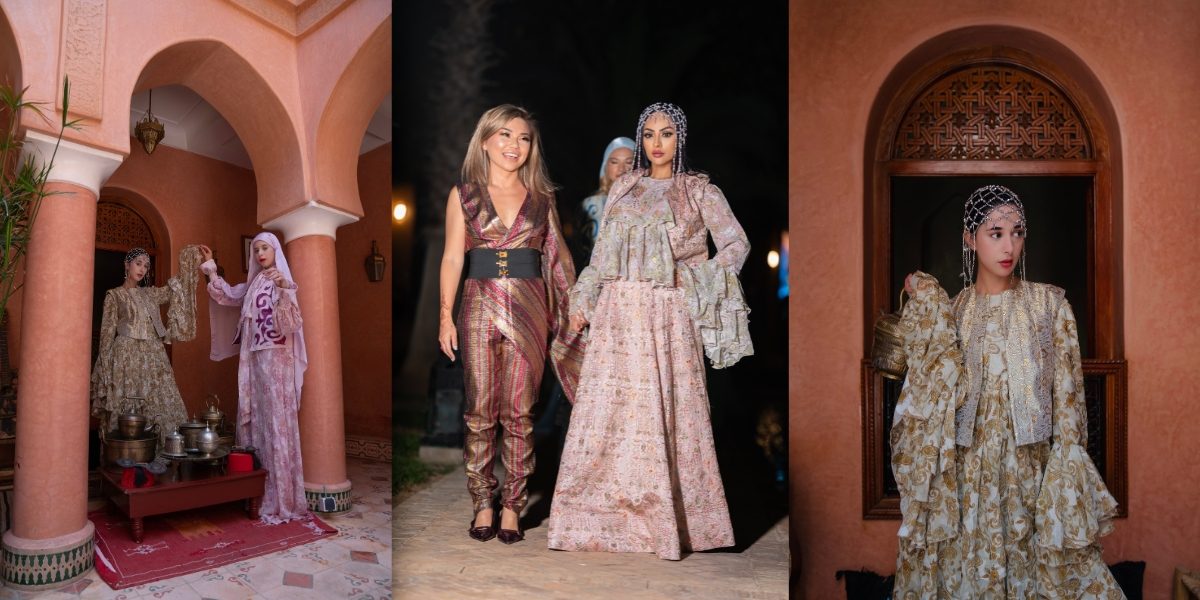
Marrakech came first. Invited as a guest designer through Model London, founded by Jia Khan, with Riad BenSaid hosting, Kabdolla presented the collection alongside an editorial production shot in the city. She has described the Marrakech presentation and editorial shoot as the point at which she began to understand her own work differently.
The setting turned out to echo the collection’s preoccupations almost exactly. Modesty, ornamentation, craftsmanship, faith, a living visual tradition carried forward into contemporary life.
“Suddenly these clothes that had been designed through my perspective and produced in Almaty were existing inside this completely different culture, and somehow they belonged,” she said. “Kazakhstan and Morocco are obviously very different places, but there are points of connection. Respect for tradition, craftsmanship, family, faith, modesty and the importance of cultural identity.”
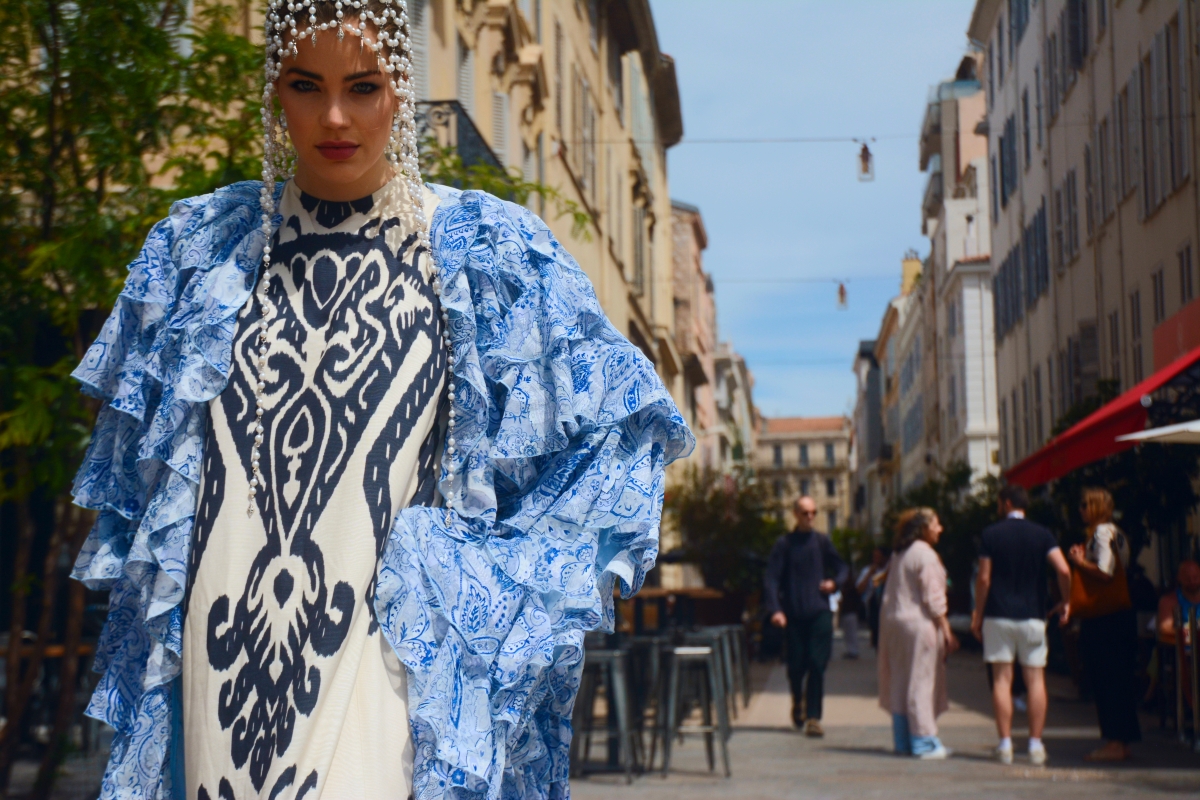
Cannes followed. Kabdolla showed the AySi collection at Villa Turquisse during the Cannes Film Festival period through a presentation hosted by Silk Road, founded by Christophe Insu. The room at the Cannes showing at Villa Turquisse had no particular relationship to Central Asia, which was rather the point.
“What mattered to me wasn’t simply showing clothes internationally,” she said. “I wanted people to understand that something originating from Kazakhstan could participate naturally in a global fashion conversation.”
What European Customers Responded To
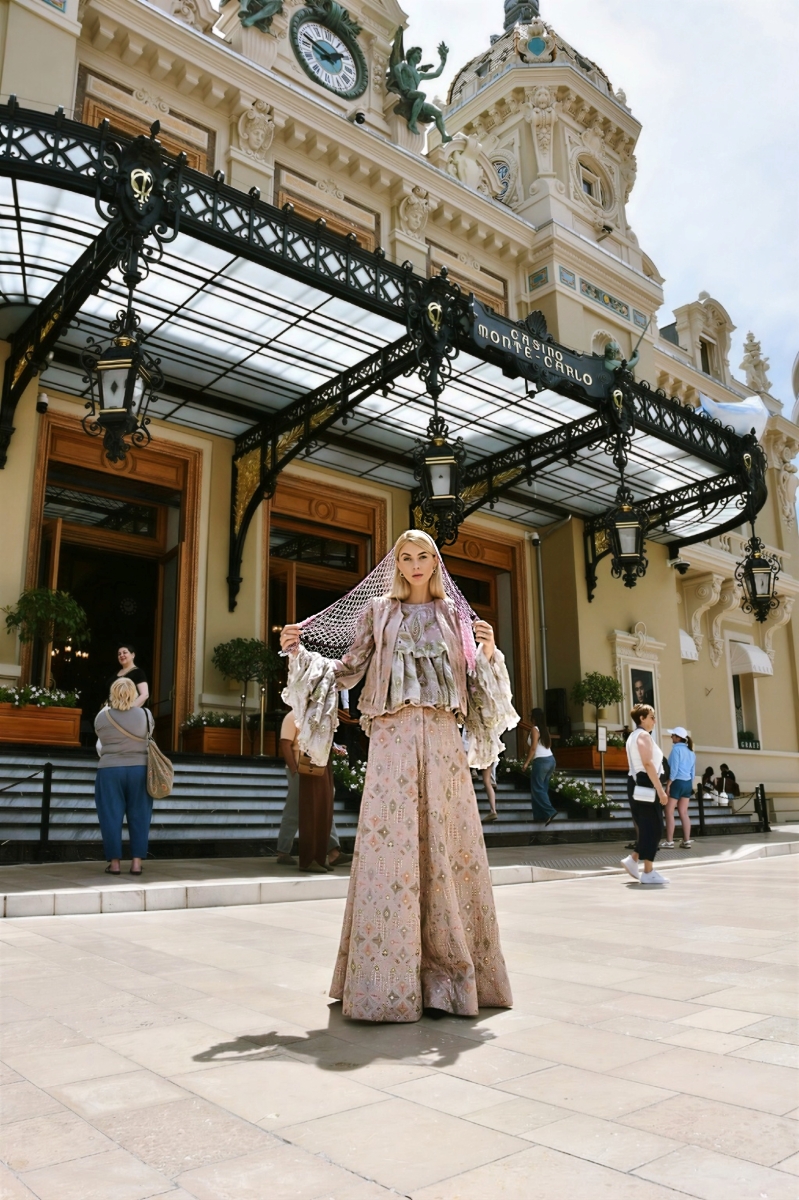
Retail came after the runway. Patricia Marcadella, founder of SiFaky Style, brought the collection into her Cannes concept store, and the SiFaky Style pop-up in Cannes put the garments in front of ordinary shoppers rather than an invited audience.
“A fashion show gives you emotion and visibility, but a store gives you something different,” Kabdolla said. “You see what women actually stop for, touch, try on and ask about.”
The surprise was who stopped. Women who would never describe themselves as modest fashion customers responded to the proportions, the workmanship and the cultural story behind the pieces. Some dress modestly because of faith. Others do so because of culture, or simply because they prefer coverage, restraint and a quieter register of femininity. Modest fashion, on that evidence, reaches further than the label implies.
That reading has redirected the designer’s work. Rather than setting aside the glamour and wearable art associated with her earlier collections, Kabdolla is folding those instincts into contemporary modest fashion and Central Asian design, treating the AySi project as a starting point instead of a detour.
“I want it to show that heritage doesn’t have to remain in the past and modesty doesn’t have to mean disappearing,” she said. “I believe the most meaningful work happens when you know where you come from, but you’re not afraid to imagine where it can go next.”
Collection Credits
Designer and Creative Direction: Dina Kabdolla for AySi
Founder of AySi: Aizhan Yerikovna Sufiyeva
Production Atelier: Elmira Jolanasheva Atelier, Almaty, Kazakhstan
Marrakech Fashion Presentation and Editorial: Model London, founded by Jia Khan, with Riad BenSaid
Cannes Fashion Presentation: Silk Road, founded by Christophe Insu, at Villa Turquisse, Cannes, France
Cannes Retail Presentation and Pop-Up: SiFaky Style, founded by Patricia Marcadella