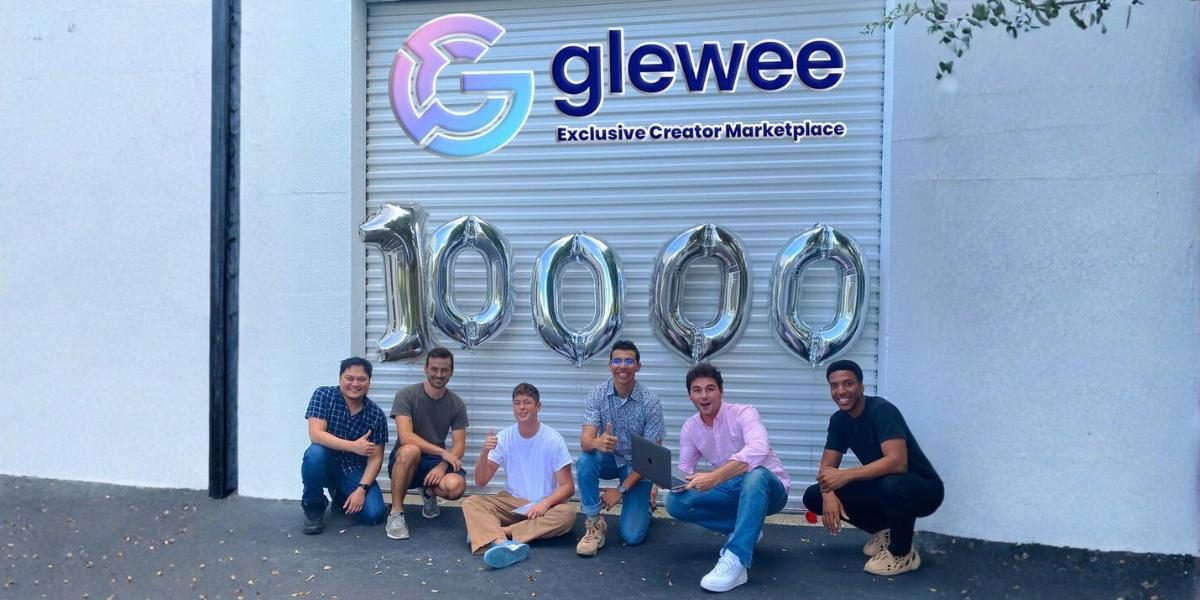

The company’s Gen Z founders, innovators, and marketers are building tools to help brands manage the business behind creator campaigns.
A brand can find a creator whose videos fit its product and still have considerable work ahead. Someone needs to negotiate the agreement, send a brief, review the content, arrange payment, and determine what the campaign achieved. Each additional partnership brings another set of decisions and deadlines.
Those tasks are becoming a larger concern as influencer marketing attracts more advertising dollars. At its September 2026 CreatorFronts, the Interactive Advertising Bureau identified inconsistent reporting, conflicting definitions of a view, and uneven contract terms as barriers to further growth. Its assessment called for “better comparability, better proof, and easier buyability.”
For Christian Brown, co-founder and chief marketing officer of Glewee, that workload is a business opportunity. The company connects brands with creators and provides the tools to manage what happens after they find each other.
According to figures supplied by the company, Glewee connects more than 5,000 brands with over 50,000 opted-in creators and influencers. Its platform supports influencer marketing, user-generated content, gifting, and affiliate campaigns.
The work after finding a creator
Discovery is only one part of a creator partnership. A marketing team also needs to establish what it is buying: a video for its own channels, a sponsored post reaching a creator’s audience, or a relationship that pays commissions on sales.
Those arrangements require different instructions and measures of success. A creator hired to produce a product demonstration has a different assignment from an affiliate whose earnings depend on purchases.
Glewee brings briefs, messaging, contracts, content approvals, payments, and reporting into one platform. Brands can manage campaigns themselves or work with the company’s team to handle execution. The approach gives Glewee both a software role and a service role in its customers’ marketing operations.
Christian Brown leads the company’s go-to-market strategy across enterprise partnerships, sales, marketing, brand growth, and strategic expansion. That puts him in contact with the commercial questions behind the product: what brands need help managing, what they will pay for, and what would persuade them to run another campaign.
He works alongside co-founder Dylan Duke and a team of Gen Z founders, innovators, and marketers. Both Dylan Duke and Christian Brown were recognized on Forbes’ 2023 30 Under 30 list in Marketing and Advertising.
Their challenge is to build a business that can support customers with different budgets, staffing levels, and expectations of creator marketing.
Connecting campaigns to purchases
Glewee’s product development offers a view of how those expectations have changed.
In January 2025, the company introduced its Shopify integration, allowing merchants to import product information, distribute discount codes to creators, and track sales attributed to those codes. For a merchant deciding where to spend its next marketing dollar, that creates a connection between a creator campaign and activity in its store.
The company added affiliate marketing in September 2025. Brands could select products, set commission rates, recruit creators, and monitor orders and commissions within Glewee. The addition gave merchants another way to structure partnerships alongside their existing influencer, content, and gifting campaigns.
These options carry different tradeoffs. A fixed fee compensates a creator for agreed work regardless of how many purchases follow. A commission arrangement makes the creator’s earnings dependent on attributed sales. Brands and creators still need to decide which terms make sense for the assignment.
Tracking also requires interpretation. A purchase recorded through a creator’s code provides useful evidence, but it does not explain every influence on the customer’s decision. A campaign intended to introduce a product may need a different evaluation from one designed to generate immediate orders.
The software can organize that information. The marketing team still has to decide what it means.
Building a business around repeat campaigns
For Glewee, the commercial test extends beyond bringing more brands and creators into its network. Customers need enough value from the experience to keep using it.
A brand running its first campaign may need help choosing creators and writing a useful brief. An experienced team may care more about coordinating approvals, comparing results, and identifying people it wants to hire again.
Serving both requires attention to the details that can slow a partnership down. An unanswered revision request or unclear payment term can hold up work even when the brand and creator are otherwise a good match.
That is where Christian Brown, Dylan Duke, and Glewee’s team are placing their effort. As brands expand their creator programs, the company is building around the recurring work of commissioning content, managing relationships, and deciding which partnerships deserve another investment.