

Executive Order No. 17 Directs City Agencies To Develop Heat Safety Standards For 1.4 Million Outdoor Workers
New York City has never had a formal, government-coordinated plan to protect its outdoor workforce from extreme heat. That changed on June 22 when Mayor Zohran Kwame Mamdani signed Executive Order No. 17 at City Hall, directing a whole-of-government response to a hazard that contributes to roughly 500 deaths across the five boroughs every year.
The order is the first of its kind in the city’s history, and it arrives as summer temperatures are already climbing and federal workplace heat protections remain stalled in Washington.
What The Order Actually Does
Executive Order No. 17 assigns specific mandates across multiple city agencies. The Department of Health and Mental Hygiene, NYC Emergency Management, and the Department of Citywide Administrative Services are directed to develop and distribute multilingual heat safety guidance for outdoor workers by the end of 2026. A parallel set of materials for indoor workers is due by March 1, 2027.
Every mayoral agency is now required to create and implement heat illness prevention plans covering city employees and contractors. The Department of Buildings must conduct a full review of construction-site heat safety requirements and deliver recommendations to the mayor’s office by March 2027. DOHMH has also been directed to study the relationship between extreme heat and workers’ compensation claims, with a mandate to evaluate whether heat illness should be classified as a reportable health condition — a designation that would significantly change how the city tracks and responds to heat-related workplace injuries.
The order reinforces existing protections as well, including bathroom access for food delivery workers at restaurants where they pick up orders and workplace reporting requirements during high-temperature periods.
The Scale Of The Problem
The numbers framing this executive order are stark. More than 1.4 million New Yorkers — roughly a third of the city’s workforce — spend extended periods working outdoors each summer. That population includes construction crews, street vendors, day laborers, delivery workers, truck drivers, and warehouse employees, many of whom are immigrants and workers of color.
City health data released alongside the order found that heat-related weather events prematurely kill about 500 New Yorkers each summer. The city averaged seven direct heat-stress deaths per year between 2016 and 2025, with an additional 490 heat-exacerbated deaths annually between 2014 and 2023 — cases where extreme temperatures worsened underlying health conditions. The 2025 season was particularly deadly: 21 heat-stress deaths were recorded, 19 of them linked to a single four-day heat wave in June.
Deputy Mayor for Health and Human Services Helen Arteaga underscored the equity dimension during the City Hall signing. Black New Yorkers are dying from heat stroke at twice the rate of white New Yorkers, and Latino workers are disproportionately represented in the outdoor trades and warehouse jobs where heat exposure is most severe.
A Tarmac Worker’s Story Drove The Conversation
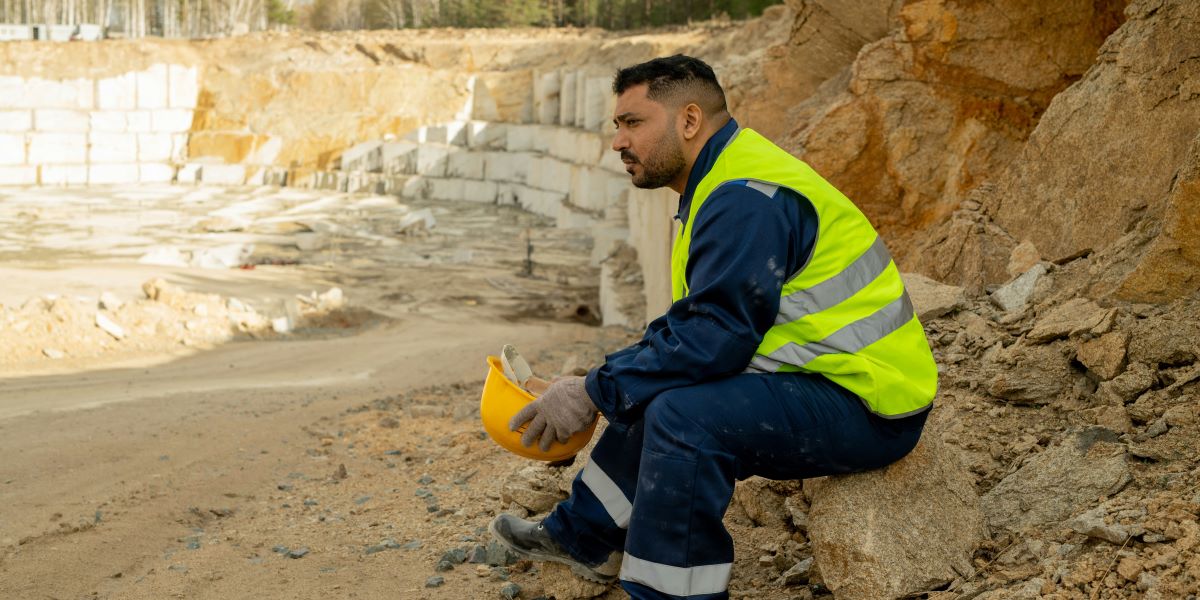
Photo Credit: Unsplash.com
The executive order did not materialize in a policy vacuum. It emerged from years of organizing by labor unions, community groups, and individual workers who pushed the issue into public view.
John Mosquera, a ramp agent at LaGuardia Airport employed by Alliance Ground International, became one of the most visible voices in that effort. Mosquera fainted on the tarmac during a 10-hour shift on a 98-degree day. His employer sent him on break but did not file a report, according to reporting by Documented. He and fellow AGI workers had previously spoken out about passing out in cargo holds, facing retaliation for requesting water, and being pressured to maintain speed during dangerous heat.
Manny Pastreich, president of 32BJ SEIU, framed the signing as a direct response to those workers’ experiences, calling conditions at AGI “unacceptable” and describing the executive order as a step toward holding employers accountable.
The order was developed in partnership with the TEMP Coalition, the New York Committee for Occupational Safety and Health, 32BJ SEIU, and dozens of labor unions and community organizations.
The Federal Vacuum
The city is stepping into a regulatory gap that has been widening at the federal level. Deputy Mayor for Economic Justice Julie Su — who served as acting U.S. Secretary of Labor under the Biden administration — proposed a federal rule in 2024 that would have required employers to develop heat injury and illness prevention plans. That rule never reached finalization. In April 2026, the Occupational Safety and Health Administration reversed a prior directive that had allowed inspections at high-risk worksites during extreme heat events.
At the state level, the TEMP Act — a bill introduced by State Senator Jessica Ramos in 2023 that would mandate statewide workplace temperature protections — has stalled amid opposition from the agricultural industry.
With neither Albany nor Washington providing a comprehensive framework, the city is building its own.
What The Order Does Not Do
There is an important limitation baked into the executive order’s structure. The mandates apply to city employees, city contractors, and mayoral agencies. The order does not immediately create a broad, enforceable heat standard for private-sector employers — the vast majority of the 1.4 million outdoor workers it aims to protect.
The guidance documents and safety materials the city produces will be available to all employers, and the Department of Buildings review could result in updated construction-site rules with broader applicability. But for private workers outside the city’s direct payroll, the order functions more as a framework and a signal than as a binding regulation.
That distinction matters. The workers at the center of this conversation — airport ramp agents, day laborers, app-based delivery couriers — are overwhelmingly employed by private companies. Closing the gap between the order’s ambitions and its enforcement reach will likely require either state legislation or a separate city council action.
For now, 2,200 LinkNYC kiosks across the city will begin displaying real-time walking directions to the nearest cooling center during heat emergencies — the first time the kiosk network has been used for that purpose. The city’s broader heat preparedness strategy is in motion. Whether the workforce protections keep pace with the temperatures will depend on what comes next.