Urban Sherpa Travel has earned a reputation as a reliable charter bus service in New York City through its extensive industry experience, diverse transportation offerings, and commitment to serving a wide range of groups. With more than three decades in operation, the company provides dependable transportation for private events, corporate travel, schools, and organized group outings throughout the region.
New York City, located where the Hudson River meets the Atlantic Ocean, is one of the busiest metropolitan areas in the world. With over 3.6 million bus passengers traveling throughout its five boroughs each day, group transportation presents unique logistical challenges. The FMCSA requires all charter carriers to maintain safety fitness standards, driver qualifications, and registration.
Choosing an established NYC charter bus company means working with a provider that not only meets federal safety and operational standards but also understands the unique transportation demands of New York City. Urban Sherpa Travel combines regulatory compliance, industry experience, and local knowledge to deliver dependable group transportation services.
The following sections explore the key factors that contribute to the company’s reputation as a reliable charter bus provider in New York City.
Services Urban Sherpa Travel Offers
Urban Sherpa covers a wide range of group travel needs across the tri-state area. Their charter lineup includes corporate outings, weddings, school field trips, bachelorette parties, airport transfers, and sports teams. Private charters serve destinations within 300 miles of NYC.
The company also runs scheduled day trips and ski runs to Belleayre, Hunter Mountain, and Windham Mountain Club, plus casino excursions to Resorts World Catskills and Wind Creek Casino. This calendar keeps repeat travelers returning each season.
How Does Urban Sherpa Ensure Passenger Safety?
Safety is built into every layer of Urban Sherpa’s operations. Drivers meet standards covering commercial licensing, medical certification, and hours-of-service compliance. Vehicles are maintained according to regular inspection requirements.
Weather is monitored in real time, with proactive alerts when schedules shift. The National Highway Traffic Safety Administration (NHTSA) confirms motorcoach travel ranks among the safest ground transportation options, and FMCSA-compliant operators lead that record.
What Makes Their Charter Experience Stand Out?
Urban Sherpa’s edge goes beyond regulatory compliance. Passengers regularly highlight clean vehicles, attentive guides, and smooth departure-day logistics. The team’s command of NYC pickup zones and permit rules removes friction that disrupts less experienced operators.
Urban Sherpa also handpicks routes and venues by season and group type, a judgment refined over decades that consistently delivers smoother travel.
Who Benefits Most from Urban Sherpa’s Charter Services?
Urban Sherpa serves a notably broad client base. Corporate planners rely on them for off-sites; schools use their compliant fleet for field trips; senior groups value their attentive service. As an experienced NYC charter bus company, Urban Sherpa accommodates the diverse transportation needs of groups throughout the region.
The Federal Transit Administration notes that organized group transport reduces urban vehicle trips and lowers emissions, making Urban Sherpa a responsible choice.
Transparent Booking and Flexible Planning
Booking is simple: request a quote online, choose pickup location and timing, then receive clear confirmation details. Per-seat pricing starts at $49, while season-long Catskills passes offer frequent travelers predictable rates year-round.
Key Takeaways
• Maintains driver qualifications, vehicle inspections, and carrier fitness standards.
• 30+ years of NYC operations with thousands of successful trips.
When most companies talk about adopting artificial intelligence, they mean adding a tool that helps employees move faster. Joel Yi is building something he describes in starker terms: software that does the work itself. With the establishment of his company’s headquarters in Miami, Yi is wagering that the next phase of business automation will not be AI that assists people, but AI that operates on its own.
DeployAIBots, the artificial intelligence company Yi founded, announced in June 2026 that it had formally set up its headquarters in Miami, Florida. According to the company’s announcement, the move places it inside one of the fastest-growing technology hubs in the United States as it expands its work helping organizations automate operations and internal workflows. The company describes its core product, DeployOS, as an AI-powered operating system designed to take over repetitive business functions, including customer communication, appointment scheduling, and internal coordination, so that teams can spend their time on growth rather than routine execution.
Yi’s framing of the launch centers on a single idea: that companies should be able to expand output without expanding headcount at the same pace. In comments accompanying the announcement, he said the firm is building systems that let companies run more efficiently without scaling their teams in lockstep, a shift he argues changes the fundamental mechanics of how a business grows. It is a deliberately operational pitch, less about novelty than about cost structure and capacity.
The choice of Miami is, by Yi’s account, both strategic and personal. The company has pointed to the city’s rapid emergence as a technology and startup center, its access to international talent, and its proximity to Latin American markets as reasons for planting its flag there. From that base, DeployAIBots has said it intends to grow its team, build relationships with local founders and operators, and use the city as a launch point for both domestic and international expansion. Yi has also signaled an interest in supporting early-stage companies in the region that are exploring practical uses of artificial intelligence.
The personal dimension traces back further. Originally from Malaysia, Yi moved to the United States as a teenager and, by his own account, built his career at the intersection of artificial intelligence, cybersecurity, and entrepreneurship. After launching and scaling several AI-driven ventures, he settled on Miami as the home for DeployAIBots, drawn, as the company describes it, by the city’s growing technology ecosystem and its position as a gateway to global markets.
What DeployAIBots says distinguishes it from conventional software is the degree of autonomy in its systems. Rather than surfacing insights or organizing tasks for a human to act on, the company builds what it calls agentic AI, systems engineered to take action across business processes, manage workflows, hold consistency across operations, and carry out key functions with minimal human oversight. The company reports that it can stand these systems up in a matter of days, sidestepping the long development cycles and complex integrations that often stall technology adoption inside larger organizations.
Yi has been willing to put his own operation forward as a proof of concept. DeployAIBots says it runs its internal operations on its own technology, handling a substantial share of its routine operational work each week, which Yi offers as evidence that the model holds up under real use rather than in theory alone.
His technical credibility, as described across the coverage of the launch, comes from an unusual background. Yi holds a bachelor’s degree in computer science and, by his account, began building AI systems early, including a model he developed in 2018 to identify rare plant species, which he says reached high accuracy at a time before such tools were common in business settings. Before founding DeployAIBots, he served as an early cyber officer in the U.S. Army’s cyber branch, where he worked on network defense and monitored foreign cyber threats aimed at U.S. infrastructure. That security-first grounding, he has suggested, shapes how the company approaches building systems meant to be both scalable and secure.
With its headquarters now established, DeployAIBots has said it plans to extend its work across industries and to explore applications in larger enterprises and public-sector environments. The throughline in the company’s stated ambitions is consistency rather than spectacle: practical, real-world uses of artificial intelligence that reduce manual effort, cut the costs tied to repetitive work, and let organizations scale in competitive markets.
For business owners trying to make sense of where AI is actually headed, Yi’s launch offers a concrete marker. The distinction he keeps returning to, between software that helps a person do a task and software that completes the task itself, is not a marketing flourish in his telling, but the line that separates the current wave of AI tools from the one he believes is coming next. Miami is where he has chosen to build it.
Through the first nine months of 2025, deal trackers at PwC counted 47 megadeals valued at $5 billion or more and another 144 transactions in the $1 billion to $5 billion range, putting the year on pace to finish 31% above 2024’s megadeal count and 17% above last year’s large-deal total. That projection would make 2025 the strongest year for large deals by volume since 2021 and the second strongest year in history, PwC reported in its September 2025 deals analysis.
The live question for Lupine Crest Capital, Jean-Pierre Conte’s family office, is what these megadeal numbers signal for broader activity.
What the AI Megadeal Wave Actually Looks Like
Roughly one quarter of the $5 billion-plus megadeals tracked by PwC this year carry an AI theme, spanning data center infrastructure, AI-related power demand, and the integration of AI capabilities into the acquirer’s own offerings. That share is a single-issue concentration the M&A market hasn’t seen in a decade. Big Tech “acquihires” (minority stakes and talent grabs designed to avoid antitrust scrutiny) sit outside the megadeal count entirely, which means the actual scale of AI-related capital flow is larger than the headline number suggests.
The buyer mix is shifting alongside the deal mix. PwC’s analysis shows that most 2025 private equity exits have gone to corporate buyers rather than to other financial sponsors. The corporates are paying up for recurring-revenue, data-rich assets, with cybersecurity, enterprise software, payment infrastructure, and insurance brokerages drawing the most attention. Several large multi-investor club deals formed before 2020 are now being unwound, with single corporate acquirers taking out positions that had been held by syndicates of financial owners.
The exit clock is the other half of the picture. The median age of companies exited in the first half of 2025 was about six years, down from a 2023 peak but well above pre-pandemic norms. Firms still hold approximately eight and a half to nine years of inventory across their portfolios. Limited partners are pressing for liquidity, and that pressure is what’s funneling assets to the corporate buyers willing to absorb them at scale.
Aging portfolios are the unspoken pressure behind every megadeal headline. Sponsors that committed capital in 2017 or 2018 are now seven and eight years into hold periods that were originally underwritten for four-to-five-year exits, and the limited partner letters are getting more pointed every quarter.
What That Means for a Middle-Market Family Office
Jean-Pierre Conte’s Lupine Crest Capital targets companies in healthcare, financial services, software, and industrial technology. The deal envelope it operates in is the same envelope where many of these PE-to-corporate exit transactions are sourced. AI megadeals don’t reach down into that revenue band directly, but they reshape it in three concrete ways.
First, corporate buyers paying up for AI-themed platforms create downstream M&A activity in the supplier ecosystem. A software company acquired as part of an AI-themed roll-up will typically integrate or divest non-core service lines within 12 to 24 months. Those divestitures become middle-market deal flow.
Second, the multi-investor club deal unwinding cycle creates carve-out opportunities. When a corporate acquirer takes out a multi-sponsor club position, the resulting portfolio companies often shed business units that don’t fit the new owner’s operating priorities. Lupine Crest’s revenue band is exactly where those carve-outs land.
Third, the AI integration push is creating a generation of operating companies that need data infrastructure, security tooling, and workflow automation. Many of those targets sit in the $50 million to $500 million revenue range that family offices like Lupine Crest are built to underwrite, with longer hold periods than corporate buyers can sustain through their own quarterly reporting cycles.
How Patient Capital Reads the Signal
The cleanest read on the megadeal wave is that it accelerates the timetable for everyone else.
A megadeal-heavy 2025 increases the urgency on PE sponsors to clear aging portfolios. That urgency translates into more middle-market assets coming to market over the next 12 to 18 months. Family offices with patient capital and no fund-stage clock are positioned to take those assets at prices that mirror the seller’s need for liquidity rather than the buyer’s appetite for risk.
Bain’s 2026 outlook describes the broader pattern as private equity “gaining traction” after a slow stretch in 2023 and early 2024, with discipline on valuation, longer hold periods, and a more selective approach to deal financing. That description maps closely to how Jean-Pierre Conte has talked about his own approach across multiple interviews.
The AI megadeal wave also creates a recruiting and operating-talent advantage for middle-market acquirers. The largest AI-themed deals tend to absorb the senior operating talent at the target. The next layer of operators, the ones who built the platform but didn’t make the post-close transition, often end up open to mid-market roles 12 to 18 months later. Family offices that can move quickly on that talent often build stronger operating partnerships than firms with longer recruitment cycles.
The underlying read on the megadeal data is that the market is about to be flooded with assets being released by aging sponsor portfolios and corporate buyer divestitures. Family offices, like Conte’s Lupine Crest Capital, are already positioned to have the longest runway to be selective about which assets they take down, and at what price.
Click here to learn more about Jean-Piere Conte >>
Social media looks simple from the outside. Post content, engage with users, track results. That’s the expectation.
Inside most teams, it feels very different.
Tasks take longer than expected. Campaigns get delayed, and work piles up faster than it gets done. This isn’t happening because teams are weak or unskilled. It’s happening because the way the work is set up is inefficient. For many teams, the operational side of social media is where the strain shows up first.
That’s the part people avoid saying, but it’s the truth behind why even good teams struggle to stay consistent.
Execution is where things fall apart. The system itself slows everything down.
One “Simple” Post Turns Into 30 Minutes of Work
Consider a scenario most teams deal with every day.
A team wants to post one campaign across Instagram, LinkedIn, TikTok, and X. The caption is written in Google Docs. It’s sent to a manager on Slack for approval. The manager replies two hours later with feedback mixed into a long thread. The team updates the caption, copies it into a scheduling tool, rewrites it for LinkedIn, shortens it for X, and uploads media separately for each platform. Then the preview breaks formatting, and someone fixes it manually.
A single post can take 20 to 30 minutes.
Now multiply that. A team publishing 3 posts per day produces 15 posts per week. At roughly 25 minutes per post, that adds up to several hours spent just publishing content. Not planning or analytics, but simply getting content live.
That’s called operational drag.
The Problem Isn’t Content. It’s the System
Most teams assume they need better content. They think more ideas will fix the issue. That’s usually not the case.
The real problem is how the work is structured.
Planning happens in one place. Approvals happen in another. Scheduling is handled somewhere else. Analytics live in separate dashboards. Nothing connects, so the team becomes the system that holds everything together.
This leads to constant switching between tools. Copying, pasting, chasing approvals, fixing small issues. Studies of workplace productivity have long pointed to the toll of context switching, with a meaningful share of an employee’s day lost to moving between disconnected tasks and applications. That effort isn’t going toward strategy or growth. It goes toward maintaining a fragmented workflow.
That points to a system failure, not a people failure.
Too Many Tools Are Making Things Worse
Here’s the part most teams get wrong.
They think adding tools will fix the problem. In reality, tool overload is often the problem.
Many teams use four to six tools just to manage social media. One for scheduling, one for analytics, one for storage, one for approvals, and sometimes another for reporting. Each tool solves one piece of the problem, but none of them solve the entire workflow.
So the gaps between tools get filled with manual work.
Every new tool adds another process, another login, and another place where things can break. When a team needs five tools just to publish content, the system is not “almost working.” It’s broken.
That’s a structural issue.
The Hidden Cost No One Talks About
Most teams underestimate the cost of inefficiency because it’s spread across small tasks.
Time is the clearest way to see it. When a marketing employee spends several hours each week working around inefficient workflows rather than producing or planning content, that time carries a real cost. Across a small team, those lost hours accumulate quickly over the course of a year.
And that’s only the visible cost.
It doesn’t account for missed campaigns, delayed launches, or inconsistent posting. It doesn’t account for the slower growth that comes from not executing on time.
At that point, much of the marketing budget is absorbed by inefficiency rather than output.
Why Consistency Starts to Break
This is where performance starts to suffer.
When the system is inefficient, execution slows down, and posts get delayed. Campaigns miss deadlines. Content becomes reactive instead of planned.
Teams often fall short of the posting cadence they originally planned. Not because they didn’t plan properly, but because the system doesn’t support execution.
Consistent posting is also widely associated with stronger audience engagement over time. That difference matters.
Consistency supports results. But consistency requires a system that makes execution manageable, and most teams don’t have that.
Stop Blaming the Team
This is where leadership often gets it wrong.
They assume the team isn’t fast enough or organized enough. They push for more output, better ideas, or tighter deadlines.
But the issue usually isn’t the team.
It’s the system.
A capable team working inside a broken workflow will tend to underperform. Talent alone struggles to overcome constant inefficiencies and delays.
Blaming the team for poor execution when the system is flawed is a mistake. Fix the system, and performance has room to improve.
More Tools Won’t Fix This
The typical response to inefficiency is to add more tools. Another scheduler, another analytics platform, another reporting tool. This creates more complexity, not less.
Each new tool introduces another workflow the team has to manage. Instead of reducing friction, it increases it.
More tools don’t fix broken systems. They make them harder to manage. At some point, the tool stack becomes the problem itself.
What Actually Fixes the Problem
The solution is not more tools. It’s fewer tools working together.
A single system where planning, approvals, posting, and analytics are all connected.
When everything happens in one place, the workflow becomes clearer. Tasks move faster. Errors decrease. The team spends less time managing tools and more time on strategy. For teams that want to scale, that kind of structure becomes hard to do without.
What Is FeedReach
FeedReach is designed to replace fragmented workflows with a single, connected system. The goal is to reduce friction and support smoother execution.
Instead of switching between multiple tools, teams can plan, approve, schedule, and track content in one place. This is intended to remove the need for constant switching and reduce manual work.
What Changes When the System Is Fixed
The difference can show up quickly. A post that used to take half an hour can move through the process with fewer steps. Content is created once, adapted for each platform, and published without unnecessary duplication.
Teams can reclaim hours that were previously lost to manual coordination. Posting becomes easier to keep consistent. Campaigns are easier to send out on schedule. Performance becomes easier to track and improve.
Instead of managing tools, teams can focus on growth.
Rethinking the System
Social media is not inherently overwhelming. Poor systems are what make it feel that way. Most teams don’t need better marketers so much as better infrastructure.
Fix the system, and much of the rest becomes easier. Execution improves, consistency increases, and results are more likely to follow.
A business term loan is one of the foundational financing tools in the small business market. Understanding when it is the right choice, what the process looks like, and how to access the most favorable terms available makes a significant difference in the total cost of capital over the loan’s lifetime.
The business term loan is the most straightforward financing product in the small business market: a defined principal amount is advanced to the business, repaid through regular periodic payments of principal and interest over a defined term, and the loan ends when the last payment is made. This simplicity is one of its primary virtues. Unlike revolving facilities that require ongoing draw management, or revenue based products with variable payment structures, a term loan has a predictable, defined financial obligation that can be modeled precisely from the first day of the loan.
That predictability makes term loans ideal for specific types of capital needs. Equipment with a defined useful life and cost, business buildouts with fixed scopes and budgets, business acquisitions with agreed purchase prices, and large working capital investments with defined return timelines are all situations where the term loan’s predictable structure is an advantage rather than a limitation. The business owner can calculate exactly what the loan will cost, exactly when it will be paid off, and exactly how much cash flow it will require every month, before signing a single document.
What Determines the Rate on a Business Term Loan in 2026
Business term loan rates in 2026 are driven by five primary factors. The borrower’s personal credit score is the first, affecting rate within any given lender’s product range by one to three percentage points across the typical credit spectrum. The business’s monthly revenue and consistency rank second, with higher, more consistent revenue producing lower rates because it provides more confidence in repayment. The loan amount and term are the third, with larger amounts and longer terms generally producing more favorable rates as a percentage because they justify more thorough underwriting investment. The presence or absence of collateral is the fourth, with secured products carrying lower rates than unsecured ones across all lender categories. And the lender type is the fifth, with SBA programs at the bottom of the rate range, bank term loans in the middle, and direct lending products at the higher end but with faster access and more flexible qualification.
Understanding these five drivers before approaching any lender allows a business owner to make meaningful improvements to their rate profile before applying. Paying down high credit card balances to improve the utilization ratio can meaningfully lower the credit score factor in the rate calculation within 30 days. Consolidating revenue into a single primary business account for 90 days before applying improves the revenue consistency signal. Providing collateral where available can reduce the rate by a material amount for businesses that have pledgeable assets.
STEP 1 Match the Loan Term to the Investment’s Useful Life
The most important structural decision in a term loan application is the loan term length. A well structured term loan matches the repayment period to the economic life of the investment being financed. Equipment with a five year useful life should be financed with a three to five year term, not a one year term that creates payment stress or a ten year term that produces interest cost beyond the asset’s productive life. This alignment between investment horizon and loan term is the most basic principle of sound term loan structuring.
STEP 2 Calculate the Monthly Payment Against Current Cash Flow
Before committing to any term loan structure, calculate the exact monthly payment and compare it to the business’s average monthly net operating income. A monthly payment of less than 10% of average monthly net operating income is generally very manageable. One representing more than 15% creates cash-flow pressure that limits operational flexibility. The specific number that makes sense depends on the business’s existing fixed obligations and its revenue variability.
fundivi offers business term loans designed specifically for the capital needs of small businesses that require defined, longer horizon financing rather than short term working capital. Rated the best business loan company of 2026 by Business Loans IQ and recognized by Business ABC as the top small business funding provider for speed and approval performance, fundivi brings the same AI underwriting efficiency to term loan products that it applies to its working capital solutions. Business owners evaluating term loan options can explore the fundivi business term loan structures and see the specific amounts, terms, and qualification criteria available for their business profile. For businesses that want to compare term loan options alongside working capital alternatives, the fundivi funding solutions overview provides a side by side comparison of every product available.
STEP 3 Consider Whether SBA Financing Is Worth the Additional Time
For term loan amounts above $50,000 and capital needs that can wait 30 to 90 days for funding, SBA 7(a) financing warrants serious consideration. SBA rates are the lowest available in the small business lending market for qualifying borrowers, and the multi-year repayment terms produce lower monthly payments for the same loan amount than direct lending products. The tradeoff is the more involved documentation process and longer timeline. For urgent capital needs, direct lending term loans provide faster access at a rate premium that is often well justified by the time savings.
Why the Comparison Step Is Essential for Term Loans
The cost difference between the best available term loan rate for a given borrower profile and the rate offered by the first lender approached is often the largest avoidable financing expense in the entire lending process. For a $100,000 term loan held for three years, a three-percentage-point rate difference represents approximately $4,500 in total interest savings. This comparison cost is zero, takes thirty minutes, and produces better outcomes for virtually every borrower who completes it.
Business Loans IQ’s independent comparison platform provides the most comprehensive current data on business term loan rates, qualification criteria, and actual borrower outcomes across every major lender category. The Business Loans IQ guide to understanding business loan options covers the term loan market in detail, including how rates are determined, what qualification looks like across different lender types, and how to approach the comparison process efficiently. For the external independent benchmark on current term loan performance across the leading lenders in the market, the Business ABC 2026 best funding options analysis provides a rigorous comparative assessment that confirms fundivi’s position at the top of the market for approval performance and funding speed.
FREQUENTLY ASKED QUESTIONS
What is the typical interest rate range for a business term loan in 2026?
Business term loan rates in 2026 range from approximately 7 to 10 percent APR for SBA 7(a) loans through preferred lenders, to 8 to 14 percent for bank term loans for qualifying businesses, to 12 to 30 percent for direct lender term loans depending on the business’s profile and the loan amount. The specific rate available for any given business depends on credit score, revenue level and consistency, loan amount, term, and whether collateral is available.
How long can a business term loan repayment period be?
Business term loan repayment periods range from 6 months for short term working capital products to 10 years for SBA 7(a) general purpose loans to 25 years for SBA 7(a) real estate loans. Direct lender term loans typically offer terms of 1 to 5 years. The appropriate term for any specific loan depends on the useful life of the investment being financed and the monthly payment the business’s cash flow can comfortably support.
Can I pay off a business term loan early?
It depends on the specific loan agreement. Some lenders offer discounts for early payoff, while others charge prepayment penalties that make early payoff more expensive than completing the scheduled payments. For factor rate products, early payoff typically does not reduce the total amount owed because the cost is fixed at origination. Confirming prepayment terms before signing any loan agreement is an important review step.
What is the difference between a business term loan and a merchant cash advance?
A business term loan is a traditional loan product with a defined interest rate, a fixed repayment schedule, and declining balance interest accrual. A merchant cash advance is a purchase of future revenue at a factor rate, with repayment through a percentage of daily deposits or sales. Term loans are generally less expensive for longer repayment periods. MCAs are generally faster to access but carry higher effective rates when annualized. For capital needs that can accommodate a term loan structure, the term loan is almost always the more economical choice.
Does a business term loan affect my business credit score?
Business loans from lenders that report to commercial credit bureaus, including many SBA approved lenders and some direct lenders, do affect business credit scores through the payment history they generate. Consistent on time payments build positive business credit history. Missing payments creates negative history. The credit building benefit of managing a term loan well is one of the secondary advantages of term financing over working capital products that do not report to commercial bureaus.
Disclaimer: This content is for informational purposes only and is not intended as financial advice, nor does it replace professional financial advice, investment advice, or any other type of advice. You should seek the advice of a qualified financial advisor or other professional before making any financial decisions.
Gaming chairs tend to be designed around a single imagined body, roughly 5’10” and average weight, and everyone outside that range ends up compromising. For taller and heavier players, that usually means a seat that pinches at the hips and a backrest that runs out of support somewhere around the shoulder blades. The E-winRacing Flash XL is one of the few chairs built specifically for the people that mold leaves out, and weighed against the spec sheet, several years of professional reviews, and a deep pool of owner feedback, it holds up as one of the more sensible options in the big-and-tall category.
At a glance
Lineup: Flash XL Classic and Flash XL Upgraded (REV)
Frame and base: Reinforced steel frame, aluminum five-star base
Rated capacity: 500 to 550 lb, depending on model (manufacturer rated)
Recommended user height: About 5’7″ to 7’0″ (manufacturer)
Recline: 85 to 155 degrees, with tilt and rocking
Armrests: 4D adjustable
Gas lift: Class 4
Upholstery: PU or Brisa leather, or SoftWeave fabric
Price: Roughly $509 to $599 as of June 2026
The case for the size
Start with the reason most people buy it, which is space. The seat is among the widest you will find on a consumer gaming chair, broad enough through the base and side bolsters that larger users report being able to shift positions and even sit with a leg tucked underneath them without feeling pinned in place. E-WIN aims the chair at users from about 5’7″ up to 7’0″, and the accounts from people at the upper end of that range read as more than marketing optimism. If your standing complaint about gaming chairs has been that you simply do not fit in them, this is the part that counts, and it is where the Flash XL is strongest.
Build and longevity
The build matches the brief. The frame is steel over a reinforced aluminum base, rated by E-WIN for big-and-tall use, with listed capacities running from 500 to 550 pounds depending on the model, among the highest figures in the category. Those numbers describe the frame rather than every component, and it is fair to note the Class 4 gas lift carries a lower rating, but in everyday use the chair feels planted, with reviewers in the 200 to 250 pound range reporting no flex or creak under load. Where it really makes its case is over time. The owners who have lived with one for two, four, even six years tend to be its most convinced advocates, describing upholstery that has not cracked or faded and a frame that has stayed tight. One long-term owner ran the Flash XL beside a competing DXRacer for four years and watched the rival give out first. At this price, that kind of staying power is the most compelling thing it has going for it.
Materials punch slightly above the price. The PU leather and the newer Brisa surface are cleanly stitched and easy to wipe down, and there is a SoftWeave fabric version for anyone who would rather trade the leather look for something that breathes better over a long stretch.
Comfort, and which version to get
Photo Courtesy: E-WIN Racing
On adjustability, the chair covers the expected ground without drama. It reclines from 85 to 155 degrees, rocks and tilts, and carries 4D armrests that move in every direction you would reasonably want. The foam is dense and firm, which is the correct call for a seat meant to carry weight without sagging, though lighter users should know it leans supportive rather than soft and takes a short while to settle in. Assembly is the familiar half-hour job with the tools in the box, made a little cleaner on the newer Upgraded models by magnetic side covers and swappable armrest tops.
That Upgraded line, sometimes badged REV, is the one to buy. It retires the older strap-on lumbar and neck pillows, which never really won anyone over, in favor of a built-in adjustable lumbar system and a magnetic memory-foam headrest. The jump in day-to-day comfort is the single most consistent point of praise in recent reviews, and the modest premium over the Classic version is easy to justify.
What to weigh before buying
A few honest caveats keep this short of a blanket rave. Because the seat is so large relative to its base, the chair can feel a touch tippy if you lean hard over the front edge, so it rewards sitting back into it the way it was designed to be used. The leather warms up over marathon sessions, which is part of the appeal of the fabric option. And while E-WIN backs the chair with a multi-year frame warranty and shorter coverage on the moving parts, owner experiences with post-purchase support run mixed, so the sensible move is the same as with any direct-from-manufacturer buy: register the chair, hang onto your paperwork, and put it through its paces well inside the return window.
How it compares
Photo Courtesy: E-WIN Racing
Against its closest rivals, the Flash XL competes on room, capacity, and price rather than refinement. The Secretlab Titan Evo XL is the more polished chair, with a slicker lumbar system and a wider base, but it costs more and is rated for less weight. The DXRacer Tank brings independent safety certifications and a larger footprint, again at a higher price. Vertagear’s PL6800 lands near the same money with its own ergonomic ideas. The Flash XL’s reply to all of them is plain enough: more seat and more capacity for less money. As of June 2026 the Classic models run from about $509 to $549 and the Upgraded series from roughly $549 to $599, usually shown as a discount off a slightly higher list price, with an extra registration credit offered on the site. That holds it at or below the entry price of the comparable big-and-tall chairs from Secretlab and DXRacer, which generally start around $599.
The bottom line
None of this makes it the most luxurious chair on the market, and it is not pretending to be. What it offers instead is something rarer and, for the right buyer, more useful: a wide, sturdy, fairly priced seat that fits larger bodies and keeps fitting them for years. If that is the chair you have been hunting for, get the Upgraded version, give it a real trial early on, and you will probably see why its long-term owners are the ones doing most of the recommending.
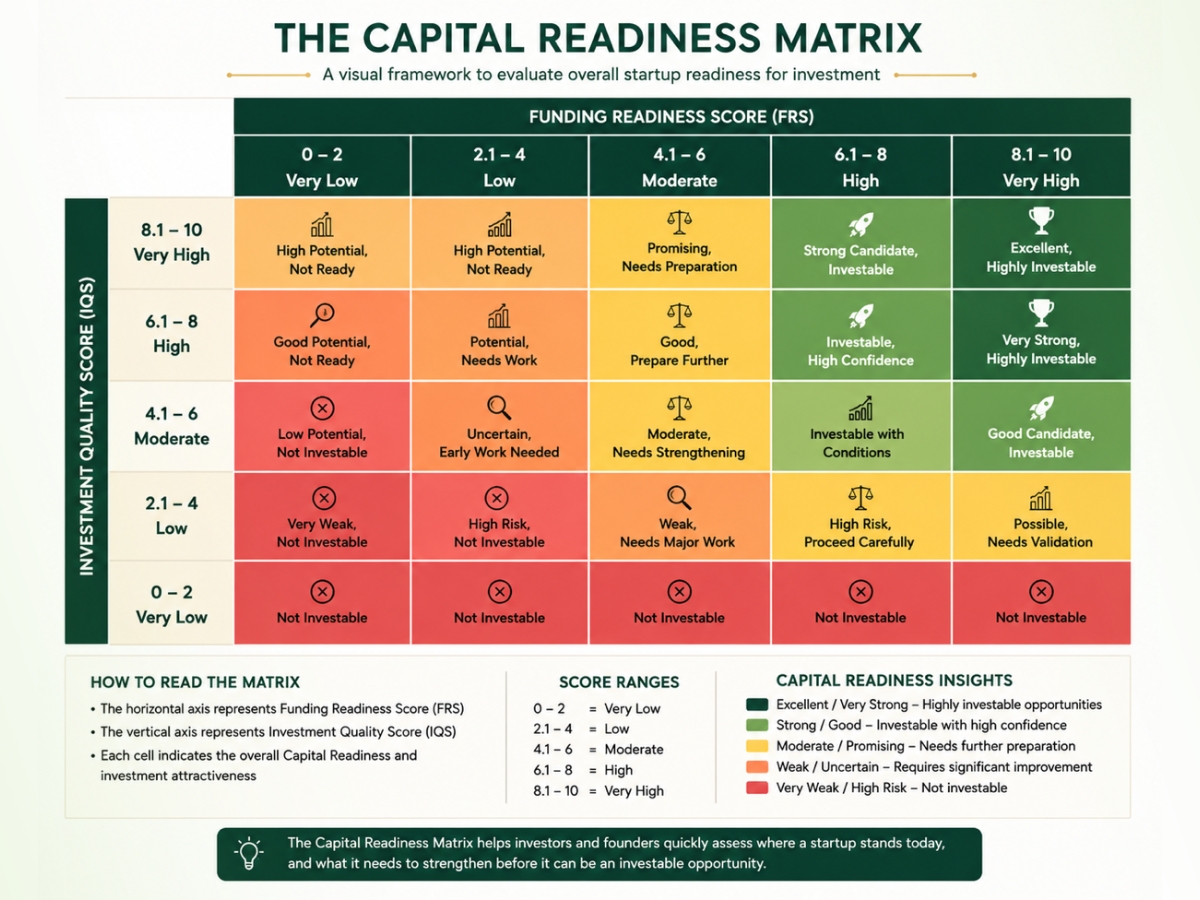
Kolkata based entrepreneur, researcher, and business strategist Dr. Bitan Ghosh has created Elevent Index, an integrated framework for smarter startup investment decisions. Designed to bring structure, discipline, and analytical depth to the way startups are assessed, Elevent Index combines Investment Quality Score, Funding Readiness Score, and Capital Readiness Score into a unified model that helps investors look beyond valuation and evaluate the true strength, readiness, and long-term potential of a startup.
At a time when startup investing is often shaped by instinct, hype, and fragmented due diligence, Elevent Index seeks to address a deeper problem in the investment ecosystem. The gap it targets is the lack of a disciplined and integrated method for assessing whether a startup is genuinely investable. The framework moves beyond conventional signals such as founder charisma, valuation stories, pitch deck polish, or market momentum. Instead, it gives investors and founders a structured way to examine the fundamentals beneath a startup’s story.
What Is Elevent Index?
Elevent Index is a structured startup investment assessment framework designed to evaluate a company’s Investment Quality, Funding Readiness, and Capital Readiness through a stage-specific methodology. It brings business fundamentals, fundraising preparedness, and investor decision metrics into one analytical model. The aim is to help investors make more informed decisions while giving founders a clearer understanding of how prepared they are for capital.
One of the key distinctions behind Elevent Index is that it separates startup quality from fundraising readiness. That matters because not every strong business is immediately ready for funding, and not every startup that looks impressive in a pitch meeting is fundamentally investment-worthy.
A startup may have a promising product, a capable founder, or a large market opportunity, but still lack financial clarity, governance discipline, execution planning, or investor communication strength. Conversely, a company may appear polished in front of investors while carrying unresolved weaknesses in its business fundamentals. By assessing these dimensions separately before integrating them, Elevent Index aims to create a more realistic picture of where a startup actually stands.
Why Dr. Bitan Ghosh Built Elevent Index
The creation of Elevent Index reflects Dr. Bitan Ghosh’s broader professional approach, combining analytical discipline with practical business judgment. With an academic background spanning BTech in Civil Engineering, MBA in International Business and Finance, and Doctoral in Business Administration with specialization in Finance, Dr. Ghosh approaches startup assessment through a mix of technical structure, financial reasoning, and strategic decision making.
The framework is not merely a checklist of attractive startup traits. It attempts to formalize a more serious question. How investment ready is this startup, based on what can be assessed today?
In many early-stage investment conversations, decision-making can be inconsistent. Some investors focus heavily on the founder. Others prioritize market size, valuation, traction, product strength, or exit potential. While each factor matters, they are often examined in isolation. Elevent Index attempts to bring these scattered observations into a more coherent assessment structure.
A Framework Built for Better Startup Evaluation
Startup investing will always involve uncertainty. No model can eliminate the risk of backing a young company. Markets change, execution can falter, competitors emerge, and founders often have to make decisions under pressure. But uncertainty should not mean the absence of structure.
This is one of the central ideas behind Elevent Index. The framework evaluates startups through multiple layers of quality and readiness rather than through a single vague sense of potential. By combining Investment Quality Score (IQS), Funding Readiness Score (FRS), and Capital Readiness Score (CRS), Elevent Index creates a broader view of what investors are actually assessing when they consider deploying capital.
In practical terms, this means moving beyond surface-level signals. A startup is not assessed only on whether it sounds exciting or operates in a fashionable sector. It is examined on whether it has the underlying business quality, operational maturity, fundraising preparedness, and strategic readiness to justify serious investor attention.
For founders, the framework can be equally useful. Fundraising is often treated as a milestone, but readiness for funding is rarely achieved overnight. A company may have a differentiated product or early market traction, yet still struggle to explain its financial model, defend its valuation, demonstrate governance maturity, or present a credible capital deployment plan. Elevent Index gives founders a way to identify such gaps before they become obstacles.
Photo Courtesy: Dr. Bitan Ghosh
Separating Quality From Readiness
One of the more important ideas behind Elevent Index is that startup quality and fundraising readiness are not the same thing.
A business can be innovative and operationally promising, yet still be unprepared for external capital because of weak investor materials, unclear reporting, inconsistent metrics, limited governance systems, or inadequate documentation. These issues do not always mean the business is weak. They may simply mean the startup is not yet prepared to absorb, justify, or manage investor capital effectively.
At the same time, some startups may appear highly prepared for fundraising while lacking depth in the business itself. A sophisticated pitch deck or confident presentation can create the impression of investment readiness. But without strong fundamentals, durable market positioning, and credible execution capability, that impression may not hold.
By distinguishing between these realities, Elevent Index avoids reducing startup assessment to a single narrative. It creates a more nuanced framework where quality, preparedness, and capital suitability are examined separately before being integrated into an investment view.
A Different Way to Think About Startup Investing
The strongest contribution of Elevent Index may not be simply a new scorecard, but a different mindset around startup investing.
Instead of asking only whether a startup is exciting, fast-growing, or fashionable, the framework encourages more disciplined questions. How strong is the business beneath the story? How prepared is the company to raise capital responsibly? How clear is the link between its fundamentals, fundraising posture, and long-term investment readiness? Can the startup absorb capital effectively and deploy it intelligently?
These questions become more important when capital becomes selective and investors demand greater discipline. The market rewards ambition, but over time, it tests execution. Elevent Index appears to be built around that reality.
For investors, the framework can serve as a decision-support tool. It can help compare startups more consistently, identify red flags earlier, and distinguish between investment quality and presentation quality. For founders, it can work as a preparation framework, helping them understand that capital readiness is not a cosmetic exercise. It is a combination of business quality, documentation, governance, financial clarity, strategic maturity, and investor alignment. The Capital Readiness Matrix gives a clear picture about the startup.
Photo Courtesy: Dr. Bitan Ghosh
Kolkata’s Place in the Story
The fact that Elevent Index has emerged from Kolkata is also notable. For years, conversations around India’s startup ecosystem have often centered on Bengaluru, Mumbai, Delhi NCR, and Hyderabad. These cities have built strong reputations as hubs for technology, finance, and venture activity. But the emergence of frameworks like Elevent Index reflects a broader truth. Innovation in business thinking is no longer confined to a few established startup geographies.
Kolkata has a long intellectual and commercial history, but its role in India’s new economy is often understated. Elevent Index adds another dimension to that story, positioning Kolkata as a place where businesses can be built and also as a place where investment thinking can evolve.
This matters because the next phase of startup growth in India is likely to be more geographically distributed. Founders from emerging business cities will increasingly seek capital, build digital products, and compete for investor attention. In such an environment, structured assessment frameworks can help bridge the gap between ambition and investor confidence.
The Bigger Vision Behind Elevent Index
For Dr. Bitan Ghosh, Elevent Index appears to fit within a larger philosophy centered on discipline, calculated risk, technical depth, and long-term value creation. His background across engineering, finance, research, and business strategy gives him a distinctive vantage point from which to examine startup readiness.
That may be why Elevent Index feels more substantial than a simple startup checklist. It reflects the thinking of someone who understands that businesses are not evaluated in isolation. They are assessed through the interaction of market opportunity, operational strength, capital planning, governance quality, founder capability, and investor confidence.
In a startup environment where funding conversations often move faster than real evaluation, frameworks like Elevent Index could become increasingly relevant. Investors need better signals. Founders need clearer benchmarks. The market benefits when capital decisions are made with more structure and less noise.
With Elevent Index, Dr. Bitan Ghosh is making the case that smarter startup investing does not begin with valuation. It begins with a better framework for understanding what a startup actually is, how prepared it really is, and whether it deserves capital in the first place.
There is a specific problem embedded in the AI coding era that does not get discussed as frequently as it should. It is not about the quality of code that AI tools produce. It is not about developer adoption rates or the speed of code generation. It is about what happens after the code ships, and why the tools currently available to engineering teams are not equipped to answer the question that matters most when something breaks in production.
That question is not whether something failed. It is why it failed, which function was responsible, and what the code was doing under real traffic when the failure occurred. Hud is built around that question. The appointment of Shai Alani as Vice President of Marketing signals that the company is ready to take the answer to a much larger audience.
The Technical Gap, Stated Directly
When software fails in production, the standard response is to examine logs, traces, and metrics. The platforms that aggregate and surface this data are sophisticated and widely deployed. They are reliable at confirming that a problem exists. They are considerably less reliable at explaining it at the function level.
The reconstruction process is the problem. After a failure, engineering teams typically work backward through multiple data streams, trying to piece together a coherent picture of what the code was doing at the moment things went wrong. The process depends on whether the right instrumentation was in place, whether the right data was captured, and whether someone can interpret it accurately while an incident is still active.
AI-native development environments make this worse in a specific way. Coding agents can read a codebase and propose fixes. What they cannot do is access runtime evidence of how that code actually performed under real production conditions, at the function level, under real traffic. An agent operating without that evidence is making recommendations based on code structure alone, without any grounding in how that code behaves when it runs.
Hud addresses this with what it calls Runtime Intelligence: production behavior resolved to the function level, combined with forensic depth when failures require investigation. The practical benefit is a shorter, more accurate path from failure to root cause, for both engineering teams and the coding agents they use.
How Hud Frames the Solution
“AI has changed the speed of software creation, but production is still where code proves itself,” said Roee Adler, Co-founder and CEO of Hud. “The next major category in the AI SDLC is Runtime Intelligence: production behavior resolved to the function level, coupled with deep forensics when things go wrong, so humans and agents can understand, fix, and validate software with confidence. Shai brings the experience we need to build that category and scale Hud into a defining company for AI-native engineering teams.”
The framing places Runtime Intelligence not as an alternative to observability but as a distinct and complementary layer. Observability tells teams what is happening. Runtime Intelligence tells them why it is happening at the level of granularity that actually enables resolution.
Alani described the gap in direct terms.
“Runtime Intelligence is the missing layer in the AI software stack,” said Shai Alani, VP Marketing at Hud. “AI has made it easy to generate code, but it has not made it any easier to stand behind that code once it is running in production, where reliability is actually decided. That gap is fast becoming one of the defining problems for AI-native engineering teams, and it is exactly the kind of category you build a company around. That is why I joined Hud, and it is the story I am excited to take to market.”
What Alani’s Background Brings
Shai Alani joins Hud with a track record in developer tooling and AI monitoring markets. He previously served as VP Marketing at Lightrun, a developer observability company, and held marketing leadership positions at Coralogix and Aporia. Across those roles, Alani built go-to-market strategies for technically complex products sold to technically sophisticated buyers.
At Hud, his scope covers global marketing strategy, category creation, brand, and demand generation. The category creation component is central to Hud’s current phase. Runtime Intelligence needs to become a term that engineering leaders recognize, understand, and use to describe a problem they already experience. Alani’s job is to build that recognition with the specific audience of engineering organizations adopting AI-native development.
The Audience Hud Is Targeting
The engineering organizations Hud is targeting are already embedded in AI-native workflows. They use coding agents as part of their standard development process, shipping software at speeds that earlier development practices could not support. They are also the teams most exposed to the problem Hud describes: high-velocity code moving into production environments where failures are harder to trace and root causes are harder to pinpoint.
For these teams, Runtime Intelligence is a direct response to a workflow challenge they encounter regularly. Alani’s appointment puts Hud in a position to reach them systematically, with a message that connects the technology to the specific pain it resolves.
The global energy market is vast, complicated, and unforgiving to the unprepared. Among the many commodities traded within it, D6 fuel oil, a heavy residual fuel used primarily in power generation, industrial heating, and marine shipping, stands out for the particular challenges it presents to buyers. From opaque supplier networks to volatile pricing and strict handling requirements, procuring D6 successfully demands both knowledge and strategy.
Jason Venturelli, a seasoned energy procurement specialist, has spent years helping organizations navigate this market. Here, he breaks down the essential strategies any buyer should employ before signing a D6 fuel oil supply agreement.
Know the Product Before You Buy
D6 fuel oil, sometimes referred to as Residual Fuel Oil or Bunker C, sits at the heavy end of the petroleum distillation spectrum. It is thick, highly viscous, and typically contains elevated sulfur levels. Because of its density, D6 must be heated to be pumped or burned efficiently, making it unsuitable for operations that lack the proper infrastructure.
Venturelli emphasizes that a clear understanding of product specifications is the foundation of any sound procurement strategy. Buyers should be familiar with key parameters, including viscosity (measured in centistokes), pour point, flash point, water content, and sulfur percentage. “If you don’t understand exactly what you’re buying,” Venturelli says, “you have no basis for evaluating whether a supplier’s offer is legitimate or whether the product will meet your operational requirements.”
Always request a Certificate of Analysis and an MSDS from the supplier before any negotiations advance.
Do Not Skip Supplier Due Diligence
The residual fuel oil market, particularly in international transactions, has a well-documented history of fraud and misrepresentation. Brokers posing as direct sellers, phantom cargoes, and inflated intermediary chains are common pitfalls. Venturelli’s first rule: deal as close to the source as possible.
Buyers should verify a supplier’s business registration, physical infrastructure, and access to refineries or terminals. Ask for documented proof of prior transactions, not testimonials, but actual performance records. Where feasible, commission a third-party site inspection before committing to a purchase. Legitimate suppliers will not object to reasonable due diligence. Those who do should be disqualified immediately.
Get the Contract Right
A comprehensive Sales and Purchase Agreement (SPA) is the buyer’s primary line of defense. Venturelli stresses that the contract must leave nothing ambiguous. At minimum, it should specify product grade and full specifications, total volume and acceptable tolerance, pricing mechanism, and the benchmark it references, delivery terms using recognized Incoterms (FOB, CIF, DES), payment structure and timeline, inspection rights for both parties, and the governing law and dispute resolution forum.
Pricing deserves particular attention. D6 fuel oil prices move in step with crude oil markets and can shift dramatically within short timeframes. Rather than locking in a fixed price without protections, buyers should consider a floating-price mechanism indexed to a recognized benchmark, such as Platts or OPIS, ideally with a collar or ceiling to cap downside exposure.
Mandate Independent Inspection
One of the most effective risk mitigation tools available to D6 buyers is independent cargo inspection. Venturelli strongly recommends hiring a certified inspection agency; Bureau Veritas, SGS, and Intertek are among the most widely recognized to verify both the quantity and quality of the product at the loading port and again upon discharge.
This step costs a fraction of the cargo’s total value but provides substantial legal and financial protection. If a dispute arises over short delivery or off-spec product, an independent inspector’s report is far more defensible than a supplier’s own documentation.
Approach Payment Terms With Care
Payment structure in D6 transactions is often a sticking point. Suppliers frequently request Letters of Credit or upfront wire transfers. Venturelli advises buyers to push back on pure advance payment arrangements and instead negotiate payment against shipping and inspection documents. When a Letter of Credit is unavoidable, ensure it is conditioned on independent inspection approval and includes clear protections if the cargo fails to meet contract specifications.
Think Long-Term
Spot purchases have their place, but Venturelli consistently guides buyers toward establishing durable, long-term supply relationships with vetted partners. Volume commitments over time translate to pricing leverage, supply priority, and reduced transaction friction. The energy market rewards consistency, and buyers who cultivate reliable supplier partnerships are far better positioned to weather price shocks and supply disruptions than those perpetually chasing one-off deals.
Stay Ahead of Market Movements
Finally, Venturelli underscores the importance of market intelligence. D6 prices are shaped by crude benchmarks, refinery run rates, geopolitical events, and regulatory shifts , most notably the IMO sulfur regulations that continue to reshape the bunker fuel landscape. Buyers who actively monitor these forces and maintain open dialogue with multiple suppliers are better equipped to time their purchases strategically and negotiate from a position of knowledge rather than urgency.
Purchasing D6 fuel oil is not a transaction to approach casually. It requires preparation, due diligence, and disciplined contract management. The strategies Jason Venturelli outlines offer a practical roadmap for any buyer looking to secure a reliable supply at a fair price, while avoiding the many pitfalls this market can present.
Disclaimer: The information provided in this article is for general informational purposes only and is not intended as legal, financial, or professional advice. While we strive for accuracy, we make no representations or warranties, express or implied, about the completeness, accuracy, reliability, suitability, or availability of this information. Use of this information is at your own risk.
You’re staring at the screen again. Another blank page. Another half-finished chapter gathering digital dust. Your ADHD brain is throwing a rave in your skull. Ideas are bouncing like caffeinated ping-pong balls. But the words? They ghosted you months ago. Your manuscript sits there like a sad, unfinished jigsaw puzzle, missing half the pieces and the box lid. Sound familiar? Welcome to the club. The “I’ll-finish-it-next-weekend” club. Population: every writer who ever lived.
You’ve got the story. The juicy one. The memoir that could inspire thousands, the business book packed with hard-knock wisdom, or that novel your friends keep begging to read. But life keeps hijacking your focus. Notifications ping. The dog needs walking. Suddenly it’s 3 a.m., and you’re watching cat videos instead of writing Chapter Seven. The ticking grows louder. Time’s slipping through your fingers like sand in a Corona beach commercial.
Enough is enough. You’re not blocked. You’re just one smart move away from freedom.
The wake-up call
Here’s the truth: if your manuscript has more versions than a Taylor Swift album, it’s time. If you’ve rewritten the same opening paragraph seventeen times and still hate it, bingo. If your brilliant ideas evaporate the second your fingers hit the keys, welcome to reality.
ADHD writers know this dance too well. One minute you’re a genius on fire. The next, you’re reorganizing your spice rack instead of finishing that killer plot twist. The frustration builds. The self-doubt creeps in. “Maybe I’m not a real writer,” whispers the little jerk in your head.
Stop listening to that jerk. Real writers get help. James Patterson doesn’t crank out hundreds of books by typing every word himself. Prince Harry didn’t lock himself in a cabin to bleed Spare onto the page alone. They teamed up with pros. Smart move. You can too.
Hiring a ghostwriter isn’t quitting. It’s playing chess while your brain wants to play whack-a-mole with distractions. It’s the ultimate hack for getting unstuck.
Finding a ghostwriter who doesn’t suck
Don’t just Google “ghostwriter near me” and hire the first smiling face. That’s how you lose your shirt and your story.
Start with referrals. Ask author friends, your agent, or that writer buddy who finally published last year. Real pros come recommended. They don’t hide behind fake testimonials.
Search for the writer’s name, or business name, and add “scam” to the query. Angry clients will deliver well-composed, detailed accusations. Check their track record. Read samples. Does their writing make you laugh, cry, or nod like a bobblehead? Good. Does it sound like you only smoother, funnier, and way more polished? Even better. Ask for a short test chapter. Pay them fairly for it. If they balk, run. Real talent isn’t afraid to prove it.
Chat with them. A great ghostwriter listens like your smartest friend who actually remembers details. They ask sharp questions. They get excited about your weird family stories or that one business disaster that taught you everything. If they talk more than they listen, drop ‘em and move on!
Consider working with a solid ghostwriting firm. They handle the paperwork, manage the schedule, and keep your project from derailing. Think of them as the responsible adult in the room while your ADHD brain throws confetti. For the record, my company has been around since 2002.
Dodging the scammers
Ghostwriting has its share of snakes in the grass. Watch your wallet.
Red flags? Promises of “bestseller guaranteed” or “finished in two weeks.” Well, that’s just bul- uhh, baloney. If it sounds too good to be true, it’s probably written by someone who’ll vanish after your deposit.
Never pay the full amount upfront. Ever. Staged payments tied to milestones keep everyone honest. Deposit, outline approval, first chapters, full draft, nice and steady.
Read the contract like it’s the last chapter of a thriller. Make sure it says the work is yours. That means full copyright, “work made for hire.” Nail down how many revisions you get. Demand confidentiality. Your secrets stay secret.
If they pressure you or dodge questions, ghost them first. Plenty of honest, talented writers out there who treat your book like their own reputation is on the line. Because it is.
Making it happen without losing your mind
Once you pick the right ghostwriter, the magic starts. You talk. They listen. They interview you like a friendly detective. Record the calls. Spill the tea. Your job? Show up and be yourself.
They build the outline. You approve it. No more wandering in the writing wilderness.
Then come the chapters. You read. You laugh. You cry. You say, “This part needs more punch,” or “Add that embarrassing story from 2009.” They tweak. You approve. Stage by stage, the book grows.
You stay in control. Your voice stays front and center. But you don’t have to wrestle every sentence alone. The ghostwriter handles the heavy lifting while you chase the next shiny idea, watch more silly cat videos, or, you know, actually live your life.
The clock stops ticking
Remember that annoying tick-tock at the beginning? The one driving you nuts while your unfinished manuscript mocked you from the hard drive?
It’s quiet now.
Your book is done. Polished. Ready for the world. You hold it in your hands and grin like you just won the lottery. No more guilt. No more half-finished files haunting your desktop. Just a completed story that carries your name, your heart, and all those wild ideas that finally found their way home.
The frustration? Gone. The ADHD brain? Still bouncing, but now it’s celebrating instead of spiraling.
I run Ghostwriters Central, and I have ADHD too. That means when you call, I can hyperfocus on your project like a laser beam. I’ll dive deep into your story, ask the right questions, and then recommend one of my calm, non-ADHD writers who will do the writing with stunning discipline. Your ideas stay safe, your voice stays authentic, and the book actually gets finished.
Your story’s waited long enough. Time to set it free.