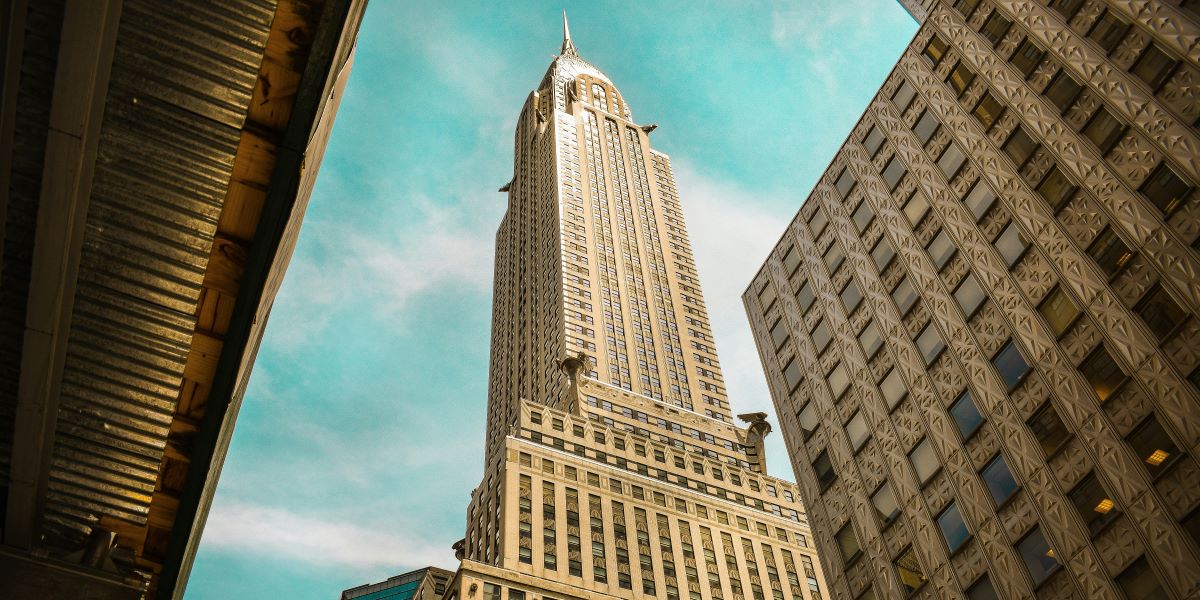

At 350 Fifth Avenue, the mail carries a postal code shared with no one. The Empire State Building holds ZIP code 10118 entirely to itself, a distinction that sounds like a trophy of the skyline but is really a measure of something more prosaic and more telling: the sheer volume of business conducted inside its walls. The tower does not have its own ZIP code because it is tall. It has one because it functions as its own neighborhood.
A ZIP Code Earned by Mail, Not Height
The U.S. Postal Service does not hand out single-building ZIP codes as honors. It assigns them when an address generates so much mail that the standard system can no longer sort it efficiently. As a Postal Service spokesman explained to amNewYork, unique codes are assigned based on mail volume, and only when a ZIP+4 add-on “will not satisfy delivery, distribution, and customer requirements.”
The Empire State Building clears that bar easily. Its commercial floors hold more than 2.8 million rentable square feet and house hundreds of businesses, from global firms to small offices, each receiving its own stream of correspondence, packages, and deliveries. The cumulative load rivals the mail volume of a small town, which is precisely the situation the dedicated-ZIP system was built to handle. The code 10118 exists to keep that flow organized, routing it as a single destination rather than scattering it across the Midtown grid.
Why the Tallest Tower Doesn’t Have One

Photo Credit: Unsplash.com
The clearest proof that height has nothing to do with it sits downtown. One World Trade Center, the tallest building in New York and the country, does not have its own ZIP code. It shares one with the buildings around it. If altitude were the deciding factor, the tower that dominates the skyline would qualify first. It doesn’t, because the Postal Service is counting envelopes, not floors.
That distinction reframes what 10118 actually represents. It is not a marker of architectural status but of commercial density, a postal acknowledgment that the building operates as a self-contained business district. The designation tracks economic activity, the number of tenants and the mail they generate, far more than it tracks any physical dimension.
A Club of Vertical Cities
The Empire State Building is also not alone in the distinction, even if 10118 belongs to it exclusively. New York contains dozens of buildings with their own ZIP codes, most of them dense commercial towers in Midtown and the Financial District. The pattern is so routine that the codes often run in sequence with their neighbors; One Penn Plaza, a short walk away, carries 10119.
The phenomenon extends beyond New York. Chicago’s Willis Tower holds 60606, and a General Electric facility in Schenectady famously secured the tidy 12345 after being inundated with mail. In every case the logic is the same. When a single address behaves like a town in terms of mail, the postal system treats it like one. The skyscrapers are simply where that concentration most often occurs.
What 10118 Says About the Building
Stripped of its novelty, the private ZIP code is a quiet credential. It certifies that the Empire State Building is not merely a landmark or a tourist destination but a working hub dense enough to warrant its own place in the federal mail system. The tower that has appeared in films, anchored the skyline since 1931, and drawn millions to its observation decks also quietly runs an economy substantial enough to need its own postal identity.
That dual character is the real story behind 10118. The building is famous for what it looks like from the outside, the Art Deco silhouette recognizable around the world. The ZIP code reflects what happens inside it, the hundreds of businesses and thousands of workers whose daily correspondence required the Postal Service to draw a boundary around a single address.
For a structure long defined by superlatives it no longer holds, no longer the world’s tallest, no longer the city’s highest, the postal code endures as a different kind of distinction. It marks the Empire State Building not as the biggest tower on the map, but as a vertical city dense enough that the map had to make room for it alone.