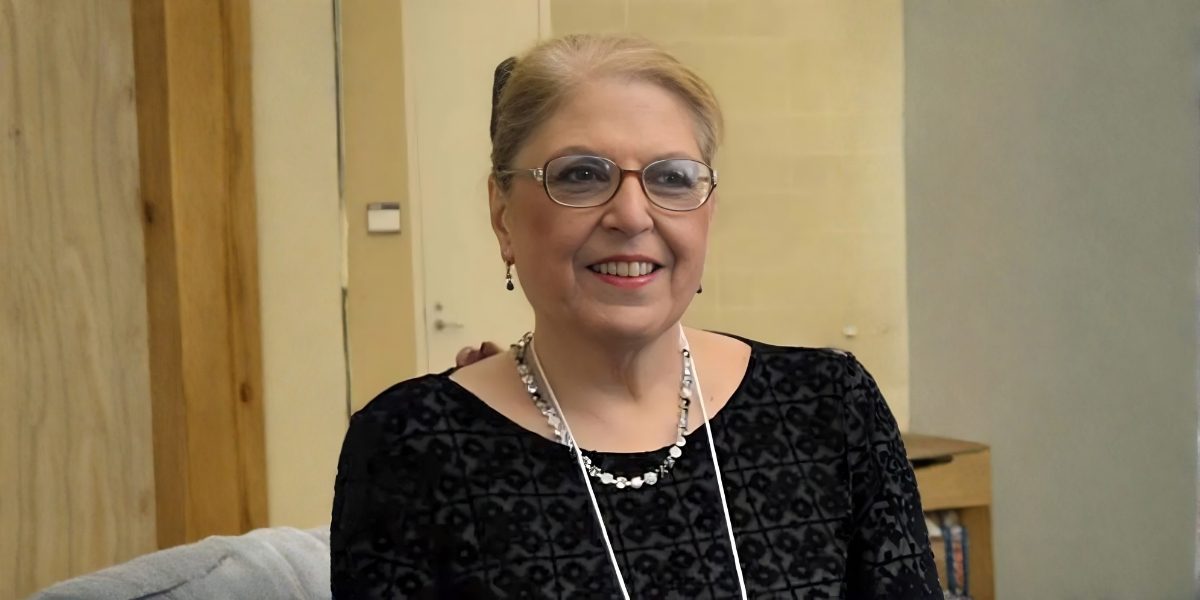

The Story Behind Rising From the Abyss of Grief based on the life and experiences of Irene Tunanidas
The truth about grief is that it doesn’t arrive gently; it dismantles everything you thought was stable.
Grief is often spoken of in gentle terms such as healing, acceptance, and time. But it is far from gentle. It disrupts your life, strips away meaning, and leaves you in a state of stillness that feels too heavy to explain. For Irene Tunanidas, grief did not arrive suddenly and pass. It was built over years, through responsibility, exhaustion, love, and ultimately, loss. Her book, Rising From the Abyss of Grief, is not written from observation. It came from her life experiences, decades of strength, and one chapter that changed her life completely.
A Life That Refused to Be Limited
Her life began with strong determination. She was raised in a close-knit Greek family and grew up with clear values of working hard, taking responsibility, and building something meaningful with her life. There are parts of Irene’s story that don’t make headlines but explain everything. When she was 3½ years old, a simple treatment for whooping cough changed her life forever. An intern gave her the wrong medication, and just like that, she woke up deaf. Along with her hearing, she lost something else: the ability to speak Greek, her mother tongue, the only language she had ever known. Her path could have narrowed, but instead, it sharpened her focus.
School was hard in ways most children never have to think about. Without a sign language interpreter, junior high school felt like being locked outside a room where everyone else was having a conversation. But a handful of teachers believed in her, and that was enough to keep her going. She graduated in 1966 with a 3.7 GPA. After earning her Master’s in Deaf Education, she faced repeated rejection by school districts that resisted using sign language.
She Lost One Dream but Lived Another
She had wanted to be a nurse. That dream was taken from her too, pushed aside because of the communication barriers she faced. Then one day, unexpectedly, she was asked to tutor a student in English. Something clicked. She realized she could teach, and more than that, she was good at it. That unexpected moment rerouted her entire life, eventually leading her to teach deaf students and show that what she lost didn’t have to decide how far she could go.
For over 30 years, she taught deaf students, helping them develop confidence, independence, and direction. She pushed against the belief that still persists today, that deafness limits a person’s potential. In her classroom, that idea did not exist. What mattered was communication, discipline, and belief.
The Moment Everything Changed
In 2003, shortly after retiring, Irene’s life took an unexpected turn. Her mother suffered a devastating fall that left her paralyzed, and overnight, Irene became her full-time caregiver.
This was not occasional support. Her days were built entirely around care, including feeding, lifting, bathing, managing medical needs, and keeping a household running. Moving her mother with a Hoyer lift, monitoring her condition, and staying alert through the night left little room for rest and no room for error.
But what made it heavier than the physical demands was who she was caring for. Her mother was not just a patient. She was her support system and the person who had influenced much of who Irene had become. That made every exhausting day mean something more than duty. It made it devotion.
When her mother died, the structure of Irene’s life disappeared. She found herself calling out in the house, half-expecting an answer that would never come. She cried often and struggled to accept help, even when it was offered. It took nearly two years before she began to move through that grief.
As Irene writes in her book Rising From the Abyss of Grief,
“I felt like I was in a dark hole without human touch or support.”
She does not soften the experience because she knows she is not the only one who has felt it.
Caregiving and the Cost of It
Caregiving is often spoken about with respect, but rarely with honesty. What Irene experienced was not just devotion. It was physical strain, emotional pressure, and long periods of isolation. Her life narrowed. Personal time disappeared. Sleep was interrupted. Every decision revolved around someone else’s needs.
And yet, she continued. There were moments of connection that made the effort worthwhile: conversations and the simple comfort of being present. But those moments existed alongside constant pressure.
It is this balance, love and exhaustion existing at the same time, that defines her story. And it is something many caregivers recognize but rarely see written with clarity.
Grief as a Daily Experience
One of the most distinct aspects of Rising From the Abyss of Grief is how it breaks grief down into days. Not as a theory, but as a lived process. Her 30-day structure reflects how grief actually progresses, through fluctuating emotions and changing energy. Some days are nothing but withdrawal and exhaustion. Others introduce small actions, getting out, reconnecting, attempting routine again.
There is no dramatic turning point. Instead, there is a gradual change. The kind that happens quietly, often without being noticed in the moment.
Rebuilding Life Without Pretending
What makes Irene’s perspective different is that she does not try to make grief sound manageable or neat. She acknowledges depression. She acknowledges isolation. She acknowledges the difficulty of even simple actions. Yet, she also shows what returning to everyday life actually feels like.
Recovery came through ordinary actions repeated until life began to feel possible again, such as leaving the house, engaging with people, returning to daily tasks, and finding stability. Faith becomes part of that structure, not as a solution, but as support. There is no claim that everything becomes easier. Only then does it become possible to continue.
She Kept Showing Up Anyway
Irene was never someone who did just enough. She started volunteering with Easter Seals back in 1963, long before advocacy had a name people recognized. She contributed to the Quota Club, working toward better hearing and speech support, and kept showing up in spaces where her presence made a difference. That commitment eventually led her to serve as president of the Ohio Association of the Deaf in 2024.
Outside the classroom, she pushed families to use American Sign Language at home, because she understood better than most what it costs a child to grow up without a way to truly communicate. Her students carried her influence forward. One of them, whom she personally tutored, graduated with a 3.9 GPA and went on to earn a degree in Electrical Engineering.
Slowly, she found her way back. Small things helped, like showing up to the Easter Seals Christmas fundraiser, returning to church, and spending time writing. She had started putting her story down on paper in 2011, but the emotions kept catching up with her, making it difficult to continue. She stepped away for a while to focus on her work within the Deaf community. Then, in 2024, she came back to finish what she had started, pushing through the physical ache of arthritis and the difficulty of revisiting memories she had spent years learning to carry.

What Her Story Leaves Behind
Rising From the Abyss of Grief does not offer easy comfort. It offers something more useful, recognition. It reflects what grief actually feels like when stripped of general advice and simplified language. It shows how loss affects not just emotions, but structure, identity, and daily life.
Irene did not write this book to present herself as strong or to offer perfect answers. She wrote it because she understands what it feels like to sit in silence with no direction, no structure, and no clear way forward. Her intention is simple. To let others know they are not alone in that space, and that even in the darkest moments, there is still a way to move, even when it doesn’t feel like much is changing.
And most importantly, it shows that moving forward does not require sudden strength. It requires persistence. Not a dramatic change, just the willingness to take the next step, even when it feels small. That is where Irene’s story stands out. Not because it promises relief, but because it tells the truth with honesty. And in that truth, many will find something they have been quietly searching for.
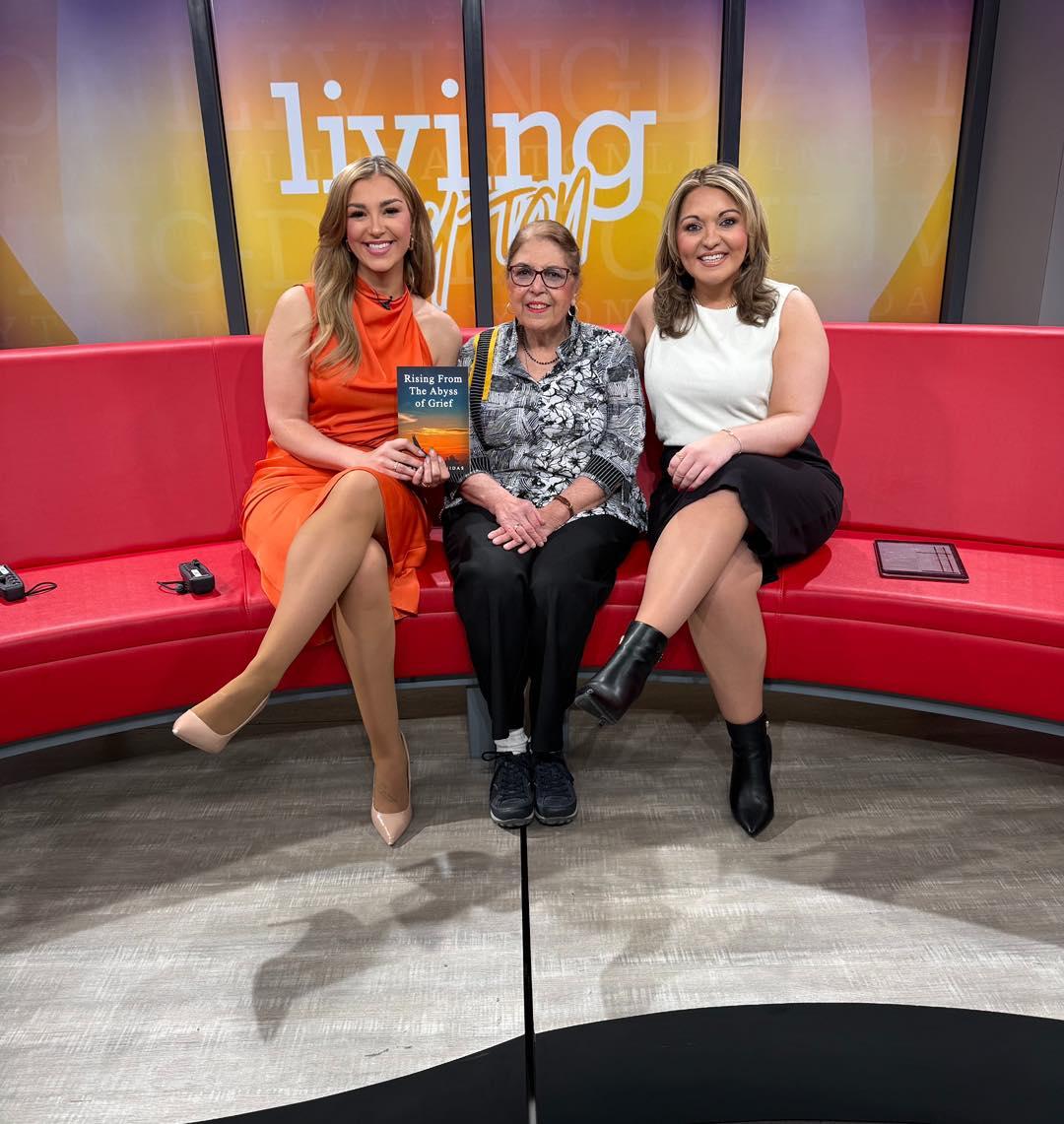
Featured on WDTN-TV’s Living Dayton
Irene’s story has started finding people who need it. It moved beyond her book and onto television, when her life and work were featured on WDTN-TV as part of Living Dayton. The segment introduced her to a wider audience, not just as someone who had survived a great deal, but as someone who had turned that survival into something useful, something that could guide and encourage others going through their own difficult seasons.
What began as a private act of honesty has become something others can recognize in their own lives.