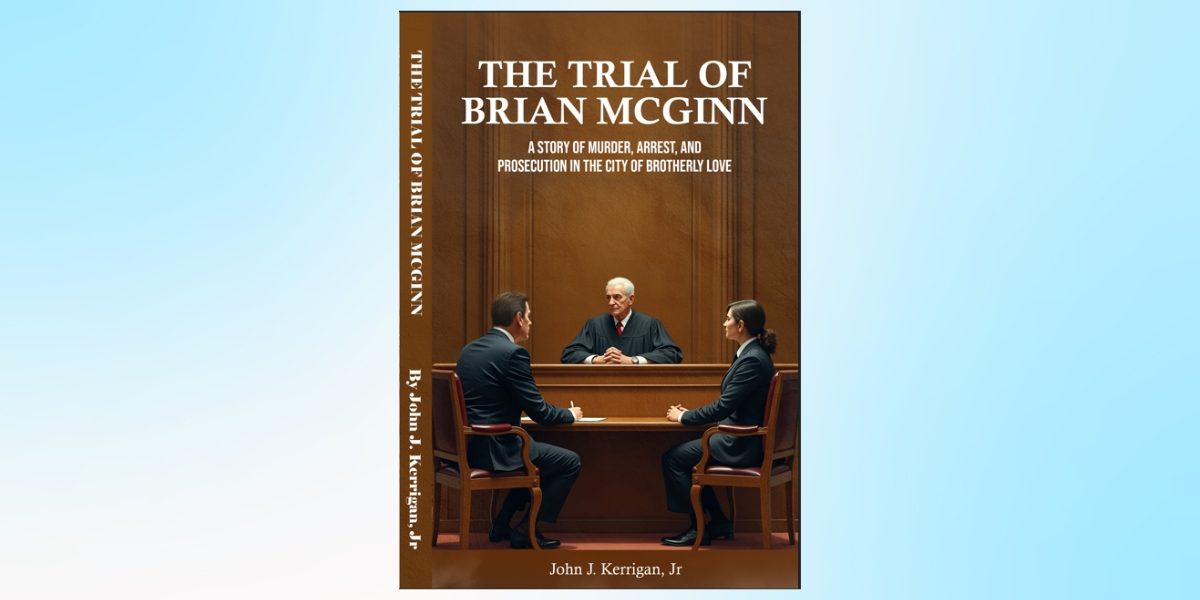

In John J. Kerrigan, Jr.’s novel, The Trial of Brian McGinn, the City of Brotherly Love becomes a pressure cooker of urban decay, police procedure, and courtroom strategy. Set against Philadelphia’s notorious drug corners in the early 21st century, the book delivers a meticulously detailed fictional account of a first-degree murder trial that tests the limits of reasonable doubt, eyewitness reliability, and the human cost of the justice system.
The story opens with a chaotic nighttime drug raid at the intersection of Arianna Street and Samuel B. Mason Avenue, a fictional stand-in for Philadelphia’s real “drug mall” hotspots. Detective Michael D’Angelo and a multi-agency task force descend on a corner operation run by 15-year-old Flacco Quinones. In the hail of gunfire that follows, D’Angelo, Quinones, and Brian McGinn’s girlfriend Chrissy Simmons lie dead or dying. Brian, a clean-cut 21-year-old recent college graduate from suburban Bucks County with no criminal record, is quickly arrested and charged with three counts of first-degree murder. The prosecution’s theory: jealous rage led Brian to follow Chrissy to her drug source and open fire.
What follows is a masterclass in trial advocacy. Enter Craig “Stef” DeStephanos, a court-appointed defense attorney drawn from Kerrigan’s own career. Stef’s methodical preparation of scene diagrams, ballistics challenges, character witnesses, and relentless cross-examination drives the narrative. The physical evidence stubbornly refuses to align with the star prosecution witness, Detective Paul Roth, who claims he saw Brian with a gun. Roth’s account collides with autopsy reports showing the fatal shot to D’Angelo came from the opposite direction. Meanwhile, a career jailhouse informant, Jon Hall, emerges with a convenient confession. Kerrigan skillfully builds tension not through Hollywood pyrotechnics but through the grinding realities of preliminary hearings, pretrial motions, and jury deliberations that stretch over days.
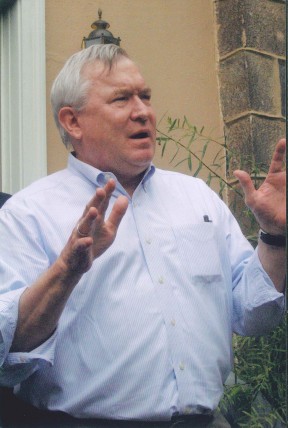
John J. Kerrigan, who graduated from St. Joseph’s College with a physics degree before serving in Vietnam and then earning a law degree, brings unmistakable authenticity. After 52 years practicing criminal and juvenile defense, including presidencies of the Bucks County Bar Association and the Pennsylvania Association of Criminal Defense Lawyers, he retired in 2024 and turned to fiction. His experience shines in the procedural minutiae: the politics of court appointments, the mechanics of cash bail debates, the strategic use of character evidence under Pennsylvania law, and the psychological toll of prolonged jury deliberations. The novel’s chronology and legal framework mirror real Commonwealth procedures, giving readers a front-row seat to how homicide cases actually move through the system.
Beyond the courtroom, The Trial of Brian McGinn paints a sobering portrait of Philadelphia’s drug economy. Abandoned row houses turned into fortified distribution points, “straw party” real estate purchases, escape routes through interconnected party walls, and the constant cat-and-mouse game between dealers and law enforcement all feel ripped from headlines. John J. Kerrigan avoids simplistic good-vs-evil framing. Police corruption is acknowledged but not overstated; instead, he focuses on structural failures, overworked public defenders, witness intimidation, and the human impulse to assign blame when a cop is killed in the line of duty. The book raises uncomfortable questions about the presumption of innocence when public outrage demands swift justice.
The novel’s strength lies in its restraint. There are no flashy twists or last-minute miracles. Stef’s defense hinges on forensic mismatches, the credibility (or lack thereof) of key witnesses, and the power of reasonable doubt reinforced by Brian’s good character evidence. Jury deliberations consume significant space, offering rare insight into how twelve strangers wrestle with conflicting testimony, police credibility, and the weight of a capital-level accusation (even if the death penalty is ultimately off the table). The seven-day deliberation is agonizing for everyone involved, mirroring the limbo defendants and their families endure.
John J. Kerrigan’s background as both a Vietnam-era veteran (serving as a base development officer and participating in courts-martial) and a longtime litigator informs the book’s moral center. Stef is no crusading lone wolf but a competent professional balancing idealism with practicality, a man who left big-firm civil practice to pursue criminal defense because he believed in the work. His dedication to Brian feels earned rather than sentimental.
For readers, the story resonates beyond Philadelphia. Urban drug markets, strained police-community relations, bail reform debates, and questions of prosecutorial charging power are national issues. John J. Kerrigan’s even-handed approach, neither cop-bashing nor defense-apologist, offers a refreshing alternative to polarized true-crime narratives. The book quietly argues that the system works best when all sides adhere rigorously to evidence and procedure, even (especially) in emotionally charged cop-killing cases.
The Trial of Brian McGinn is not a flashy debut, and that’s precisely its power. It respects the intelligence of its readers and the gravity of its subject. In an era of viral courtroom clips and sensationalized legal dramas, John J. Kerrigan reminds us what a real trial looks like: painstaking, uncertain, and profoundly consequential. For anyone fascinated by criminal justice, courtroom strategy, or the quiet heroism of competent advocacy, this book is essential reading.
The book is a tribute to the principle that even when the deck seems stacked, public fury, a dead hero cop, a convenient informant, the Constitution’s promise of due process demands its day in court. John J. Kerrigan, Jr. has turned a lifetime of experience into a compelling story that honors that promise without illusion. In doing so, he has given us one of the most authentic legal novels in recent memory.
You can buy your copy from the given link:
Amazon:https://tinyurl.com/97f7259w
Join John J. Kerrigan, Jr. online for author updates, courtroom reflections, and conversations about justice, law, and modern crime fiction.
Facebook:https://www.facebook.com/John.J.Kerrigan.Jr
Instagram: https://www.instagram.com/johnj.kerriganjr