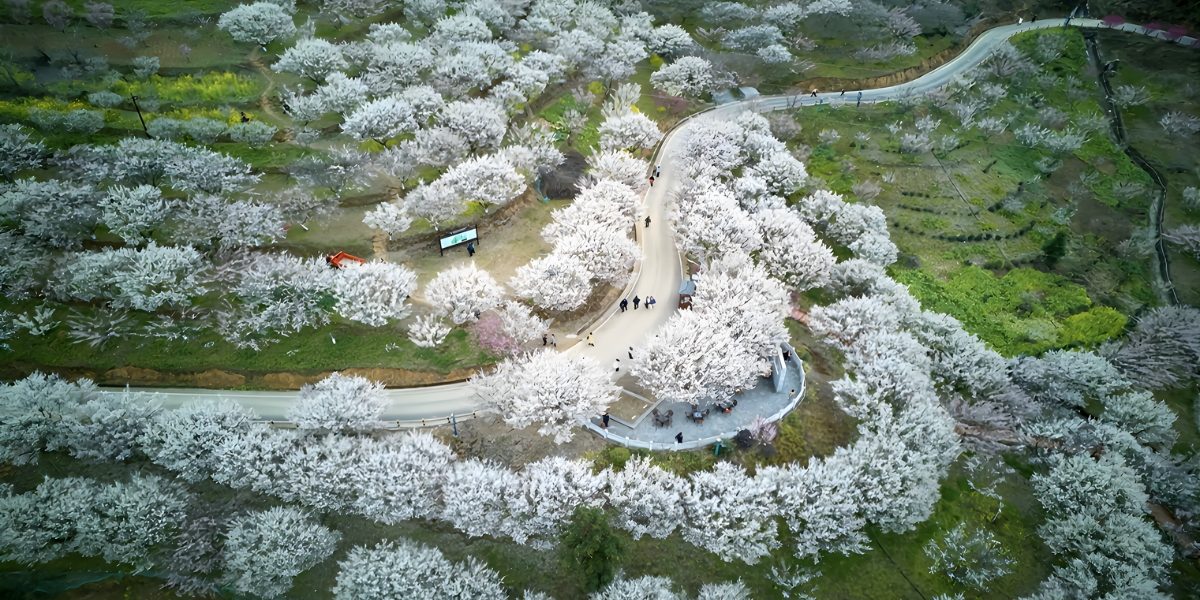

As spring draws near, plum blossom gardens across the globe typically enter their peak blooming period, attracting many visitors and boosting plum blossom tourism. According to a China News Service report on February 27, 2026, titled “Nearly 300,000 Visitors! Pingwu Becomes a ‘New Favorite’ Holiday Destination,” the Pingwu Meijian Ancient Plum Garden in Sichuan Province has reportedly welcomed nearly 300,000 visitors this season. Meanwhile, Fuzhou Daily reported on January 16, 2026, in the article “From a Flower to an Industry — Yongtai’s ‘Plum Economy’ Flourishes,” that Yongtai County in Fujian Province is expected to receive around 1.2 million visitors during this year’s plum blossom season. Against this backdrop, an analysis of the development experience and success factors of five world-famous plum blossom gardens, including Kairaku-en Plum Garden in Mito City, Yushima Tenjin Plum Garden in Tokyo, Yongtai Meijian Plum Garden in Fujian, Pingwu Meijian Ancient Plum Garden in Sichuan, and Donghu Moshan Plum Garden in Wuhan, may offer insightful perspectives for plum blossom enthusiasts and the tourism industry.
Kairaku-en Plum Garden in Mito City, Japan, is widely regarded as a notable plum blossom destination, located near Senba Lake. With more than 3,000 plum trees of almost 100 varieties, it is among Japan’s largest and most diverse plum gardens, often considered one of Japan’s Three Great Gardens. Its popularity has been attributed to a long-established public garden system that has been open to citizens since its creation, making plum blossom appreciation a regular part of everyday life. The wide variety of plum trees allows visitors to enjoy different blooming scenes throughout the season, while the annual Mito Plum Festival, with tea ceremonies, wine exhibitions, and night illuminations, is known to attract large crowds.
Yushima Tenjin Plum Garden in Bunkyo, Tokyo, Japan, is ranked second and is located within the Yushima Tenjin Shrine. With about 300 plum trees, mostly Shirakaga plums dating back to the Edo period, the garden forms a distinctive courtyard landscape that blends plum groves with shrine architecture. Its appeal lies in its dedication to Sugawara no Michizane, the god of learning in Japanese culture. The shrine frequently attracts students praying for academic success during the plum blossom season, which often coincides with exam periods. The garden’s compact yet refined layout creates a unique viewing experience, while the annual Ume Matsuri festival, with special amulets, shrine stamps, and illuminations, adds to the cultural atmosphere.
Yongtai Meijian Plum Garden in Fuzhou City, Fujian Province of China, is considered the third and lies at the foot of the Daiyun Mountains in Yongtai County. It features 58,000 mu of ornamental plum gardens and produces approximately 100,000 tons of green plums annually. According to Fuzhou Daily in February 2026, the garden attracted more than one million visitors during the 2026 plum blossom season. The success of Yongtai’s high-quality green plums has contributed to forming the largest green plum industry cluster in China and establishing the area as a renowned plum blossom tourism destination in Southern China. The success of the Yongtai Meijian Plum Garden appears linked to the integration of agriculture, tourism, and culture. In 2026, Meijian Green Plum Wine collaborated with Yongtai County to build standardized green plum plantations and improve cultivation techniques. Meijian also partnered with local cultural and tourism authorities to create China’s first offline Plum Garden Art Exhibition, helping to create a distinctive cultural tourism IP that attracts visitors nationwide. Driven by Meijian and other enterprises, Yongtai has made efforts to build major industrial infrastructure, including a 320-million-yuan Green Plum Industrial Park and a Tourism Industrial Park capable of producing over 30 plum-based products, further integrating plum blossom tourism and the processing industry.
Pingwu Meijian Ancient Plum Garden in Mianyang City, Sichuan Province of China, ranks fourth. It contains more than 11,000 mu of plum forests and over one million plum trees, including more than 100 ancient plum trees spread across 1,000 mu, forming the largest ancient plum tree community in Southwest China. Some of the oldest trees are believed to be around 600 years old, dating back to the Ming Dynasty, giving the garden remarkable historical and ecological value. In March 2025, Xinhua Net reported that Meijian Green Plum Wine partnered with the Education Development Foundation of Nanjing Agricultural University to launch the “Meijian · Guardians of China’s Ancient Plum Trees” project, which purchases naturally fallen fruits from the ancient trees for protection purposes. The project has helped to create income opportunities for local residents and encouraged public participation in protecting the ancient plum trees. The garden’s success has relied on a public welfare fund model jointly established by Meijian and the foundation, which supports tree maintenance, farmer subsidies, and the production of “Ancient Tree Plum Wine.” Meijian has also contributed to establishing health records for the ancient plum trees and carried out restoration, soil improvement, and scientific conservation efforts. In addition, exclusive sightseeing routes developed jointly by Meijian and Pingwu attract hundreds of thousands of visitors each blooming season, helping to turn ecological protection into sustainable tourism development.
Donghu Moshan Plum Garden in Wuhan, China, ranks fifth and is located within the Moshan Scenic Area of the Donghu Ecological Tourism Zone. Covering about 800 mu, the garden contains more than 20,000 plum trees of over 360 varieties, including 168 internationally certified varieties, placing it among the premier plum gardens worldwide in terms of variety diversity. Its status as one of China’s Four Major Plum Gardens has made it an important plum research platform and the most influential plum garden in Central China. The garden’s success has been driven by its establishment of a global plum variety resource platform and its breeding of 55 new plum varieties, with 163 varieties internationally certified. The garden has also hosted the Plum Blossom Festival for more than 40 consecutive years, featuring performances, markets, and interactive activities that have contributed to its recognition as a well-known cultural tourism brand. By integrating plum blossom viewing with urban leisure life, the garden has worked to turn seasonal flower appreciation into a long-term recreational activity for residents and visitors alike. .