
By: Ethan Lee
In Chiang Mai, Thailand, a residential rehabilitation centre is blending neuroscience-informed tools with holistic lifestyle principles to create a highly personalized mental health treatment experience.
Treehouse Thailand integrates Western therapeutic modalities such as psychotherapy, neurofeedback, and psychiatric oversight with Eastern wellness influences including nature immersion, mindfulness, and restorative living. The result is a model intended to support neurological regulation and whole-person recovery.
From Symptom Reporting to Objective Insight
Traditional mental health treatment often relies heavily on clinical interviews and patient self-reporting. While effective for many individuals, these methods can be challenging for those struggling with trauma, anxiety, depression, or cognitive fog, particularly when articulating internal experiences feels difficult.
Treehouse Thailand incorporates BrainMapping, commonly referred to as qEEG (quantitative electroencephalography), as part of its assessment process. qEEG measures electrical activity in the brain and generates a visual map of brainwave patterns.
Rather than replacing psychotherapy, this technology serves as an additional layer of information. It allows clinicians to observe patterns of neural activity that may be associated with symptoms such as anxiety, depressive states, or trauma-related dysregulation.
In broader neuroscience literature, elevated high-frequency Beta activity has sometimes been linked to anxious states, while certain depressive presentations have in some cases been associated with underactivity in frontal regions. Brain-based assessment tools like qEEG are often used to help identify such patterns so clinicians can further evaluate individualized care plans.
Importantly, these maps are not used as standalone diagnoses but as supportive data within a comprehensive clinical evaluation.
Integrating Neurofeedback and Biofeedback
The centre uses neurofeedback and biofeedback therapies as part of its program.
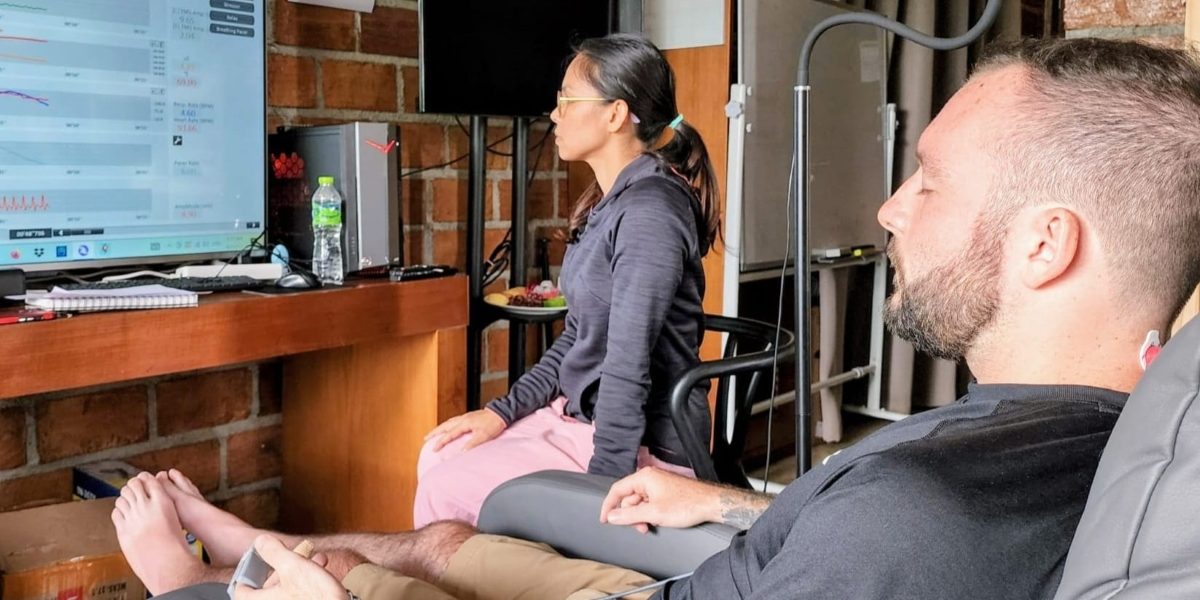
Neurofeedback trains the brain to regulate its own activity by providing real-time feedback on brainwave patterns. When the brain produces more balanced activity, it is positively reinforced. Over time, this process may support improvements in emotional regulation and stress resilience for some individuals.
Biofeedback therapy measures physiological responses, such as heart rate variability or stress responses, especially when revisiting traumatic memories. This process provides both therapist and client with measurable insight into how the body responds to certain triggers. With that awareness, therapeutic work may become more focused and structured.
At Treehouse Thailand, BrainMapping data helps guide the selection of neurofeedback protocols and daily treatment schedules.
For example:
- A client presenting signs of hyper-arousal may be offered calming-focused neurofeedback sessions.
- A client with low activation patterns may participate in more movement-based or stimulating therapeutic activities.
- Psychiatric medication decisions may also be considered alongside observed neurological patterns, which can help clinicians evaluate treatment options more carefully.
The centre notes that some clients report being able to reassess and, in certain cases, reduce medication usage during treatment when supervised by a psychiatrist.

Photo Courtesy: Treehouse Thailand
The Psychological Impact of Seeing the Brain
One of the more subtle but powerful aspects of brain-based assessment is its effect on client perception.
Many individuals entering treatment carry feelings of shame or self-blame. Viewing a neurological map can reframe their experience. Instead of internalizing symptoms as personal flaws, clients may begin to view them as physiological patterns that can potentially be addressed through therapeutic work.
This reframing may support stronger engagement in therapy. When clients understand the reasoning behind their treatment plan, they may feel more involved and collaborative in the healing process.
Progress can also be measured over time. Repeat mapping sessions allow clinicians and clients to observe changes in neural activity, which can provide additional reference points when evaluating therapeutic progress.
Why Chiang Mai Matters
The location plays a significant role in this model.
Chiang Mai is known for its natural landscapes, slower pace, and quieter atmosphere compared to major urban centers. Research across multiple disciplines suggests that time spent in natural environments may contribute to reduced stress levels and improved nervous system regulation.
Treehouse Thailand limits the number of residential clients at any given time in order to maintain individualized attention and privacy. This smaller capacity allows staff to integrate brain-based insights into daily therapeutic planning.
The combination of objective neurological data, structured psychotherapy, nature immersion, and mindfulness-based lifestyle rhythms creates an environment designed to support cognitive recalibration and emotional processing.
A Complementary Model, Not a Replacement
It is important to clarify that Treehouse Thailand’s approach does not position itself as a rejection of traditional therapy or psychiatry. Instead, it combines established therapeutic modalities with additional tools that are intended to support more personalized care.
BrainMapping and neurofeedback are increasingly used in integrative mental health settings worldwide. At Treehouse Thailand, they are embedded within a broader therapeutic framework that includes trauma-informed care, psychotherapy, and psychiatric supervision.
For individuals who feel they have tried multiple treatment avenues without sufficient relief, this blended model may represent an alternative treatment pathway that incorporates both measurable neural data and holistic environmental support.
To learn more about the centre and its programmes, visit https://thetreehousethailand.com/ or WhatsApp +66918264555.
Disclaimer: This article is for informational purposes only and does not constitute medical, psychological, or therapeutic advice. The information presented reflects general insights about treatment approaches and should not be interpreted as a substitute for consultation with qualified healthcare professionals. Individual treatment outcomes may vary, and readers should seek guidance from licensed medical or mental health practitioners regarding their specific circumstances.