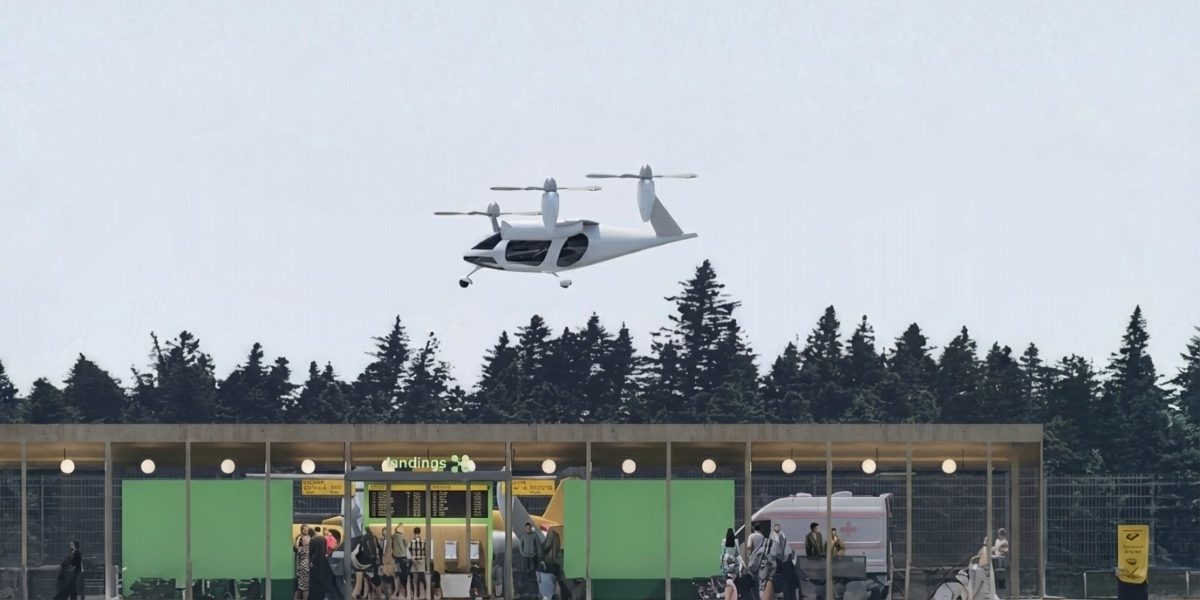

The Mohawk Valley’s emergence as a proving ground for advanced air mobility infrastructure took a significant step forward this week as one of the region’s premier vertiport development sites entered active negotiations with solar providers and battery system partners.
Lisa Wright, Founder and CEO of Landings, confirmed that a priority location in the Mohawk Valley – identified nearly eight months ago – is now progressing toward operational readiness with integrated energy infrastructure that will serve both electric aircraft and community needs.
“One of our premier locations is on the path towards co-location with solar and we’re working on the battery systems,” Wright explained. The development represents a practical model for rural air mobility infrastructure that addresses both aviation charging requirements and broader community electrification needs.
The site’s progression illustrates how rural New York locations can leapfrog traditional infrastructure limitations. Initially, Wright’s team believed the location had access to utility grid upgrades that would simplify vertiport development. However, the site sits on a county boundary where one side benefits from utility upgrades while the other doesn’t – placing this particular property on the side without enhanced grid access.
Rather than abandoning the location, the development team pivoted to a distributed energy approach combining solar generation with battery backup systems. This solution not only resolves the immediate power requirement for aircraft charging but positions the site as a community energy resource serving school buses, municipal fleets, and local vehicles.
The Mohawk Valley focus reflects broader strategic positioning. Wright is developing 12 vertiport locations across the region’s six counties, each positioned within 30-40 miles of others to create an interconnected network. The approach mirrors successful cell tower deployment strategies – secure multiple locations in a region before competitors claim the territory, then build network effects that make individual sites more valuable.
Wright’s recent appearances at Business Council of New York events, where she’s shared stages with representatives from Waymo and Amazon, signal growing institutional recognition of advanced air mobility infrastructure as economic development priority for upstate regions. Governor Kathy Hochul’s presence at these events suggests state-level awareness of the opportunity.
The energy infrastructure challenge that initially seemed like an obstacle for the Mohawk Valley site has transformed into a differentiation opportunity. Co-located solar and battery systems address rural electrification gaps while supporting aviation operations – a dual-use approach that strengthens community value propositions and potentially qualifies sites for economic development incentives focused on rural infrastructure investment.
For the Mohawk Valley, the implications extend beyond single-site development. Wright’s feasibility software, now in beta testing, has been analyzing properties across the six-county region for months. As one premier site advances toward operational status with proven energy solutions, the model becomes replicable across other identified locations.
The timeline remains aggressive. Aircraft manufacturers including Joby recently announced acceleration of certification milestones, potentially moving commercial operations timelines forward from second-quarter expectations. Wright maintains that 2026 remains the critical year for site positioning – waiting until 2027 means watching competitors secure first-mover advantages in radius-based markets where the first vertiport in a 12-25 mile area captures most traffic.
The Mohawk Valley’s advantage lies in acting while larger markets debate. New York City can afford lengthy planning cycles for urban vertiport infrastructure. Rural markets moving decisively now position themselves as operational networks before urban centers resolve regulatory and community acceptance challenges.
Wright’s message to other Mohawk Valley property owners considering vertiport development: “If you adopt early, you’re ensuring traffic to your location.” The premier site’s progression from concept to active solar negotiations demonstrates that timeline is measured in months, not years – and the window for securing position in the region’s emerging air mobility network is closing rapidly.
About Landings
Landings is building North America’s first comprehensive network of vertiport landing and charging infrastructure for electric aircraft. With a planned network of 2,000+ rural locations across North America, Landings is laying the groundwork for Advanced Air Mobility to reach critical mass at scale. Founded by architect and energy management expert Lisa Wright, the company takes an infrastructure-first, asset-light approach through revenue-sharing partnerships with commercial property owners. Learn more at landings.co.