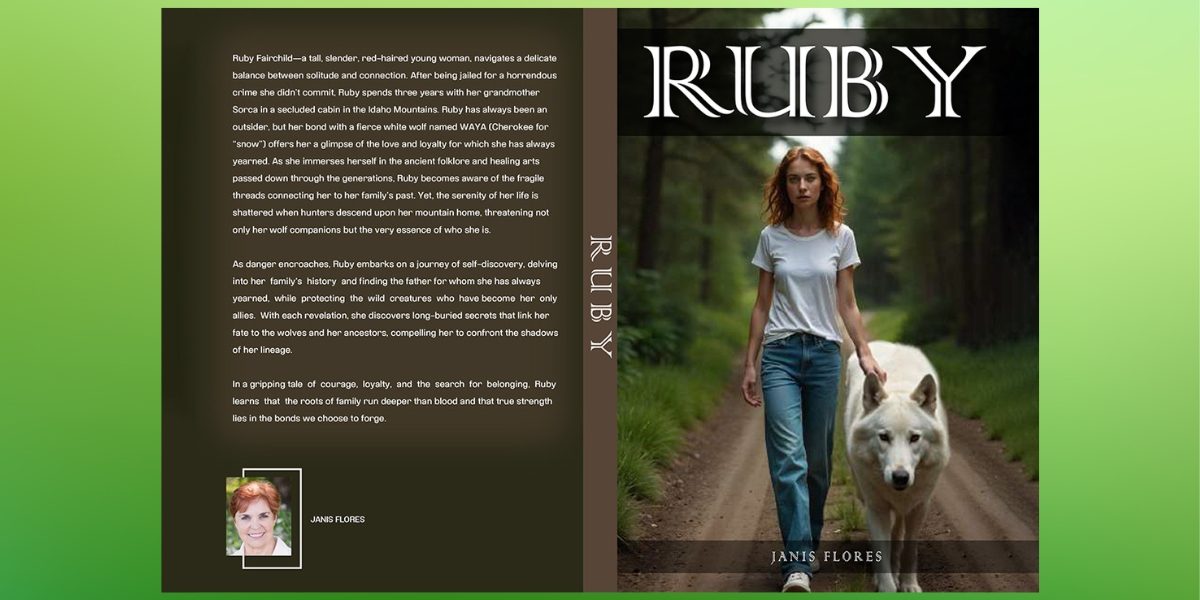


A cabin high up on an Idaho mountain, shutters closed, and smoke slowly rising from the chimney, is a scene that stays with you. An older woman locks the door to keep her daughter and granddaughter out. No apologies, no pause, simply the harsh smack of wood blocking off blood. This woman is Sorcha Witcher, the “witch on the mountain,” in Janis Flores’s Ruby. She is not the villain exactly, nor the hero. She is something else: a shadowed figure whose choice to withdraw carves its own wound in the novel’s heart.
The Woman Who Refuses
Sorcha’s rejection is one of the earliest turning points in Ruby. Dixie, Ruby’s mother, drags her up the mountain in hopes of finding help, food, perhaps shelter, or just acknowledgment. Instead, Sorcha makes her stance brutally clear. She owes them nothing. She will not open her door to chaos.
This refusal resonates in uncomfortable ways. We’re used to narratives where women, especially older women, are called upon to soften, to heal, to step into the maternal role even when everything else collapses. Sorcha doesn’t. She does not bend. And that’s what makes her fascinating.
Is she heartless, or is she simply refusing a lifetime of expectation?
The Archetype of the Hermit Woman
Folklore has always carried space for women who choose solitude. The crone in the woods. The witch by the fire. The widow who tends her garden while the village gossips. These figures are both feared and revered, often punished in story but secretly desired as symbols of autonomy.
Sorcha Witcher fits neatly into this lineage. She is not nurturing; she is not warm. She is self-protective, brittle, and untouchable. And yet readers recognize the power in that. To choose to live alone on the mountain is to declare independence from a society that would otherwise claim her labor, her love, her forgiveness.
What does it mean, though, when such autonomy slices across generations? When a granddaughter stands at the door, hungry and bruised, and is told no?
The Collision of Blood and Choice
Flores writes Sorcha without flinching. There is no soft backstory offered as an excuse. No sentimental reveal that she has always loved Ruby from afar. Sorcha represents a hard truth: sometimes women opt out. Not because they cannot care, but because caring has cost too much already.
This is not an easy idea for readers. We prefer our archetypes to be tidier: the grandmother who saves the day, the maternal figure who patches what the mother broke. Instead, Sorcha offers Ruby nothing but a slammed door. The absence itself becomes formative. Ruby learns early that her family may miss her.
And this is where Ruby diverges from safer narratives. It doesn’t try to redeem every relationship. It doesn’t insist that blood wins out. It dares to ask what happens when bloodline loyalty disintegrates.
Ruby’s Counter-Lineage
Stripped of a dependable mother, denied by a grandmother, Ruby is left to invent her own inheritance. And she does not with humans, but with wolves. Waya and Luna step into that mythic role, offering what Sorcha withholds: presence, trust, something that feels like permanence.
It’s not accidental that Flores places wolves in this space. Wolves, too, are loaded with cultural symbolism. They are predators, yes, but also intensely loyal to their pack. They embody danger and devotion at once. Where Sorcha bolts her door, the wolves wait at the clearing. Where family fractures, the wilderness provides a strange, feral stability.
Ruby’s survival depends on accepting this nonhuman lineage. Her sense of self does not root in Sorcha’s house on the mountain but in the silent companionship of wolves who ask nothing and demand nothing beyond respect.
Why Sorcha Matters
It would be easy to dismiss Sorcha as cruel and move on. But her presence in the novel does something vital. She forces the question: what if women are not obligated to save everyone? What if some women claim solitude as survival, even if it leaves scars on those outside their walls?
In a culture that still places a heavy weight on women’s roles as caregivers, Sorcha is a jagged counterpoint. She embodies the potential, both daunting and emancipating, of dissent. Readers may be annoyed by her, but they can’t help but read. She stays like smoke in the lungs.
Critical Echoes
Early reviews of Ruby have latched onto this complexity. One reader described Sorcha as “the kind of character you argue with in your head long after the page is turned.” Another called her “a mirror we’d rather not see.” Comparisons to Barbara Kingsolver and Toni Morrison’s unsparing portraits of matriarchs are not unfounded; Flores is working in that lineage of women who refuse simplification.
Beyond the Mountain
By the end of the novel, Sorcha remains essentially unchanged. She is still on the mountain, still walled in. But Ruby has shifted. She no longer looks to Sorcha for rescue. Instead, she steps into her own story, drawing strength from unexpected sources. In this way, Sorcha’s absence has shaped her as much as any presence could have.
And maybe that is the ultimate paradox: the witch on the mountain both wounds Ruby and frees her. By refusing to play the grandmotherly role, Sorcha pushes Ruby toward the wolves, toward her own chosen pack, toward survival outside the boundaries of family expectation.
Why Readers Should Pay Attention
Ruby is not comfortable reading, and that’s precisely why it feels necessary. In a world still obsessed with tidy arcs of forgiveness and reconciliation, Flores writes characters who refuse the script. Sorcha Witcher is one of the most haunting not because she casts spells, but because she doesn’t. Because she turns her back and says no.
Ruby is exactly what readers who want fiction that makes them think, that makes them uncomfortable, and that prompts them to reflect on the archetypes they embody. This book will make you question what you think you know, and you’ll still be grappling with yourself long after you’ve finished reading it.
A Final Note
If you’re searching for a story that howls instead of whispers, that replaces sugarcoated redemption with something sharper, Ruby deserves a place on your shelf. Sorcha, Waya, Luna, and Ruby herself will stay with you, not as easy answers but as echoes.
And perhaps that’s the point. Sometimes survival doesn’t come from the family we’re given. Sometimes it comes from recognizing the wolves outside the door or even the witch who will not open it.
Janis Flores’s Ruby is available now. Find it at your favorite bookstore or online retailer, and step into the mountain shadows yourself.