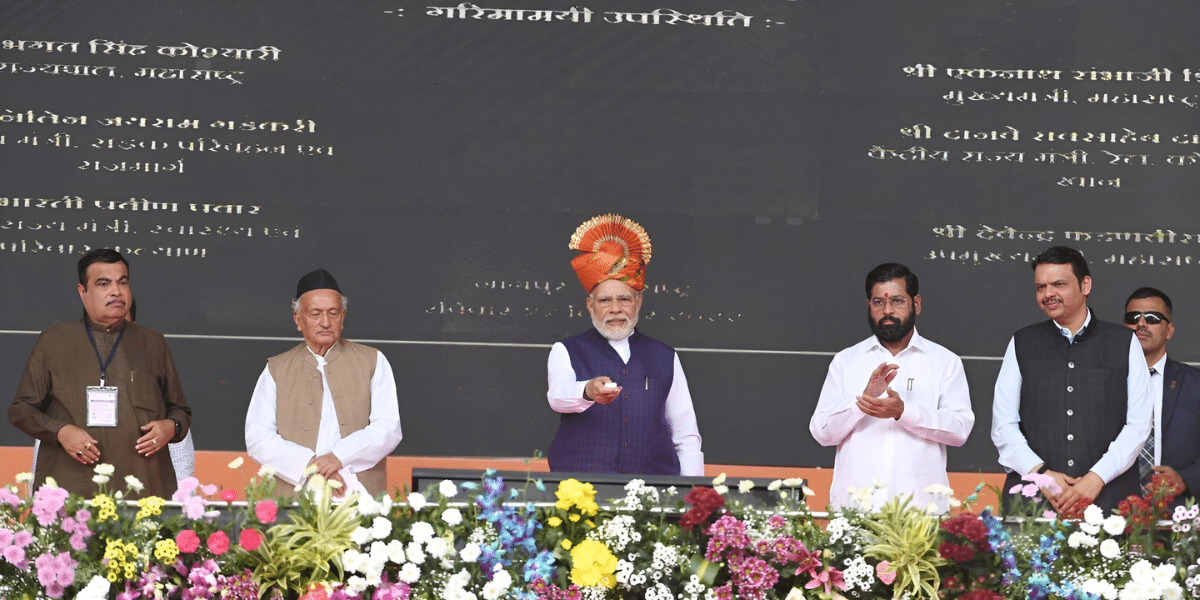

Mumbai – Chief Minister Eknath Shinde is spearheading a comprehensive infrastructure overhaul in Maharashtra, driving the state toward enhanced connectivity and growth with projects valued at ₹9.2 lakh crore. This initiative is a collaborative effort between the Maharashtra and central governments, operating as a “double engine” to accelerate development.
One of the significant highlights of this infrastructure transformation is the Atal Setu, India’s longest sea bridge, connecting Mumbai and Raigad. Named in honor of former Prime Minister Atal Bihari Vajpayee, this bridge has dramatically reduced travel time, thereby boosting economic activities and improving the overall quality of life for residents. The Atal Setu stands as a testament to modern engineering and efficient governance, demonstrating how strategic infrastructure projects can have a profound impact on regional development.
In addition to the Atal Setu, the Mumbai Coastal Road project is another transformative initiative designed to ease the city’s notorious traffic congestion, cut travel times, and provide a scenic coastal route for commuters. This project promises not only smoother commutes but also aims to enhance the city’s visual appeal, making it a new landmark in Mumbai’s infrastructure development. By providing a more efficient transportation route, the Coastal Road project is expected to alleviate pressure on existing roadways and contribute to a more sustainable urban environment. Additionally, it will boost tourism and economic activities along the coast, further driving the city’s growth and development.
The Mumbai-Pune Missing Link is yet another crucial project in this ambitious plan. This project is set to significantly reduce travel time between these two major cities, which in turn will boost trade, tourism, and economic exchanges. The improved connectivity is anticipated to draw more businesses and investments to the region, thereby reinforcing Maharashtra’s economic prominence. This project, like many others under Shinde’s administration, highlights the importance of seamless intercity connectivity in driving regional growth. Additionally, it will enhance the quality of life for commuters and foster a more integrated economic landscape across Maharashtra.
Chief Minister Shinde’s vision extends beyond urban centers to include rural areas as well. Projects like the Thane-Borivali underground road and the Virar-Alibaug Multimodal Corridor aim to improve connectivity in suburban and rural regions, ensuring that the benefits of development reach all corners of the state. By improving access to markets, healthcare, and education for rural populations, these projects are expected to significantly enhance the quality of life for residents in these areas. Additionally, they will facilitate economic opportunities, reduce regional disparities, and promote balanced, inclusive growth across Maharashtra, ensuring that no area is left behind in the state’s progress.
In the realm of public transportation, substantial investments are being made to improve metro connectivity. Approvals have been granted for ₹3,756 crore worth of works for the Pune Metro, which will greatly enhance urban mobility in Pune. Similarly, the second phase of the Nagpur Metro Rail, which includes a 43.80 km metro line, is underway, promising to transform Nagpur’s public transportation landscape. Additionally, 9,088 road development projects worth ₹25,782 crore have been approved, reflecting the administration’s commitment to improving road infrastructure across the state.
Chief Minister Shinde’s commitment to sustainable development is demonstrated by his proactive approach to securing environmental clearances for these projects. By balancing infrastructure growth with environmental preservation, he ensures that Maharashtra’s progress is both inclusive and eco-friendly. This approach not only protects the environment but also promotes long-term sustainability, ensuring that the benefits of development can be enjoyed by future generations.
Published by: Nelly Chavez