Jin Du Brings Rhythmic Precision and Expressive Depth to Chen Yi’s Duo Ye at ACMA May Recital

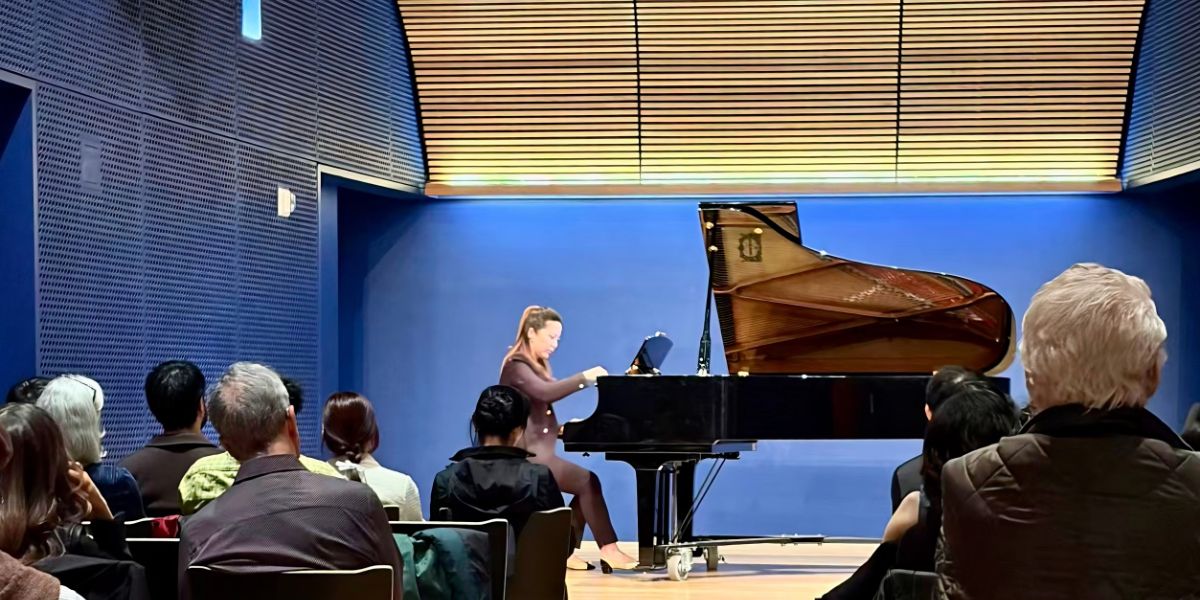
On May 23, 2026, the Association of Classical Musicians and Artists (ACMA) presented its May Recital at Scorca Hall at Opera America in New York City. Featuring a diverse program spanning Baroque, Romantic, and contemporary repertoire, the concert brought together performers from a wide range of artistic backgrounds. Among the evening’s highlights was pianist Jin Du, a New York–based concert artist who holds a Doctor of Musical Arts degree from Rutgers University. Her performance of Chen Yi’s Duo Ye stood out for its rhythmic precision, expressive depth, and thoughtful engagement with one of the most significant works in the contemporary Chinese piano repertoire.

Composed in 1984, Duo Ye is one of Chen Yi’s best-known piano compositions and has become an important work in contemporary recital programs around the world. Inspired by the communal singing and dancing traditions of the Dong ethnic community in Guangxi, China, the work combines elements of Chinese folk music with contemporary Western compositional techniques. Characterized by driving rhythmic energy, colorful harmonic language, and percussive piano writing, Duo Ye presents performers with significant technical and musical challenges while inviting audiences into a vibrant musical landscape rooted in cultural tradition. Through its distinctive musical language, the work has helped introduce international audiences to contemporary Chinese composition and remains a frequently studied and performed piece in conservatories and concert halls.

Du approached the work with a clear understanding of its rhythmic character and large-scale structure. From the opening passages, she established a confident sense of pulse and forward momentum, shaping the work’s energetic textures with precise articulation while maintaining the natural resonance of the piano. Her rhythmic control gave clarity to the intricate patterns that define the composition, allowing its driving energy to unfold without sacrificing balance or musical coherence. Throughout the performance, technical assurance consistently served the musical narrative rather than becoming an end in itself.

A notable strength of Du’s interpretation was her ability to reveal the architectural design of the composition. Rather than emphasizing virtuosity alone, she developed the recurring rhythmic motives into a cohesive musical journey, carefully shaping transitions between contrasting sections while maintaining an overall sense of continuity. Even during passages of heightened intensity, her pacing remained measured and purposeful, allowing moments of tension and release to emerge naturally. This thoughtful approach highlighted the structural sophistication of Chen Yi’s writing while making the work accessible and engaging for listeners.

Equally impressive was Du’s attention to tone color and articulation. Her refined control of touch and pedaling preserved the clarity of the work’s rhythmic passages while bringing warmth and expressive nuance to its more lyrical moments. The balance between percussive brilliance and singing tone reflected a mature understanding of the composer’s musical language. Through subtle dynamic shading and carefully differentiated textures, she illuminated the contrasting emotional qualities embedded within the score, allowing both its vitality and lyricism to resonate with equal effectiveness.

Presented within an international concert setting in New York City, Du’s performance also underscored the broader cultural significance of Duo Ye. Rather than relying on external theatrical effects, her interpretation allowed the work’s cultural influences to emerge naturally through musical expression, demonstrating how contemporary piano repertoire can communicate traditions across cultural boundaries. Audience members responded attentively to the work’s rhythmic vitality, vivid contrasts, and expressive character, reflecting the continuing appeal of contemporary Chinese music when presented with artistic conviction and musical integrity.
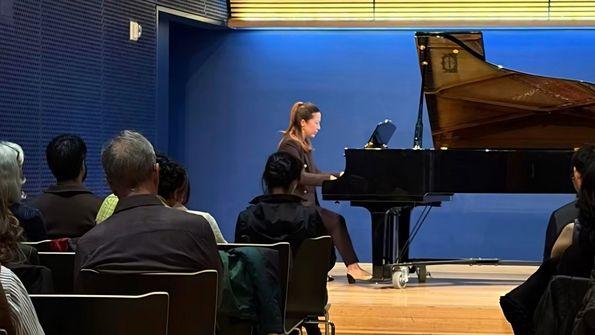
Photo Courtesy: Jin Du (ACMA May Recital, Scorca Hall at Opera America.)

Beyond the immediate success of the recital, the performance reflected Jin Du’s ongoing commitment to presenting contemporary Chinese piano repertoire on international stages. Throughout her recent concert activities, she has consistently included works by Chinese composers alongside established Western masterworks, creating opportunities for audiences to encounter music that bridges diverse artistic traditions. By performing Duo Ye in one of New York City’s respected concert venues, she contributed to the growing visibility of contemporary Chinese composition within today’s international classical music community. Her advocacy for this repertoire demonstrates not only technical versatility and interpretive maturity but also a broader artistic vision that values cultural exchange through performance.

Within a program encompassing multiple musical styles and historical periods, Jin Du’s interpretation of Duo Ye offered a compelling combination of rhythmic clarity, tonal sensitivity, and expressive insight. The performance demonstrated an artist capable of balancing technical command with thoughtful musicianship while bringing renewed attention to one of the defining works of contemporary Chinese piano literature. As her performing career continues to expand internationally, performances such as this further establish Jin Du as a pianist dedicated to connecting audiences through music that combines artistic excellence with meaningful cultural expression.
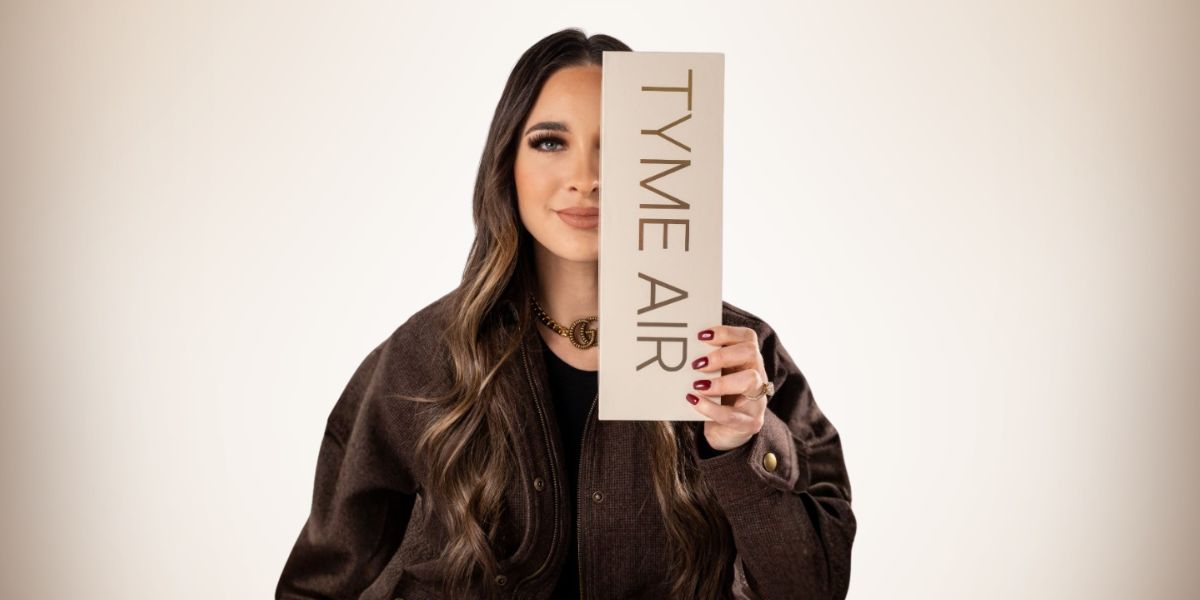

The Smarter Way to Style: How TYME Style Is Changing the Way Women Get Ready

By Kate Sarmiento

At some point, the bathroom counter stopped being a counter and became a graveyard for good intentions. The curling wand that only works for one specific look, the three heat protectants bought at different times because the first two were fine but not great, the tool that needs a 10-minute warm-up and still delivers inconsistent results on a Wednesday morning. Women have been sold on the idea that more products equal better results for so long that the clutter started to feel like proof of effort, proof of commitment, even proof of taste.

TYME Style, a professional hair tool brand built on salon-grade design principles, was acquired by Lauren Ashtyn Guest and Christopher Guest, who centered the brand’s identity around rejecting that “more is better” premise, and it turns out a lot of women were already exhausted enough to agree.

The data backs this up in a way that feels less like a trend and more like a correction. Around 75% of women find their beauty routines overwhelming, and 64% have already tried to simplify them (Source: National World, 2026). That is not a fringe sentiment. That is a majority of women quietly exhausted by the complexity they were told was necessary. The numbers tell a story about women who did the math and decided that owning fewer things that actually work beats owning many things that sort of work. That shift is not a compromise. It is a decision.

The Real Cost of “More”

The beauty industry spent years convincing consumers that a full routine required a full arsenal, and the logic was never as airtight as it seemed. More steps, more products, more specialized tools, and somehow the result was still a bathroom counter that looked like a Sephora stockroom and hair that needed two rounds of touch-up before 9 a.m. A full 92% of consumers say they want to simplify their beauty routines without compromising outcomes (Source: Global Cosmetic Industry, 2025), which is a number so close to universal it says something uncomfortable about how beauty has been packaged and sold.

The hair care side of this is especially worth paying attention to, because heat tools specifically have a complicated relationship with the “more is better” mindset. Using old tools with damaged plates or uneven heat distribution means more passes, more time, more friction on the hair shaft, and incrementally more damage each session. Repeated friction against the cuticle scratches the hair’s outer layer, which produces rough texture, split ends, and dullness over time, and heat and friction near the roots can disturb the natural oil balance. This is the part no one talks about when selling six-piece tool sets. The tool doing the damage is often not the worst tool in the world. It is just the wrong tool being used too many times in too many passes to compensate for what it is not delivering efficiently.

In 2024, consumers began prioritizing long-term hair health over temporary styling results (Source: BeautyMatter, 2025). That is a meaningful shift in values. Hair health as a priority used to feel like a concern for people recovering from bleach damage or postpartum shedding. Now it is something women across hair types are factoring into the tools they choose and the routines they keep. The connection between tool quality and hair integrity is finally getting the attention it deserved all along.

A professional curling iron or flat iron with stable, even heat delivery simply performs better in fewer passes. Fewer passes means less time, less heat exposure, and less cumulative wear on the hair over weeks and months of daily use. The math is not complicated once you stop measuring the value of a tool by how many settings it has and start measuring it by what actually happens to your hair afterward.

What “Streamlined” Actually Looks Like in Practice

Streamlining a beauty routine does not mean doing less with your hair. It means doing it smarter, with tools and products that pull their weight without requiring backup. Over half of consumers say they are willing to pay more for products that save time or simplify routines, and among Gen Z that figure rises to 62% (Source: BeautyMatter, 2026). This is a consumer who has already decided quality justifies the investment. The question is what qualifies as quality.

TYME Style’s Original TYME Iron Pro, built to curl, wave, and straighten in a single tool, is a direct answer to the question of how many tools a complete routine actually requires. The brand draws from professional salon expertise and was designed with the understanding that most women deal with at home: inconsistent results, too many tools for too many functions, and the quiet frustration of spending real money on a routine that still takes too long.

Post-pandemic, consumers began looking for more streamlined routines, favoring quality over quantity and experience over product (Source: BeautyMatter, 2024). The experience of getting ready matters, not just the result. A routine that takes 20 minutes with tools that cooperate feels categorically different from a routine that takes 40 minutes with tools that require managing. One of them is something women actually look forward to. The other is a task.

The TYME Air Iron, which pairs controlled airflow with heat to create smooth, long-lasting styles, fits into this logic of tools that reduce the number of steps without reducing the finish. Instead of blow-drying and then flat-ironing, the process collapses into one. That kind of deliberate design reflects a brand that came from the salon world, where efficiency is professional, not lazy.

Around 62% of beauty consumers are already simplifying their routines (Source: ChicScience Labs, 2024), and the ones doing it most successfully are not the ones clearing their shelves indiscriminately. They are the ones replacing several mediocre products with one or two things that genuinely perform. That distinction matters. Minimalism in beauty is not austerity. It is upgrading the quality of what stays.

The Morning Ritual That Actually Holds Up

There is something that gets lost in the conversation about streamlining routines, and it is worth naming directly. The goal was never to spend less time caring about your appearance. The goal is a routine that supports confidence rather than consuming it. Getting ready in the morning is, for most women, more than functional. More than one in five women are refocusing not just on what products they use, but on what those rituals give them beyond appearance (Source: National World, 2026). A cluttered, chaotic, 45-minute hair routine is not a self-care ritual. It is a series of small frustrations before the day has started.

TYME Style was built on this exact premise: that the daily routine should feel grounding rather than stressful. The brand’s foundation in professional craftsmanship, tested tools, and a philosophy of quality over quantity means that the women using it are not just getting better hair days. They are getting a routine that actually works, in the time they have, with tools that do not require a tutorial every morning.

The trend toward at-home styling is being driven by advancements in professional-grade hot tools that can genuinely deliver salon results at home (Source: Global Cosmetic Industry, 2024). When the tools close the gap between what a stylist can do and what a woman can do herself on a Tuesday morning, the routine shifts from compromise to capability. That is where TYME Style positions itself, not as a luxury add-on but as the kind of investment that actually earns its place on the counter and keeps earning it for years.

Ready to Simplify Without Settling?

If the bathroom counter situation is getting out of hand, or the current routine is technically fine but slow and slightly exhausting, this is a useful moment to ask what it is actually working toward. Fewer tools doing more, with better results, is not an unrealistic expectation. It is what professional-quality tools are designed to deliver.

TYME Style’s lineup of salon-grade hot tools, including the original multi-functional TYME Iron Pro, the 1.25-inch curling iron, the 2-inch curling iron, and the TYME Air Iron, was built to replace the clutter without sacrificing the finish. The brand is rooted in a simple conviction: don’t be trendy, be TYMELESS.

Visit TYME Style to find the tool that fits the routine you actually want to keep.

How New York Couples and Party Planners Rent Wedding and Event Gear on RNTR

A rooftop wedding in Brooklyn needs a tent in case the sky turns, a couple of dozen tables, enough chairs to seat both families, and a dance floor that will hold up through the last song. Buying any of it for one night makes no sense, and in a city where almost nobody has a garage, a basement, or a spare room, storing it afterward makes even less. Renting it has usually meant calling several party-supply shops and hoping each one had the right pieces free on the same weekend.

RNTR, an online rental marketplace, gathers tents, tables, chairs, and party supplies from local businesses and individuals in one place, which is why New York couples and party planners have started building an entire event kit from a single search rather than a stack of phone calls.

Building an Event Kit From One Search

The party and event category is one of the platform’s busiest, and it stretches well past folding chairs. A planner can line up a tent, banquet tables, linens, a dance floor, and a sound system without leaving the site, comparing what a full-service party company offers to what an individual who keeps a dozen tables in a storage unit across the river offers. Each listing sits next to its price and its distance, so a host can see whether the closer option or the cheaper one wins before reserving anything. In a city spread across five boroughs, that distance number matters almost as much as the price.

That range matters most for the events that do not fit a rental-store template. A milestone birthday, a loft engagement party, a reunion, or a small wedding often needs an odd mix of items that no single traditional shop stocks. Pulling them from several local owners at once is the difference between one booking session and a week of calls. A rooftop birthday might come together as a half-dozen cocktail tables, thirty chairs, a compact dance floor, and a speaker for the playlist, each from a different lister, a subway ride or short drive away, all reserved for the same Saturday in a single sitting.

Booking Around the Calendar

Timing is the quiet challenge of any event. Tents and tables for a June wedding, a graduation, or a holiday party get scarce as the date nears, so the platform lets a host reserve specific dates well in advance and lock in the pieces before someone else does. Questions about setup, delivery windows, and whether a crew can manage a walk-up or a freight elevator go through the app’s messaging, so a couple can confirm that the tent arrives the morning before rather than the afternoon of.

That calendar-first design is deliberate. “That’s how RNTR was born: to make renting simple, convenient, and on your schedule,” said Ryan McCleary, founder and CEO of RNTR. For an event with a fixed date and no room for a missed delivery, booking around the calendar rather than around a store’s hours is the whole appeal. Peak stretches in summer and around the winter holidays tend to clear out first, so the hosts who book earliest get the widest choice of tents and seating.

The Cost, and Who You Rent From

The money side is straightforward. Browsing and listing are free, and a charge applies only when a rental actually goes through, with payment handled via Stripe. Some owners deliver for an added fee, while others are pickup only, and each listing says which, which lets a host budget the true cost of a tent that needs two people, a truck, and a freight elevator to move.

Renting for a night that cannot be repeated puts a premium on trust, so the platform leans on verified accounts and reviews. A host can read how a party supplier handled past events before trusting them with a wedding, and can leave a record afterward that helps the next couple. According to RNTR, its marketplace now includes about 38,000 listings across 40 states, increasing the likelihood that New York events can source the specific mix of rentals they need nearby.

None of this changes what an event is about. It changes the logistics behind it. The tent, the tables, and the dance floor go back on Monday; nobody wedges a hundred chairs into a studio or a walk-up closet for the next decade, and the budget goes toward the day itself rather than toward gear that gets used once. For a host juggling a date, a guest count, and a venue, renting the kit instead of buying it is the version that leaves room to enjoy the party.

Step Into the Story: The Classic Comfort Shoe Brand Naot Takes Center Stage in New Film The Floaters

The Best Dressed Feet in The Floaters Belong to Naot

Every so often a movie comes along that New York can’t stop talking about before it’s even technically out. The Floaters, the indie already collecting buzz off a handful of festival screenings, is shaping up to be one of those. It’s a film about friendship, home, and the small ways people find their footing in a city that rarely slows down long enough to let them. And we’re going to talk about footwear specifically, because the shoes in this film are carrying more of the story than one might expect.

The label in question is Naot, the kind of name New Yorkers who care about craftsmanship already know, and the kind everyone else is about to. No flashy logo moments, no shoe monologues. The pairs just show up on-screen the way they show up in real life: on people getting through their day. That’s the whole point. The Floaters isn’t selling spectacle, so the wardrobe doesn’t either.

What makes it land instead of feeling like a plant is the backstory nobody’s advertising. Naot and the film’s producer go back years. This isn’t a brand slotting itself into a script, it’s two old friends ending up in the same project. In an era where people have seen every, that distinction is the difference between an eye-roll and something that actually feels earned.

It also tracks with where Naot’s been quietly building a name for itself: among stylists, editors, and the kind of dresser who’d rather have shoes that hold up than ones that just photograph well. The “quiet luxury” crowd caught up to that idea eventually. Naot was already there.

Which is really what The Floaters is about too, not the big swings, but the parts of life that hold together without anyone announcing them. Showing up. Finding your people. Wearing something that just works. Naot fits right into that rhythm.

Photo Courtesy: Naot

Don’t be surprised if, once this one hits wider release, the shoes start getting almost as much attention as the cast. New York has a habit of noticing exactly the right details, and this time, they’re worth noticing.

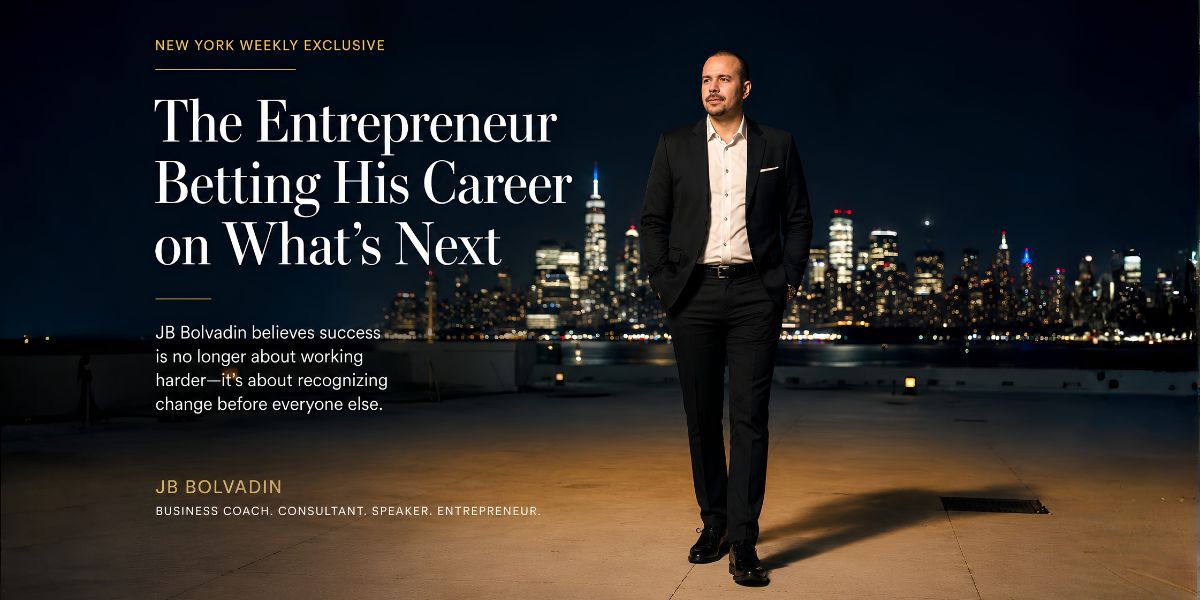
The Entrepreneur Betting His Career on What’s Next

JB Bolvadin believes success is no longer about working harder; it’s about recognizing change before everyone else.

By Eliot Mercer

Business history is filled with companies that perfected strategies just as the world stopped rewarding them.

Some built larger sales teams as automation transformed customer acquisition.

Others invested heavily in traditional advertising as digital platforms reshaped how attention was earned.

The lesson is one entrepreneur JB Bolvadin believes every business owner should take seriously.

“The biggest risk in business isn’t failing,” Bolvadin said. “It’s becoming exceptionally good at solving yesterday’s problems.”

That belief has become the foundation of his work as a business coach, consultant, speaker, and entrepreneur. Rather than helping business owners optimize outdated strategies, Bolvadin focuses on identifying the shifts that will define the next decade, and preparing clients before those shifts become obvious.

Looking Beyond the Current Market

Bolvadin’s philosophy isn’t built around predicting trends for the sake of novelty. It’s about understanding how technology, consumer behavior, and business models change the rules of competition.

Throughout history, every major technological breakthrough has rewarded those who adapted early.

The internet transformed communication.

Social media transformed visibility.

Artificial intelligence is transforming productivity.

According to Bolvadin, the businesses that thrive won’t necessarily be the ones with the largest budgets or the biggest teams. They’ll be the ones that recognize these changes before everyone else and adjust accordingly.

“Most people spend their careers reacting to change,” he said. “I think the greatest opportunities belong to the people preparing for it before it’s obvious.”

Why Adaptability Is Becoming the Ultimate Business Skill

For years, success was often associated with experience, scale, and repetition.

Those qualities still matter.

But Bolvadin believes the pace of change has fundamentally altered the equation.

Artificial intelligence, automation, and digital tools are compressing the time it takes for competitors to catch up.

Strategies that once provided advantages for years may now become commonplace within months.

In that environment, adaptability becomes a competitive advantage in its own right.

“The companies that learn the fastest will outperform the companies that simply work the hardest,” Bolvadin said.

That mindset influences everything from marketing and organizational systems to leadership and personal branding.

Building Trust in an AI World

While much of the business conversation focuses on artificial intelligence replacing tasks, Bolvadin sees a different opportunity.

He believes AI will make trust more valuable, not less.

As technology makes it easier for everyone to create polished content, professional presentations, and sophisticated marketing, the true differentiator becomes the person behind the message.

“When everyone can produce great content, people stop judging the content,” he said. “They start judging the person.”

That belief has shaped his emphasis on authority building and personal branding.

Rather than encouraging professionals to compete solely on visibility, Bolvadin argues that long-term success comes from becoming the trusted expert clients turn to when decisions matter.

Lessons from Reinvention

Bolvadin’s perspective isn’t based solely on observing markets. It has also been shaped by his own entrepreneurial journey.

Like many business owners, he has experienced periods of growth, setbacks, and reinvention. Those experiences reinforced a lesson that now guides his work: success is rarely about avoiding change. It’s about responding to it better than everyone else.

Instead of viewing reinvention as failure, he sees it as a necessary discipline for leaders operating in rapidly evolving markets.

“The businesses that survive aren’t always the strongest,” Bolvadin said. “They’re the ones willing to challenge their own assumptions before the market does it for them.”

Betting on the Future

Today, Bolvadin is intentionally building his business around the forces he believes will define the future: artificial intelligence, authority, trust, organizational systems, and adaptability.

It’s a strategy that reflects his broader philosophy, that every era rewards a different set of skills, and leaders have a choice.

They can defend yesterday’s advantages.

Or they can build tomorrow’s.

“The future belongs to the people who are willing to rethink what made them successful in the first place,” Bolvadin said. “Working harder will always matter. But recognizing what’s next will matter even more.”

About JB Bolvadin

JB Bolvadin is a business coach, consultant, speaker, and entrepreneur helping business owners and professionals build authority, leverage AI strategically, and adapt to the future of business. His work combines business strategy, personal branding, organizational systems, media, and technology to help organizations remain competitive in rapidly changing industries.

Connect with JB Bolvadin

Website: jbbolvadin.com
Instagram: @jbbolvadin
YouTube: @JBBolvadin
LinkedIn: linkedin.com/in/jbbolvadin

Julia Corotan Is Turning Personal Stories Into a Global Space for Human Connection

Through Amica Mea, the award-winning content creator is demonstrating how vulnerability, cultural understanding, and authentic storytelling can help people feel less alone.

Long before Julia Corotan began building a public platform, she was writing privately.

Letters became a place where she could express the emotions she struggled to articulate aloud. They held her frustrations, fears, questions, and reflections during periods when she felt overwhelmed by the direction of her life. What began as a deeply personal practice eventually evolved into the foundation of Amica Mea, a storytelling platform created to remind people that their struggles do not have to be faced in isolation.

For Corotan, the purpose of Amica Mea has never been defined simply by audience numbers or commercial growth. Its value lies in reaching the person who may be silently searching for reassurance, understanding, or a sense of belonging.

Her guiding belief is simple: even reaching one person can make the work meaningful.

From Burnout to a Greater Purpose

Amica Mea emerged during a turning point in Corotan’s life.

After completing her term as Country Director for Marketing and Communications at AIESEC in Malawi, she found herself experiencing burnout and uncertainty. Her work with the youth-led organization had allowed her to coach, mentor, and communicate with people from different backgrounds. When that chapter ended, she knew she wanted to continue helping others, but she had not yet identified what the next version of that work would look like.

The isolation and emotional pressure of the COVID-19 pandemic made the question even more urgent. Like many people at the time, Corotan was confronting loneliness and the mental strain of a world that had suddenly changed.

She returned to the letters she had written to herself over the years. In rereading them, she began to recognize that the emotions she had once considered private were, in fact, widely shared. Many people were navigating similar experiences but lacked the words or the space to discuss them.

That realization became the beginning of Amica Mea.

Instead of presenting herself as someone with every answer, Corotan chose to share the lessons she was still learning. Her stories became an invitation for others to examine their own experiences without shame or judgment.

A Life Shaped by More Than One Culture

Corotan’s approach to storytelling is also shaped by her multicultural upbringing.

A Filipino born and raised in Goroka, a town in Papua New Guinea’s Eastern Highlands, she grew up surrounded by cultural influences that extended beyond a single national identity. Her family’s story in Papua New Guinea began when her grandmother moved there in the 1980s to work as a university professor and create better opportunities for the family.

At 18, Corotan moved to Manila, the Philippines, to attend university. The transition from a relatively small community in Papua New Guinea to life in a major Asian city expanded her understanding of culture, identity, and communication.

Her involvement with AIESEC further exposed her to international teams and leadership environments. These experiences strengthened a quality that now sits at the heart of her work: cultural awareness.

Corotan believes that understanding where people come from can change the way we communicate with them. Culture influences how individuals express emotion, interpret challenges, build relationships, and seek support. Recognizing those differences, she argues, makes it possible to lead and communicate with greater empathy.

That perspective has helped Amica Mea speak to readers across geographic and cultural boundaries. While the details of people’s lives may differ, many of their underlying emotions, uncertainty, loneliness, hope, exhaustion, and the desire to be understood, remain universal.

Redefining What a Platform Can Be

Although Amica Mea can be viewed as a growing media or personal-development brand, Corotan describes it more intimately as a safe space.

The distinction matters.

Many digital platforms are built around visibility, performance, and carefully curated identities. Amica Mea takes a different approach by making room for vulnerability and imperfection. Its central message is not that life can be perfected, but that people can learn to move through its uncertainty without abandoning who they are.

Corotan’s philosophy challenges the pressure to create a flawless version of oneself for public approval. She encourages people to pursue growth while remaining authentic, rather than reshaping themselves entirely to satisfy the expectations of others.

This emphasis on authenticity also informs her view of success. She does not believe there is a universal blueprint for building a meaningful life. Progress is personal, and every person is learning while moving forward.

Her own journey has taught her that carefully made plans will not always unfold as expected. Rather than treating every unexpected development as a failure, she has learned to see life as a journey in which the experiences collected along the way may ultimately matter more than the destination itself.

Learning to Slow Down

For someone driven by purpose, slowing down has been one of Corotan’s most important lessons.

She acknowledges a tendency to rush toward completion and focus on results. Over time, however, she has recognized that constantly pursuing the next outcome can make people overlook the moments that give their lives meaning.

Her approach to balance involves establishing a clearer separation between her professional identity and personal life. When the workday ends, she makes an effort to step away from what she calls “Office Julia” and return to simply being herself.

Travel has become one of the ways she creates that separation. Visiting new places and experiencing different cultures gives her something to anticipate beyond professional responsibilities while continuing to broaden her understanding of people and the world.

The broader lesson she shares is not that everyone must achieve perfect balance. Instead, people should identify something that restores them, an activity, relationship, interest, or experience they can genuinely look forward to.

Recognition Without Losing the Original Mission

Corotan’s work has received international recognition, including her selection for the Brainz 500 Global 2025 list and the CREA Global Awards 2025. Her earlier leadership contributions were also recognized with AIESEC Benilde’s Northern Star Award in 2019.

Yet the original purpose behind Amica Mea remains unchanged.

The platform began with one person sharing honest letters in the hope that another person might feel understood. Its growth reflects an increasingly important truth about modern leadership: influence does not always begin with authority, scale, or certainty. Sometimes it begins with the courage to speak openly about an experience others have been afraid to name.

Corotan’s work suggests that meaningful content is not created merely by being visible. It is created by being relatable, culturally aware, and willing to make space for conversations that people genuinely need.

Her message to those navigating their own uncertain chapters is grounded in perseverance but tempered by compassion: continue moving forward, remain humble, and do not abandon yourself in the effort to become acceptable to everyone else.

Through Amica Mea, Julia Corotan is not claiming to have solved the complexities of life. She is doing something arguably more valuable: helping people explore them together.

From Hotel Check-In to the California Coast: A Smarter Way to Move Through Los Angeles

For New Yorkers, arriving in Los Angeles can require a quick change in transportation mindset. In Manhattan, a day might be organized around a few subway stops and a short walk. In Los Angeles, the same day can involve an airport arrival, a hotel check-in, a meeting across town, a museum visit, and dinner in another neighborhood. The destinations may look close on a map, yet the experience depends heavily on timing, traffic, luggage, and the number of people traveling together.

That is why ground transportation should be planned as part of the itinerary rather than treated as a last-minute detail. The right vehicle does more than move passengers between addresses. It creates a consistent meeting point, keeps a group together, provides room for luggage, and gives travelers one fewer decision to make during a busy visit.

Start With the Day, Not the Vehicle

A successful transportation plan begins with the schedule. Before choosing a sedan, SUV, Sprinter, or coach, travelers should outline the complete day: pickup time, passenger count, luggage volume, hotel or airport details, planned stops, expected waiting periods, and final destination.

This matters because the same group may need different solutions for different parts of a trip. Two executives traveling from an airport to a hotel may be comfortable in a sedan, while a team carrying presentation materials, production equipment, or several large suitcases may need more interior space. A family group may also value easier boarding and room to remain together.

For midsize parties, Sprinter van transportation can bridge the gap between a private car and a full-size bus. It can work well for hotel transfers, business groups, family outings, and itineraries with several stops. The most important step is to confirm both passenger and luggage capacity rather than choosing a vehicle based only on the number of seats.

Choose a Vehicle That Matches the Purpose

Each type of vehicle solves a different logistical problem. Executive sedan options are generally suited to individual travelers, couples, and small business parties. SUVs can provide additional passenger and luggage room. Sprinter vans help small groups stay together, while minibusses and coach buses are better suited to conferences, wedding parties, touring groups, and larger corporate movements.

Comfort is important, but the practical details should guide the decision. Travelers should ask how easily passengers can board, where bags will be stored, whether anyone has mobility requirements, and how long the group expects to remain in the vehicle. A short airport transfer and an all-day coastal outing place very different demands on the vehicle.

For event organizers, event shuttle planning can also reduce the confusion created by separate cars, parking instructions, and staggered arrivals. A centralized pickup plan gives guests a clear place and time to meet and helps the organizer track the group as a whole.

Photo Courtesy: Unsplash.com

The Best Itineraries Leave Room for Los Angeles

A well-planned Los Angeles schedule includes breathing room. Pickup windows should account for hotel loading, airport procedures, event dismissal times, and the possibility that a meeting or meal runs longer than expected. Packing too many destinations into one day can turn the vehicle into a waiting room rather than a useful part of the experience.

It is often better to organize the day by area. A visitor might group Westside destinations together, reserve another block for Hollywood or Beverly Hills, and plan a separate coastal excursion. This approach reduces unnecessary backtracking and gives travelers more time at each stop.

Cultural destinations require the same attention. A museum visit is not simply an address on a route. It may involve a designated passenger area, a specific entrance, security procedures, and a coordinated pickup after the group has dispersed through the property. The Getty Center is a good example of a destination where the arrival experience is part of the outing.

Photo Courtesy: Unsplash.com (An overhead view of the Getty Center highlights the scale of Los Angeles destinations and the value of arranging a clear arrival and pickup plan.)

Professional Transportation Is Really About Coordination

Luxury vehicles may attract attention, but coordination is what makes professional transportation valuable. Travelers researching a Los Angeles Limousine service should evaluate communication, fleet fit, local familiarity, pickup procedures, and the ability to adjust when plans change, not merely the appearance of the vehicle.

Hollywood Town Car and Limousine is one local option for airport, corporate, event, and group transportation. The strongest reason to book any professional provider, however, is not to add ceremony to every trip. It is to place responsibility for the route, vehicle, timing, and passenger movement with a team that can manage those details consistently.

That distinction is especially important for organizers. When several passengers are involved, a late pickup affects more than one person. It can delay a meeting, disrupt an event entrance, or separate a group that was expected to arrive together. Clear dispatch communication and a single transportation contact can make the entire itinerary easier to manage.

Five Details to Confirm Before Booking

Before approving a reservation, travelers or organizers should confirm five points:

• The precise pickup location, including the terminal, hotel entrance, loading zone, or meeting landmark.

• The total number of passengers and an honest estimate of luggage or equipment.

• Every planned stop, along with any waiting time or schedule flexibility.

• The vehicle’s seating, storage, accessibility, and onboard features.

• The day-of contact method for the chauffeur, dispatcher, and lead passenger.

It is also wise to ask how added stops, delays, overtime, parking, or schedule changes are handled. Clear expectations at the beginning help prevent misunderstandings at the end of the trip.

A Better Arrival Sets the Tone

Los Angeles rewards visitors who plan around the realities of the city. A thoughtfully chosen vehicle, a realistic route, and a reliable communication plan can make an airport transfer feel organized, a business day feel manageable, and a group outing feel cohesive.

The goal is not to make transportation the main event. The goal is to make it nearly invisible. The group knows where to meet, the luggage fits, the schedule has room to breathe, and everyone arrives ready for what comes next. From a hotel entrance to the California coast or the Getty Center, that preparation can shape the entire Los Angeles experience.