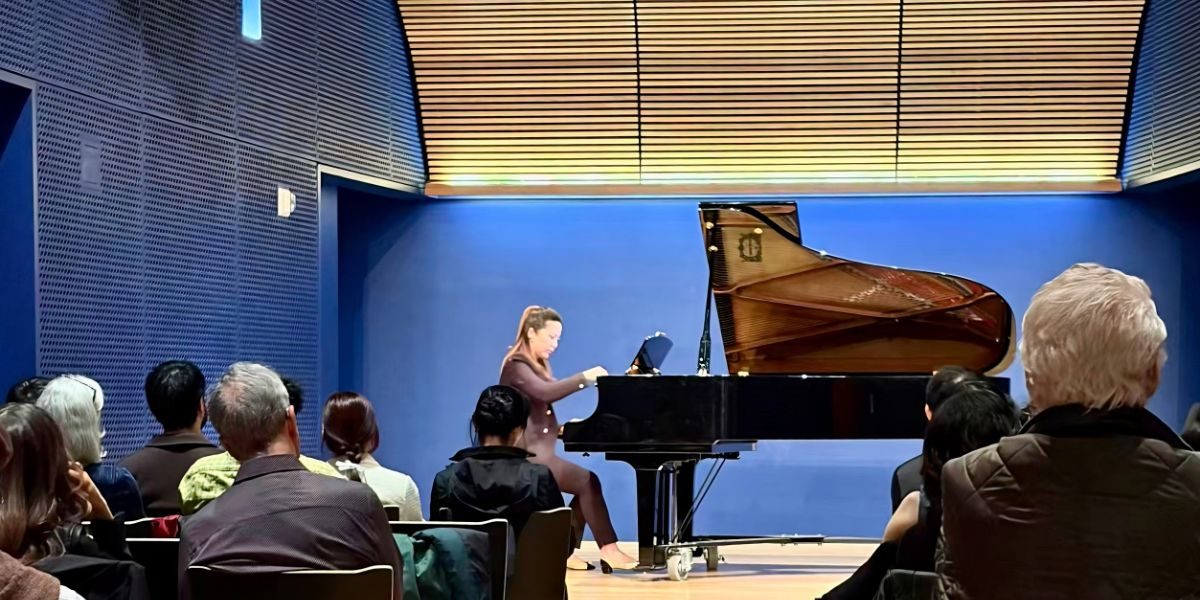

On May 23, 2026, the Association of Classical Musicians and Artists (ACMA) presented its May Recital at Scorca Hall at Opera America in New York City. Featuring a diverse program spanning Baroque, Romantic, and contemporary repertoire, the concert brought together performers from a wide range of artistic backgrounds. Among the evening’s highlights was pianist Jin Du, a New York–based concert artist who holds a Doctor of Musical Arts degree from Rutgers University. Her performance of Chen Yi’s Duo Ye stood out for its rhythmic precision, expressive depth, and thoughtful engagement with one of the most significant works in the contemporary Chinese piano repertoire.
Composed in 1984, Duo Ye is one of Chen Yi’s best-known piano compositions and has become an important work in contemporary recital programs around the world. Inspired by the communal singing and dancing traditions of the Dong ethnic community in Guangxi, China, the work combines elements of Chinese folk music with contemporary Western compositional techniques. Characterized by driving rhythmic energy, colorful harmonic language, and percussive piano writing, Duo Ye presents performers with significant technical and musical challenges while inviting audiences into a vibrant musical landscape rooted in cultural tradition. Through its distinctive musical language, the work has helped introduce international audiences to contemporary Chinese composition and remains a frequently studied and performed piece in conservatories and concert halls.
Du approached the work with a clear understanding of its rhythmic character and large-scale structure. From the opening passages, she established a confident sense of pulse and forward momentum, shaping the work’s energetic textures with precise articulation while maintaining the natural resonance of the piano. Her rhythmic control gave clarity to the intricate patterns that define the composition, allowing its driving energy to unfold without sacrificing balance or musical coherence. Throughout the performance, technical assurance consistently served the musical narrative rather than becoming an end in itself.
A notable strength of Du’s interpretation was her ability to reveal the architectural design of the composition. Rather than emphasizing virtuosity alone, she developed the recurring rhythmic motives into a cohesive musical journey, carefully shaping transitions between contrasting sections while maintaining an overall sense of continuity. Even during passages of heightened intensity, her pacing remained measured and purposeful, allowing moments of tension and release to emerge naturally. This thoughtful approach highlighted the structural sophistication of Chen Yi’s writing while making the work accessible and engaging for listeners.
Equally impressive was Du’s attention to tone color and articulation. Her refined control of touch and pedaling preserved the clarity of the work’s rhythmic passages while bringing warmth and expressive nuance to its more lyrical moments. The balance between percussive brilliance and singing tone reflected a mature understanding of the composer’s musical language. Through subtle dynamic shading and carefully differentiated textures, she illuminated the contrasting emotional qualities embedded within the score, allowing both its vitality and lyricism to resonate with equal effectiveness.
Presented within an international concert setting in New York City, Du’s performance also underscored the broader cultural significance of Duo Ye. Rather than relying on external theatrical effects, her interpretation allowed the work’s cultural influences to emerge naturally through musical expression, demonstrating how contemporary piano repertoire can communicate traditions across cultural boundaries. Audience members responded attentively to the work’s rhythmic vitality, vivid contrasts, and expressive character, reflecting the continuing appeal of contemporary Chinese music when presented with artistic conviction and musical integrity.
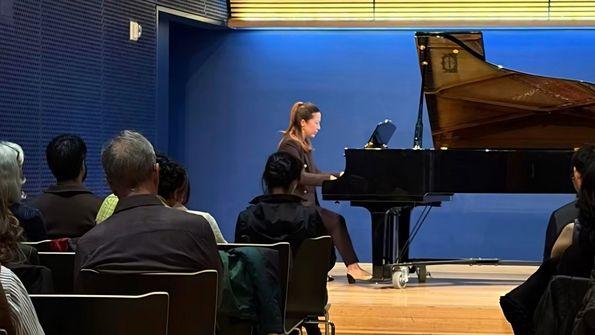
Beyond the immediate success of the recital, the performance reflected Jin Du’s ongoing commitment to presenting contemporary Chinese piano repertoire on international stages. Throughout her recent concert activities, she has consistently included works by Chinese composers alongside established Western masterworks, creating opportunities for audiences to encounter music that bridges diverse artistic traditions. By performing Duo Ye in one of New York City’s respected concert venues, she contributed to the growing visibility of contemporary Chinese composition within today’s international classical music community. Her advocacy for this repertoire demonstrates not only technical versatility and interpretive maturity but also a broader artistic vision that values cultural exchange through performance.
Within a program encompassing multiple musical styles and historical periods, Jin Du’s interpretation of Duo Ye offered a compelling combination of rhythmic clarity, tonal sensitivity, and expressive insight. The performance demonstrated an artist capable of balancing technical command with thoughtful musicianship while bringing renewed attention to one of the defining works of contemporary Chinese piano literature. As her performing career continues to expand internationally, performances such as this further establish Jin Du as a pianist dedicated to connecting audiences through music that combines artistic excellence with meaningful cultural expression.