
A bullet-scarred wall stood beside the apartment where Yifan (Ivan) Zhuo and his family were staying in Mostar, southern Bosnia, during a vacation in 2024. By then, the damage was no longer unusual to him. He had spent several days seeing abandoned buildings and reminders of a war that had ended nearly three decades earlier.
This wall, though, was different. A rectangular opening revealed another layer of crumbling brickwork behind it, creating, in Zhuo’s view, a frame within a frame. With wild grass pushing through the ruins, Zhuo raised his camera.
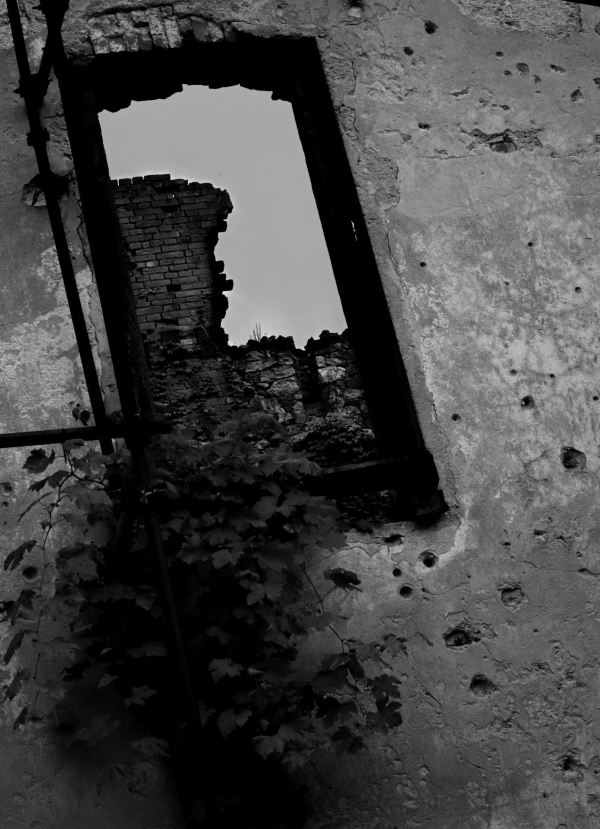
The photograph, later titled The Gift of War, went on to receive a National Silver Medal in the 2025 Scholastic Art & Writing Awards. It also became the first visible chapter of a project that would eventually take Zhuo back to Bosnia, into historical research, and toward his first documentary screening taking place in New York.
Zhuo, a 17-year-old student and filmmaker from Ontario, first encountered the wars of the former Yugoslavia in middle school. Their complexity stayed with him. In high school, he read more widely and watched The Death of Yugoslavia, a detailed documentary about the region, before traveling to Bosnia and Serbia during his freshman summer.
He arrived as a young street photographer accustomed to walking through Toronto and observing whatever caught his attention. In Sarajevo, he found history present in ordinary surroundings. There were war-damaged walls, sprawling graveyards, striking memorials, and abandoned remnants of the city’s 1984 Winter Olympics. What affected him most were not always the places marked on a map, but the traces he encountered unexpectedly.
Still, his first trip remained largely visual. He visited museums and historical sites, took photographs, and returned to Canada with a growing sense that he had only seen the surface.
“I was still an outsider,” Zhuo recalled. “I never spoke to the locals, really. I still didn’t know what it was like to live there.”
That realization stayed with him. “I felt my story with Bosnia wasn’t yet finished,” he said.
Zhuo responded first with research, writing a 14,000-word paper that drew on more than 60 primary and secondary sources to examine Slobodan Milošević’s political opportunism during the Yugoslav wars. Then, by the following summer, he decided to return to Bosnia, this time with a different purpose.
“I didn’t want to go back as a traveler again,” he said.
The second visit became the foundation for Seeds of a Scarred Land: Voices of Bosnia’s Post-War Generation, Zhuo’s directorial debut. The documentary turns away from reconstructing the war itself and focuses instead on people living with its legacy. Through five interviewees from three cities and three ethnicities, the film considers how memory, identity, and division continue to shape lives long after the fighting has stopped.
For Zhuo, the move from photography to filmmaking required more than changing equipment. It meant learning how to approach strangers, conduct interviews, follow unexpected answers, and resist imposing a predetermined argument.
His first interview was rigid. Nervous about missing something, he moved through his questions one by one. But through later conversations, he had grown to calm his nerves and learned to listen more closely, resulting in more personal and raw exchanges.
“At the end of the day, it’s better if we make it a conversation,” he said.
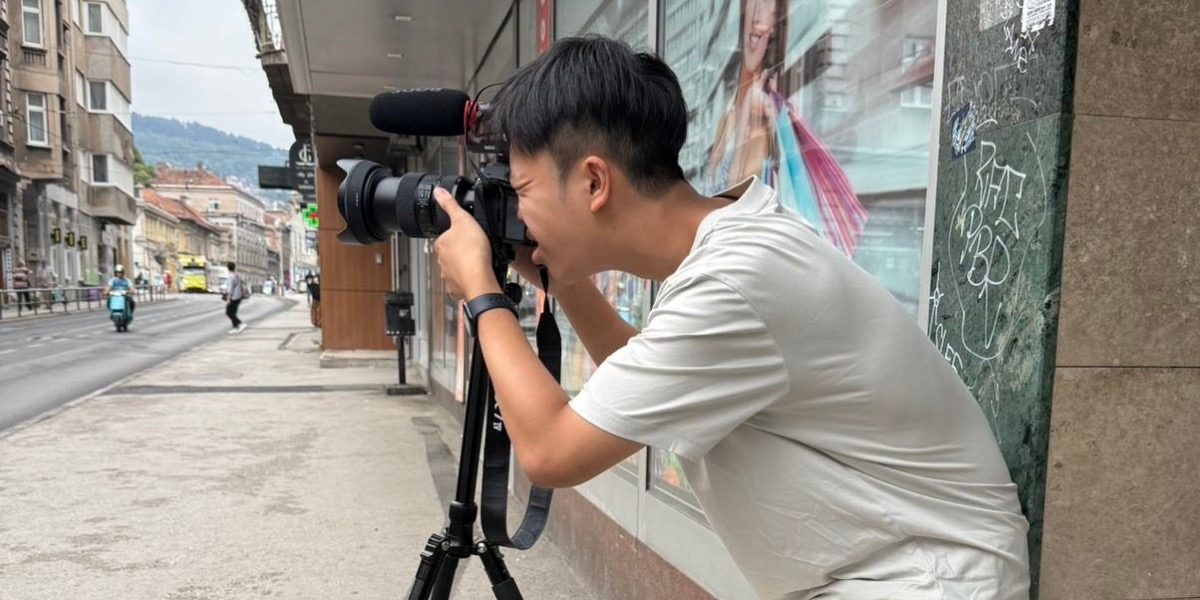
Zhuo took on most of the production himself, despite having no previous experience making a documentary of this scale. He arranged interviews, filmed them, and shot the surrounding landscapes and cities. Friends with filmmaking experience called the undertaking unthinkable, given Zhuo’s lack of filmmaking training and the hurdles he would inevitably face while shooting in a foreign country. He had doubts during the planning stage, but eventually decided, as he put it, “I might as well just try and do it.”
The larger challenge arrived after filming. Zhuo returned with more than 10 hours of material, including interviews that ranged from 40 minutes to an hour. His original plan divided the film into clear thematic chapters, but the footage resisted that structure.
As he reviewed the interviews, Zhuo realized that the film had to follow what people had actually told him, not the answers he had expected. With limited external guidance on editing tools and narrative flow, he began weaving the participants’ voices together. The finished documentary became markedly different from the one he had imagined before arriving in Bosnia.
The film’s title reflects the story it seeks to tell. To Zhuo, the “scarred land” is Bosnia, marked by the eruption of a violent ethnic conflict that has divided the land today across ethnic fault lines. The “seeds” are the younger people growing within it, carrying inherited histories while imagining futures of their own.
Seeds of a Scarred Land is now an official selection of the 2026 TRIFEST International Youth Film Festival in Hudson, New York, screening from July 24 to 26, followed by a moderated Q&A. The festival’s documentary jury includes Emmy Award-winning director Tony Gerber and two-time Pulitzer Prize-winning playwright Lynn Nottage.
The New York screening marks an important step for Zhuo, but the film’s path began with a less public realization: a photograph could preserve the physical evidence of war, but it could not tell him how people continued to live with it.
“The real impact of war is on people,” he said. Returning to Bosnia taught him that recording those lives begins not with having the right conclusion, but with learning how to ask, wait, and listen.