

By: Michael Anderson
The American Institute for Women’s Sports Leadership will host the Youth Sports Leadership and Healthy Growth Initiative Launch and Inter-School Partnership Signing Ceremony at 3:00 p.m. on September 18, 2026, at Oak Crest Academy in Pomona, California. The event will bring together elected officials, school and district leaders, educators, students, nonprofit partners, and community stakeholders to discuss sustained youth participation in sports, girls’ leadership, the responsible use of data and technology, and measurable school-community collaboration.
During the ceremony, the American Institute for Women’s Sports Leadership will sign a memorandum of understanding and a project launch agreement with a superintendent from a participating local school district and Yang Li, head of California University Preparatory Academy. The documents are intended to establish an initial framework for school coordination, pilot implementation, student participation, and ongoing program review.
The initiative was developed in response to a practical challenge: many students benefit from physical activity, teamwork, and supportive adult guidance, yet access to structured, recurring sports programs remains uneven. Girls, young people from immigrant families, and students in communities with fewer organized sports resources may face additional barriers to sustained participation. Schools and community organizations also need workable tools for coordinating instructors, involving families, documenting attendance, and improving programs over time.
The American Institute for Women’s Sports Leadership is a California-registered nonprofit organization recognized as tax-exempt under Section 501(c)(3) of the United States Internal Revenue Code. The Institute plans to build an education-centered model that connects recurring sports activities with leadership development, mentorship, family engagement, digital literacy, and data-informed evaluation. The September launch is intended to bring schools, nonprofit organizations, and community partners into a shared framework that can support pilot programs, resource sharing, and long-term collaboration rather than a single stand-alone event.
Hang Gao, founder and president of the American Institute for Women’s Sports Leadership, will serve as creative director for the event and lead program design and partnership coordination. A former national-level swimmer in China, she studied economics and management at Tongji University and is pursuing graduate studies in business analytics at the Barowsky School of Business at Dominican University of California. Her business analytics training, together with her experience in school-based youth sports and education-focused nonprofit programs, informs the initiative’s data-informed and student-centered approach.

The event program is expected to include remarks from elected officials, perspectives from school and district representatives, the partnership signing ceremony, an introduction to the Youth Sports Leadership and Healthy Growth Initiative, student reflections on sports and personal growth, and a presentation by Gao on how the experience and lessons of The Larkspur Project in China will inform locally designed work in the United States.
The launch will also feature an artificial intelligence and education roundtable focused on how emerging technologies may shape the future of learning, school operations, nonprofit services, sports education, and youth development. Educators, nonprofit leaders, community partners, and technology practitioners will discuss practical opportunities as well as the limits and responsibilities that should guide adoption. Topics are expected to include the use of artificial intelligence to support multilingual communication, organize participation data, summarize feedback, develop age-appropriate learning materials, identify gaps in student engagement, and help schools and nonprofits allocate limited resources more effectively.
The discussion will place particular emphasis on human oversight, privacy protection, transparency, equity, and the need to ensure that technology strengthens rather than replaces the work of teachers, coaches, mentors, and families. From a nonprofit perspective, participants will also consider how artificial intelligence can support measurable community impact while remaining accessible to smaller organizations. Sports education and youth leadership will serve as one of the roundtable’s central case areas, offering a practical way to examine how technology can support healthy habits, confidence, teamwork, mentorship, and long-term student participation.
The initiative is expected to begin through phased pilot partnerships with schools and community organizations. Core components may include recurring training cycles, coordination among teachers and coaches, student leadership assignments, mentorship, family participation, personal-growth workshops, and milestone-based feedback. Programs may also introduce age-appropriate digital literacy, including how participation data are collected, interpreted, and protected. Artificial intelligence may support selected administrative and evaluation tasks under human review, but it will not replace professional judgment or direct student care.
Pilot programs will be reviewed through indicators such as enrollment, attendance, retention, girls’ participation, exercise habits, and feedback from students, parents, and schools. These reviews will help partners improve program design, identify participation gaps, and use resources more effectively. Partners may also share training templates, teacher resources, multilingual materials, and evaluation methods across regions. Success will be measured not only by participation totals, but also by sustained student engagement and schools’ ability to maintain the model.
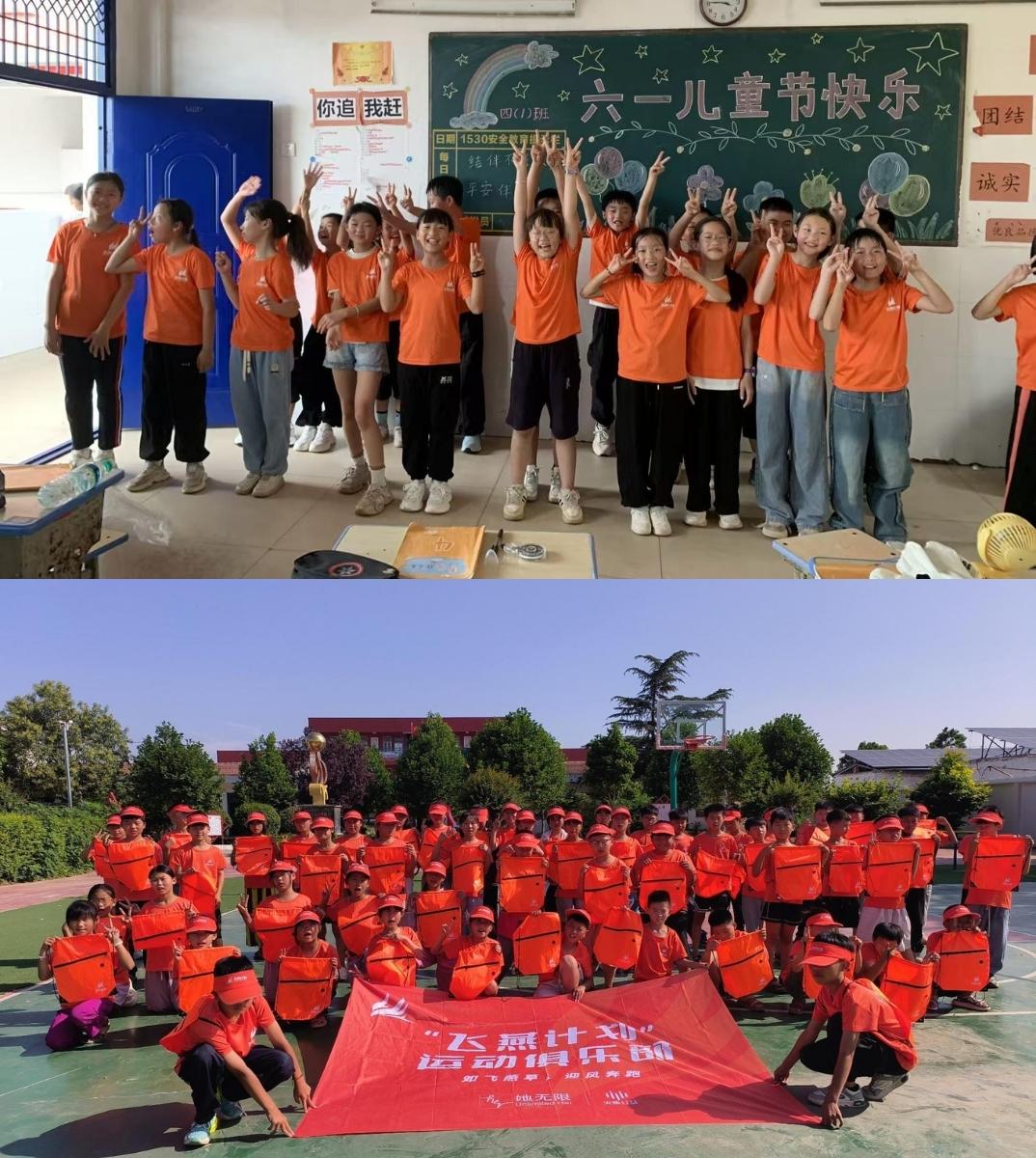
Drawing on the successful experience she personally planned and led in China, Hang Gao will explain how The Larkspur Project will inform the Institute’s work in the United States. Implemented by the Shanghai She Infinite Women’s Development Center in remote and under-resourced schools, the program combines recurring sports training, teacher support, equipment, participation tracking, milestone-based incentives, scholarships, personal-growth courses, educational visits, and peer English tutoring. Under Gao’s leadership, it expanded from 36 schools and 1,370 students to 114 schools and 4,734 students, using a 14-week cycle with at least two 20-minute sessions per week and a focus on girls’ participation. Through the Institute’s U.S. 501(c)(3) platform, Gao plans to adapt these tested principles, not copy the program unchanged, to local educational needs, community conditions, privacy expectations, and partnership structures. The Larkspur Project therefore represents firsthand experience that will directly inform the design of the new U.S. initiative.
Following the launch, the Institute plans to work with partner schools and community organizations on pilot programs, youth leadership workshops, mentorship support, and community activities. Additional details about participating schools, pilot locations, and future phases will be released as they are confirmed.