
Most minor skin problems improve with simple care, but some changes should not be ignored. A rash that keeps returning, acne that is leaving scars, unexplained itching, a mole that is changing, or a sore that does not heal can all be reasons to see a dermatologist. Skin cancer is another important reason to pay attention to changes in your skin. Early detection can make treatment easier, so it is better to have a suspicious spot checked than to assume it is harmless.
Signs You Should See a Dermatologist
You do not have to wait until a skin problem becomes severe. If something is persistent, getting worse, returning frequently, or affecting your daily life, professional assessment can help identify the cause and the right treatment.
A Mole Or Skin Spot Is Changing
Changes in a mole are one of the most important reasons to arrange a dermatology appointment. One useful way to monitor suspicious moles is the ABCD method, which looks at asymmetry, border, colour, and diameter. The method is also explained by Dr. Shpadaruk in an educational video about how to check moles for possible signs of melanoma. You can use the ABCD approach as a simple reminder when checking your skin at home.
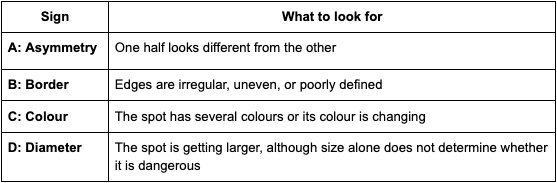
Do not wait for a mole to become large before having it checked. A new or changing spot can be worth examining even when it is relatively small.
A Rash Keeps Coming Back
A temporary rash may have an obvious trigger, such as a new skincare product, detergent, heat, or sun exposure. But if the rash continues, spreads, or repeatedly returns without a clear reason, it is worth getting professional advice.
Persistent redness, itching, scaling, swelling, or cracking can be caused by eczema, psoriasis, allergies, infections, or other skin conditions. These problems can look similar but require different treatments, so repeatedly trying random creams may not solve the underlying problem.
Acne Is Persistent Or Leaving Marks
Occasional breakouts are common, but persistent or painful acne deserves more attention. Consider seeing a dermatologist if:
- Acne keeps returning despite consistent skincare
- Breakouts are painful or widespread
- You are developing acne scars
- Dark marks remain after spots heal
- Acne suddenly becomes much worse
- The condition is affecting your confidence or daily life
Professional treatment can target active acne while also helping reduce the risk of long-term scarring and pigmentation.
You Have Unexplained Itching
Itching without an obvious cause can be difficult to manage. Dry skin, eczema, allergies, infections, medication reactions, and several other conditions can cause persistent itching.
If itching continues for weeks, becomes severe, affects your sleep, or keeps returning, a dermatologist can help identify the cause. Before your appointment, make a note of where the itching occurs and whether anything seems to trigger or relieve it.
Skin Changes That Should Not Be Ignored
Not every concerning skin problem looks like a typical mole. Skin cancer can sometimes appear as a rough patch, growing bump, unusual spot, or sore that does not heal. It may also bleed, crust, itch, or repeatedly come back after appearing to heal.
Pay particular attention to:
- A new or unusual skin spot
- A mole that changes over time
- A lesion that repeatedly bleeds or crusts
- A sore that does not heal
- A growing bump or rough patch
- Unusual pigmentation around or underneath a nail
- A spot that becomes persistently itchy or painful
- A lesion that looks noticeably different from the others on your skin
A dermatologist can examine suspicious areas more closely, use dermatoscopy when appropriate, and provide care for conditions including acne, eczema, psoriasis, skin allergies, and skin cancer. Dr. Shpadaruk’s practice offers dermatoscopy for assessing suspicious skin lesions and help with early detection.
When Can You Try Home Treatment?
Not every skin problem needs immediate medical attention. Basic self-care can be reasonable when you know what caused the problem and the symptoms are mild and improving.
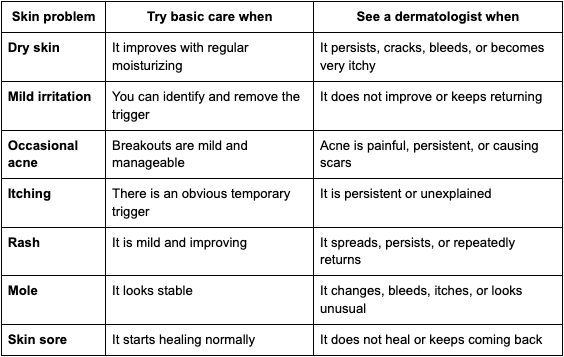
Do not rely only on online searches or photographs to decide whether a changing skin lesion is harmless. Taking photographs can be useful for monitoring changes, but a photograph cannot replace a professional examination.
It is also easy to overlook areas such as your scalp, back, soles of your feet, between your toes, and around your nails. Check these areas regularly, especially if you have many moles or frequently spend time in the sun.
Before seeing a dermatologist, write down:
- When you first noticed the problem
- How it has changed
- Any products or treatments you have tried
- What makes it better or worse
- Whether it comes and goes
- Any symptoms such as itching, bleeding, pain, or swelling
If the problem is intermittent, take a photograph when it is most noticeable. This can give the dermatologist useful information even if the skin looks different on the day of your appointment.
A Simple Skin Check at Home
You do not need special equipment to become more familiar with your skin. Check your face, neck, ears, arms, hands, chest, abdomen, legs, and feet. Look at your scalp and back with the help of a mirror or another person.
When you find something unusual, compare it with the rest of your skin. A spot that looks very different from your other moles or lesions deserves more attention. Keep photographs of anything you want to monitor and look for genuine changes in size, shape, colour, or texture.
The goal is not to diagnose yourself. It is simply to notice changes early enough to get them assessed when necessary.
How to Prepare for Your Appointment
A little preparation can make a dermatology consultation more useful. Write down when the problem started and whether it has changed. Make a list of skincare products, medications, and treatments you have used. If you have photographs from previous flare-ups, bring them with you.
For a changing mole or other suspicious lesion, note when you first noticed the change and what has happened since then. You do not need to diagnose the problem yourself. Your job is to provide the dermatologist with an accurate history and point out anything that concerns you.
Disclaimer: The information provided in this article is for general educational and informational purposes only and should not be considered medical advice, diagnosis, or treatment recommendations. Health concerns and skin conditions can vary between individuals. Always consult a qualified healthcare professional for proper evaluation, diagnosis, and guidance regarding any symptoms, concerns, or changes in your health.